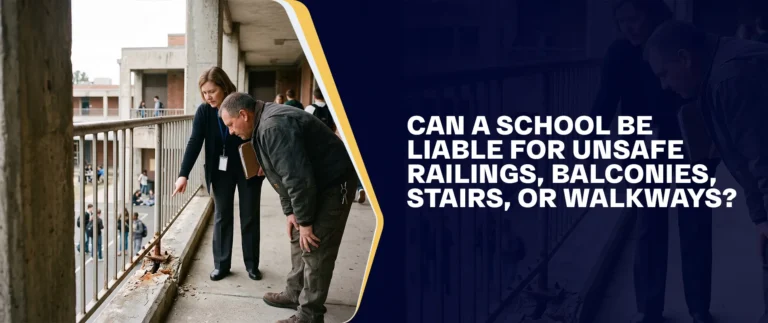
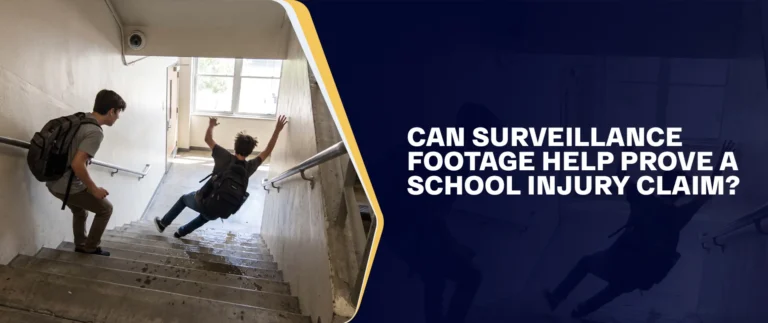
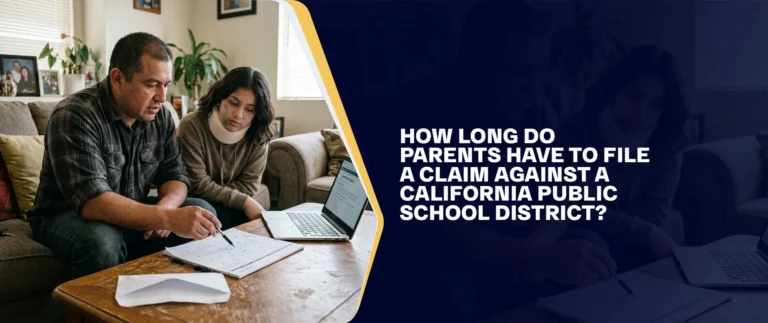
TL;DR: Get medical care and report the injury in writing. Save photos, messages, witness names, and past bullying reports. Ask the school to save camera footage and explain how it will keep your child safe. Keep track of treatment costs, review insurance communications carefully, and check filing deadlines.
Parents should get medical care for their child, report the injury to the school, and save evidence. They should also document their child’s recovery, identify any ongoing safety risks, and find out how medical expenses will be covered.
A school may face a personal injury claim if poor supervision or unsafe conditions caused the harm. People bringing claims against public schools often must file a government claim within six months.
Table of Contents

What Should Parents Do Immediately After a Child Is Seriously Injured at School, Especially If Bullying, a Fight, Unsafe Premises, or Supervision Failures May Be Involved?
Put your child’s health and safety first. Then record what happened and ask the school to save its records.
- Get medical care. Call 911 for a medical emergency. For other injuries, arrange care based on your child’s condition. Follow the doctor’s advice and keep records of each visit.
- Ask your child what happened. Let your child describe the incident in their own words, and write down their account. Avoid leading questions or repeated questions.
- Report the injury in writing. Contact the principal or school staff and state when and where the injury occurred. Describe any unsafe equipment, hazardous conditions, supervision concerns, or earlier threats that may have contributed. Save your message and the school’s reply.
- Take photos and save items. Take photos of injuries, damaged items, or unsafe areas when allowed. Keep clothing and other items linked to the event. For a fall- or equipment-related injury, document the condition promptly, as the school may need to repair or replace the equipment.
- Ask for the incident report. Find out if the school made a report and ask for a copy if available. Write down which staff members were present.
- Ask the school to save evidence. Request camera footage, reports, and staff notes in writing. Keep a copy of your request.
- Address immediate safety risks. If the injury involved bullying, violence, defective equipment, or another unresolved hazard, ask what steps the school will take to protect your child from further harm. Request temporary safety arrangements when needed, and follow medical advice about when your child can return to school.
Key Facts About California School Injury Claims
- Schools must supervise students. California law addresses teachers’ duties during recess and other school activities. Schools may face liability when poor supervision contributes to an injury. Separate rules apply to off-campus injuries (Education Code §§ 44807 and 44808).
- Schools need bullying complaint rules. Education Code § 234.1 requires districts to adopt procedures for bullying reports based on protected traits.
- Claims against public schools have short deadlines. Government Code § 911.2 sets a six-month claim deadline for most injuries.
- Minors have late-claim protections. Government Code §§ 911.4 and 911.6 set out the process for seeking permission to file a late claim.
- Parents can ask for school records. Education Code § 49069.7 grants parents access to their child’s pupil records, subject to certain limits.
- Claims against private schools follow other rules. Code of Civil Procedure §§ 335.1 and 352 address deadlines for injury claims and the tolling of the statute of limitations for minors.
What Should Parents Ask the School After a Serious Injury?
Ask the school for a clear account of the incident, the records it created, and any steps taken to address safety concerns. Put important questions in writing.
Start with the principal or school administrator. Depending on the incident, the district’s risk management office or another department may also be involved.
Depending on the incident that led to the injury, parents may ask the school to:
- Confirm when and where the injury occurred and which staff members were present.
- Explain whether the area, equipment, or activity involved has been inspected.
- Confirm whether the school has repaired, removed, or restricted access to a suspected hazard.
- Provide information about any available student accident insurance and the appropriate claims contact.
- Schedule a meeting to discuss unresolved concerns.
For bullying-related injuries, also ask how the school will investigate the complaint, address reported threats, and protect your child from further incidents. Save the replies. After a meeting, email the school a summary of what staff shared with you.
What If the School Does Not Address a Safety Complaint?
If the school does not respond to an unresolved hazard, supervision concern, or bullying report, parents can escalate the matter to the district or the appropriate school administrator.
For certain discrimination, harassment, intimidation, or bullying complaints involving protected characteristics, Education Code § 234.1 and the Uniform Complaint Procedures may apply.
Qualifying complaints must generally be filed within 6 months of the incident or of when the complainant first learned about it. Districts generally have 60 calendar days to issue an investigation report unless an extension is agreed to in writing.
The California Department of Education explains these procedures. A school complaint is not a personal injury claim. Filing a complaint about school safety, bullying, or staff conduct does not replace or extend the deadline for presenting a government injury claim.
How to Preserve Evidence After a School Injury
Ask the school to save the video, reports, and other records as soon as possible. Camera systems may overwrite footage, and schools may delete other records in accordance with their retention policies. The evidence parents should preserve depends on how the injury happened.
Document Unsafe Property Conditions and Defective Equipment
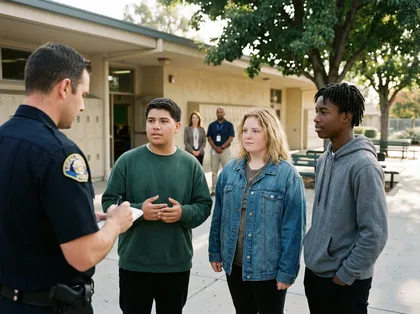
If your child was injured because of a hazardous condition, take photographs of the area as soon as you can safely and lawfully do so.
Examples include broken playground equipment, loose railings, damaged bleachers, slippery floors, uneven walkways, or unsafe conditions in classrooms and science laboratories.
Where relevant, document:
- The hazard itself. Photograph damaged equipment, floor defects, missing guards, spills, or other suspected dangers.
- The surrounding area. Capture lighting, warning signs, barriers, and the location where the injury occurred.
- Measurements. Record the approximate size or dimensions of a defect when safe and permitted. Do not interfere with school operations or enter restricted areas.
- Earlier reports. Save messages or complaints showing when staff were told about the condition.
- Maintenance records. Ask the school to preserve inspection reports, repair requests, maintenance logs, and related communications.
Do not move damaged equipment, disturb an accident scene, or attempt to recreate the incident. If the school has already repaired the issue, ask when the work was completed and whether photographs or maintenance records were retained.
Under Government Code § 835, liability for a dangerous condition of public property depends on several requirements, including whether the condition caused the injury and whether the public entity created the condition or had the legally required notice.
Keep Records of Bullying, Fights, and Earlier Complaints
When bullying or student violence contributed to an injury, preserve information about the incident and any earlier threats or complaints. These records may help establish what staff knew before the injury.
Keep:
- Dates, locations, and descriptions of earlier incidents.
- Names of witnesses and staff members involved.
- Emails, complaint forms, and messages sent to school employees.
- The school’s responses and any safety measures taken.
- Screenshots of relevant threats, text messages, or online posts.
Save complete conversations when available, including dates and usernames. Do not alter the original screenshots or publish another child’s private information online.
An earlier complaint alone does not prove negligence. The evidence must connect the school’s legally actionable conduct to the injury.
Request School Records and Witness Information
Parents should make written requests for evidence even when the school is still investigating.
- Send a request to save records. Write to the principal. For public schools, you can also contact district staff or counsel. Give the date, time, and place. Ask staff to save video, incident reports, staff messages, and duty schedules. Include past bullying reports when relevant.
- Ask for school records. Parents can request their child’s pupil records. Public school districts must provide access within five business days. Parents may also request certain safety and repair records under public records laws. Privacy rules can limit access to other students’ information. Keep copies of your requests and the school’s replies (Education Code § 49069.7).
- Get medical records. Save test results, treatment notes, bills, and plans for future care. Include counseling records if the injury affected your child’s mental health. These records can help show the harm the child suffered.
- Find witnesses. Write down the names of students, staff, and others who saw the event. Note what each person saw or heard. Ask the school to save any written witness reports.
For a school trip, save permission forms, travel plans, and chaperone lists. These records may help show who was at fault for an injury during a school field trip.
If the school will not share records, ask why and ask staff to keep them. Under federal privacy rules, you may have a right to view video that counts as your child’s school record. The school may not have to give you a copy. A school injury attorney can explain other ways to seek the records.
Do not wait for the school to release records before filing a required government claim.
How Can Parents Handle Medical Bills After a Serious School Injury?
A serious injury may require emergency treatment, specialist appointments, rehabilitation, or ongoing care. Parents may need to manage these expenses before any personal injury claim is resolved. Depending on the available coverage, several options may help cover treatment costs.
Check Health Insurance and School Accident Coverage
- Private Health Insurance: Contact your insurer to confirm which treatments are covered, deductibles, copayments, and referral requirements. Keep copies of bills and explanations of benefits.
- Medi-Cal: Eligible children may receive covered treatment through Medi-Cal. Parents should confirm coverage and provide the child’s insurance information to medical providers.
- School Accident Insurance: Some districts offer student accident insurance. Under Education Code §§ 49470 and 49472, qualifying districts may provide or make certain accident coverage available. Ask whether your child is covered, what expenses the policy pays, and whether any claim forms or deadlines apply.
Student accident insurance is separate from establishing school negligence. Coverage may be available under the policy’s terms even when fault has not been determined.
Keep Track of Medical Bills and Possible Liens
Parents should keep a record of medical expenses, payments made by insurers, outstanding balances, and bills paid directly by the family. Some health plans have reimbursement rights when an injured person later receives compensation from a responsible third party.
For example, California’s Department of Health Care Services (DHCS) may seek reimbursement for injury-related treatment that Medi-Cal paid for. Under Welfare and Institutions Code § 14124.73, a Medi-Cal member or representative generally must notify DHCS within 30 days after filing a qualifying personal injury action or claim.
Private health insurance plans may also have reimbursement or subrogation rights, depending on their terms and applicable law. These obligations can affect how much compensation remains after a settlement. Parents can ask an attorney to review possible medical liens or reimbursement claims before resolving the case.
Who May Be Liable for Bullying, Fights, or Unsafe Conditions at School?
A school, a staff member, a student, or an outside company may share fault for a child’s injury. Liability depends on each party’s legal duties, actions, and role in causing harm.
Education Code § 44807 addresses teachers’ duty to supervise students. In Dailey v. Los Angeles Unified School District (1970), the California Supreme Court recognized claims based on negligent supervision.
Those who may share fault include:
- Public and private schools. Staff may ignore known threats or fail to watch students. Parents may sue a school district after a fight when poor supervision helps cause the injury.
- Teachers and school staff. Staff may face claims for harm they cause through a lack of care. Some laws limit these claims. Government Code § 815.2 may make public entities liable for certain acts by their employees on the job.
- Students and their parents. A student who intentionally harms another child may face a civil claim. Parents with custody and control may also face limited liability for certain intentional acts. For personal injuries, this law limits their liability to qualifying medical, dental, and hospital costs (Civil Code § 1714.1).
- Those who care for school property. Broken playground equipment, dangerous stairways, damaged walkways, or other property hazards may support a claim when the applicable legal requirements are met. Government Code § 835 governs dangerous-condition claims involving public property.
- Outside companies. Bus firms, repair crews, or other service providers may share fault if their conduct caused the injury.
Earlier bullying reports may show that staff knew about a threat. However, negligent supervision during a fight may support a claim even without prior warnings.
Arash Law’s California school injury attorneys can review the facts, school records, and claim deadlines. Call (888) 488-1391 for a free case review.
What Compensation May Be Available After a Serious School Injury?
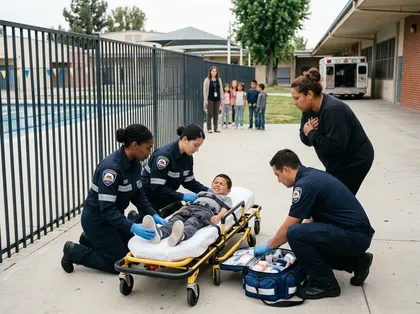
A child may seek compensation for medical costs, pain, and other losses caused by someone else’s negligence. A serious injury may also lead to future losses.
- Economic Damages: These cover costs such as hospital care, therapy, and future treatment. They may also cover additional educational support or a loss of future earning capacity.
- Non-Economic Damages: These cover pain, mental distress, and loss of enjoyment of life. They may include harm linked to bullying or violence.
Government Code § 818 bars punitive damages against public school districts. Other rules may apply to private schools and other parties.
Records of ongoing medical care, educational accommodations, and the child’s recovery can help document the full extent of the losses. A California child injury attorney can assess how future needs may affect the claim.
Who Can File a Personal Injury Claim on Behalf of an Injured Child?
Parents can report an injury, request school records, and take steps to protect their child’s legal rights. However, filing a lawsuit on behalf of a child involves additional requirements.
Under California Code of Civil Procedure §§ 372 and 373, the following rules generally apply:
- Representation in Court: A minor must generally appear through a guardian or conservator of the estate or a court-appointed guardian ad litem.
- Guardian ad Litem Appointment: A guardian ad litem is an adult appointed to represent the child’s interests during litigation. A parent or another qualified adult may request the appointment. When required for a minor plaintiff, the appointment generally must occur before a summons is issued.
- Reporting Injuries and Filing Claims: Parents generally do not need a guardian ad litem appointment to report an injury to the school or present a government claim on their child’s behalf. The appointment requirement typically becomes relevant when the case goes to court.
Does a Court Need to Approve a Child’s Settlement?
Yes. California courts generally must approve settlements involving a minor’s personal injury claim, even when the parties reach an agreement before filing a lawsuit.
Under California Rules of Court, Rule 7.950, the court reviews a petition for approval of settlement. Relevant information may include:
- Settlement Amount: The proposed compensation for the child.
- Attorney’s Fees: Any legal fees and expenses to be deducted.
- Medical Expenses: Treatment costs and outstanding medical liens.
- Protection of Funds: How the child’s settlement money will be held or managed.
Before accepting a settlement offer or signing a release, parents can have an attorney review the agreement to ensure it addresses their child’s current injuries, future treatment needs, and other losses.
What Filing Deadlines Apply to California School Injury Claims?
Most public school injury claims require that a government claim be presented within six months. Private school injury lawsuits often have a two-year time limit. Special rules apply to children and some types of claims.
- Public School Claims: Families generally have six months to present an injury claim against a public school district. They must also follow the required claim-filing procedures. A school incident report or bullying complaint does not replace a government claim (Government Code §§ 911.2 and 915).
- Late Claims Involving Minors: A child’s age does not extend the first six-month deadline. Families may apply to present a late claim within a reasonable time, generally no later than one year after the claim arose, although limited statutory exceptions may apply. Districts must grant qualifying applications if the child was a minor throughout the original six-month period (Government Code §§ 911.4 and 911.6).
- Denied Late-Claim Applications: If the district takes no action within 45 days, the law generally treats the application as denied. A valid written agreement may extend that period. Parents generally have 6 months after the denial to seek relief from the court (Government Code §§ 911.6 and 946.6).
- Deadlines After Filing a Government Claim: Public school districts generally have 45 days to act on a claim. A rejection notice that meets legal requirements usually starts a six-month deadline to sue. Without the required notice, families generally have two years from when the claim arose to file a lawsuit (Government Code §§ 912.4, 913, and 945.6).
- Private School Claims: Families generally have two years to file a personal injury lawsuit against a private school. This deadline may pause while the injured child is under 18 (Code of Civil Procedure §§ 335.1 and 352).
- Charter School Claims: Filing deadlines depend on the school’s legal status and who may be responsible. Parents should confirm whether the government claim requirements apply.
- Childhood Sexual Assault Claims: Qualifying childhood sexual assault claims are exempt from the usual government claim presentation requirement. Claims involving assaults on or after January 1, 2024, generally have no filing deadline. Earlier assaults are subject to different filing rules and may be subject to specific deadlines or exceptions (Government Code § 905(m); Code of Civil Procedure §§ 340.1 and 340.11).
Frequently Asked Questions About California School Injuries
These questions address school notification, student fault, police reports, physical education injuries, and bullying complaints.
Is a School Required to Notify Parents When a Child Is Injured?
Schools may have duties to notify parents under their policies or other laws. California does not set one notification deadline for every school injury. Parents should ask when the staff learned about the injury, when they contacted the family, and why there was any delay.
What If the School Says My Child Was Partly Responsible for the Fight?
Your child may still have a claim, even if they share fault. California’s comparative fault rule may reduce compensation based on that share. Courts judge a child’s conduct based on their age, experience, and ability to see danger. Video, witness reports, and past complaints may help show what took place.
Can Parents Report a Serious School Fight to the Police?
Yes. Parents may report an assault or suspected crime to the police. Give officers the facts and keep the report number. Education Code § 48902 also requires school principals or their designees to report certain crimes. A police report does not replace a school complaint or a required government claim.
Can a School Be Liable for an Injury in PE Class?
Yes. A school may face a claim if poor supervision or unsafe property caused the injury. But not every sports injury proves fault. Education Code § 49475 has concussion rules for certain school sports. It generally does not apply to required PE classes.
Can My Child Return to School While a Bullying Complaint Is Pending?
Yes. A pending complaint does not by itself stop a child from going back to school. Ask staff for a written safety plan and report any new threats. Your child’s doctor may set limits on when your child can return.
Request a Free Case Evaluation After a Serious School Injury
Arash Law can review whether bullying, physical violence, unsafe conditions, or poor supervision contributed to your child’s injury.
Our firm has recovered over $1 billion for injured clients across California. Our attorneys can review the school’s response, assess liability, and explain your legal options. Call us at (888) 488-1391 for a free case evaluation.
Sources
- California Legislature, LegInfo — California Civil Code § 1714.1. This section establishes limited parental or guardian liability for harm caused by a minor’s willful misconduct. https://leginfo.legislature.ca.gov/faces/codes_displaySection.xhtml?sectionNum=1714.1.&lawCode=CIV
- California Legislature, LegInfo — California Code of Civil Procedure § 335.1. Establishes the general two-year deadline for filing personal injury lawsuits. https://leginfo.legislature.ca.gov/faces/codes_displaySection.xhtml?sectionNum=335.1.&lawCode=CCP
- California Legislature, LegInfo — California Code of Civil Procedure § 340.1. Establishes special filing rules for qualifying childhood sexual assault claims, including an exemption from government claim presentation requirements. https://leginfo.legislature.ca.gov/faces/codes_displaySection.xhtml?sectionNum=340.1.&lawCode=CCP
- California Legislature, LegInfo — California Code of Civil Procedure § 352. Provides rules for pausing certain lawsuit deadlines while the injured person is under 18. https://leginfo.legislature.ca.gov/faces/codes_displaySection.xhtml?sectionNum=352.&lawCode=CCP
- California Legislature, LegInfo — California Education Code § 234.1. Requires school districts to maintain policies and complaint procedures addressing discrimination, harassment, intimidation, and bullying. https://leginfo.legislature.ca.gov/faces/codes_displaySection.xhtml?sectionNum=234.1.&lawCode=EDC
- California Legislature, LegInfo — California Education Code § 44807. Addresses teachers’ and certificated school employees’ responsibilities for student conduct during covered school activities. https://leginfo.legislature.ca.gov/faces/codes_displaySection.xhtml?sectionNum=44807.&lawCode=EDC
- California Legislature, LegInfo — California Education Code § 48902. Requires school administrators to notify law enforcement about certain suspected offenses, including specified acts of violence and other criminal conduct. https://leginfo.legislature.ca.gov/faces/codes_displaySection.xhtml?sectionNum=48902.&lawCode=EDC
- California Legislature, LegInfo — California Education Code § 49069.7. Gives parents access to their children’s pupil records, subject to applicable restrictions. Public school districts generally must provide requested access within five business days. https://leginfo.legislature.ca.gov/faces/codes_displaySection.xhtml?sectionNum=49069.7.&lawCode=EDC
- California Legislature, LegInfo — California Education Code § 49475. Establishes concussion removal-from-play and return-to-play requirements for qualifying school athletic activities. https://leginfo.legislature.ca.gov/faces/codes_displaySection.xhtml?sectionNum=49475.&lawCode=EDC
- California Legislature, LegInfo — California Government Code § 815.2. Addresses public entity liability for certain acts or omissions of employees acting within the scope of employment, subject to applicable immunities. https://leginfo.legislature.ca.gov/faces/codes_displaySection.xhtml?sectionNum=815.2.&lawCode=GOV
- California Legislature, LegInfo — California Government Code § 818. Prohibits punitive damages against public entities, including public school districts. https://leginfo.legislature.ca.gov/faces/codes_displaySection.xhtml?sectionNum=818.&lawCode=GOV
- California Legislature, LegInfo — California Government Code § 835. Establishes the requirements for holding a public entity liable when a dangerous condition of its property causes an injury. https://leginfo.legislature.ca.gov/faces/codes_displaySection.xhtml?sectionNum=835.&lawCode=GOV
- California Legislature, LegInfo — California Government Code § 905(m). Exempts qualifying childhood sexual assault claims brought under Code of Civil Procedure § 340.1 from the ordinary government claim requirement. https://leginfo.legislature.ca.gov/faces/codes_displaySection.xhtml?sectionNum=905.&lawCode=GOV
- California Legislature, LegInfo — California Government Code § 911.2. Establishes the six-month deadline for presenting most personal injury claims against public entities. https://leginfo.legislature.ca.gov/faces/codes_displaySection.xhtml?sectionNum=911.2.&lawCode=GOV
- California Legislature, LegInfo — California Government Code § 911.4. Allows qualifying claimants to apply to present a late government claim, generally within a reasonable time not exceeding one year after the claim arose. https://leginfo.legislature.ca.gov/faces/codes_displaySection.xhtml?sectionNum=911.4.&lawCode=GOV
- California Legislature, LegInfo — California Government Code § 911.6. Sets the rules for applications to present late government claims. It addresses applications involving minors. https://leginfo.legislature.ca.gov/faces/codes_displaySection.xhtml?sectionNum=911.6.&lawCode=GOV
- California Legislature, LegInfo — California Government Code § 915. Establishes procedures for presenting government claims to the proper public entity. https://leginfo.legislature.ca.gov/faces/codes_displaySection.xhtml?sectionNum=915.&lawCode=GOV
- California Legislature, LegInfo — California Government Code § 945.6. Sets lawsuit deadlines after a government claim gets rejected. This includes a six-month period after a valid written rejection notice. https://leginfo.legislature.ca.gov/faces/codes_displaySection.xhtml?sectionNum=945.6.&lawCode=GOV
- California Legislature, LegInfo — California Government Code § 946.6. Allows qualifying claimants to seek relief from the court if their late government claim application is denied or deemed denied. Generally requires filing the petition within six months. https://leginfo.legislature.ca.gov/faces/codes_displaySection.xhtml?sectionNum=946.6.&lawCode=GOV
- California Legislature, LegInfo — California Government Code § 7920.000 et seq. The California Public Records Act allows public access to government records but has some exemptions. https://leginfo.legislature.ca.gov/faces/codes_displaySection.xhtml?sectionNum=7920.000.&lawCode=GOV
- California Courts — California Rules of Court, Rule 7.950. Sets out steps for obtaining court approval for settlements involving minors. This includes necessary disclosures and petition forms. https://courts.ca.gov/cms/rules/index/seven/rule7_950
- Stanford Law School, California Supreme Court Resources — Dailey v. Los Angeles Unified School District (1970) 2 Cal.3d 741. Addresses school liability for negligent supervision that contributes to student injuries. https://scocal.stanford.edu/opinion/dailey-v-los-angeles-unified-sch-dist-27575/
- California Legislature, LegInfo — California Government Code § 912.4. Requires public entities to act on most presented claims within 45 days and explains when an unanswered claim is deemed rejected. https://leginfo.legislature.ca.gov/faces/codes_displaySection.xhtml?sectionNum=912.4.&lawCode=GOV
- California Legislature, LegInfo — California Government Code § 913. Establishes notice requirements when a public entity rejects a government claim. https://leginfo.legislature.ca.gov/faces/codes_displaySection.xhtml?sectionNum=913.&lawCode=GOV
- California Legislature, LegInfo — California Education Code § 44808. Addresses public school liability for injuries that occur away from school property, including certain school transportation and school-sponsored activities. https://leginfo.legislature.ca.gov/faces/codes_displaySection.xhtml?sectionNum=44808.&lawCode=EDC
- U.S. Department of Education, Student Privacy Policy Office — Explains when school photographs and videos qualify as student education records and when parents may inspect them. https://studentprivacy.ed.gov/faq/faqs-photos-and-videos-under-ferpa
- California Department of Education — Explains how parents can file complaints involving discrimination, harassment, intimidation, and bullying, including applicable filing and response periods. https://www.cde.ca.gov/re/di/eo/complaint.asp
Disclaimer
Past results do not guarantee future outcomes. Every case is different. The information on this page is for general educational purposes and does not constitute legal advice. No attorney-client relationship is formed by reading or relying on this content. If your child was injured, talk to a licensed personal injury attorney in California about your case. Arash Law, (888) 488-1391.