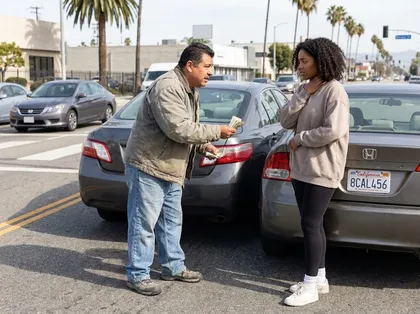
TL;DR: It is generally safer to decline a roadside cash offer until you know the extent of any injuries, repair costs, and lost income. A private payment does not replace any required information exchange or crash report. Accepting cash does not automatically end your claim, but what you agree to, document, or sign can affect your options later.
Do not rush into a roadside agreement if another driver offers cash after a California crash and asks you not to call the police. Injuries, repair costs, and lost income may become clear only after you leave the scene. Address safety first, exchange the required information, document the crash, and complete any reports required under California law.
Accepting cash does not automatically end your claim. But the parties may later disagree about what the payment covered or what they agreed to in writing. California reporting duties can still apply. Depending on the crash, you may need to exchange information, file a crash report with the California Department of Motor Vehicles (DMV), or report the collision to law enforcement.
Key Facts About Cash Offers After a California Crash
- A roadside cash offer may not cover the full loss. Injuries, repair costs, and lost income may become clearer after you leave the scene.
- Accepting cash does not automatically end a claim. A release or settlement agreement may limit your ability to seek additional compensation.
- A private payment does not replace your legal duties after a crash. You still need to exchange required information, and an SR-1 or law enforcement report may also be required.
- Informal payments can create later disputes. Photos, witness information, texts, receipts, and payment records can help show what happened and what the money covered.
Table of Contents

Should You Call the Police If the Other Driver Asks You Not To?
The other driver’s request does not prevent you from contacting law enforcement. It is generally advisable for motorists involved in accidents to call the police and to call 911 when there are injuries.
Call 911 immediately if:
- Someone is injured or needs emergency medical assistance.
- The crash creates an immediate traffic or safety hazard.
- The other driver is threatening or aggressive, or you otherwise feel unsafe.
- You reasonably suspect the driver may be impaired.
You should also consider contacting the appropriate law enforcement agency when the other driver refuses to exchange required information, provides information that appears false, or tries to leave before completing their legal duties.
A police response is not guaranteed in every minor collision. Local agencies may consider factors such as injuries, severity, location, and whether the crash occurred on private property. Calling the police at the scene is also different from completing reports that California law may require afterward. An SR-1 or a written injury-collision report may still be required regardless of whether an officer came to the scene.
Why Might a Driver Offer Cash After a Crash?
A driver may offer cash because they believe the damage is minor, want to avoid an insurance claim, or have concerns about insurance, licensing, vehicle authorization, employment rules, or possible traffic violations. A cash offer alone does not establish wrongdoing.
Whatever the reason, do not rely only on the driver’s explanation. Verify their identification, vehicle information, and evidence of financial responsibility before leaving the scene.
What to Document If the Other Driver Offers Cash
If the other driver offers cash, preserve evidence showing what happened, who was involved, and what the payment was meant to cover. These records can become important if the other driver later disputes fault, the extent of the damage, or the purpose of the payment.
Preserve the following when it is safe to do so:
- Photos and Videos: Photograph the damage to every vehicle, license plates, vehicle positions, skid marks, road conditions, traffic signs, and other relevant details. Keep the original files and avoid deleting or editing them.
- Witness Information: Get the names, phone numbers, and other contact information of anyone who saw the crash. If possible, ask witnesses to briefly describe what they observed while the event is still fresh in their memory.
- Admissions and Statements: Save any statements in which the other driver describes how the crash happened, acknowledges responsibility, apologizes, or explains why they are offering payment. Preserve written or electronic statements rather than relying only on memory.
- Texts and Messages: Screenshot and save text messages, emails, or app messages about the collision, payment offer, responsibility, repairs, or injuries. Keep the full conversation so the surrounding context is preserved.
- Payment Records: Save receipts, screenshots, transaction numbers, dates, amounts, sender information, and any memos or descriptions for Venmo, Zelle, PayPal, and other electronic payments.
- Written Documents: Keep copies of any receipt, note, release, or settlement document exchanged at the scene. Photograph handwritten documents before leaving, so you have a copy if the original is lost.
Back up important records as soon as possible. Store copies in more than one place, such as your phone, email, cloud storage, or another secure location. Avoid altering original photos, messages, or payment records because the original files may contain useful information about when and how they were created.
If the other driver leaves before exchanging information, record the license plate and vehicle description when it is safe to do so. Depending on the circumstances, the incident may qualify as a hit-and-run.
Injured in a California crash? Arash Law’s car accident claims lawyers handle injury cases arising from collisions in California. Call 888-488-1391 for a free case evaluation.
The Risks of Accepting a Cash Offer at the Accident Scene
Accepting a roadside cash offer can create problems before the full effects of the crash are known. Later injuries, hidden vehicle damage, limited documentation, and disputes over the payment can all affect what happens next.
Delayed Injuries May Not Show Up for Days
Some crash injuries may not cause obvious symptoms right away. Whiplash symptoms usually start within days, while concussion symptoms can show up hours or days later.
By then, the involved parties have left the scene. You may need medical visits, therapy, or time away from work. A payment accepted at the roadside may not account for those later losses.
Limited documentation can also make it harder to show when the symptoms began and how they relate to the crash.
Hidden Vehicle Damage Can Exceed What You See
A quick look at the vehicle may not reveal the full cost of repairs. A body shop may later find damage to the frame, suspension, sensors, crumple zones, or other concealed parts. Some damage may not be obvious from dents or scratches alone.
A cash offer based only on what you and the other driver can see at the scene may fall short of the final repair bill. A professional inspection can provide a clearer estimate.
The other driver may also offer cash specifically for vehicle damage without intending to settle a separate injury claim. If the payment is intended only for repairs, keep texts, receipts, payment descriptions, or other records that show that purpose.
Be cautious before signing anything that describes the payment as a “full,” “final,” or “complete” settlement. That language may affect whether you can pursue additional compensation later.
Informal Cash Payments Can Create Later Disputes
Handling a crash informally may leave fewer records showing how the collision occurred, who was involved, or what the cash payment was intended to cover.
The other driver may later dispute fault, the information exchanged at the scene, or whether the payment covered only vehicle damage or all losses from the crash. Without written terms, texts, receipts, or other records, it may be harder to show what both sides agreed to.
Preserve photos, messages, payment records, and any documents describing the purpose of the payment. You may still pursue an injury claim without a police report, but fewer records can make later disputes harder to resolve.
Can I Still File a Claim If I Already Took Cash from the Other Driver?
Yes. Accepting cash does not automatically prevent you from seeking additional compensation, and a private payment is not automatically illegal. The key questions are what the payment covered, what the parties agreed to, and whether you signed a release or settlement agreement.
What to Do If You Have Already Accepted the Payment
If you have already accepted cash or an electronic payment:
- Preserve the payment record. Keep receipts, screenshots, transaction details, payment descriptions, and any messages about what the money was intended to cover.
- Keep any documents you signed. Save receipts, releases, handwritten notes, settlement agreements, or other paperwork connected to the payment.
- Do not assume the claim is closed. A payment for vehicle damage, for example, does not necessarily resolve a separate injury claim.
- Seek medical care if injuries or symptoms appear. Keep records of when symptoms began and any treatment you receive.
- Notify your insurer if you have not already done so. Your policy may contain notice requirements, and additional coverage issues may arise if the other driver is uninsured or underinsured.
- Avoid signing additional settlement documents without understanding their effect. A release may limit your ability to pursue additional compensation.
If you signed a release or accepted payment containing settlement language, its legal effect depends on the wording and circumstances. Have the document and related communications reviewed before assuming either that your claim is barred or that the payment has no effect.
California Reporting Laws and Post-Crash Obligations
The California Vehicle Code (CVC) sets several duties after a crash, including exchanging information and filing certain reports. Depending on the circumstances of the crash, you may need to exchange information, file a crash report with the DMV, or notify the police or the California Highway Patrol (CHP).
A private cash payment does not replace these California reporting duties.
| Reporting Requirement | When It Applies | Deadline |
|---|---|---|
| Exchange Information (CVC § 16025) |
Drivers involved in a crash when the required parties are present and able to exchange information. | At the scene. |
| DMV SR-1 (CVC § 16000) |
Injury, death, or more than $1,000 in damage to any one person’s property. | Within 10 days. |
| Police or CHP Report (CVC § 20008) |
Injury or death for drivers other than common carrier drivers. | Within 24 hours. |
Exchange Information at the Scene
If the other parties are present and able, exchange identification and insurance information. CVC § 16025 requires drivers to exchange information, including:
- Their name.
- Driver’s license number.
- Vehicle information.
- Proof of financial responsibility.
10-Day DMV SR-1 Reporting Requirement
CVC § 16000 requires drivers to file a California DMV SR-1 accident report within 10 days when a crash causes injury, death, or more than $1,000 in damage to any one person’s property. The statute contains an exception for certain government-owned, leased, or directed vehicles. The requirement otherwise applies even if the drivers agree to handle payment privately.
Failing to file a required SR-1 may lead to license suspension.
24-Hour Police or CHP Reporting Requirement
CVC § 20008 generally requires a driver, other than the driver of a common carrier vehicle, to submit a written report to the CHP or, for crashes within a city, to the CHP or the local police department within 24 hours when the crash causes injury or death. Property damage alone does not trigger this specific rule. Different reporting rules apply to common carrier vehicles. A private cash payment does not replace the required report.
Frequently Asked Questions About Cash Offers After Car Accidents in California
Drivers often ask whether taking cash limits a later claim, whether to notify their insurer, and what happens if the other driver leaves. The answers below also cover signed releases, hit-and-run issues, and crashes involving public entities.
Should I Tell My Insurance Company About a Private Cash Payment?
Yes, you generally should notify your insurer about the collision.
Notifying your insurer is separate from filing a police report, submitting an SR-1, or making a claim for payment. Many policies require prompt notice of a crash, even when the drivers initially plan to handle the matter privately.
Depending on your policy and the facts, waiting too long to notify your insurer can lead to a coverage dispute. If uninsured motorist coverage may apply, settling with the other driver without your insurer’s written consent could also affect that coverage. (Insurance Code § 11580.2(c)(3))
What If the Other Driver Gave Me Fake Contact Information?
Report the crash to law enforcement. Record the vehicle description and any full or partial plate number. Note the direction of travel. Gather witness information and take photos. Keep any messages or payment records.
If the driver leaves without meeting their legal obligations, the crash may qualify as a hit-and-run under California law. Your uninsured motorist coverage may also apply if the driver is uninsured or cannot be identified.
If a hit-and-run vehicle struck you and the driver cannot be identified, special requirements for uninsured motorist claims may apply. For certain claims, California law requires physical contact with the vehicle. For those claims, you must report the crash to law enforcement within 24 hours and submit a sworn statement to your insurer within 30 days.
What Happens If I Signed a Release or Receipt at the Scene?
Signing something does not automatically mean your claim is over.
A receipt may confirm only that money changed hands. A release or settlement agreement may state that the payment resolves some or all claims arising from the crash.
The wording of the document and the circumstances surrounding the agreement can affect its legal effect. Keep a copy of anything you signed. Have it reviewed before assuming that you cannot seek additional compensation.
A California car accident lawyer can review the document and explain how it may affect your claim.
How Long Do I Have to File a Lawsuit After a California Car Accident?
For many California car accident cases, you generally have two years to file a personal injury lawsuit and three years to file a lawsuit for damage to personal property, such as a vehicle.
Accepting a private cash payment does not automatically pause or extend these deadlines. Different rules may apply in cases involving minors, public entities, or other circumstances that affect when the filing period begins or is paused.
What If a Government Entity May Be Liable?
You may need to present a separate government claim before filing a lawsuit if a public entity contributed to the crash. For personal injury, death, or damage to personal property, you typically have six months to file a claim. This period usually begins when the claim arises (Government Code § 911.2).
Claims against the State of California generally go through the State’s Government Claims Program. Claims against a city or county usually go to that local entity.
A private payment from another driver does not replace or extend the government claim deadline. Different timing rules or late-claim procedures may apply in some cases.
Talk to Arash Law About Your California Crash Today
If another driver offered you cash and asked you not to call the police or involve your insurance, be careful not to treat the payment as final. Injuries and other losses may become clearer after the crash. Reporting duties, deadlines, and anything you signed can also affect your options.
Arash Law can review the payment, the available evidence, insurance issues, and any applicable deadlines. Our injury law firm has recovered over $1 billion for clients across California.
Call 888-488-1391 for a free case evaluation. Our team is available 24 hours a day.
Sources
- California Legislature, LegInfo — California Vehicle Code § 16025. Requires drivers involved in a collision to exchange identifying information and evidence of financial responsibility. https://leginfo.legislature.ca.gov/faces/codes_displaySection.xhtml?sectionNum=16025.&lawCode=VEH
- California Legislature, LegInfo — California Vehicle Code § 16000. Requires a DMV accident report within 10 days when a crash causes injury, death, or damage to any one person’s property exceeding $1,000. https://leginfo.legislature.ca.gov/faces/codes_displaySection.xhtml?sectionNum=16000.&lawCode=VEH
- California Department of Motor Vehicles — Explains the circumstances requiring an SR-1, its 10-day deadline, and how it differs from police and insurance reports. https://www.dmv.ca.gov/portal/dmv-virtual-office/accident-reporting/
- California Legislature, LegInfo — California Vehicle Code § 20008. Drivers involved in crashes causing injury or death must submit a written report to the CHP or the appropriate local police department within 24 hours. https://leginfo.legislature.ca.gov/faces/codes_displaySection.xhtml?sectionNum=20008.&lawCode=VEH
- California Legislature, LegInfo — California Vehicle Code § 20001. Requires a driver to stop after a collision involving injury or death and addresses penalties for failing to perform required duties. https://leginfo.legislature.ca.gov/faces/codes_displaySection.xhtml?sectionNum=20001.&lawCode=VEH
- California Legislature, LegInfo — California Vehicle Code § 20003. Requires drivers in crashes involving injury or death to provide identifying information and render reasonable assistance to anyone injured. https://leginfo.legislature.ca.gov/faces/codes_displaySection.xhtml?sectionNum=20003.&lawCode=VEH
- California Legislature, LegInfo — California Vehicle Code § 20002. Sets duties after property-damage collisions, including stopping and providing identifying information. https://leginfo.legislature.ca.gov/faces/codes_displaySection.xhtml?sectionNum=20002.&lawCode=VEH
- California Legislature, LegInfo — California Code of Civil Procedure § 335.1. Provides a two-year filing period for many personal injury actions based on another person’s wrongful act or neglect. https://leginfo.legislature.ca.gov/faces/codes_displaySection.xhtml?sectionNum=335.1&lawCode=CCP
- California Legislature, LegInfo — California Code of Civil Procedure § 352. Addresses tolling when an injured person was a minor or lacked legal capacity when the claim arose, with an exception for certain public-entity claims. https://leginfo.legislature.ca.gov/faces/codes_displaySection.xhtml?sectionNum=352.&lawCode=CCP
- California Legislature, LegInfo — California Civil Code § 1542. Addresses unknown claims in connection with a general release and is relevant when a crash settlement includes release language. https://leginfo.legislature.ca.gov/faces/codes_displaySection.xhtml?sectionNum=1542.&lawCode=CIV
- California Legislature, LegInfo — California Government Code § 911.2. Claims involving personal injury, death, or damage to personal property against a public entity generally must be presented within six months. https://leginfo.legislature.ca.gov/faces/codes_displaySection.xhtml?sectionNum=911.2&lawCode=GOV
- California Department of General Services, Office of Risk and Insurance Management — File a Government Claim. Explains the Government Claims Program and how claims for damages against the State of California are submitted. https://www.dgs.ca.gov/ORIM/File-A-Claim
- California Department of Insurance — So You’ve Had an Accident, What’s Next? The page provides California consumer guidance on notifying an insurer, collecting driver and witness information, taking photos, and avoiding premature agreements after a crash. https://www.insurance.ca.gov/01-consumers/105-type/95-guides/01-auto/hadaccident.cfm
- California Legislature, LegInfo — California Insurance Code § 11580.2. Governs uninsured motorist coverage, including certain settlement restrictions and requirements for claims involving unidentified drivers. https://leginfo.legislature.ca.gov/faces/codes_displaySection.xhtml?sectionNum=11580.2.&lawCode=INS
- Mayo Clinic — Whiplash Symptoms and Causes. Explains that whiplash symptoms most often begin within days of an injury. https://www.mayoclinic.org/diseases-conditions/whiplash/symptoms-causes/syc-20378921
- Centers for Disease Control and Prevention — Symptoms of Mild Traumatic Brain Injury (TBI) and Concussion. Explains that some concussion symptoms may appear immediately, while others may develop hours or days later. https://www.cdc.gov/traumatic-brain-injury/signs-symptoms/index.html
Disclaimer
Past results do not guarantee future outcomes. Every case is different. The information on this page is for general educational purposes and does not constitute legal advice. No attorney-client relationship is formed by reading or relying on this content. If you were injured, consult a licensed California personal injury attorney about your specific situation. Arash Law, 888-488-1391.