TL;DR: Your injury lawyer should investigate promptly when evidence suggests a vehicle defect caused the crash or worsened your injuries, before repairs or disposal remove critical evidence. The review should consider other possible causes and whether they contributed alongside a defect. A malfunction or recall alone does not prove liability, and a claim may exist without a recall.
An injury lawyer should investigate a possible vehicle defect as soon as evidence suggests a component caused the crash or worsened your injuries. Ideally, they should investigate before physical evidence is lost, repaired, or destroyed.
Warning signs may include unexpected braking or steering problems, tire failures, restraint-system problems, and injuries unusually severe for the collision. These circumstances may warrant an investigation into whether a vehicle defect contributed to the crash or injuries.
Any of these can point to a defect, even when another driver caused the collision. Product liability claims against automakers or parts manufacturers operate alongside or independently of standard driver-negligence claims. They also involve different types of key evidence. That’s why an early evaluation is crucial before the vehicle is altered or destroyed.
Table of Contents

Something About the Vehicle May Have Contributed to My Crash or Injuries. What Facts Would Help a Lawyer Decide Whether a Defect Investigation is Warranted?
A lawyer can assess whether a defect investigation is warranted by reviewing how the vehicle and its safety systems performed before impact and what physical evidence remains. Your vehicle’s repair history, recall information, and available crash data can also help identify whether a component deserves expert examination.
Useful facts include:
- What Happened Before Impact: Describe any sudden steering loss, braking problems, unintended acceleration, tire failure, or warning lights. Explain what you felt, heard, or saw and whether passengers or witnesses noticed it. The National Highway Traffic Safety Administration (NHTSA) identifies sudden steering-component, wheel, and accelerator control failures as examples of safety-related vehicle defects.
- How Safety Equipment Performed: Tell the lawyer whether a seat belt unlatched, a seatback collapsed, or an airbag appeared to malfunction. Airbag nondeployment alone does not establish a defect because airbags are not designed to deploy in every crash. Whether deployment was expected depends on factors such as the direction of impact, crash severity, and system design.
- Your Injuries and Vehicle Damage: Medical records, photographs, and inspection findings can help an expert evaluate whether a suspected failure contributed to particular injuries. These records may reveal compartment intrusion, broken seats, restraint damage, or a post-crash fire.
- Prior Problems and Vehicle History: Share the VIN, maintenance records, earlier complaints, repairs, modifications, and loading information. A lawyer can compare these facts with NHTSA’s recalls, investigations, complaints, and manufacturer communications.
- Available Evidence and Vehicle Location: Explain who holds the vehicle and whether anyone has repaired, dismantled, or scheduled it for salvage. Available event data recorder (EDR) information may help reconstruct vehicle behavior, driver inputs, and restraint deployment leading up to the crash.
You do not need to identify the defective part before contacting a lawyer. Share these facts with a car accident lawyer early on so they can assess preservation needs and whether an expert inspection would help determine what happened.
Key Facts: Vehicle Defect Investigations in California
- Vehicle failures can warrant investigation. Sudden steering failures, sticking accelerator controls, unexpected seatback failures, and fire-causing wiring problems are examples of potential safety-related defects.
- The nondeployment of an airbag does not automatically prove a defect. Airbags do not deploy in every crash. Deployment depends on impact characteristics, system design, and sensor locations.
- Electronic data may help explain the crash. EDRs may capture vehicle behavior, driver inputs, and restraint use or deployment leading up to a collision.
- A VIN search has limits. The NHTSA’s VIN lookup identifies certain unrepaired recalls but may omit completed repairs, some recent recalls, and recalls older than 15 years.
- Vehicle evidence should be preserved before repairs. Repairs, dismantling, or disposal may alter physical evidence needed to determine whether a defect contributed to the crash or injuries.
- Personal injury lawsuits generally have a two-year deadline. California Code of Civil Procedure (CCP) § 335.1 generally requires filing within two years of injury, although delayed discovery and other exceptions may affect the deadline.
Red Flags That Warrant a Product Liability Investigation
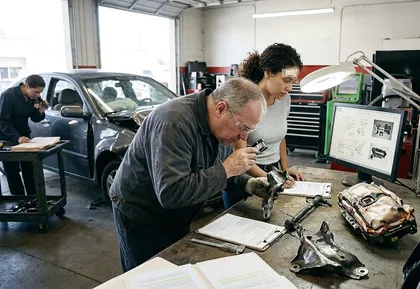
Specific failures involving vehicle control, occupant protection, tires, or electrical systems may warrant investigating whether a defect caused the crash or worsened your injuries. Tell the lawyer about any of these warning signs:
- Braking, Steering, or Acceleration Problems: Describe unexpected acceleration, loss of steering, or brakes that failed to respond before impact. Note warning lights, unusual sounds, and whether the problem occurred previously.
- Airbag or Seat Belt Problems: Identify airbags that did not deploy, deployed unexpectedly, or released metal fragments. Report seat belts that unlatched, tore, or failed to restrain an occupant. A later investigation can determine whether or not an airbag should have deployed, depending on the crash conditions and the vehicle’s design.
- Rollovers and Occupant-Compartment Failures: Explain whether the vehicle rolled over during an ordinary maneuver, the roof crushed, or a door opened during the rollover. Photographs and witness accounts can help experts assess vehicle stability and occupant protection.
- Tire Failures: Report a blowout or tread separation, including any vibration or pressure warnings before the crash. Preserve the tire and detached pieces so an expert can investigate whether the failure preceded impact.
- Electronic or Battery-System Problems: Describe unexpected electronic stability-control or driver-assist behavior, including sudden braking or steering inputs. For electric vehicles, identify battery warnings, smoke, overheating, or fire.
- Unexplained Fires or Injury Patterns: Report post-crash fires and injuries that appear unusually severe for the impact. These circumstances may justify expert review, but neither establishes a defect by itself.
Do Recalls or Malfunctions Prove a Vehicle Defect?
A vehicle recall or unexpected malfunction may justify further investigation, but neither automatically proves a defect caused your crash or injuries.
A related recall can identify a known safety issue worth comparing with your crash evidence. Provide your lawyer with the recall notice, VIN, and any recall-repair records. A recall announced after the crash does not, by itself, establish what the manufacturer knew beforehand.
Likewise, unexpected vehicle behavior does not necessarily indicate a product defect. Passenger accounts, warning messages, repair records, and electronic data may help experts distinguish defects from maintenance problems, impact damage, or driver inputs.
Establishing a product liability claim requires evidence of a manufacturing defect, design defect, or inadequate warning under the applicable legal standard. The evidence must also connect the defect to the crash or resulting injuries.
An engineering inspection may help determine whether a component was defective and whether that defect caused the collision or increased the harm. Another driver’s involvement does not automatically rule out a defect claim, and the absence of a recall does not end the inquiry.
Why Immediate Investigation Matters
Immediate investigation matters because repairs, dismantling, or disposal can permanently remove evidence needed to determine what failed. A vehicle defect claim can be very difficult to pursue without the vehicle itself, particularly when experts must distinguish preexisting failure from crash damage.
If the injured party is still in possession of their vehicle, they can delay repairs until potential defects can be investigated. Otherwise, they or their attorney should promptly contact the tow yard or storage facility and insurer in writing. The notice should identify the vehicle and request preservation of its post-crash condition, components, and electronic data before repairs, destructive testing, salvage, or disposal.
A written preservation request documents that the recipients received notice of the potential claim. It does not automatically stop a sale or resolve storage charges. A lawyer can confirm preservation arrangements and assess whether urgent court intervention is necessary.
Records tied to the vehicle’s history can be equally important. Repair orders, warranty claim records, recall notices, and communications from dealerships or manufacturers may help establish when a problem first appeared, what repairs were made, and who knew about it.
A motor vehicle accident attorney can review these materials and coordinate an appropriate inspection. Preserving the vehicle and records early gives experts a better opportunity to assess whether a suspected defect caused the crash or increased the severity of the injuries.
Possible Causes of the Crash And The Evidence That May Prove Them
A crash may involve a negligent driver, a hazardous road condition, improper vehicle use, a vehicle defect, or several contributing factors. A lawyer can compare these possibilities against the evidence rather than assume an apparent malfunction explains everything.
| Possible Cause | What It May Look Like | Evidence That May Prove It | How Does It Relate to a Vehicle Defect? |
|---|---|---|---|
| Driver Actions |
|
|
A driver’s actions may initiate a crash, while a vehicle defect may increase injury severity. |
| Road And Environmental Conditions |
|
|
Road conditions may combine with a vehicle defect to cause a crash or worsen its effects. |
| Vehicle Operation and Maintenance |
|
|
Operation or maintenance problems may resemble or conceal a defect. Comparing records with inspection findings may help distinguish them. |
| Possible Vehicle Issues |
|
|
A vehicle defect may lead to a product liability claim when it causes the crash, worsens injuries, or both. |
These causes can overlap. For example, another driver may cause the impact, while a defective seat belt may increase the severity of injuries. Identifying driver error or a road hazard as the cause also does not automatically eliminate the need for a vehicle inspection.
Use this Crash Cause Comparison Table to organize your observations and identify records a lawyer may need.
Unsure of what caused your crash? Arash Law’s auto defect injury lawyers handle California personal injury claims involving both driver negligence and manufacturer strict liability. In many vehicle-defect crashes, both theories apply simultaneously. If necessary, we work with engineering experts and crash analysts to separate what the collision produced from what the vehicle’s failure added.
Call (888) 488-1391 for a free case evaluation.
California’s Strict Liability and Enhanced Injury Rules
Under strict product liability, a manufacturer can be liable for a defective product without proof of negligence in California. The state’s Supreme Court established this doctrine in Greenman v. Yuba Power Products, Inc. (1963) 59 Cal.2d 57. You must show that the product was defective and that the defect caused your injuries, without having to prove that the manufacturer acted negligently.
Strict product liability also applies to crashworthiness claims. The crashworthiness doctrine distinguishes two categories of harm:
- Baseline Injury: The harm the collision would have caused with no defect involved. A manufacturer is not liable for baseline injuries.
- Enhanced Injury: The added harm attributable to the vehicle’s failure to protect the occupant during the crash. A manufacturer may be liable for enhanced injuries regardless of who caused the underlying collision.
In Soule v. General Motors Corp. (1994) 8 Cal.4th 548, the plaintiff alleged that vehicle defects allowed a front wheel to collapse rearward and push the floorboard into her feet, worsening her ankle injuries. The California Supreme Court affirmed her verdict and explained that a defect must be a substantial factor in causing enhanced injuries.
Distinguishing baseline injuries from enhanced injuries requires examining the crash forces, the suspected defect, and the medical evidence.
If your crash involved a component failure that worsened your injuries, the question is the same: did the failure make your injuries meaningfully more severe than the crash force alone would explain? Expert analysis may help determine which injuries the defect caused or worsened.
Deadlines for California Vehicle Defect Claims
Different claims have different filing deadlines, and some only give you months to file. Regardless of the deadline, preserving evidence requires prompt action because repairs or disposal can destroy critical evidence before you file.
| Type of Claim | General Deadline | Legal Basis |
|---|---|---|
| Personal injury against a manufacturer, distributor, retailer, or driver | Generally two years from the date of injury. | CCP § 335.1 |
| Wrongful death | Generally two years from the date of death. | CCP § 335.1 |
| Property damage claim against a private party | Generally three years from the date the property damage occurred. | CCP § 338(c)(1) |
| Claim against a government entity (for example, a dangerous road condition) | Written claim within six months of the incident; lawsuit within six months of a written rejection. | Gov. Code §§ 911.2, 945.6 |
| Injured minors | The deadline is generally tolled while under 18 for claims against private defendants. Stricter rules apply to public entity claims. | CCP § 352(a); see Gov. Code § 911.4 for government claims |
Claims against state agencies go through the DGS/ORIM Government Claims Program. Discovery rules, tolling, and other exceptions can change these dates, so have an attorney review your deadline as early as possible.
Frequently Asked Questions About Vehicle Defect Investigations in California
What Should I Not Tell the Insurance Company After a Suspected Vehicle Defect Crash?
Avoid guessing about fault, the cause of a malfunction, or how fully you will recover. Describe what you observed and say when you do not know an answer. Do not exaggerate or hide facts. Before giving a recorded statement, ask your lawyer about your obligations under your policy.
Do I Need an Expert to Prove a Vehicle Defect?
You will likely need expert testimony, especially when a dispute involves complex vehicle systems or whether a failure worsened your injuries.
Depending on the issue, your lawyer may work with an automotive engineer, crash reconstructionist, or biomechanical expert. You do not automatically need every type of expert in every case.
What If I Do Not Know Whether My Vehicle Had an Open Recall?
Enter your 17-character VIN at NHTSA’s recall lookup. It identifies unrepaired recalls for participating manufacturers, but it may omit recently announced recalls, older recalls, and completed repairs. Share any results and repair records with your lawyer. Having no open recall does not rule out a defect claim.
Can I Sue the Manufacturer If Another Driver Caused My Crash?
Yes, you can sue the manufacturer if a vehicle defect also caused or worsened your injuries. For example, another driver may cause the collision while a defective seat belt fails to restrain you. You may pursue claims against both parties, but you must establish how each contributed to your harm.
What If the Manufacturer Argues the Crash Was Too Severe for Any Vehicle to Have Protected Me?
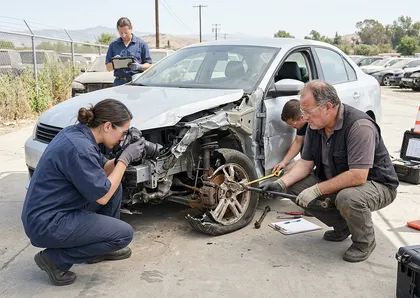
You may still have a claim if the evidence shows that a defect worsened your injuries. An expert can compare what happened with how a vehicle without that defect would have performed.
If you would have suffered the same injuries without the defect, then the defect would not support an enhanced-injury claim.
What If the At-Fault Driver Was Underinsured and the Vehicle Defect Claim Involves the Manufacturer?
You may pursue a liability claim against a manufacturer separately from the other driver’s insurance coverage if a defect contributed to your injuries. The driver’s policy limit does not cap the manufacturer’s potential liability. Your lawyer should also review any available underinsured motorist coverage and coordinate the claims to avoid recovering twice for the same losses.
Do I Have a Claim if a Dealership Sold Me a Defective Car?
Yes, you may have a claim against a dealership that sold you a defective car. Under California law, automobile retailers that sell new vehicles can be held strictly liable even if they did not manufacture the defective component (Vandermark v. Ford Motor Co. (1964) 61 Cal.2d 256).
However, different rules may apply to used-car dealerships. A lawyer can investigate the vehicle’s condition, sales records, repair history, and the dealership’s role in the alleged defect to determine whether you have a claim.
How Can I Afford Legal Representation for a Vehicle Defect Case?
Many car accident lawyers, such as those from Arash Law, handle vehicle defect claims on a contingency fee basis, meaning you pay nothing up front. Your attorney’s fee depends on a recovery.
Before signing, review the fee percentage and responsibility for expenses such as expert inspections, testing, and court filings. Ask who advances those costs and whether you could owe them if the case produces no recovery. Get those terms in writing.
Request a Free Case Review of Your Crash Involving a Possible Vehicle Defect
If you suspect a vehicle problem caused your crash or worsened your injuries, Arash Law can review the facts and explain your options. Our attorneys can assess available crash data, vehicle damage, medical records, and repair history to determine whether an expert investigation may help.
You do not need to identify a defective part before contacting us. We can discuss how to preserve the vehicle and what evidence may support a claim.
Call (888) 488-1391 for a free case evaluation.
Sources
- National Highway Traffic Safety Administration (NHTSA): Motor Vehicle Safety Defects and Recalls.
https://www.nhtsa.gov/sites/nhtsa.gov/files/documents/mvdefectsandrecalls_808795.pdf- California Code of Civil Procedure § 335.1: Two-Year Statute of Limitations for Personal Injury. https://leginfo.legislature.ca.gov/faces/codes_displaySection.xhtml?sectionNum=335.1.&lawCode=CCP
- California Code of Civil Procedure § 338(c)(1): Three-Year Statute of Limitations for Property Damage. https://leginfo.legislature.ca.gov/faces/codes_displaySection.xhtml?sectionNum=338.&lawCode=CCP
- California Civil Code § 1714: General Negligence Standard. https://leginfo.legislature.ca.gov/faces/codes_displaySection.xhtml?sectionNum=1714.&lawCode=CIV
- California Government Code § 911.2: Government Claims Presentation Deadline. https://leginfo.legislature.ca.gov/faces/codes_displaySection.xhtml?sectionNum=911.2.&lawCode=GOV
- California Government Code § 945.6: Deadlines for Filing Lawsuits Against Public Entities.
https://leginfo.legislature.ca.gov/faces/codes_displaySection.xhtml?sectionNum=945.6.&lawCode=GOV- California Department of General Services: DGS/ORIM Government Claims Program.
https://www.dgs.ca.gov/ORIM/File-A-Claim- National Highway Traffic Safety Administration (NHTSA): Vehicle Recall Database. https://www.nhtsa.gov/recalls
- Greenman v. Yuba Power Products, Inc. (1963) 59 Cal.2d 57. California Supreme Court, establishing strict product liability.
https://repository.uclawsf.edu/cgi/viewcontent.cgi?article=1437&context=traynor_opinions- Soule v. General Motors Corp. (1994) 8 Cal.4th 548. California Supreme Court, addressing enhanced-injury causation and the consumer-expectations test.
https://www.leagle.com/decision/19945568cal4th5481543- Li v. Yellow Cab Co. (1975) 13 Cal.3d 804. California Supreme Court, establishing pure comparative fault.
https://scholarlycommons.pacific.edu/cgi/viewcontent.cgi?article=2458&context=mlr- Vandermark v. Ford Motor Co. (1964) 61 Cal.2d 256. California Supreme Court, recognizing strict product liability for automobile retailers.
https://repository.uclawsf.edu/cgi/viewcontent.cgi?article=1835&context=traynor_opinions- California Business and Professions Code § 6147: Written Contingency Fee Agreement Requirements. https://leginfo.legislature.ca.gov/faces/codes_displaySection.xhtml?sectionNum=6147.&lawCode=BPC
Disclaimer
The information on this page is for general educational purposes and does not constitute legal advice. Reading or relying on this content does not create an attorney-client relationship. If you were injured, consult a licensed California personal injury attorney about your specific situation. Arash Law: (888) 488-1391.