TL;DR: Responsibility for a self-driving car accident may fall on the human driver, vehicle owner, manufacturer, software developer, fleet operator, or another road user. Liability depends on the vehicle’s level of automation, who controlled it, and what caused the crash.
Highlights:
- Confirm the vehicle’s SAE automation level and your role at impact.
- Photograph the scene, vehicle displays, road conditions, and any visible sensors.
- Collect names, contacts, and quick statements from witnesses and other drivers.
- Have a lawyer send preservation letters for logs, video, and telematics data.
- Get medical care promptly and save records linking symptoms to the crash.
- Check which insurance applies, such as your policy, the owner’s, or a fleet operator’s.
- If a public road condition contributed to your accident, file a government claim within 6 months.
Tip: When reporting the crash, stick to observable facts (alerts, takeover prompts, speed) and avoid guessing about what the software “saw.”
Table of Contents
In a self-driving car crash, responsibility may fall on the vehicle owner, human operator, manufacturer, software developer, fleet operator, or another party. Liability depends on what caused the accident, the vehicle’s level of automation, and who controlled it at the time.
California courts apply existing negligence, product liability, insurance, and comparative fault rules to these cases. However, questions involve fully driverless operation, remote assistance, software failures, and responsibility among multiple technology companies, given the technology’s relative newness and limited precedent. Existing negligence and product liability doctrines were not designed to allocate fault across distributed autonomous systems involving multiple overlapping companies, software layers, and evolving standards of care.
Courts examine who controlled the vehicle, which system was active, and how each party’s conduct contributed to the crash. Injured people may still pursue compensation even when the technical and legal issues are complex.
Determining Liability In California Self-Driving Car Crashes
To determine fault in self-driving car accidents, investigators look at who controlled the vehicle, which system was active, and what caused the crash.
The Society of Automotive Engineers (SAE) has defined six levels of automation for these cars:
- Level 0: The driver controls the vehicle. Safety features may only warn or assist.
- Level 1: The system controls either steering or speed.
- Level 2: The system controls steering and speed, but the driver must stay alert.
- Level 3: The system drives and monitors the environment under set conditions, but the driver must be ready to take over when prompted.
- Level 4: The system drives without human control in limited areas or under specific conditions.
- Level 5: The system handles all driving without a human driver.
California generally treats Levels 3 through 5 as autonomous vehicles. Levels 0 through 2 remain driver-assistance systems.
At levels 0 through 2, the human driver often has the primary duty of preventing a crash. Level 3, fault may depend on the warning and the driver’s response. At levels 4 and 5, responsibility may fall on the fleet operator, manufacturer, software developer, parts supplier, or maintenance company.
The level of automation does not determine fault on its own. Investigators also ask:
- Was the system active?
- Was the vehicle within its approved operating limits?
- Did it give a clear and timely warning?
- Did the driver have enough time to respond?
- Did faulty software, sensors, repairs, or maintenance cause the crash?
- Did another driver, road user, or dangerous road condition contribute?
Self-driving car cases often depend on vehicle logs, sensor recordings, software data, and warning records. These records should be preserved as soon as possible.
California also operates under a pure comparative fault system. Courts can split blame across multiple parties. Among liable defendants, noneconomic damages are generally allocated according to each defendant’s percentage of fault, while economic damages may be subject to joint and several liability.
California requires manufacturers to test or deploy qualifying autonomous vehicles on public roads to maintain $5 million in insurance, a surety bond, or approved self-insurance. This requirement may provide an additional source of compensation when the manufacturer is legally responsible for bodily injury, death, or property damage. However, it does not automatically establish fault or entitle an injured person to $5 million. Coverage depends on the vehicle’s automation level, the parties involved, the applicable insurance or bond terms, and the cause of the collision.
The Human Operator Or Passenger’s Responsibility
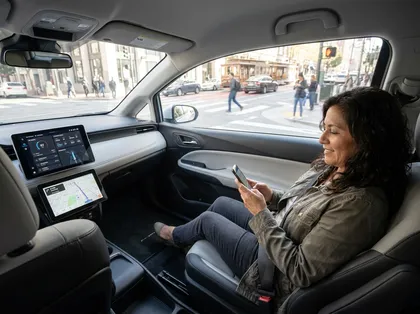
A human driver may be responsible if they:
- Fail to watch the road while using a Level 2 system.
- Ignore a clear and timely request to take control.
- Use the system outside the conditions approved by the manufacturer.
- Drive while distracted, impaired, or otherwise unsafe.
The driver’s responsibility may be reduced if the system malfunctions, provides an inadequate warning, allows too little time to respond, or prevents the driver from taking control. The available evidence and each party’s conduct determine the allocation of fault.
Passengers in driverless Level 4 vehicles generally have no duty to steer, monitor the road, or take control. Merely summoning the vehicle or entering a destination does not automatically make someone its operator.
However, a passenger may share fault if they:
- Tamper with sensors.
- Misuse the emergency controls.
- Override safety features.
- Intentionally interfere with the vehicle.
California law defines an operator as the person in the driver’s seat or, when that seat is empty, the person who causes the autonomous technology to engage.
The Vehicle Owner’s Responsibility
A vehicle owner may share responsibility if poor care or misuse caused the crash. Examples include:
- Fail to monitor the road while using a Level 2 system.
- Ignore a clear and timely request to take control of a Level 3 vehicle.
- Use the technology outside its approved operating conditions.
- Drive while distracted, impaired, or otherwise unable to respond safely.
- Disable or misuse required safety features.
Ownership alone does not always prove fault. However, an owner may be liable for negligent maintenance or misuse. Under California Vehicle Code §17150, vehicle owners may be liable if they let someone drive their car, and that person is negligent. There are limits and exceptions to this rule.
However, when liability is based solely on vehicle ownership and permissive use, not on the owner’s independent negligence, Vehicle Code §17151 generally limits the owner’s statutory liability to:
- $15,000 for injury or death to one person.
- $30,000 for injury or death to multiple people in one accident.
- $5,000 for property damage.
These statutory limits do not necessarily restrict liability based on the owner’s own negligent conduct. In a fully driverless crash, whether California’s permissive-use statutes apply may depend on whether a person was legally operating or using the vehicle, as well as on the specific facts of the case.
The Manufacturer’s Responsibility
A vehicle maker or tech company can be liable under California product liability law. This is a defect in a vehicle or automated system that causes an accident.
Under strict product liability, the injured person usually doesn’t have to show that the defendant was negligent. They must show that the product had a manufacturing defect, a design defect, or lacked proper warnings. That the defect existed when it left the defendant’s possession and that the defect was a substantial factor in causing the injuries.
Possible claims may involve:
- Design Defects: The system was unsafe despite being built as planned.
- Manufacturing Defects: A part was damaged, installed incorrectly, or built differently from its design.
- Software Defects: The system failed to detect, steer, brake, or respond safely.
- Failure to Warn: The company did not clearly explain the system’s limits or when the driver had to take control.
- Safety Violations: The company failed to comply with an applicable safety rule, contributing to the crash.
Starting July 1, 2026, AB 1777 allows police to issue a formal ‘Notice of Autonomous Vehicle Noncompliance’ to manufacturers. This happens when a self-driving car violates a traffic law while its automated system is on. The notice documents an alleged traffic violation. It does not prove civil liability or suggest that the autonomous vehicle was unsafe.
Strict liability doesn’t mean a manufacturer is always at fault if an autonomous vehicle crashes. To prove liability, you must show that the vehicle, automated driving system, or other product was defective and caused the crash.
The Seller’s Responsibility
Dealerships, retailers, distributors, suppliers, and other commercial sellers within a product’s distribution chain may face strict liability for defective vehicles or components. The injured person generally does not need to prove that the seller created or knew about the defect.
A claim generally requires proof that the product contained a manufacturing defect, design defect, or inadequate warning when it left the seller’s possession. The defect must also be a substantial factor in causing the person’s injuries.
Robotaxi Or Fleet Operator
The company that owns or operates a driverless fleet may be separate from the vehicle or software manufacturer. Its responsibilities may include vehicle maintenance, operating limits, dispatching, and remote operations support.
California distinguishes between remote drivers and remote assistants. A remote driver performs part or all of the driving task, including real-time steering, braking, or acceleration. A remote assistant provides information, advice, or revised goals but does not drive the vehicle.
A fleet operator may be responsible if it:
- Sends a vehicle into unsafe or unauthorized conditions.
- Operates outside the vehicle’s approved area or limits.
- Fails to inspect, maintain, repair, or calibrate the vehicle.
- Continues using a vehicle after learning about a safety problem.
- Provides inadequate remote driving or assistance systems.
- Poorly trains or supervises remote drivers, remote assistants, or safety drivers.
- Fails to remove a damaged or unsafe vehicle from service.
A remote driver’s unsafe maneuver or a remote assistant’s incorrect information may contribute to a crash. Depending on the facts, responsibility may extend to the worker, employer, manufacturer, fleet operator, or several parties.
Employer Of A Safety Driver Or Test Operator
An employer may be responsible when an employee causes a crash while doing a task within the scope of their employment.
An autonomous-vehicle company might share liability if an employee:
- Failed to monitor the road
- Ignored a takeover warning
- Broke company safety rules
The employer might be liable for negligent hiring, training, supervision, or retention. This happens if they put an unqualified or unsafe operator in charge of the vehicle.
Software Developers And Component Manufacturers
An autonomous vehicle relies on software and interconnected parts supplied by multiple companies. Depending on what failed, potentially responsible parties may include:
- Automated-driving software developers.
- Camera, radar, lidar, and sensor manufacturers.
- Steering, braking, or acceleration-system manufacturers.
- Mapping and routing providers.
- Companies that install or connect the automated system.
- Companies responsible for faulty software updates.
A company can be responsible if its product has a design or manufacturing defect. It may also be liable if it lacks clear warnings about the system’s limitations, among other reasons. A separate software or technology company can be liable based on its role. This includes designing, manufacturing, modifying, or controlling the vehicle.
Repair Shops And Maintenance Contractors
A repair facility, fleet-maintenance company, or calibration technician may share responsibility if improper work caused the automated system to fail. Examples include:
- Installing a sensor incorrectly.
- Failing to recalibrate a camera or radar system after repairs.
- Using a defective replacement part.
- Missing visible damage to safety equipment.
- Returning a vehicle to service despite a known problem.
The vehicle owner or fleet operator may also share fault if they failed to arrange necessary repairs or continued operating the vehicle after receiving a warning.
Government Entities
A city, county, state agency, or other public entity may share responsibility if a dangerous public condition contributed to the crash. Potential examples include:
- A malfunctioning traffic signal.
- Missing, damaged, or obscured signs.
- Dangerous road design.
- Inadequate construction-zone warnings.
- Poorly maintained pavement.
A dangerous road condition does not automatically make a public entity liable. The injured person generally must show that:
- The public property was in a dangerous condition at the time of the injury.
- The condition proximately caused the injury.
- It created a reasonably foreseeable risk of that kind of harm.
The claimant must also show the following:
- A public employee negligently or wrongfully created the condition.
- The entity had actual or constructive notice of it in time to take protective measures.
A publicly owned autonomous shuttle or vehicle may give rise to public entity liability if its operation was a substantial factor in causing an accident. However, ownership alone does not mean the vehicle is a dangerous condition of public property or automatically makes the public entity liable. Under California Government Code § 815, liability must be based on a specific statutory authorization, such as:
- Government Code § 815.2 (which allows liability when a public employee’s negligent act within the scope of employment causes harm)
- Government Code § 835 (which allows liability for a dangerous condition of public property)
and even when such a statutory basis exists, applicable immunities may still limit or bar a claim.
Ultimately, any claim involving a publicly owned autonomous vehicle will depend on whether the facts establish liability under an applicable statute and whether any governmental immunities apply.
Other Drivers, Pedestrians, And Cyclists
The manufacturer is not automatically responsible just because an autonomous vehicle was involved.
Another driver may cause or contribute to the crash by speeding, running a red light, making an unsafe turn, or changing lanes without care. A pedestrian or cyclist may also share fault if their actions contributed to the collision.
However, the automated system, manufacturer, or fleet operator may still share responsibility if the vehicle should have detected and safely responded to a reasonably expected road hazard.
Determining liability in a self-driving car crash often requires specific technical evidence. This data must be preserved as early as possible to avoid loss or overwrite.
A self-driving car accident lawyer can review the facts of your situation and discuss how to preserve key evidence to help build your claim.
Important Evidence Needed For California Autonomous Vehicle Claims
Technical evidence may be stored both inside the vehicle and on the manufacturer’s or fleet’s servers. Some videos, logs, and other records may have limited retention periods. Because of this, making prompt preservation requests is important. California requires qualifying autonomous vehicles to capture at least 30 seconds of specified pre-collision sensor data in autonomous mode, store it in read-only form, and preserve it for three years.
Claims involving self-driving cars often rely on specific types of proof, including:
- Event Data Recorder Logs: Crash-related information that may include vehicle speed, braking status, throttle input, restraint use, and changes in velocity.
- Autonomous-System Records: Records of steering, acceleration, braking, system status, takeover requests, and other actions performed by the automated-driving system.
- Sensor and Camera Footage: Data from the cameras and sensors built into the car.
- Software Performance Data: Records showing whether the self-driving system worked or failed before the crash.
- Internal Safety Reports: Files from the maker or tech company about known problems or safety warnings.
- Dispatch and Fleet Records: Records showing why, when, and where a fleet vehicle was placed into service, when available.
- Mapping and Routing Data: The high-definition map, routing information, geofencing restrictions, and map version used by the vehicle at the time of the collision, when applicable.
Seeing a doctor or chiropractor after the crash can also help tie your injuries to the accident. Medical records can be just as time-sensitive as digital data.
A car accident lawyer can help you understand your options before California’s filing deadlines arrive.
Time Limits For Filing An Autonomous Vehicle Claim In California
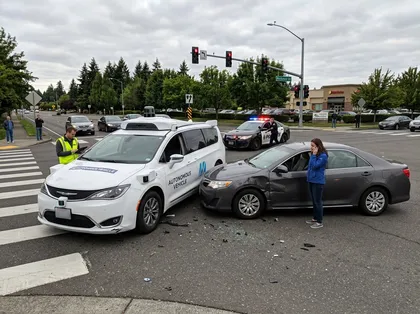
California law gives you two years from the date of your accident to file a personal injury lawsuit. This applies whether you are suing a tech company, a vehicle maker, or a private operator. Missing that deadline generally means losing your right to pursue compensation. Rare tolling exceptions may apply in some situations.
Under 13 CCR §§ 227.54 and 228.34, manufacturers testing or deploying autonomous vehicles in California must submit qualifying crash reports to the DMV using its electronic Collision Reporting Template. The applicable reporting deadlines and crash criteria follow NHTSA Standing General Order 2021-01.
A shorter government-lawsuit deadline may apply whenever the case alleges responsibility by a California public entity or employee, including claims involving a public vehicle or a dangerous road condition. Under California Government Code §911.2, you must first file a government tort claim, a written notice to the agency, within six months of when your cause of action accrues, which is often, but not always, the date of the incident.
If the agency delivers or mails a written rejection that complies with the Government Claims Act, the claimant generally has six months from that notice to file a lawsuit. If no compliant rejection notice is provided, a two-year deadline from accrual generally applies. Exceptions may alter these deadlines. Missing this step can block your claim against that agency, even if you file a lawsuit within the two-year window.
Frequently Asked Questions About Self-driving Car Accidents
The law governing self-driving cars in California is still changing. The rules covering insurance, fault, tech company liability, and legal fees for these vehicles can be confusing for many people. Below are answers to common questions after a self-driving car crash.
Can I Sue Waymo If Their Driverless Robotaxi Hits Me?
Yes. Depending on the facts, claims against Waymo may involve negligence, product liability, fleet-operation negligence, or other legal theories if Waymo or another responsible party contributed to the collision.
Does My Regular Auto Insurance Cover A Self-Driving Car Crash?
It may. Coverage depends on the policy terms, who owned and operated the vehicle, whether it was used personally or commercially, and how the accident occurred. A robotaxi or autonomous fleet may also be covered through the operator’s commercial insurance, bond, or self-insurance.
Can I File A Wrongful Death Claim If A Loved One Is Killed By An AI Vehicle?
Yes. If a loved one is killed in a crash with a self-driving car, certain family members may be able to file a wrongful death claim in California. You may name the company, the fleet operator, another driver, or any mix of parties who share fault.
California law limits who may bring a wrongful death claim. Eligible plaintiffs include a surviving spouse or domestic partner, children, and the issue of deceased children. If there is no surviving issue, people who would inherit under California’s intestate succession laws may qualify. Certain dependent putative spouses, stepchildren, parents, legal guardians, and qualifying minors may also have standing under Code of Civil Procedure §377.60.
Are Software Companies Liable For Hacking Or Cyberattacks On Autonomous Cars?
Not automatically. Civil liability for a cyberattack would still depend on the defendant’s role, a defect or unreasonable failure to use care, and whether that conduct caused the crash. A separate software developer is not automatically liable to the same extent as the automaker merely because its code contributed to the accident.
A third-party software developer is not automatically liable simply because its code contributed to a crash. Under California’s strict product liability law, liability may depend on whether:
- The developer supplied the software as part of the vehicle or automated-driving product.
- The software had a recognized manufacturing defect, design defect, or inadequate warning when supplied.
- The defect caused the collision.
CACI Nos. 1201, 1203, and 1205 recognize manufacturing defects, design defects, and failure to warn as strict product liability theories.
If the software developer and other defendants are found legally responsible for the same injury, California law may impose joint and several liability for economic damages. Non-economic damages are generally allocated according to each defendant’s proportionate share of fault.
Know Your Rights After A Self-Driving Car Accident
Determining who is responsible if a self-driving car is involved in an accident is often complicated. As more self-driving cars hit the roads, legal systems and laws will continue to adapt. Awareness of personal responsibilities, the importance of vehicle maintenance, and adherence to safety regulations will play critical roles in ensuring safety.
Self-driving accidents may be legally different from other vehicle collisions. Even when they generally rely on the same legal principles as other collisions, autonomous-vehicle claims may introduce additional regulations, defendants, and technical evidence. These claims often involve vehicle software, sensor data, and major tech companies. Acting quickly gives an attorney the chance to secure that data before it is overwritten or gone.
Our lawyers at Arash Law, also known as AK Law, have secured significant results in serious personal injury cases across California, including multi-million-dollar verdicts and settlements. We investigate how these accidents happen, identify who is at fault, and seek to hold those parties accountable.
While the examples below are not self-driving car cases, they reflect our approach to complex litigation involving corporate and government defendants:
- $17,900,000 — After years of litigation, we secured a unanimous $17.9 million verdict for our clients. One client faced a fractured tibia and a permanent brain injury, while the other had a sprained knee requiring therapy.
- $12,000,000 — This case settled right before jury selection, achieving $12 million for our 74-year-old client. She suffered severe injuries after being struck while crossing the street, necessitating extensive medical care.
- $10,000,000 — Our client, run over by a speeding vehicle, received $10 million in damages. We also ensured he received the best available medical treatment for his recovery.
Disclaimer: The results mentioned in these case summaries are based on specific circumstances and outcomes. Past performance does not guarantee future results, and every case is unique.
Call Arash Law at (888) 488-1391 to schedule a free case review.