TL;DR: Jaywalking is legal in California as of January 1, 2023, unless it creates an immediate danger of collision. Pedestrians can still be injured by drivers, and fault depends on careless behavior, so serious crashes can lead to liability claims in court.
Highlights:
- Use crosswalks at signalized intersections and obey walk/don’t-walk signs.
- Cross mid-block only when traffic is clear and no immediate collision danger.
- Stay on sidewalks; if none, walk near the road edge safely.
- Watch for turning vehicles and cars entering or leaving driveways.
- Pick well-lit crossing spots with clear visibility and enough time gaps.
- Avoid walking impaired; it increases risk and slows decision-making.
- After any pedestrian crash, seek care and document the scene promptly.
Tip: If a crash happens, take photos, collect witness contacts, and stick to facts when reporting.
Table of Contents
Is Jaywalking Legal In California?
The State of California, where Jaywalking Laws were first enacted, has now decriminalized it.
In the 1930s, the rapid adoption of automobiles influenced American society, leading to the development of highways and urban centers. While this era brought economic prosperity and improved transportation for goods, it also resulted in challenges involving people’s safety.
Pedestrian safety became a growing concern, particularly for children, as heavy vehicles crowded the streets. To address this issue and support smoother traffic flow, the government implemented laws against jaywalking.
While these laws contributed to reducing pedestrian accidents over time, they often placed responsibility on pedestrians rather than addressing driver negligence. Many states, including California, prioritized vehicle safety, which inadvertently perpetuated risky driving behaviors.
The initial solution created new problems and failed to resolve the issue regarding pedestrian safety entirely. Today, jaywalking laws persist, disproportionately impacting communities of color and highlighting systemic disparities. California Assemblyman Phil Ting of District 19 has introduced the Freedom to Walk Act to address these concerns.
If you or a loved one suffers from injuries after a pedestrian accident, Arash Law, led by Arash Khorsandi, Esq., offers necessary guidance, navigates legal complexities, and advocates for your rights. Call our experienced pedestrian accident lawyers at (888) 488-1391 for a free initial consultation.
What Is Jaywalking?
 Jaywalking is the act of crossing streets without following marked crosswalks, intersections, or traffic signals. This hazardous behavior may result in accidents, injuries, and, in some cases, fatal outcomes.
California Vehicle Code 21955 (CVC) provides that between adjacent intersections controlled by traffic control signal devices or by police officers, pedestrians shall not cross the roadway at any place except in a crosswalk.
California Vehicle Code 21956 (CVC) also states that:
- Pedestrians may only walk on a roadway within a business or residential district close to the left-hand edge of the road.
- A pedestrian may walk close to the right-hand edge of the roadway if a crosswalk or other means of safely crossing the roadway is unavailable or if existing traffic or other conditions would compromise the safety of a pedestrian attempting to cross the road.
Violations of these laws are considered jaywalking.
The Relaxation Of California’s Jaywalking Laws
You might wonder if Jaywalking is still illegal today. Well, recently, the Freedom To Walk Act, also known as AB 2147, was passed on October 1, 2022, by Governor Gavin Newsom. This law makes jaywalking in California legal as of January 1, 2023.
The Freedom to Walk Act was signed into law by Governor Gavin Newsom in September. Previously, pedestrians caught jaywalking faced fines of up to $250, often due to traffic officers’ interventions. It is important to note that under the new law, traffic officers cannot issue citations or take action unless an “immediate danger of collision” is evident, adhering to the principle of a “reasonably careful person.”
The Rationale For Passing The Freedom To Walk Act
 Assemblyman Ting believes that safely crossing streets shouldn’t be a crime. He argues that the costly fines and unnecessary encounters with law enforcement disproportionately impact certain areas, prompting a reevaluation of police resource allocation. Advocates of the bill point out that impoverished areas often lack the infrastructure for safe crosswalks, and decriminalizing jaywalking has successfully reduced citations for minorities and low-income individuals who struggle to pay fines.
In particular, the law addresses disparities in law enforcement’s application of these regulations. However, Los Angeles’ urban planning may not be optimal for pedestrian safety. While this step addresses injustices stemming from jaywalking laws, its impact on pedestrian safety remains to be seen.
The University of California’s Institute of Transportation Studies is partnering with the California Highway Patrol to assess the effects of jaywalking decriminalization. They will conduct a comprehensive study, with findings expected by January 1, 2028.
California is not the first state to decriminalize jaywalking. Data showed no significant impact on pedestrian traffic deaths throughout that year after Virginia implemented it in March 2021. Although Kansas City, Missouri, legalized jaywalking in 2021, there is not enough information to say whether it has affected pedestrian traffic safety.
The New Law Can Help Avoid Life-Threatening Situations
Supporters also claimed that the new law might prevent arrests for jaywalking from developing into possibly fatal police encounters, citing cases from recent years in Sacramento, San Clemente, and Oakland.
There were protests when a homeless man was killed by a police officer in San Clemente in September 2020 after the officer stopped him for jaywalking. Unfortunately, prosecutors decided not to charge the deputy.
An attorney for a civil rights group in the Bay Area said that under this law, police will no longer be able to issue citations and impose substantial debt on pedestrians. He said officers use jaywalking violations as a pretext to harass people, especially minorities and low-income people. The bill aims to put an end to that and make California safer for everyone.
In April 2017, A Del Paso Heights man was beaten by a Sacramento police officer after he was accused of jaywalking. The man received a settlement for a civil rights lawsuit against the city.
In a 1991 jaywalking case involving deceased rapper Tupac Shakur, Oakland police stopped him for jaywalking. According to reports, Shakur was choked, handcuffed, and tackled before going unconscious. Shakur filed a lawsuit against the Oakland Police Department, which was later resolved.
Additionally, decriminalizing jaywalking is intended to prevent police from using jaywalking charges as an excuse to harass people, particularly low-income and minority groups.
Did The Freedom To Walk Act Make Jaywalking Absolutely Legal In California Now?
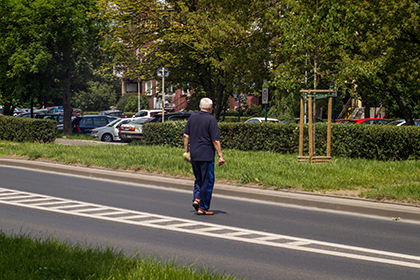 Americans highly value their freedom, and in 2023, Californians gained a little more thanks to AB 2147, also known as the Freedom to Walk Act. This law allows Californians to jaywalk without worrying about receiving a ticket as they are out on the streets.
According to CVC 21955, pedestrians can cross when it’s safe, and law enforcement will only step in if there’s an immediate collision risk. Californians now have the liberty to jaywalk without fear of law enforcement interference, but that doesn’t mean reckless crossing is encouraged.
Advocates of this new law see it as a victory for pedestrians, especially in low-income communities of color, where jaywalking citations are disproportionately issued. It’s also intended to encourage respectful interactions between motorists and pedestrians. However, it doesn’t absolve pedestrians from being prudent while navigating the streets or solve all the safety challenges we face on our roads.
Pedestrians must still exercise caution. It’s not a blanket ‘anything goes’ on the streets. In the event of an accident, a pedestrian accident lawyer can help you understand your options.
What Are The Penalties For Jaywalking In California?
Pedestrians must use crosswalks to cross intersections with traffic lights. Here are some instances when jaywalking is illegal:
- Crossing a street outside of a marked crosswalk.
- Crossing a road 15 feet away from a marked crosswalk.
- Crossing a roadway at a crosswalk when a light flashes, “Do not walk.”
A pedestrian caught jaywalking before the new jaywalking law took effect in January 2023 could be charged with an infraction and may be ordered to pay a fine of up to $200 plus court costs.
Safety Tips For Pedestrians
This new law will provide greater freedom to pedestrians on the streets in California.
The new law allows Californians to walk freely in the streets. It does not, however, exempt citizens from accountability for their actions. They still need to play a part in maintaining the safety of our roadways by maintaining safe walking practices despite the provisions of this new law.
Everyone is a pedestrian at some point, as the National Highway Traffic Safety Administration (NHTSA) stated. So, we should exercise caution when walking, just as we demand that drivers do so when driving.
Stay safe by following these steps based on the NHTSA pedestrian safety tips:
- Follow road rules, signals, and signs.
- Keep walking on sidewalks.
- Always use marked crossings or intersections.
- Look for cars coming from all directions, especially those making a turn.
- Look for a spot on the sidewalk that is well-lit and has a good view of the traffic if there aren’t any designated crosswalks or crossings. Wait for a chance in the traffic that gives you enough time to cross safely. When crossing a street, be aware of the traffic and maintain your visibility.
- Be aware of your surroundings. Be cautious of vehicles entering or leaving driveways and backing into parking spaces.
- If you’re drunk or otherwise incapacitated, don’t walk. These may impair your judgment and capacity to make decisions.
- Walking is an excellent mode of transportation that can be beneficial for your health. Walking outside is relatively safe, so go ahead and do it!
Seek Legal Support For Your Pedestrian Accident
 The Freedom to Walk Act may impact pedestrian accidents in California, but its actual outcome remains to be seen. It’s essential to remain vigilant and be prepared for whatever may come your way.
Accidents can happen right around the corner, even for innocent pedestrians. In that case, it’s beneficial to work with accident lawyers from Arash Law who stay current with recent law changes and evolving pedestrian traffic rules.
Our experienced California pedestrian accident lawyers at Arash Law can represent clients throughout California. We can review the specifics of your case and assist you with your legal needs.
Contact our pedestrian accident attorneys at (888) 488-1391 or fill out our “Do I Have A Case?” form to schedule a free initial consultation. Our car accident lawyers can help you explore your options for pursuing fair compensation.