TL;DR: Sprains, strains, and tears are the most common auto shop injuries based on available BLS data, with 2,130 cases reported among mechanics in 2020. These injuries often affect the hands and back from lifting and repetitive work. Customers and other visitors may also suffer harm from unsafe shop conditions.
Highlights:
- Sprains, strains, and tears are the most reported injuries.
- Document slip hazards, spills, tools, and warning signs immediately.
- Seek medical care and keep all treatment records.
- Identify who controlled or created the hazardous condition.
- Act within two years to file most personal injury claims.
- File a government claim within six months if the auto shop is publicly owned.
- Employees must report work injuries within 30 days.
Tip: Take photos of the scene and the equipment’s condition, and stick to clear facts when speaking with insurers.
Table of Contents
According to the Bureau of Labor Statistics (BLS), sprains, strains, and tears are the most common injuries among automotive service technicians and mechanics, accounting for 2,130 cases in 2020. Though this is the only available data on auto shop injuries, it’s important to note that these incidents can affect not only workers but also customers and other visitors.
Moreover, several types of injuries can occur in an auto shop. These include the following:
- Strains, sprains, and tears from heavy lifting and repetitive movements.
- Back and head injuries in cases of slip-and-falls.
- Burns from hot engines, oil, and chemicals.
- Crush injuries from falling heavy parts, tools, or vehicles.
- Cuts and lacerations from unsecured tools and machinery.
Under the state’s premises liability law, auto shop owners and managers in California must keep their properties reasonably safe for visitors. If dangerous conditions harm employees or customers, the auto shop’s owner or manager may face liability.
Common Injuries Victims Can Sustain In Auto Shops
Customers walking through an auto shop can suffer injuries when staff fail to fix or warn them about hazards. Employees can also get hurt if the shop fails to provide proper safety equipment or to enforce appropriate safety procedures. Due to risks like these, some of the most common auto shop injuries include:
- Sprains and Strains — Workers who lift heavy engines, tires, or parts can injure their backs, shoulders, or knees. Customers can also sprain or strain themselves if they slip while walking on slick floors.
- Fall Injuries — Oil, grease, water, or tools on the floor can create slipping hazards. Slip-and-falls can cause broken bones, head trauma, or bruises. Victims may also sustain spinal cord injuries, which can potentially lead to paralysis in severe cases.
- Repetitive Motion and Muscle Injuries — These injuries primarily affect workers. Doing the same movements repeatedly may cause soreness or numbness in the hands and arms.
- Cuts and Lacerations — Sharp tools, metal parts, and broken glass can cut workers and customers alike. Even minor cuts can become serious if untreated.
- Burns — Solvents and fluids can burn both workers and customers if they are accidentally touched. Engines and exhaust systems stay hot even when turned off, posing a risk of burns. There is also a risk of electric shocks or arc burns when handling batteries, wiring, or sensors.
- Eye Injuries — Flying sparks, dust, or chemical splashes can cause eye damage. Customers can be injured if proper barriers or warning signs are missing. Workers can be injured if employers fail to provide appropriate protective gear.
Typical Injury Risks In Auto Shops
The dangerous conditions that cause the most common auto shop injuries often arise from everyday tasks. People in these shops can get injured due to:
- Chemicals — Auto shops use a wide range of chemicals to maintain and repair vehicles. However, these substances and their fumes can affect both workers and visitors. Chemical exposure can lead to:
- Skin Irritation — Contact with oils, grease, brake fluid, cleaners, and chemicals, such as paint thinners, can cause rashes or itchy skin.
- Eye Irritation — Fumes, dust, or splashes from solvents and cleaners can make eyes red or sore.
- Burns — Some chemicals cause burns if they come in direct contact with the skin.
- Respiratory Issues — Fumes from paints, spray coatings, and solvents can lead to asthma and other respiratory conditions. Their long-term effects aren’t usually apparent right away.
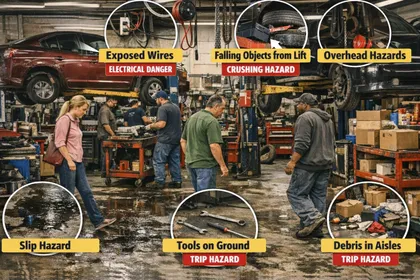
- Slip Hazards — Floors cluttered with tools, exposed wires, or spilled oil can cause workers or customers to slip, fall, and get injured.
- Heavy Machinery — These can result in catastrophic injuries if employees misuse them or operate them without sufficient safety gear. They could also fall on and injure customers if they’re not properly secured.
- Loud Noises — Workers repeatedly exposed to loud noises from tools, machinery, or explosions could develop hearing loss if employers don’t provide ear protection equipment.
Employers, property owners, and workers all share responsibility for eliminating these hazards to prevent harm. Premises liability attorneys consider whether safety precautions were in place in these cases. If they weren’t and negligence was involved, victims may be eligible to pursue compensation for their losses.
How Can Auto Shop Injury Victims Seek Damages?
In California, negligence is a legal concept that often serves as the basis for liability. In other words, injured victims could seek compensation for their losses if someone else caused their injuries. After an auto shop injury, they could file an insurance claim to recover the costs of:
- Medical Expenses — Depending on the extent of their injury, victims may incur costs related to urgent care, hospital stays, and treatments such as physical therapy, chiropractic care, and surgery.
- Lost Income — Victims can seek compensation for the wages they can’t earn during their physical recovery. If an injury affects their ability to work long-term, they can also factor reduced earning capacity into their claim.
- Out-of-Pocket Costs — These can include miscellaneous injury-related costs, such as expenses for:
- Home or child care.
- Transportation to medical appointments.
- Home modifications and medical equipment.
- Non-Economic Damages — These are intangible losses that victims experience as a result of their injuries. They may include pain and suffering, emotional distress, and loss of quality of life, among others.
However, the methods available to victims for seeking damages will depend on their situation. An injured customer will typically have different options than an injured auto shop employee. To outline their next steps, lawyers who handle premises liability cases usually assess why they were on the premises, the circumstances of the incident, and the factors that contributed to the injury.
| Who Can Be Involved In An Auto Shop Claim? | What Were They Doing On The Property? | How Could They Have Contributed To The Injury? |
|---|---|---|
| Customers | Dropping off or picking up vehicles, waiting in service areas, or walking through the premises. | They ignored safety warnings. |
| Auto Shop Workers | Performing vehicle repairs, maintenance, diagnostics, and shop operations. | They failed to address hazards or warn visitors about them. |
| Suppliers and Delivery Drivers | Delivering parts, tools, fluids, tires, or other materials. | They ignored safety warnings or created hazards while at the auto shop. |
| Government or Safety Inspectors | Assessing the safety of the premises in line with local, state, or federal laws. | |
| Independent Contractors | Accomplishing outsourced tasks, as some jobs may require the assistance of third-party mechanics, electricians, cleaning crews, IT technicians, or equipment repair specialists. | |
| Tow Truck Operators | Bringing vehicles for repair or retrieving them. | |
| Insurance Adjusters | Inspecting vehicles or assessing damage claims. |
California also follows a pure comparative negligence rule. Under it, multiple parties may share fault for an injury.
For example, a slip-and-fall occurred in an auto shop. A supplier who spilled some of the motor oil it was delivering may have created the hazard. However, auto shop owners, managers, and employees could share liability for failing to spot and address the dangerous conditions arising from the spill.
Even if the victim is partially at fault, they may still be able to seek compensation for their losses. However, an insurer or court could reduce their total damages. To illustrate, consider a scenario in which a customer slipped, fell, and was injured because they ignored warnings about the spilled motor oil. If they are found to be 15% at fault, they may only pursue 85% of their total damages.
Options For Injured Customers Or Non-Employees
Under California premises liability law, property owners and operators must maintain a reasonably safe environment for lawful visitors. If hazardous conditions exist in an auto shop, injured non-employees may have legal options. However, they must be able to prove that the at-fault party caused their injuries.
General negligence is often the basis of liability in California. A key issue in many premises liability cases is notice. The injured party must show that the owner:
- Actually knew about the dangerous condition.
- Should have known about it through the exercise of reasonable care.
In other words, it is not enough that a dangerous condition exists. After getting injured on someone else’s property, you need to provide evidence that the business or property owner failed to take reasonable steps to inspect, repair, warn, or fix the hazard. These are the common reasons why premises liability can be challenging. Victims may be able to determine whether they have a case by seeking free advice from car accident lawyers.
If the legal aspects of notice and negligence are present and attorneys confirm that an injured victim has a case, they could file:
- An Insurance Claim — Many businesses carry Commercial General Liability (CGL) insurance. If the auto shop carries this coverage, the victim may be able to file a claim against it. If the claim gets accepted, the victim may receive a settlement offer. However, whether CGL insurance applies depends on the policy’s limits, its terms and conditions, and the circumstances of the injury.
- A Personal Injury Lawsuit — Taking further legal action may be an option if:
- There are disputes over liability.
- A victim’s injury-related losses exceed policy limits.
In California, if a victim pursues a legal claim for an auto shop injury, they generally have two years from the date of the injury to file their case. For delayed discovery of injuries, this time limit may be adjusted. If the auto shop is government-owned (e.g., a fleet maintenance facility), the victim must first file an administrative claim within six months. They can only sue if their claim gets rejected or if they don’t receive a response within 45 days.
Several individuals or entities may also share liability for an auto shop injury. In these cases, California’s comparative negligence rule would apply. A lawyer can assist you with the claims process if you have to pursue compensation from multiple at-fault parties and insurers as a result.

Options For Injured Auto Shop Employees
While there may be some overlap with claims filed by injured visitors, auto shop employees, such as mechanics and technicians, may have additional avenues for recovery.
Workers’ Compensation Claim
In California, the Division of Occupational Safety and Health (Cal/OSHA) sets and enforces safety standards that businesses must follow. If an injury occurs because an auto shop failed to comply with these regulations, workers’ compensation may apply.
This type of insurance covers injuries sustained on the job. Here’s how the claims process typically proceeds:
- Notice Deadline — Employees must notify their employer of a work-related injury within 30 days. Prompt notification is essential to avoid eligibility issues.
- Form Submission — The injured employee fills out and submits the Workers’ Compensation Claim Form (DWC-1) provided by their employer. This document officially records the injury and begins the claims process.
- Claim Filing — The employer fills out the DWC-1’s “employer” section and forwards the form to its insurer.
- Insurance Review — The insurer assesses the claim and informs the injured employee of its status within two weeks.
If your employer’s insurance company accepts your claim, it may provide:
- Medical Benefits — Coverage for necessary medical treatment. These may include:
- Doctor visits
- Hospital care
- Surgery
- Prescription medications
- Physical therapy
- Medical equipment related to the work injury
- Disability Benefits — Partial wage replacement if the employee cannot work due to the injury. In California, disability benefits are usually calculated based on the severity of the injury and the employee’s wages before the incident. They may then cover:
- Temporary Disability (TD) — For workers expected to recover and return to work.
- Permanent Disability (PD) — For workers whose injury results in lasting limitations, reducing their ability to perform the same job and earn the income they did before.
- Vocational Support — Assistance for employees who cannot return to their previous job due to their injury. These can include the following:
- Retraining and/or job placement services.
- Help in finding suitable work that accommodates the injury.
- Death Benefits — If the injury led to a fatality, eligible surviving family members may seek these benefits through a workers’ compensation claim.
Third-Party Personal Injury Claim
In certain situations, injured employees may be able to file one if:
- Other Parties Caused Their Injury — For example, a defective tool or machine could make the manufacturer or distributor liable. Likewise, if a third party negligently maintains the premises and causes an injury, they could also face liability.
- Workers’ Compensation Insurance Isn’t Available — If the auto shop does not carry workers’ compensation coverage, the employee may be able to pursue damages directly from the business for work-related injuries.
- Their Employer Violated Work Safety Regulations — Both the federal Occupational Safety and Health Administration (OSHA) and California’s Cal/OSHA have specific regulations that auto shops and similar businesses must follow to maintain a safe workplace. If employees get injured because auto shops fail to comply with safety rules, they may face fines, penalties, or legal liability.
In some cases, an injured employee may file a personal injury claim rather than seek workers’ comp benefits. In others, they may be able to pursue compensation from both simultaneously. This scenario could occur if their injuries result in both economic damages, such as medical bills, and non-economic damages, like pain and suffering. Since workers’ comp doesn’t cover intangible losses, filing a third-party personal injury claim may be necessary.
Given these potential complications, thinking “I need a personal injury lawyer” after getting hurt at an auto shop makes sense. With different options available to auto shop injury victims, the claims process can become overwhelming.
Frequently Asked Questions About Auto Shop Injury Incidents
Below are answers to some common questions asked by individuals who sustained auto shop injuries. If you have questions specific to your situation, consulting a personal injury attorney may be helpful.
What Is The Most Common Injury In An Auto Shop?
A BLS report on auto shop accidents found that sprains, strains, and tears are the most common injuries among automotive mechanics. In 2020 alone, there were 2,130 reported cases of these injuries. The report also noted that the hands and back are the most frequently affected body parts. However, these findings apply only to employees in the automotive industry and do not include data about customers or other visitors.
Does Workers’ Compensation In California Cover Auto Shop Workers?
Yes. California employers generally must carry workers’ compensation insurance. This coverage aims to protect workers who suffer injuries or become ill as a direct result of their job. For auto shops, possible claimants may include auto repair shop workers and mechanics, as well as other automotive technicians. The workers’ compensation system provides quick access to medical care and financial support.
How Much Does It Cost To Hire A Lawyer After An Auto Shop Injury?
The actual cost of legal representation depends on several factors. If the case is complex and may require litigation, the resources required may be greater, and hiring a lawyer may also become more expensive.
However, some injury law firms, such as Arash Law, work on a “no win, no fee” basis or contingency fee arrangement. One common question about this policy is, “Do lawyers only get paid if they win?” Generally, the answer is yes, as attorneys who offer contingency fees are paid only if they obtain compensation for the case.
Consider Legal Representation After An Injury In An Auto Shop
Suffering an injury in an auto shop can result in significant losses, including medical expenses, lost wages, and other related costs. Whether you are a customer, employee, or visitor, you may pursue compensation for your injuries.
Our premises liability lawyers at AK Law can explain your possible legal options after an auto shop injury. We can assist in investigating the case and determining whether negligence contributed to the incident. Call us at (888) 488-1391 for a free case review.