TL;DR: Yes, you may be able to sue a restaurant for food being too hot if it caused serious injuries. The restaurant may be liable if it negligently served or failed to warn customers about unreasonably hot food. Proving negligence and causation is necessary to establish liability.
Highlights:
- Seek medical help immediately if the burn is severe or spreading.
- Inform the restaurant and ask for a written incident report.
- Take photos of the burn, the food, the container, and the surrounding area.
- Keep evidence like packaging, receipts, and damaged clothing.
- Ask any witnesses for their contact information to support your claim.
- Consult a burn injury lawyer who can help you navigate the legal process.
Tip: Stick to the facts when reporting the incident to avoid confusion or unnecessary complications.
Table of Contents
In California, you may have a claim against a restaurant if you suffered serious injuries from unreasonably hot food or drinks. However, you must prove that the restaurant acted negligently, resulting in your injuries. In other words, it failed to take reasonable steps to prevent harm.
If a burn occurs in a restaurant or similar setting, it may fall under the state’s premises liability law. It requires businesses to maintain a reasonably safe environment for their customers. Those diners can sustain injuries if food or drinks are served at unsafe temperatures or handled carelessly. These can range from minor discomfort to third-degree burns that require medical treatment and cause lasting damage.
A restaurant may be responsible if:
- A drink or food item is served at an unsafe temperature.
- Proper warnings are not given when something is extremely hot.
- A staff member spills or mishandles hot food or beverages.
- Damaged or unsuitable containers cause spills, leading to burn injuries.
- A hot surface is not properly marked or protected in customer areas.
Not every burn leads to a legal claim. To have a valid case, you generally need to show that negligence caused the injury, not just the natural heat of the food or drink. The outcome often depends on the specific facts of the incident.
What Makes A Restaurant Legally Responsible For Food That Is Too Hot?
A restaurant is not automatically liable just because the food or coffee was hot. Hot food is expected to be hot. The legal issue is whether the restaurant created unreasonable burn risks by preparing, packaging, carrying, or serving the item in an unsafe manner. They may have also failed to warn you about how hot the food was.
California’s standard of care determines whether the business acted reasonably under the circumstances. Under it, victims generally need to prove four things to establish liability:
- Duty of Care: The restaurant had a legal duty to serve customers in a reasonable manner to prevent harm.
- Breach of Duty: It failed to uphold this duty. Negligence can mean:
- Serving food at unsafe temperatures.
- Poor handling.
- Weak packaging.
- No warnings.
- Other careless actions.
- Causation: That failure caused the burn.
- Damages: You suffered losses such as medical bills, pain and suffering, lost income, or scarring.
Is There A Legal Temperature Limit For Coffee Or Hot Food?
There are no regulations that set a maximum serving temperature for food or drinks. Food safety rules recommend maintaining the internal temperature of hot foods at 135°F or higher to prevent the growth of harmful microorganisms. However, this is not meant to serve as a safe serving temperature for consumers.
While there is no legal maximum, very high temperatures can still pose a risk of burns, especially with liquids. That risk is what can create liability, not just whether the item was hot enough to meet food safety standards. Burn injury lawyers work with qualified experts to assess whether the temperature of the food or beverage was excessively high and posed an unreasonable risk of causing burns.
What Types Of Situations Can Lead To Restaurant Liability?
A valid claim can arise from more than one kind of situation. Strong cases usually involve facts that show the restaurant increased the risk beyond what a customer reasonably expects.
Situations that may lead to restaurant liability include the following:
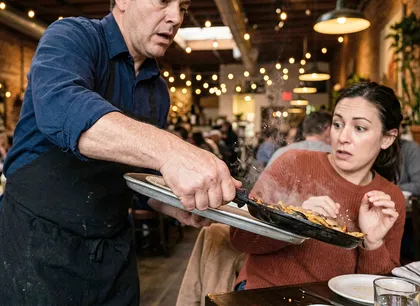
- A server spills hot coffee, tea, soup, or oil on a customer.
- A cup, lid, tray, or bag fails, causing the contents to spill.
- A broken table, unstable tray stand, or floor hazard contributes to the spill.
- A dish is served at a dangerously high temperature without adequate warning.
- A sizzling plate or flaming item is mishandled near a customer.
- An improperly secured hot food or drink from a drive-thru spills on the driver.
- Takeout packaging that does not properly seal or stabilize hot items in bags results in spills during transport.
One notable recent example of this is a 2020 Starbucks negligence lawsuit in Los Angeles. The case arose after one of the chain’s workers poorly secured a hot beverage before handing it over to a Postmates driver at a drive-thru. The drink then spilled onto the driver’s lap, resulting in catastrophic burns, lasting nerve damage, and emotional distress.
Some cases also fall under premises liability, especially when a business fails to keep the property reasonably safe. This distinction matters when something in the restaurant, not a food or drink, causes the burn. It could be a slippery floor, wobbly furniture, or an unsafe service area, not just the food’s temperature.
For example, a customer might slip on a spill while carrying hot food and suffer burns. Premises liability attorneys can assess the situation and determine whether a safety hazard caused the victim’s injuries.
What To Do If You Get Burned Due To A Hot Food Or Drink
Seek medical care immediately. Scald burns from hot liquids or steam can worsen quickly. Deeper burns can leave scarring or require longer treatment if they are not handled properly. After getting initial treatment, you can start gathering evidence of the incident.
Consider the following steps:
- Get Medical Care: Seek medical help if the burn is severe, blistering, spreading, or involves the face, hands, feet, genitals, or major joints.
- Inform the Restaurant: Tell the manager what happened and ask for a written incident report.
- Take Photos as Evidence: These can include the burn, the food or drink, the container, the table, the floor, and any warning labels.
- Keep the Evidence: Useful evidence for these restaurant accidents includes the cup, lid, tray, bag, receipt, damaged clothing, or anything that shows the food was too hot and that you sustained injuries.
- Get Witness Names: If other customers or staff saw the spill or serving issue, ask them for their contact information. Their statements may support your claim.
A burn injury case ultimately depends on whether the establishment served the item in a manner that was unreasonably dangerous to the customer, not just because the item was too hot. Children are particularly vulnerable in these types of restaurant incidents.
What Evidence Matters Most In A Hot Food Burn Case?
Early photos, preserved packaging, witness names, and medical records are extremely important. In a civil case, the “burden of proof” rests on the injured victim. That means showing that your version is more likely to be true than not.
The strongest evidence often includes:
- Injury Photos: Images from day one through the healing process.
- Scene Photos or Video: Visuals of the table, counter, floor, and surrounding area.
- Packaging Evidence: The container, lid, cup, bag, tray, or soup container involved.
- Receipt and Order Details: Proof of being at the restaurant and ordering the specific item.
- Incident Report: Documentation showing the timeline of what happened.
- Witness Statements: Accounts from people who saw the incident.
- Surveillance Footage: Video from cameras covering the area where the incident occurred.
- Medical Records: Initial treatment and follow-up notes that show the severity of the injuries.
Burn injury attorneys can help obtain evidence that victims may not have access to. They can also make a formal request to keep video footage and related incident evidence.
Who May Be Liable For A Restaurant Burn Injury?
When determining liability, the law looks at who had control over the situation and whether they took reasonable steps to keep others safe. In a burn injury case involving excessively hot food, a restaurant is typically liable. In practice, however, more than one party may be legally responsible.
Depending on how the incident happened, liability may extend to:
- Restaurant Owner or Operator: If they allowed food or drinks to be served in a way that created an unreasonable risk of burns.
- Employee: If their actions while working caused the injury.
- Property Owner or Manager: If a dangerous condition on the premises contributed to the burn.
- Manufacturer: If a defective cup, lid, tray, heater, or product failed and caused the injury.
- Franchise Entity: If its level of control over operations is sufficient to support responsibility.
Each case is different, and liability can be complex depending on the specific facts involved. In some cases, you might even share fault for your burn injuries. California’s pure comparative negligence rule allows courts to find multiple parties liable, including injured victims. Though shared fault won’t block your case, it can reduce your compensation.
For example, suppose a court finds you 40% liable because you carelessly handled the food that burned you or ignored warnings about how hot it was. If your total damages are $100,000, the court can deduct 40% and only award you $60,000.
Due to the complexity of these cases, some victims seek free advice from a burn injury lawyer to help them identify potential liable parties.
What Injuries Can Hot Food Or Drink Cause?
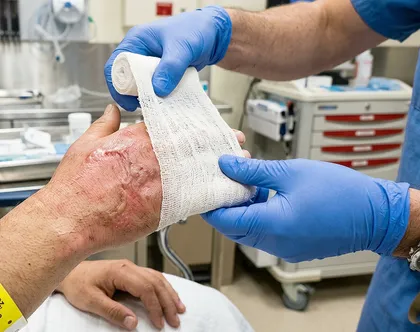
Restaurant burn cases are not limited to a burnt tongue or a small red patch. Scalds from hot liquids or steam can happen in seconds and range from mild to severe burns. The level of severity matters because it helps show how serious the injury is and what kind of medical care may be necessary:
- First-Degree Burns: Red, painful, and no blisters.
- Second-Degree Burns: Blisters, swelling, and pain.
- Third-Degree Burns: White, charred, or leathery. These often need medical care, including skin grafts.
In a restaurant case, burn injuries may include:
- Facial burns or eye injuries.
- Scarring and skin discoloration.
- Nerve symptoms or numbness.
- Infection risk.
- Stress, embarrassment, or emotional distress from visible injury.
Aside from burns, people also sustain other injuries in restaurants, including wrist sprains, shoulder strains, or back pain. These injuries often occur from slipping, jerking, or falling. In those cases, treatment may extend beyond burn care to include follow-up evaluation, therapy, or chiropractic care, as medically appropriate.
What Compensation May Be Available After A Restaurant Burn?
Your compensation should reflect the full extent of the harm, not just the initial emergency visit. A serious burn can involve wound care, specialist visits, missed work, scar treatment, and long-term emotional effects. Deep burns may also require surgery or skin grafting.
Compensation may include:
- Medical Bills: Costs of emergency care, treatment, and hospital visits for burn injuries.
- Lost Wages: Income lost while recovering from the burn injury.
- Reduced Earning Ability: Long-term impact on the ability to work or earn the same income. Burns that cause mobility problems or facial scars can limit job options. That’s especially true for careers that rely on physical appearance and ability, such as modeling or construction work.
- Pain and Suffering: Physical pain can range from immediate, intense burning sensations at the time of the incident to ongoing discomfort during healing.
- Emotional Distress: Psychological effects such as anxiety or trauma from the incident.
- Scarring and Disfigurement: Lasting changes to appearance caused by burns.
- Out-of-Pocket Costs: Extra expenses related to recovery that are not covered elsewhere. These can include transportation to medical appointments, prescription medications, bandages, and wound care supplies, or hiring help for daily tasks while recovering.
If the defense argues that you contributed to the incident, you need clear proof to challenge their arguments. If they prove shared responsibility, your percentage of fault reduces your potential recovery. Such cases depend heavily on the facts and the quality of the evidence.
How Long Do You Have To Sue A Restaurant In California?
In California, you generally have two years to file a personal injury lawsuit. Under Section 335.1 of the state’s Code of Civil Procedure, a person injured because of someone else’s negligence must file a claim within that time. When the injured person is a minor, the two-year deadline generally does not begin until the minor turns 18.
That said, you should not wait. Over time, important evidence can be lost or destroyed.
- Security footage can be deleted.
- Employees and witnesses may leave the premises.
- Incident reports can become harder to obtain.
- Key physical evidence may be lost or removed during cleanup.
Burn injury lawyers can help preserve available evidence. They can also work with professionals to gain a better understanding of the incident and its potential impact on your life.
Frequently Asked Questions About Suing Restaurants For Food Burn Injuries
It is normal for people to have legal questions after suffering burn injuries from hot food at a restaurant. The sections below address some of these common concerns.
Can I Sue A Restaurant If I Spilled The Hot Food Or Drink On Myself?
Possibly. The key question is whether the restaurant still created an unreasonable risk. A weak lid, a flimsy bag, an unstable tray, a lack of warning, or excessive heat can still support a claim even if the final spill occurred in your hands.
If the incident happened only because of your own handling and the restaurant did nothing negligent, then the case can be harder to prove.
What If I’m A Restaurant Worker Who Got Burned?
The legal process is usually different when the injured person is a worker. In California, workplace injuries are generally handled first through the workers’ compensation system. It provides medical care and other benefits after a job-related injury.
However, the analysis does not always end there. If a third party, such as a landlord, outside contractor, equipment manufacturer, product supplier, or customer, played a role in causing the injury, a separate third-party claim may still be possible. The exact legal options depend on the specific facts of the situation.
What If The Restaurant Warned Me That The Food Was Hot?
A warning helps the defense, but it does not automatically end the case. The warning must be adequate, and the restaurant must still serve the item in a reasonably safe manner. A business may still face liability if the food or drink was dangerously hot, poorly packaged, or handled carelessly despite the warning.
What Affects The Value Of A Restaurant Burn Injury Case?
Burn severity is the biggest factor that can influence the value of a restaurant burn injury case. Generally, more serious burns require more medical care. You may also experience more pain and suffering and take more time off work. You may have the right to pursue a greater amount of compensation to cover these more extensive losses.
However, insurers are more likely to dispute high-value cases, so be sure to provide exhaustive medical documentation to justify the severity of your burns, the treatments you needed to heal, and the losses you incurred as a result.
Do I Need To Keep The Cup, Container, Or Receipt?
Yes, if you still have them. The physical container, lid, bag, tray, and receipt can help show how the item was packaged, labeled, and served. Even if you no longer have the product, photos, witness names, or medical records, they can still support your claim.
When Do I Need An Attorney?

Some victims think, “I need a personal injury lawyer to handle my case,” if their claim is challenging. Most often, these cases involve serious injuries, significant losses, and complex questions about who is responsible. In restaurant burn cases, it can be difficult to show that the restaurant acted negligently without strong supporting evidence. Certain types of evidence may be necessary to build the claim, and a burn injury attorney can help identify and gather that information.
How Much Do Lawyers Charge For Burn Injury Cases?
The cost depends on the time and effort required for the case. More complex cases usually require more resources, thereby increasing legal costs. Another factor is how the lawyer structures their fees, such as whether they charge by the hour or on a contingency basis.
However, if you’re asking, “Do lawyers only get paid if they win?”, know that injury law firms like Arash Law work on a contingency fee basis. Under this arrangement, you only pay the attorney’s fees if they obtain compensation for you. The exact terms depend on the written fee agreement.
Get Legal Guidance After Sustaining Food Burn Injuries At A Restaurant
Not every hot food or hot drink injury will justify seeking compensation. However, a serious burn caused by careless serving, unsafe packaging, poor warnings, or a spill hazard can support a claim. The stronger your proof, the better you can show that the restaurant created an unreasonable risk and that the injury caused real losses.
If you are dealing with a serious burn, visible scarring, missed work, or an insurer that is already asking questions, our burn injury lawyers at AK Law can provide legal support. We can review the details of your case and help you understand your possible next steps.
Call us at (888) 488-1391 to schedule a free initial consultation.