TL;DR: DUI accidents in Orange County occur mostly on Beach Blvd. (SR-39), Chapman Ave., SR-91 in Anaheim, and PCH. These accidents mostly occur on weekend nights, especially from midnight to 3 a.m. Injured drivers, passengers, or pedestrians can face costly medical bills or lost pay, and they need time-sensitive evidence to prove fault and seek compensation.
Highlights:
- Plan transportation before drinking: rideshare, designated driver, Orange County Transportation Authority (OCTA) bus, or a nearby hotel stay.
- Be extra alert on Beach Blvd – SR-39, Chapman Avenue, SR-91, and Pacific Coast Highway, especially late at night.
- Limit late-night weekend driving when possible, particularly between midnight and 3 a.m.
- If you see a driver who appears impaired, create distance, pull over safely, and call 911.
- After any crash, call 911 or the California Highway Patrol (CHP) and save the police report number.
- Get medical care promptly, as physician and chiropractic treatment records both help document your injuries for a claim.
- If you decide you need a personal injury lawyer, Arash Law offers a free consultation. Ask about the contingency fee arrangement.
Tip: Preserve photos, receipts, and repair estimates from day one, and give only factual, brief responses to any insurer until you speak with an attorney.
Table of Contents

DUI crashes in Orange County do not follow a random pattern. They concentrate on specific roads at specific hours in places where nightlife, beach tourism, and freeway traffic intersect. Based on Arash Law’s analysis of 2024 California Highway Patrol crash records, Beach Boulevard in Huntington Beach, Chapman Avenue in the City of Orange, and the SR-91 corridor through Anaheim were the top Orange County roads with recorded DUI-involved crashes. Understanding the patterns on these roads gives you a practical advantage, whether you are trying to avoid a dangerous stretch of road or trying to understand the evidence that may matter most if a drunk driver has already injured you.
A DUI crash is legally distinct from a standard car accident. The driver decided to operate a vehicle while impaired, and California law may allow an injured person to seek punitive damages in addition to the usual economic and emotional losses. The criminal case against the driver proceeds separately and does not need to be resolved before you can move forward with a civil injury claim.
The data below comes from the California Highway Patrol’s 2024 California Crash Reporting System (CCRS), the official statewide crash database. Statewide context draws from UC Berkeley SafeTREC and Federal FARS data. Both datasets are publicly available and updated regularly. Arash Law monitors them to keep this information current.
Where Most Orange County DUI Accidents Happen
Orange County’s DUI crashes are not spread evenly across the road network. They cluster along corridors that combine high traffic volume, commercial activity, and late-night destinations. Heavy traffic on these roads creates more opportunities for impaired drivers to collide with other vehicles after dark.
The table below lists the Orange County roads that recorded the highest number of DUI-involved crashes in the California Crash Reporting System (CCRS) 2024 data. Each entry identifies the road and the city where those crashes were recorded.
| Road / Corridor | City |
|---|---|
| Beach Blvd (SR-39) | Huntington Beach |
| Chapman Avenue | Orange |
| SR-91 Eastbound (Riverside Freeway) | Anaheim |
| Pacific Coast Highway (SR-1) | Huntington Beach |
| Newport Boulevard | Costa Mesa |
| SR-91 Westbound (Riverside Freeway) | Anaheim |
| Lincoln Avenue | Anaheim |
| Ball Road | Anaheim |
| Harbor Boulevard | Fullerton |
| La Palma Avenue | Anaheim |
The CCRS data for Orange County shows that Beach Boulevard (SR-39) recorded the most DUI-involved crashes of any road in the county. Multiple corridors in the Anaheim area appear on this list, reflecting the city’s concentration of entertainment venues, hotels near Disneyland Resort, and freeway interchanges.
Both the eastbound and westbound lanes of SR-91 appear separately because the CCRS records crashes by travel direction. Each direction is treated as a separate roadway segment, allowing analysts to identify where crashes occur more frequently. The fact that both directions appear on the list indicates that DUI-involved crashes were recorded often enough in each direction to rank independently.
Chapman Avenue in the City of Orange runs east-west through a mix of commercial corridors and residential neighborhoods, connecting Orange to Anaheim and Garden Grove. Its placement near the top of this list reflects the volume of late-night traffic between restaurants, bars, and nearby entertainment districts.
The Pacific Coast Highway through Huntington Beach and Newport Beach carries a mix of local residents, tourists, and rideshare traffic. Traffic volumes often increase during summer weekends and other peak travel periods. The higher traffic volume may increase drivers’ exposure to impaired motorists.
When DUI Crashes Are Most Likely In Orange County
Weather and lighting conditions help provide context for when DUI crashes occur. The CCRS 2024 data for Orange County shows that weather conditions play a much smaller role than many people assume. Road conditions and visibility are rarely the primary factor. Driver impairment is.
The table below shows how Orange County drunk driving accidents break down by weather condition in the CCRS 2024 dataset.
| Weather Condition | Relative Frequency |
|---|---|
| Clear | Highest |
| Cloudy | Moderate |
| Raining | Low |
| Fog / Reduced Visibility | Rare |
| Other | Rare |
Clear weather accounted for the vast majority of DUI crashes in the Orange County CCRS dataset, far more than rainy or foggy conditions combined. That distribution does not mean clear days are more dangerous per se. It reflects that most driving happens in clear conditions. The 2024 CCRS counts show that most recorded Orange County DUI-involved crashes occurred in clear weather. These counts do not measure crash risk per mile driven under each weather condition or establish whether weather contributed to an individual crash.
Lighting conditions in the Orange County CCRS records show that crashes under dark conditions with functioning street lights far outnumber those in daylight. The lighting breakdown is below.
| Lighting Condition | Relative Frequency |
|---|---|
| Dark – Street Lights | Highest |
| Daylight | Moderate |
| Dark – No Street Lights | Low |
| Dusk / Dawn | Low |
| Dark – Street Lights Not Functioning | Rare |
The nighttime predominance in Orange County’s crash records aligns with the UC Berkeley SafeTREC Traffic Safety Facts report published in 2024, which primarily analyzes California and national crash data from 2022.
That California statewide report consistently identifies late-night hours, particularly the midnight-to-3 a.m. window on weekend nights, as carrying the highest concentration of alcohol-involved fatal crashes. Those are California statewide figures, not Orange County-specific, but they are consistent with what the local CCRS lighting data shows: nighttime driving carries a disproportionate DUI crash risk, even on well-lit roads.
When to Be Most Alert on Orange County Roads
The Orange County timing data points to a clear set of elevated-risk windows for DUI crashes. If your route takes you through any of the corridors listed above, extra alertness during these periods meaningfully reduces your exposure:
- Friday and Saturday nights, particularly after 10 p.m.
- Late-night hours, especially between 9 p.m. and 3 a.m. The cited statewide 2022 data identifies the period from Saturday midnight to 3 a.m. Sunday is the peak period.
- Holiday weekends, when alcohol consumption and road traffic both peak.
- The hours following major events, such as concerts at the Honda Center in Anaheim, sporting events, beach festivals, and large gatherings at resort areas.
- Late-night hours near bars, restaurants, and hotel corridors in Anaheim, Huntington Beach, Newport Beach, and Costa Mesa.
- Freeway on-ramps and major arterials after last call, when impaired drivers transition from surface streets to higher-speed roads.
Sobriety is not a guarantee of safety on Orange County’s high-risk DUI corridors. Another driver’s impairment poses a risk to everyone on the road. Increasing your following distance, staying out of adjacent lanes when a nearby driver is behaving erratically, and reducing speed through high-risk intersections all reduce your exposure.
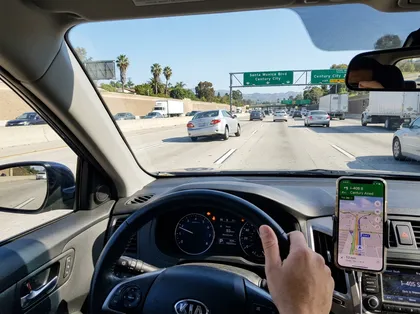
How to Reduce Your Risk Before And During A Drive
The most effective safety decision you make happens before the trip begins. If alcohol or cannabis is part of your evening, arrange a sober ride before you leave, not after. Orange County offers practical options for every situation.
- Designated Driver: Coordinate with a sober friend or family member before the event. Rotate the role across your group on different outings.
- Rideshare Services: Uber and Lyft both operate throughout Orange County, including in beach cities and the Anaheim resort area. Scheduling a pickup in advance through the app reduces wait times at peak hours.
- Orange County Transportation Authority (OCTA): OCTA operates bus routes across the county. Checking schedules before you go out is the key step, as routes and last-departure times vary by corridor.
- Overnight Stay: When a venue is far from home, staying at or near the location eliminates the late-night drive entirely. Many hotels in Anaheim and Newport Beach are within walking distance of major entertainment districts.
- Group Transportation: Chartering a car or van service for a large group spreads the cost and eliminates the designated-driver question for everyone.
Once you are on the road, recognizing an impaired driver early gives you time to create distance before a collision occurs. Signs that a driver nearby may be impaired include:
- Weaving or drifting across lane lines.
- Inconsistent speed, either far below the limit or intermittently fast.
- Late or abrupt braking, including hard stops at green lights.
- Unusually wide turns or cutting corners.
- Driving without headlights after dark.
- Coming close to hitting curbs, medians, or parked vehicles.
If you observe signs of impairment from a nearby vehicle, do not tailgate, honk, or attempt to confront the driver. Move to a different lane when it is safe, increase your following distance, and, if you can do so safely, pull over and call 911. Tell the dispatcher the vehicle’s location, direction of travel, color, make, license plate, and what driving behavior you observed.
What To Do After A DUI Crash In Orange County
The actions you take in the first hours after a DUI crash directly affect the strength of any injury claim you may file. Injuries, including concussions, soft-tissue damage, and internal trauma, may not produce obvious symptoms immediately. The evidence that proves fault, such as crash scene conditions, witness accounts, and the driver’s BAC results, begins to degrade quickly.
These are the steps you can take:
- Call 911. The California Highway Patrol (CHP) typically responds to crashes on state highways and freeways, including SR-91, SR-39, and portions of the Pacific Coast Highway under its jurisdiction. Local police departments usually respond to crashes on city streets. The crash report documents the scene, identifies the drivers, and records any field sobriety test results or signs of impairment observed by the responding officer.
- Seek medical evaluation the same day. Symptoms of concussion and some other crash injuries may not appear immediately. A same-day medical record documents your condition and treatment timing and may support causation, but it does not establish causation by itself.
- Follow your treatment plan fully. Whether your provider is a physician, an orthopedic specialist, or a chiropractor, consistent treatment records, appointment dates, documented symptoms, range-of-motion measurements, and imaging results build the factual foundation of your damages claim.
- Photograph the scene before vehicles move. Cover vehicle positions, visible damage, skid marks, road debris, traffic control devices, lighting conditions, and any visible injuries.
- Collect witness information at the scene. Bystanders who saw the other driver swerving, who heard an admission, or who observed the driver’s condition before the crash may become critical witnesses.
- Record the police report number immediately. You will need it to request the full report from the CHP or the investigating police department.
- Decline to give a recorded statement to the opposing insurer. The other driver’s insurance company is not working in your interest. Recorded statements are used to identify inconsistencies that can reduce your recovery.
- Review any medical release carefully before signing. A broad release can give an insurer access to your entire medical history, not just the records from this crash. An attorney can advise you on what scope is appropriate.
- Save every financial document related to the crash. Bills, receipts, repair estimates, pharmacy records, pay stubs showing missed work, and treatment notes all support your claimed losses.
Camera practices vary by custodian. Some systems may not record or retain footage, while others use different retention periods. Identify potential footage promptly and ask the agency or business whether a recording exists and how long it will be retained.
When you are ready to speak with an attorney about your rights as an Orange County DUI accident victim, Arash Law can review the facts of your case and explain your options.
What a DUI Crash Claim Can Cover in California
A personal injury claim after a DUI crash can seek several categories of compensation. Understanding what may be recoverable helps you evaluate whether the first settlement offer you receive reflects the full value of your losses.
- Economic losses are the most straightforward. They include hospital and emergency room bills, follow-up medical care, physical therapy, chiropractic treatment, prescription costs, medical equipment, vehicle repair or replacement, and wages lost while you were unable to work. If your injuries affect your earning capacity long-term, that future loss is also recoverable.
- Non-economic losses are harder to calculate but equally real. Pain and suffering, emotional distress, loss of enjoyment of activities you could do before the crash, and the impact on close relationships are all recognized categories of damages under California law.
A DUI crash can also support punitive damages, a compensation intended to punish the defendant rather than simply make you whole. Under Civil Code § 3294, a court may award punitive damages where clear and convincing evidence shows the defendant acted with malice, meaning a conscious disregard for the safety of others. A drunk driver’s decision to get behind the wheel knowing the risk that conduct creates can satisfy that standard.
California Insurance Code § 533 and California public policy generally prevent an insured from shifting liability for punitive damages based on the insured’s own willful misconduct to an insurer. Collection of a punitive award may therefore depend on the defendant’s personal assets. If a court grants them, collection may depend on the defendant’s personal assets. An attorney can assess whether punitive damages are realistic in your specific case before you factor them into any settlement decision.
California’s negligence framework under Civil Code § 1714 establishes that every person has a duty of ordinary care to avoid injuring others. A driver who chose to drive impaired breached that duty. Your claim does not require a criminal conviction — the civil and criminal cases run on separate tracks, with different standards of proof.
Deadlines That Affect Your Orange County DUI Injury Claim
Two filing deadlines control the timeline for most Orange County DUI injury claims, and they do not pause while you recover.
The standard personal injury statute of limitations under Code of Civil Procedure § 335.1 gives you two years from the date of injury to file a civil lawsuit. A notable exception applies to injured minors:
- Under Code of Civil Procedure § 352, the two-year period typically does not begin to run until the minor reaches age 18, though this tolling rule does not apply when a public entity is a potential defendant. However, it does not eliminate the Government Claims Act’s claim-presentation requirements. Special late-claim rules may protect a claimant who was a minor throughout the initial six-month presentation period.”
When a government entity, such as Caltrans, the City of Huntington Beach, OCTA, or another public agency, may share responsibility for the crash, a government tort claim under Government Code § 911.2 must be presented to that entity within six months of the incident.
- If the public entity formally rejects your claim, you generally have only six months from the date of that rejection notice to file a lawsuit in court under Government Code § 945.6. This is a window that can materially shorten your overall timeline.
- If the public entity does not send a formal written rejection notice, the deadline to file suit is generally two years from the date of the injury under Government Code § 945.6(a)(2). If you miss the six-month presentation deadline, you may lose the right to sue the public entity.
California permits a late-claim application in certain circumstances, generally within a reasonable time not exceeding one year after the claim accrues. If the entity denies the application, additional court procedures and deadlines apply.
These deadlines apply even when you are still treating injuries, negotiating with an insurer, or waiting for a police report. Consulting an attorney early preserves every option. Waiting too long can permanently close some of them.
Civil injury claims arising from Orange County DUI crashes are typically filed at the Orange County Superior Court – Central Justice Center, 700 Civic Center Drive West, Santa Ana, CA 92701. Complex or multi-party cases that require exceptional judicial management may be assigned to the Civil Complex Center, 751 West Santa Ana Blvd., Santa Ana, CA 92701.
Frequently Asked Questions About Orange County DUI Crashes
DUI crash claims involve legal questions that rarely come up after a routine fender-bender. The answers below address what Orange County injury victims ask most often. Each answer is self-contained; no prior legal knowledge is assumed.
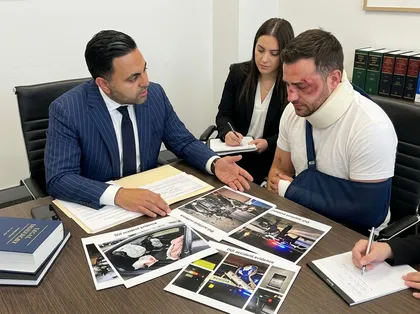
How is a DUI crash claim legally different from a standard car accident claim in California?
A standard car accident claim is based on negligence, proving the other driver failed to exercise ordinary care. A DUI crash has the same negligence foundation but may also expose the defendant to punitive damages under Civil Code § 3294.
To recover punitive damages, you must show by clear and convincing evidence that the driver acted with malice or conscious disregard for others’ safety. A driver who chose to operate a vehicle while knowingly impaired can meet that standard, though the specific facts of your case determine whether a punitive claim is viable. The higher evidentiary bar for punitive damages is one reason attorney guidance matters in these cases.
Does the driver’s DUI arrest or conviction help my civil injury claim?
Yes, but not automatically. A DUI arrest by itself does not prove the driver was negligent. An arrest is only an accusation. However, the facts that led to the arrest, such as chemical test results, officer observations, field sobriety tests, witness statements, and body camera footage, may help support your civil claim.
A DUI conviction can be stronger evidence, but its effect depends on the circumstances. In California, a final felony conviction may be admissible under the hearsay exception in Evidence Code § 1300 to prove facts essential to the judgment. A misdemeanor DUI conviction does not receive the same treatment, although other evidence from the criminal case may still be relevant in a civil lawsuit.
Even without a conviction, you can recover compensation if you prove the other driver was negligent and caused your injuries. In civil cases, the burden of proof is lower than in criminal cases, so a driver may be found liable in a personal injury lawsuit even if the criminal case is dismissed or ends without a conviction.
Can a bar or restaurant in Orange County be held responsible for a drunk driver’s actions?
California law significantly limits the liability of alcohol vendors for third-party injuries. Under California’s dram shop framework, a business that sells or serves alcohol is generally not liable for injuries caused by an adult patron who then drives drunk. A narrow exception applies when a business serves alcohol to an obviously intoxicated minor. In that circumstance, the business may be held liable if its service contributes to a crash. If you believe a bar or restaurant played a role in the crash, an attorney can evaluate whether any exception applies to your situation.
What happens if the driver who hit me has no auto insurance?
If the at-fault driver is uninsured, your own auto policy’s uninsured motorist (UM) coverage may provide compensation for your medical bills, lost wages, and other losses. California law requires insurers to offer this coverage with every auto policy, and it is included unless you rejected it in writing under Insurance Code § 11580.2. If the driver had insurance but not enough to cover your damages, your underinsured motorist (UIM) coverage may apply to the gap. Reviewing your policy with an attorney before accepting anything from either insurer is advisable, as coverage terms and claim procedures vary.
How do personal injury attorneys charge for DUI accident cases?
Arash Law handles DUI accident claims on a contingency fee basis. Under that arrangement, you pay no attorney fees unless and until compensation is recovered for you. The fee is a percentage of the recovery, agreed upon in writing before representation begins, as required by California Business and Professions Code § 6147. Case costs and expenses are separate from attorney fees and may be handled differently depending on the written fee agreement. The agreement will specify how costs are treated. If no compensation is recovered, you owe no attorney’s fee. An initial consultation is free; you can get a clear picture of your options and the process before making any commitment.
How long does a DUI injury claim take to resolve in Orange County?
Resolution timelines vary depending on the severity of your injuries, how quickly fault can be established, the number of parties involved, and whether the case settles or proceeds to trial. Cases involving minor injuries and unambiguous fault sometimes resolve within a few months of reaching maximum medical improvement. Cases involving serious injuries, multiple defendants, or disputed facts can take a year or longer. Rushing a settlement before your medical situation has stabilized typically means accepting less than your injuries are worth. An attorney can advise you on timing as your case develops.
Get Legal Help After An Orange County DUI Crash
You now have a clearer picture of where these crashes happen, when the risk peaks, and what steps protect your rights if you have been hurt. The next step is a conversation with an attorney who handles DUI injury claims throughout Orange County.
Arash Law represents people hurt by impaired drivers on the county’s most dangerous corridors, Beach Boulevard, Chapman Avenue, SR-91, Pacific Coast Highway, and beyond. Our attorneys know how the Orange County Superior Court handles these cases, how to read CHP crash reports for the details that matter, and how to deal with insurers who move quickly to limit what they pay. There are no upfront costs and no fees unless we recover compensation for you.
AK Law can make them pay. Call Arash Law at (888) 488-1391 for a free initial consultation.
About This Page
This page was prepared by Arash Law to help Orange County drivers and DUI crash victims understand local crash patterns and their legal rights. The crash location and condition data cited here come from the California Highway Patrol’s California Crash Reporting System (CCRS), publicly available at data.ca.gov. Statewide time-of-day and alcohol-involvement context draws from the UC Berkeley SafeTREC 2024 Traffic Safety Facts: Alcohol-Impaired and Alcohol-Involved Driving report, which uses Federal Fatality Analysis Reporting System (FARS) data. Court venue information is sourced from the Orange County Superior Court’s official locations page at www.occourts.org. Applicable statutes — including CCP § 335.1, GOV § 911.2, and Civil Code § 3294 — are cited from leginfo.legislature.ca.gov, the official California Legislative Information database.
Arash Khorsandi, Esq., California State Bar #249405, admitted 2007, reviewed this page in July 2026.
This page is for general informational purposes only and does not constitute legal advice. Reading this page does not create an attorney-client relationship with Arash Law.
Sources
- California Highway Patrol – California Crash Reporting System (CCRS): https://data.ca.gov/dataset/ccrs
- California Highway Patrol – CCRS Crashes_2024 Dataset Resource (raw data file, updated July 2026): https://data.ca.gov/dataset/ccrs/resource/f775df59-b89b-4f82-bd3d-8807fa3a22a0
- UC Berkeley SafeTREC – 2024 Traffic Safety Facts: Alcohol-Impaired and Alcohol-Involved Driving: https://safetrec.berkeley.edu/2024-safetrec-traffic-safety-facts-alcohol-impaired-and-alcohol-involved-driving
- California Office of Traffic Safety – OTS Crash Rankings: https://ots.ca.gov/media-and-research/crash-rankings
- Orange County Superior Court – Locations & Contact Info: https://www.occourts.org/general-information/locations-contact-info
- Orange County Superior Court – Filing a Lawsuit (Self-Help Civil): https://www.occourts.org/self-help/self-help-civil/filing-lawsuit
- California Code of Civil Procedure § 335.1 (Two-year PI statute of limitations): https://leginfo.legislature.ca.gov/faces/codes_displaySection.xhtml?sectionNum=335.1.&lawCode=CCP
- California Government Code § 911.2 (Six-month government tort claim deadline): https://leginfo.legislature.ca.gov/faces/codes_displaySection.xhtml?sectionNum=911.2.&lawCode=GOV
- California Civil Code § 3294 (Punitive damages – malice/oppression/fraud): https://leginfo.legislature.ca.gov/faces/codes_displaySection.xhtml?sectionNum=3294.&lawCode=CIV
- California Business and Professions Code § 6147 (Contingency fee agreements): https://leginfo.legislature.ca.gov/faces/codes_displaySection.xhtml?sectionNum=6147.&lawCode=BPC
This page is provided for general informational purposes only. It does not constitute legal advice, and reading it does not create an attorney-client relationship. Every case depends on its own facts. Contact Arash Law for advice specific to your situation. Results in past cases are not a guarantee of future outcomes.