TL;DR: Police determine who is at fault in an accident by reviewing skid marks, vehicle damage, road conditions, and witness statements, then naming a Primary Collision Factor tied to a traffic law violation. That finding can shape insurance decisions, but insurers or courts can still reject it, which may affect who pays your medical bills, car repairs, and lost wages.
Highlights:
- Photograph vehicle positions, skid marks, debris, and road conditions before cleanup.
- Get names and contact details from any witnesses at the scene.
- Request available surveillance footage from nearby businesses or homes immediately.
- Save your dashcam video and back it up to a separate device or the cloud.
- Request a copy of the accident report from the agency that investigated your crash.
- If the report is wrong, submit a written statement and supporting evidence.
- Calendar deadlines: 2 years for most injury suits, 6 months for public-entity claims.
Tip: Write down a timeline while it is fresh, stick to observable facts, and keep copies of everything you submit or receive.
Table of Contents
Police begin determining fault in an accident by gathering and examining evidence at the scene. Officers check the physical scene for skid marks, vehicle positions, and road conditions. They also speak with everyone involved, including witnesses. Based on what they find, they write a report with an initial assessment of fault.
Police may also note any violations of the California Vehicle Code (CVC). Under state law, the report matters, but it is not the final word on who is responsible. Insurance companies, attorneys, and courts treat the police report as one piece of evidence, not a final decision. This process begins the moment law enforcement arrives at the crash site.
How Do Police Investigate A Traffic Accident Scene?
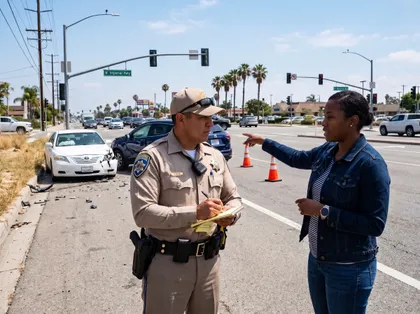
A police crash investigation is a process officers use to record what happened at a traffic crash scene. For standard fender-benders, patrol officers conduct a basic assessment. In catastrophic injury or fatal crashes, law enforcement may deploy specialized units, such as the CHP’s Multidisciplinary Accident Investigation Team (MAIT). These teams use 3D mapping, physics, and automotive engineering to reconstruct the crash and determine its cause. The resulting report creates an official record of the officer’s findings.
Responding officers usually conduct their investigation by:
- Securing the Scene: Officers generally block off the area to protect people and prevent further crashes.
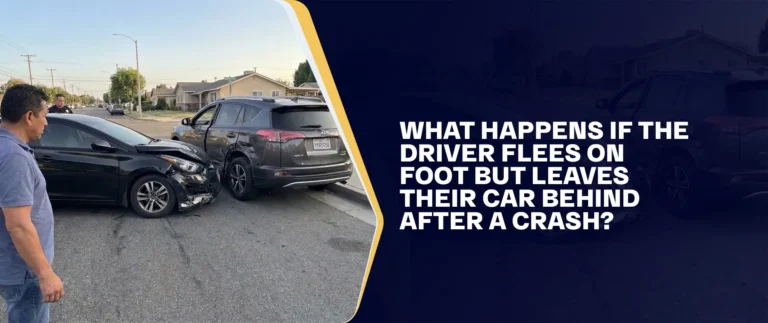
- Collecting Physical Evidence: They check for skid marks, debris, and vehicle damage.
- Taking Photos: They usually document the vehicles, road conditions, and visible injuries.
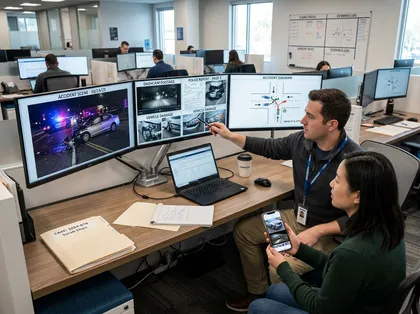
- Checking for Footage: They may look for footage from traffic cameras, businesses, or dash cams.
- Interviewing Everyone Involved: Officers speak with drivers, passengers, and bystanders to gather all accounts.
If the parties involved give different accounts, officers compare each version with the physical and independent evidence. An officer may find one account better supported. However, they may also document both versions and leave the cause undetermined when the evidence does not resolve the conflict.
What Kind Of Evidence Do The Police Look For At The Accident Scene?
Here is what officers look for during their on-scene work:
- Skid Marks: Officers measure skid marks to gauge speed and where the vehicles stopped.
- Vehicle Damage Locations: The spots where each vehicle was hit help show the angle and point of impact.
- Road Conditions: Officers note weather, lighting, and any road hazards such as potholes or debris.
- Signs of Impairment: Officers observe driver behavior, speech, and odors. If they suspect alcohol or drugs contributed to the crash, they may administer basic sobriety or chemical tests at the scene.
All of this goes into the accident report. Officers may use CHP Form 555 to document a traffic collision. California also uses related forms, including a separate form for certain property damage-only crashes. This form includes a crash diagram and the officer’s first notes on what happened. That completed report gives everyone a clear record of the scene. It helps establish whether any traffic rules may have been violated.
What Factors Do Police Consider To Assign Fault?
After reviewing the evidence, the police typically assign fault by identifying and considering the Primary Collision Factor (PCF). The PCF is the main violation of the CVC that officers believe caused the crash. Some examples include the leading causes of traffic fatalities in California, such as:
- Speeding (CVC § 22350).
- Failure to yield (CVC § 21801).
- Distracted driving (CVC § 23123.5).
- Tailgating (CVC § 21703).
- Driving under the influence (CVC § 23152).
Violations of statutes such as these may create a rebuttable presumption of negligence when the violation proximately caused the injury, the injury was the type the law was designed to prevent, and the injured person belonged to the class the law was intended to protect.
Aside from the PCF, the police also consider the following factors before making initial fault assessments:
- Physical and environmental evidence, such as vehicle damage and skid marks.
- Statements from involved parties, with police often assigning greater weight to those of independent, neutral bystanders than to those of the involved drivers or their passengers.
- Digital evidence, such as dashcam footage.
Sometimes, there just isn’t enough evidence for a police officer to say for sure who caused a crash or which driver’s story is more believable. When this happens, the officer might:
- Mark the cause as “undetermined.”
- Simply write down both drivers’ different versions of events without picking one.
- File only a brief, limited report.
For minor accidents, police may not even file a report.
The PCF is the officer’s opinion at the scene, not a final legal ruling. What comes next depends on how insurers and courts weigh that opinion against all the evidence. Traffic accident lawyers can help you understand how the PCF fits into that broader fault analysis.
Is A Police Report The Final Word On Fault In California?
A police report carries real weight after a car accident, but it does not have the final say on fault. Insurance adjusters treat it as one piece of evidence among many. They look at camera footage, dashcam recordings, and photos of vehicle damage. They also review medical records and bills that connect your injuries to the accident.
Meanwhile, California Vehicle Code § 20013 establishes that an accident report generally cannot be used as evidence in a civil or criminal trial arising from the crash. Under Evidence Code § 1200, it is also considered hearsay and is therefore generally inadmissible as evidence in court.
That means that, in California, the final word on fault is usually made by insurance adjusters (during the claims process) or a judge or jury (if the case proceeds to trial). However, that does not make a police report useless.
Insurers usually treat the police report as a starting point when reviewing a claim. A report can also serve as an official record of a traffic collision. Photos, witness testimony, vehicle damage, camera footage, and other evidence collected after the accident may still help establish what happened and who was responsible.
While these case results do not guarantee future outcomes, they show how our firm has been able to help clients recover compensation, even if police reports initially found them at fault for a traffic accident:
- Truck Vs. Motorcycle – $5,000,000: The police report alleged that our client had been speeding and riding under the influence. Our team demonstrated that the truck driver violated his training and company policies. As a result, the trucker made an improper, dangerous turn that was the true cause of the collision. Since the evidence showed the crash would not have occurred if the turn had been made safely, we were able to secure a $5 million recovery for the client.
- Auto Vs. Auto – $3,000,000: The police report initially and incorrectly blamed our client for running a stop sign. Our attorneys obtained the other vehicle’s black box data, which showed that the opposing driver had been speeding before the collision. Using the physical evidence and principles of crash reconstruction, the team demonstrated that the other driver’s excessive speed was the true cause of the accident. This work helped secure the full $3 million in available policy limits for our client and their family.
What Should You Do If You Disagree With The Police Report?
If you believe the report contains an error, you can ask the agency to correct objective information or consider a supplemental statement. Officers were not at the crash when it happened. They piece together what occurred from photos, skid marks, and statements, so their report can miss key details. You can submit your own written account to put your version on file.
Here are steps you can take to dispute an inaccurate report:
- File a Written Statement: Contact the agency that wrote the report, such as the CHP or your local police department, and submit your version of what happened. The agency may add your statement or supporting evidence to its records, but it is not required to change or supplement the officer’s conclusions.
- Collect Your Own Evidence: Gather dashcam footage, photos, and contact information for witnesses.
- Challenge the Insurance Determination: Find out what evidence the adjuster used to assign fault. Then submit your own evidence to push back.
- Get Legal Help: Disputing a report can be difficult. A lawyer can help you obtain evidence that’s challenging to get on your own. Examples include event data recorder (EDR) data, also known as “black box” data, from vehicles, as well as surveillance footage. An attorney can also bring in crash experts if needed.
FAQs About How Police Determine Who Is At Fault After An Accident
After a traffic accident, it is normal to have questions about how police reports affect your ability to pursue compensation. This section covers the most common concerns we hear from people in California who have just gone through a crash. Knowing the answers ahead of time can help you avoid mistakes that could hurt your claim.
Does A Traffic Citation Mean The Driver Is Legally At Fault?
Not necessarily. A traffic citation means the officer believed there was sufficient reason to accuse the driver of violating a traffic law. It is not a final determination of civil fault. The cited driver may not be solely responsible, and another person or entity may share liability. Insurers, attorneys, and courts consider the citation alongside physical evidence, witness statements, video footage, vehicle data, and other available evidence.
Can Two Drivers Both Be Found At Fault By Police?
Yes. California crash reports explicitly include a section for “Other Associated Factor(s).” For example, an officer might cite one driver’s speeding as the PCF, but cite the other driver’s illegal lane change as an associated factor. That means that, depending on the details of the accident, the police may name another driver, the at-fault driver’s employer, a vehicle or parts manufacturer, or a government agency in its initial fault findings.
How Long Does It Take To Get A Police Report In California?
Police reports are often available within a few days to two weeks, depending on the responding agency and the complexity of the crash. Crashes that involve serious injuries or a death may take longer. You can request a copy from the law enforcement agency that responded to the scene.
Can I Get A Copy Of The Police Report If I Was Not At Fault?
Yes. Drivers, passengers, vehicle or property owners, and other authorized parties can generally request the report from the agency that investigated the crash. Fault does not affect your right to access it. The report is a key document for your insurance claim and any legal steps you may take.
Wrongly Blamed In A California Traffic Accident? Arash Law Can Handle Your Injury Case
If a police report got the facts wrong, you have the right to push back. You need a legal team that will dig deeper and get to the truth of what actually happened.
Arash Law handles traffic accident cases by conducting its own investigation. AK Law collects dashcam video, black box data, witness statements, and physical evidence to show the full story of what happened. When a police report contains inaccuracies, we work to build a case that challenges them.
Do not wait to get help. California generally allows two years from the date of your accident to file a personal injury lawsuit. Meanwhile, if the crash involved a public entity, you only have six months from the date of your injury to submit an administrative claim. If you miss the applicable deadline, you may lose your right to seek any compensation for your injuries.
Call (888) 488-1391 for a free initial consultation. We handle traffic accident cases on a contingency basis, meaning you pay nothing up front. You owe us nothing unless we recover money for you.