TL;DR: Use legal directories and law firm websites to search for the best supermarket slip-and-fall attorney to handle your case. Compare relevant case results, litigation experience, investigation resources, and State Bar records. Look for a lawyer who knows how to preserve evidence and investigate what the store knew about the hazard.
Highlights:
- Report the fall to a manager and ask for a copy of the incident report.
- Photograph the hazard, the surrounding area, and your shoes before cleanup.
- Get witness names and contact details, including nearby employees.
- See a doctor promptly and keep all medical records and receipts.
- Have your lawyer send a spoliation letter for surveillance footage, logs, and maintenance records.
- Decline recorded statement requests from insurers until you have legal guidance.
- Calendar deadlines: 2 years to sue, 6 months to file an administrative claim if a government entity is involved.
Tip: Bag and save the shoes and clothing you wore, and do not wash them (in case they become necessary evidence).
Table of Contents
To find the best supermarket slip-and-fall attorney for your case, use verified legal networks, the State Bar of California, and directories for qualified lawyers. Look for personal injury firms that handle supermarket slip-and-fall and premises liability claims. Check the firms’ websites, relevant case results, and litigation experience before choosing a lawyer.
A supermarket fall can leave you with injuries, missed work, and medical bills. The right attorney should know how to preserve video, review inspection records, and investigate what the store knew. Look for specific premises liability experience, strong investigation resources, and experience handling disputed claims. These factors can help you compare firms and choose the right fit.
Where To Begin Your Search For A Slip-and-Fall Attorney
Start by searching for California law firms that handle premises liability claims. Specifically, look for retail store slip-and-fall lawyers who focus on supermarket cases rather than on premises liability in general.
A few reliable starting points can help narrow your search:
- State Bar Certified Referral Service: You can use the State Bar’s lawyer referral services, available for search by county and practice area. This connects you with vetted attorneys who handle premises liability cases in your area.
- State Bar Attorney Search: Before you hire anyone, check the attorney’s license status and disciplinary history through the State Bar’s Attorney Search tool. This confirms the lawyer is in good standing to practice in California.
- Firm Websites and Case Results: Many firms list past settlements and verdicts for slip-and-fall and premises liability cases. Reviewing these can show whether a firm has real experience with supermarket chains.
- Referrals From Other Attorneys: If you already have a lawyer for an unrelated matter, ask if they know a premises liability attorney. Many firms refer cases outside their focus to trusted colleagues. Once you have a shortlist, the traits below can help you choose the right fit.
What Should You Look For In A Qualified Supermarket Slip-and-Fall Attorney?
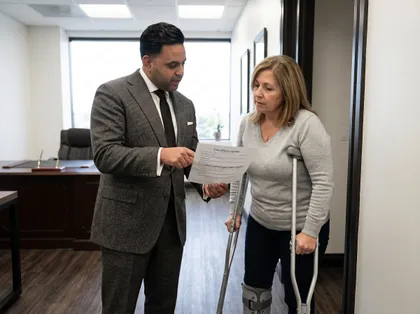
Look for a lawyer with California slip-and-fall experience, a willingness to go to trial, and the funds to hire outside experts. These traits matter most when you are facing a large chain with a full defense team.
Not every injury attorney has worked on slip-and-fall claims. Fewer still know how to take on a big supermarket chain.
These chains carry corporate insurance. They have adjusters and defense lawyers paid to minimize any compensation you may recover. They count on you to accept a low offer. You need a lawyer who will not back down.
Look for these traits before you hire anyone:
- Premises Liability Experience: The attorney should have handled California slip-and-fall cases, not just general injury claims. Store cases often turn on two key issues:
- Notice: Did the store know about the hazard?
- Inspection: Did staff use reasonable practices to catch dangers in time?
- Willingness to Go to Trial: Many lawyers push for fast settlements. Ask whether the attorney has taken slip-and-fall cases all the way to a jury verdict.
- Resources to Build Your Case: Strong cases often need outside experts, such as safety analysts or medical witnesses. A well-funded firm can advance these costs, with no attorney fees owed unless they recover compensation for you.
- Thorough Investigation Skills: Look for an attorney who knows how to find and preserve key evidence before it disappears.
Proving the store was at fault requires specific legal arguments, and that work starts with the slip-and-fall accident lawyers you hire.
Arash Law’s Slip-and-Fall Case Results
Every case below is one Arash Law has handled and resolved for a client. Each turned on a property owner’s duty to keep the premises safe for visitors. Two are slip-and-fall cases. The third shows the same duty applied to a different kind of hazard:
- $3,000,000 Slip and Fall Recovery: Our client suffered a spine injury in a slip-and-fall accident. Video footage of the fall helped secure this settlement and bring closure for our client.
- $3,500,000 Premises Liability Recovery: Poor lighting on the property led to a fall and a spinal injury. We fought to hold the property accountable and secured this settlement for our client.
- $1,000,000 Negligent Security Recovery: Our client was assaulted while shopping at a large retail store. We proved the store had prior notice of violence and failed to provide proper security.
Case Results Disclaimer: Every case is different, and past results do not guarantee a similar outcome. Results depend on the facts, injuries, available insurance, applicable law, and other circumstances.
How Does A Lawyer Prove The Supermarket Was At Fault Under California Law?
To win a supermarket slip-and-fall case in California, your attorney generally has to prove that the store failed to use reasonable care and that this failure caused your injuries. When the claim involves a dangerous condition the store did not create, an important issue is often whether the store knew about the hazard or should have discovered it through reasonable inspections.
There are two ways to show the store had that knowledge. The first is actual knowledge: the store or one of its employees directly knew about the hazard. A worker who mopped around a spill without marking it, or a customer who told staff about it, would both put the store on actual notice. The second is constructive knowledge: the hazard sat there long enough that the store should have found and fixed it during routine inspections, even if no one reported it.
The California Supreme Court addressed this in Ortega v. Kmart Corp. (2001) 26 Cal. 4th 1200. The court held that a store’s failure to inspect within a reasonable time can support an inference of constructive notice.
California law sets no fixed time limit for every case. A hazard left unattended longer can make a stronger case for notice than one that just occurred. Either way, the exact facts of your case decide the outcome.
How Will An Attorney Actually Help Your Supermarket Slip-And-Fall Case?
An attorney moves quickly to secure time-sensitive proof. Store policies vary, and some keep footage only a short time before it’s erased. Your attorney works to preserve that footage, build the case, and protect you from saying something the insurer might use against you.
Your attorney handles the following key tasks right away:
- Spoliation Letter: This is a written legal notice sent to the store immediately. It is a formal request to the store to retain all camera footage, cleaning logs, and maintenance records. Once a store receives this notice, destroying that evidence may carry serious consequences in court.
- Witness Interviews and Incident Reports: Your attorney reaches out to witnesses and requests a copy of the store’s incident report. This helps keep the facts on record before anything gets changed or downplayed.
- Insurance Communication: The store’s insurer may call you soon after the accident. Your attorney handles all contact with the insurer, which helps reduce the risk of your words being used against you.
Many people don’t realize that evidence of major slip-and-fall hazards at supermarkets can disappear quickly. How fast you take action can directly affect the strength of your claim.
What To Do After A Slip And Fall At A Supermarket
If you slip and fall at a supermarket, prioritize seeking medical help and preserving evidence of what happened. The following steps can help protect your health and your potential claim:
- Report the fall to a store manager and ask them to write an incident report.
- Photograph the hazard, your injuries, and the surrounding area before anyone cleans it up.
- Get the names and contact information for any nearby witnesses.
- See a doctor soon after the fall, even if your injuries feel minor at first.
- Avoid giving a recorded statement to the store’s insurer before you speak with an attorney.
Frequently Asked Questions About Supermarket Slip-And-Fall Claims
If you slipped and fell at a grocery store, you have legal rights and likely more options than you realize. California law protects injured shoppers, and the legal team you hire can make a real difference in your outcome. Getting clear answers to these questions can help you take the right next step with confidence.
Do Lawyers Only Get Paid If They Win A Slip-And-Fall Case?
Personal injury attorneys who work on a contingency fee basis only get paid if they win your case or secure a settlement. Under this arrangement, you owe no attorney fees unless the case results in a recovery. Your written agreement will also explain how case costs, like expert fees, are handled.
Do I Still Have A Case If I Was Partly At Fault?
Yes. Under California’s pure comparative negligence rule established in Li v. Yellow Cab Co. (1975), you can still pursue compensation even when you share some of the fault. Your share of fault reduces your potential compensation, but it does not bar your claim entirely.
Is There Free Advice From A Slip-And-Fall Attorney Available?
Many reputable personal injury firms offer free consultations so you can learn your options at no cost. If you are searching for free advice from a slip-and-fall attorney, a free consultation is the closest equivalent, and it usually comes with no obligation to hire them afterward.
What If I Slipped On A Spilled Liquid That Just Happened?
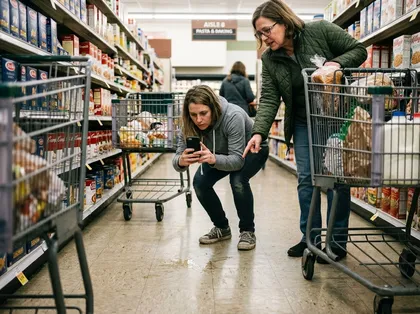
A fresh spill can still support a legal claim against the store. If store employees were nearby and had a reasonable opportunity to clean up the hazard or warn shoppers, the store can still be held responsible. Your attorney can look into what staff knew and when.
Can I Sue If There Was A Wet Floor Sign?
A wet floor sign does not automatically eliminate the store’s liability. If the sign was hard to see, placed after the fall, or the hazard remained unreasonably dangerous despite the warning, you may still have grounds to pursue a claim, depending on the facts of your situation.
How Long Do I Have To File A Claim Against A California Supermarket?
Under California Code of Civil Procedure (CCP) Section 335.1, you generally have two years from the date of your fall to file a lawsuit. If the fall happens in a public, government-run wet market or inside a government-owned building, they may be liable. If such is the case, you generally must file an administrative claim within six months instead. Missing either deadline can bar your case.
Slipped And Fell At A Supermarket? Arash Law Can Help
Get a free case review from our lawyers. There is no cost and no obligation. Slip-and-fall injuries can leave you with medical bills, missed work, and real uncertainty about what to do next.
Arash Law (also called AK Law) handles personal injury cases under a written contingency fee arrangement. You pay no attorney’s fee unless we recover compensation for you, and the agreement explains how case costs are handled.
Call (888) 488-1391 today to schedule your free consultation.