TL;DR: A property owner is not automatically liable if someone dies on their property. Liability generally depends on whether negligence, a dangerous condition, or another wrongful act contributed to the death. Family members pursuing a wrongful death claim may need to determine who controlled the property, preserve evidence, and check applicable filing deadlines.
Key Facts
- California Government Code § 835 governs liability for a dangerous condition of public property, and a claim involving death or personal injury generally must be presented to the public entity within six months after the claim arises.
- California Civil Code § 1714 provides the starting point for premises liability, stating that people are generally liable for injuries caused by failing to use reasonable care in managing their property.
- In Ortega v. Kmart Corp., the California Supreme Court explained that inspection evidence and the duration of a dangerous condition can help establish constructive notice.
- California Code of Civil Procedure § 377.60 identifies who may qualify to file a wrongful death action, including a surviving spouse, domestic partner, and children, among others listed in the statute.
- California Code of Civil Procedure § 335.1 generally provides two years from the date of death to file a wrongful death lawsuit.
- California Code of Civil Procedure § 377.34 states that pain and suffering and disfigurement damages may be available in qualifying survival actions filed from January 1, 2022, through December 31, 2025, and are generally unavailable in actions filed on or after January 1, 2026.
Table of Contents
A property owner is not automatically legally responsible simply because someone dies on their property. Liability usually depends on the cause of death and on whether the owner, occupier, or another responsible party failed to exercise reasonable care.
For families who have lost someone, determining what happened may require looking beyond the location of the death. A fatal injury may result from a broken staircase, unsafe electrical wiring, an unsecured swimming pool, poor maintenance, inadequate security, or another dangerous condition. In other cases, the death may result from a medical emergency or another event unrelated to the property or anyone’s negligence.
The person also does not have to die at the property for liability to arise. If a dangerous condition causes an injury and the person later dies at a hospital or another location, eligible family members may still have a wrongful death claim. A survival action may also allow certain claims of the deceased to continue after death.
When Can A Property Owner Be Liable For A Death?
A property owner may be liable when negligence, an unsafe condition, or another wrongful act connected to the property causes or contributes to a fatal injury.
Examples may include:
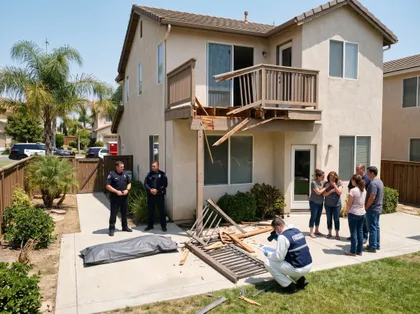
- A person falls from a damaged staircase that was not reasonably repaired.
- A child gains access to an inadequately secured swimming pool and drowns.
- Faulty electrical wiring causes electrocution or a fire.
- A dangerous condition remains in a walkway without adequate warning.
- A landlord fails to address a serious hazard after learning about it.
- A business fails to take reasonable security precautions against a foreseeable risk of violent crime.
- Someone responsible for the property knows about a dangerous condition but does not repair it or warn others.
Determining liability may require examining who owned or controlled the area, what that person knew or should have known about the danger, and whether there was a reasonable opportunity to correct it or provide a warning.
California premises liability law does not make property owners responsible for every injury or death that occurs on their premises. Liability depends on the circumstances and whether the legal requirements for negligence or another claim can be established.
Different rules apply when a fatal accident involves government-owned property. Under California Government Code § 835, liability for a dangerous condition of public property depends on specific statutory requirements. A claim involving death or personal injury generally must also be presented to the public entity within six months after the claim arises. If the entity sends a proper written rejection, a lawsuit generally must be filed within six months after that notice.
When Might A Property Owner Not Be Liable For A Death?
A death on someone’s property does not, by itself, establish liability. The claimants generally must be able to connect the death to negligence, an unsafe condition, or another legally wrongful act.
A property owner may not be liable when:
- The property was reasonably safe.
- No property condition caused or contributed to the death.
- The person suffered a sudden medical emergency unrelated to the property.
- The owner did not know and could not reasonably have known about the danger.
- The hazard arose too recently for a reasonable inspection to discover and correct it.
- Another person or business controlled the area and was responsible for its safety.
- The incident could not reasonably have been foreseen or prevented.
The deceased person’s actions may also be relevant. California follows comparative fault principles, so responsibility can be divided among several parties rather than placed entirely on one person.
Depending on what happened, the property owner, tenant, contractor, business, equipment manufacturer, another individual, or the deceased person may each have contributed to the incident.
The Reasonable Care Standard For California Property Owners
California Civil Code § 1714 provides the starting point for premises liability. Under that law, people are generally liable for injuries caused by failing to use reasonable care in managing their property.
Depending on the circumstances, reasonable care may require an owner or occupier to:
- Inspect the property when appropriate.
- Repair dangerous conditions.
- Warn people about hazards that cannot be corrected immediately.
- Follow applicable building and safety requirements.
- Take reasonable precautions against foreseeable dangers.
Whether reasonable care was used depends on factors such as the nature of the property, the seriousness of the danger, the likelihood of injury, and whether reasonable steps could have reduced the risk.
A person’s reason for being on the property (for example, whether they were invited, working there, or even trespassing) can still matter when assessing which risks were foreseeable. Still, it does not, by itself, determine whether the property owner is legally responsible.
For a family trying to understand whether negligence contributed to a loved one’s death, premises liability attorneys can review the circumstances and identify potentially responsible parties.
Does The Owner Have To Know About The Dangerous Condition?
In many premises liability cases, the family must show that the property owner knew or should have known about the dangerous condition.
Actual notice means the owner knew about the danger. Constructive notice generally means the condition existed long enough that the owner should reasonably have discovered it through appropriate inspections.
In Ortega v. Kmart Corp., the California Supreme Court explained that evidence of inspections and the duration of a dangerous condition can help establish constructive notice.
Evidence that may help establish notice includes:
- Maintenance records
- Inspection schedules
- Earlier complaints
- Prior accidents
- Emails or text messages discussing the hazard
- Surveillance footage
- Repair requests
- Photographs of the condition
- Employee or witness testimony
The notice requirement may differ when the owner, an employee, or another responsible party created the dangerous condition. Evidence showing how the hazard developed can help determine who knew or should have known about it before the fatal accident.
What If The Hazard Was Open And Obvious?
An open and obvious danger can affect a premises liability claim, but it does not automatically prevent a family from seeking compensation.
California courts consider whether a reasonable person would have recognized and avoided the danger. In some cases, an obvious condition may mean the property owner had no duty to provide a warning. However, other reasonable precautions may still be required when the risk of harm remains foreseeable.
In a wrongful death claim, this issue may affect both the property owner’s responsibility and whether the deceased person shared fault for the accident. The outcome depends on the specific circumstances.
Can A Property Owner Be Liable If A Trespasser Dies?
Possibly. A person’s status as a trespasser does not automatically preclude a property owner from liability under California law.
California generally applies ordinary negligence principles when deciding whether a property owner owed a duty of care. Trespassing may still matter because it can affect whether the person’s presence and the risk of injury were reasonably foreseeable.
Factors that may affect liability include:
- Nature of the Danger: The type of hazard, whether it was concealed or obvious, and whether the owner knew or should have known about it, may affect whether reasonable precautions were required.
- Children and Swimming Pools: California imposes drowning-prevention requirements on certain residential pools and spas. In a fatal child drowning case, applicable safety requirements and whether a child’s access was foreseeable may be relevant.
- Known Patterns of Unauthorized Entry: If an owner knows people regularly enter or cross a particular area without permission, that history may make an injury more foreseeable.
California’s recreational use law may also limit a property owner’s liability when someone enters property for certain recreational activities. Whether an exception applies depends on the circumstances.
Trespasser cases are highly fact-specific. A court may consider why and how the person entered the property, the nature of the danger, the owner’s knowledge, and whether the fatal injury was reasonably foreseeable.
Can You Be Liable For A Murder Or Other Violent Crime?
A property owner is not automatically liable simply because another person commits a violent crime on the premises. However, California law may require reasonable security measures when third-party criminal conduct is sufficiently foreseeable.
California courts have recognized that landlords and commercial property owners may have a duty to take reasonable precautions against foreseeable criminal conduct. What precautions are reasonable depends in part on the foreseeability of the crime and the burden of the proposed security measures.
If inadequate security may have contributed to an injury or death, the victim or surviving family members may have grounds to pursue a civil claim.
Examples of evidence that may be relevant to such a claim include:
- Earlier assaults or robberies
- Repeated police calls
- Broken locks or gates
- Security complaints
- Inadequate lighting
- Known unauthorized access
- Prior threats involving the property
Are Landlords Liable If A Tenant Or Guest Dies?
A landlord may be liable for a dangerous condition if they controlled the area and knew or should have known about the hazard. This may include unsafe common areas or conditions that the landlord had a duty and a reasonable opportunity to repair.
Liability may be less likely when a tenant has exclusive possession of an area, and the landlord had no reasonable opportunity to discover or correct the hazard.
A fatal accident at a rental property may therefore require investigation of:
- The lease
- Repair responsibilities
- Prior maintenance requests
- Building inspection records
- Common-area control
- Earlier complaints
- What the landlord and tenant each knew
These records can help show who had responsibility for the condition that contributed to the accident.
Who Can File A Wrongful Death Claim In California?
After a death, not every relative automatically has the right to bring a wrongful death action. California Code of Civil Procedure § 377.60 identifies who may qualify.
Eligible parties may include the deceased person’s:
- Surviving spouse.
- Domestic partner.
- Children.
- Descendants of deceased children.
- Certain heirs, when there is no surviving issue.
- Certain dependent family members described by the statute.
- Certain dependent minors who meet the statutory requirements.
The deceased person’s personal representative may also bring the wrongful death action on behalf of eligible survivors.
Determining who may file can become difficult in blended families, cases involving dependent relatives, or disputes among potential heirs. California wrongful death claims are also generally treated as a single joint action, so eligible heirs ordinarily should be included in the same lawsuit.
What Must A Family Prove In A Fatal Premises Liability Case?
Families pursuing a wrongful death claim based on unsafe property generally need evidence showing that the property owner or another responsible party was negligent and that the negligence contributed to the fatal injury.
Under California Civil Jury Instructions (CACI) 1000 and 1001, the plaintiffs generally must establish the following elements of a premises liability claim:
- Duty of Care: The defendant owned, leased, occupied, or controlled the property and owed a duty to use reasonable care.
- Breach of Duty: The defendant failed to use reasonable care in maintaining, inspecting, repairing, or managing the property.
- Causation: The negligence was a substantial factor in causing the fatal injury.
- Damages: Eligible survivors suffered losses recoverable under California wrongful death law.
The existence of a dangerous condition alone may not establish liability. Depending on how the hazard arose, the family may also need to show that the defendant knew or should have known about it and had a reasonable opportunity to address it.
Inspection records, complaints, repairs, surveillance footage, photographs, witness statements, and evidence showing how long the condition existed can help establish what happened.
Under California’s comparative fault rules, a family may still seek compensation if the deceased person was partly responsible. Any recovery may be reduced according to that person’s share of fault.
What Evidence Matters After A Fatal Premises Accident?
Families may have many immediate concerns after losing someone, but evidence can begin disappearing soon after an accident. Hazards may be repaired, surveillance footage may be overwritten, and witnesses may become harder to locate.
Potentially useful evidence includes:
- Photographs and videos of the scene
- Surveillance footage
- Witness names and contact information
- Police reports
- Fire department reports
- Coroner or medical examiner records
- Maintenance records
- Property inspection reports
- Building permits
- Repair requests
- Prior complaints
- Prior incident reports
- Insurance information
- Medical records and bills
- Employment and income records
Families do not need to investigate everything themselves. They should avoid altering the accident scene or taking physical evidence that belongs to someone else. Written preservation requests and formal legal procedures may help protect evidence without placing that responsibility entirely on grieving family members.
What Damages May Be Available After A Fatal Property Accident?
Available damages depend on the facts and the type of legal claim. Wrongful death and survival actions address different types of loss.
A wrongful death claim seeks compensation for losses suffered by eligible surviving family members. Depending on the case, these damages may include:
- Lost financial support
- Loss of household services
- Funeral and burial expenses
- Loss of companionship, care, comfort, and guidance
These damages cannot replace the person who died. They are intended to address certain financial and personal losses California law recognizes after a wrongful death.
A survival action is different because it continues certain claims the deceased person could have pursued if they had lived.
Under California Code of Civil Procedure § 377.30, the deceased person’s personal representative may bring the survival action. If there is no personal representative, a qualifying successor in interest may bring it.
Survival damages may include:
- Medical expenses incurred before death.
- Income lost before death.
- Property damage.
- Penalties or punitive damages that the deceased person could have recovered when legally available.
A survival action can have a different filing deadline from a wrongful death claim. Under California Code of Civil Procedure § 366.1, it generally must be filed no later than six months after death or the limitations period that would have applied if the deceased person had lived.
Under California Code of Civil Procedure § 377.34, pain, suffering, and disfigurement damages may be available in qualifying survival actions filed from January 1, 2022, through December 31, 2025. Under current law, these damages are generally unavailable in actions filed on or after January 1, 2026.
A survival action may be relevant when the person lived for some time after the accident and received medical treatment before passing away. Wrongful death lawyers can review whether wrongful death, survival, or other claims may apply.
Does Homeowners Insurance Cover A Wrongful Death Claim?
Homeowners’ insurance may cover some wrongful death claims through personal liability coverage.
The California Department of Insurance explains that liability coverage may provide a defense and pay covered damages when an insured is legally responsible for injury to another person. Renters’ policies may also include personal liability coverage.
Coverage depends on the policy and the circumstances surrounding the death. Issues may include:
- Policy limits
- Exclusions
- Intentional conduct
- The identity of the insured
- The location of the incident
- Whether the loss falls within the policy’s coverage
For a family seeking compensation, identifying available insurance can be an important part of the claim. Coverage should not be assumed without reviewing the applicable policies.
Frequently Asked Questions About Fatal Premises Liability Cases
A death on someone else’s property can leave a family with legal questions at a time when their attention is understandably elsewhere. Clear information about liability, evidence, and deadlines can help them decide what to do next.
How Long Do We Have To File A Wrongful Death Claim In California?
California Code of Civil Procedure § 335.1 generally provides two years from the date of death to file a wrongful death lawsuit.
Other claims arising from the same incident may have different deadlines. Survival actions follow separate timing rules, while claims involving California public entities generally require a government claim to be presented much sooner.
Because several deadlines can apply to the same fatal accident, families should identify the applicable filing periods as early as reasonably possible.
What If The Deceased Received Medical Care Before Passing?
A survival action may allow recovery of certain losses the deceased person incurred between the injury and death. Depending on the circumstances, these may include medical expenses, lost income, property damage, and other recoverable losses.
A wrongful death claim addresses losses suffered by eligible surviving family members, such as lost financial support and loss of companionship.
Medical records, bills, employment documents, and other records from the period between the injury and death may help establish these losses.
What Should A Family Do After A Fatal Accident On Someone Else’s Property?
Families should focus first on their immediate personal needs. When they are able, they can also take steps to protect information related to the accident:
- Keep photographs, videos, and documents related to the accident.
- Save medical, funeral, and burial records.
- Write down the names of witnesses.
- Preserve communications with the property owner or insurer.
- Avoid signing releases before understanding what rights may be affected.
- Ask that surveillance footage and other evidence be preserved.
- Speak with an attorney about deadlines and potential claims.
Families do not have to determine liability on their own. The appropriate next steps depend on the circumstances, the parties involved, and the available evidence.
Contact Arash Law About a Fatal Accident on Someone Else’s Property
When negligence or an unsafe property condition may have contributed to a loved one’s death, families may want answers about what happened and who may be legally responsible.
Arash Law handles wrongful death and premises liability cases. AK Law attorneys can investigate the circumstances, review available evidence, identify potentially responsible parties, and examine applicable insurance coverage.
Our legal team can also explain how California premises liability and wrongful death laws may apply to the family’s circumstances.
The following cases did not involve fatal injuries. However, they illustrate how our firm has handled serious injury claims involving property or unsafe conditions:
- Our 18-year-old client suffered severe injuries while working on the defendant’s farm and operating the defendant’s tractor and harvesting equipment. While he was positioned on the machinery, the tractor drove into a hole, causing the equipment to collapse on him and crush his legs. The defendant denied responsibility, so we took the case through arbitration and secured an $18.7 million award for our client.
- Our client suffered a head injury from an industrial machine while working at a factory. The opposing parties raised several defenses. Our firm secured the maximum available policy limits, resulting in a $14 million recovery.
- Our client suffered a spinal injury after inadequate lighting led to a fall. Our team handled the premises liability case and secured a $3.5 million recovery.
These results illustrate our work in serious injury cases. A fatal accident involves different damages and legal issues. Past results do not guarantee future outcomes. Each case depends on its own facts and circumstances.
Call Arash Law at (888) 488-1391 to discuss your case with our legal team. You owe no attorney fees unless we recover compensation for your family.