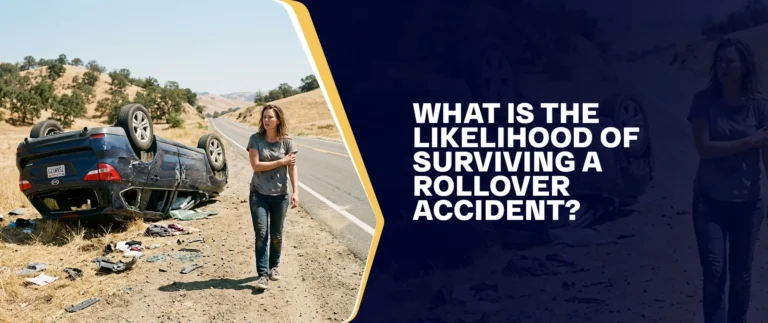
TL;DR: Head-on crashes tend to be more dangerous, while T-bone crashes can pose extreme risks to occupants sitting closest to the point of impact. Speed, vehicle size, point of impact, seat position, and safety features can change the outcome. Either crash type can cause severe or fatal injuries.
Key Facts
- The Insurance Institute for Highway Safety (IIHS) data shows frontal impacts accounted for 59% (13,514) of deaths among passenger vehicle occupants in 2024.
- IIHS data shows side impacts accounted for 22% (5,047) of deaths among passenger vehicle occupants in 2024.
- California Vehicle Code § 21801 requires a driver making a left turn or U-turn to yield to approaching traffic that presents a hazard.
- California Vehicle Code § 20008 requires a driver involved in a crash causing injury or death to make or cause a written report to the CHP or appropriate local police department within 24 hours.
- California Code of Civil Procedure (CCP) § 335.1 generally gives you two years from the date of injury to file a personal injury lawsuit.
Table of Contents
Head-on collisions are generally more dangerous overall, especially at high speeds. However, a T-bone crash can be especially dangerous for a person sitting on the side that gets hit.
Head-on and T-bone collisions fall within broader crash categories used in safety data. A head-on collision is a type of frontal impact, while a T-bone collision is a type of side impact. Not every frontal impact is head-on, and not every side impact is a T-bone crash.
According to the Insurance Institute for Highway Safety (IIHS), 13,514 passenger vehicle occupants died in frontal impacts in 2024, compared with 5,047 in side impacts. These figures cover the broader impact categories, so they do not provide a direct count of head-on versus T-bone deaths.
Additionally, these figures reflect total fatalities by crash category, not the risk of a fatal or serious injury in a given collision. They also do not account for the number of crashes in each category or other variables needed to determine the relative risk of serious or fatal injury in a frontal versus side-impact collision.
The IIHS figures cited here use broader frontal- and side-impact categories and therefore should not be interpreted as a direct head-on-versus-T-bone risk comparison.
The difference in risk also depends on how the impact occurs. In a head-on crash, a vehicle can lose speed rapidly during a severe frontal impact. The sudden change in velocity can place substantial forces on the occupants. In a T-bone crash, there is much less space between an occupant and the striking vehicle. The vehicle’s side may also be pushed into the passenger compartment.
The severity of either collision may depend on:
- The speed of each vehicle.
- The size and weight of each vehicle.
- The angle of impact.
- Whether the passenger compartment was crushed.
- The exact location of the impact.
- Seat belt use.
- Airbag deployment.
- Vehicle age and safety design.
- The occupant’s seating position.
For this reason, the IIHS data provides useful context, but crash type alone cannot determine how badly someone will be injured.
Why Head-On Collisions Are So Dangerous
Data Transparency Note
This page uses the most recent and accurate publicly available data from the Insurance Institute for Highway Safety (IIHS) (2024). We will update this content when newer reliable data becomes available.
A head-on collision occurs when the fronts of two vehicles traveling in opposite directions collide. It is a type of frontal impact, a broader category that also includes other crashes in which the front of a passenger vehicle is the primary point of impact.
Because head-on crashes fall within this broader category, frontal-impact data helps show the risks associated with severe front-end collisions. In 2024, frontal impacts accounted for 59% of deaths among passenger vehicle occupants, according to the IIHS. The figure covers frontal impacts generally, not head-on collisions alone.
Head-on crashes can be especially severe because both vehicles may be moving toward each other before impact. Occupants can experience a rapid change in velocity as their vehicle slows, stops, or changes direction.
One common misconception is that two identical cars traveling toward each other at 50 mph experience the same impact as one car hitting a rigid wall at 100 mph. In an idealized, symmetrical head-on collision between identical vehicles traveling at equal speeds, each car changes velocity as if it were hitting a rigid barrier at about 50 mph, not 100 mph. The 100-mph figure describes their closing speed, not the equivalent barrier-impact speed for each vehicle. Even at 50 mph, however, a frontal collision can cause severe or fatal injuries.
Modern vehicles have several protections designed for frontal crashes. These may include:
- Front crumple zones that deform to absorb crash energy.
- Seat belts help control the occupant’s movement.
- Frontal airbags that protect the head and chest.
- Strong passenger compartments designed to resist collapse.
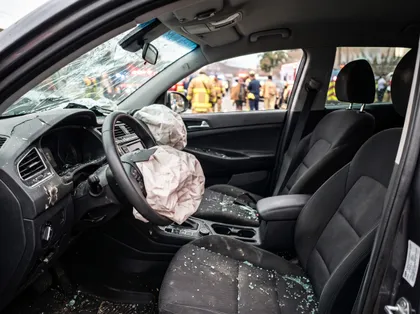
IIHS explains that frontal airbags are designed to protect people in moderate-to-severe frontal crashes, particularly by reducing contact between the head or chest and hard parts of the vehicle.
It’s also important to note that frontal structures allow for a larger crumple zone than the sides of the vehicle. However, head-on crashes often involve very large longitudinal deceleration, which may result in a stronger impact.
These safety systems reduce risk, but they cannot eliminate the enormous forces involved in a serious head-on collision.
A head-on crash tends to be more dangerous when speeds are high, braking occurs late, or braking does not occur at all. A significant mass mismatch between the two vehicles can also increase the risk of a severe injury. These conditions push the crash beyond what frontal crumple zones and airbags are designed to absorb.
Why T-Bone Collisions Can Be Especially Deadly
A T-bone collision occurs when the front of one vehicle strikes the side of another. It is a specific type of side-impact crash. Other side impacts can occur at different angles and do not necessarily form the characteristic “T” shape.
T-bone crashes fall within the broader side-impact category used in crash statistics. According to IIHS, side impacts accounted for 22% of deaths among passenger vehicle occupants in 2024.
This type of collision can be especially dangerous because the struck vehicle has less structure between an occupant and the point of impact. A direct hit to a door may leave only the door, side structure, and airbag system to help protect the person inside.
IIHS notes that occupants have little space between themselves and the vehicle’s side. Side airbags must therefore deploy quickly to help protect occupants during a serious side impact.
A T-bone crash is more likely to be the more dangerous option when the impact lands directly on the door. A large or heavy pickup or SUV may create greater intrusion or occupant loading depending on the vehicles’ relative size, weight, ride height, and impact geometry. Seating on the struck side also increases the likelihood of a severe injury. These factors can produce severe injury even at moderate speeds.
A T-bone crash may be especially dangerous when:
- The striking vehicle hits the driver’s or passenger’s door directly.
- A large SUV or truck hits a smaller car.
- The striking vehicle is traveling at high speed.
- The passenger compartment is pushed inward.
- The occupant is not wearing a seat belt.
- The vehicle lacks effective side-impact protection.
For someone sitting directly beside the impact, a T-bone crash can therefore be more dangerous than a head-on crash under different circumstances.
Near-Side vs. Far-Side Occupants
In a T-bone crash, an occupant’s position relative to the point of impact can substantially affect their injury risk. A near-side occupant, someone sitting in the seat closest to where the striking vehicle hits, is separated from the impact by only the door, window, and a few inches of structure.
When that door is pushed inward, the occupant can be struck directly by the intruding structure before airbags or restraints have time to engage fully. Near-side occupants tend to face a meaningfully higher risk of severe chest, pelvis, and head injuries than a driver or passenger seated on the opposite side of the vehicle.
A far-side occupant, by contrast, has the width of the vehicle’s cabin between themselves and the impact. While a far-side passenger is not immune to injury, especially if they’re thrown across the cabin toward the point of impact, they generally have more time and distance for restraint systems to work as intended.
This distinction is one reason why the same T-bone crash can produce dramatically different outcomes for two occupants riding in the same vehicle. It’s a key factor that insurers and attorneys examine when evaluating an injury claim after a side-impact collision.
What Factors Determine Which Collision Is More Dangerous?
Crash type alone does not determine how dangerous a collision may be. The outcome depends on several details, including speed, vehicle size, impact location, and occupant protection. Even two crashes of the same type can lead to very different injuries.
| Factor | How It Can Affect Collision Severity |
|---|---|
| Speed | Higher speeds increase crash energy and reduce driver’s time to react. Greater forces can also place more stress on vehicle safety systems. |
| Vehicle Size & Weight | A large difference in vehicle mass can increase the risk for occupants in the smaller vehicle. A collision with a large pickup or SUV may also cause greater intrusion into the passenger compartment. |
| Point of Impact | The location and angle of impact matter. A side impact near the driver’s door may pose a greater risk than a hit to an unoccupied rear section. Full-width and small-overlap frontal crashes can also affect vehicles differently. |
| Seat Position | Occupants sitting closest to the point of impact may face a higher risk of injury. The risk can be especially important in side-impact collisions. |
| Seat Belts & Airbags | Seat belts and airbags can reduce the risk of injury. Side airbags provide added protection because occupants have less space between themselves and the striking vehicle. |
| Vehicle Construction | Vehicle design can affect how well occupants are protected. Features may include stronger occupant compartments, crumple zones, side-impact structures, and advanced restraint systems. |
Common Injuries In Head-On And T-Bone Crashes
Both collision types can cause life-changing injuries. Common injuries may include:
- Traumatic Brain Injury (TBI): In head-on crashes, the brain can slam against the skull when the body stops suddenly. In T-bone crashes, a direct blow from the side window can cause the same injury. Outcomes range from concussion to lasting cognitive damage.
- Spinal Cord and Whiplash Injuries: Head-on and T-bone crashes can place substantial forces on the neck and spine. Depending on the injury, a person may require medical treatment, rehabilitation, physical therapy, or surgery, and severe spinal cord injuries can result in partial or complete paralysis.
- Chest, Internal, and Bone Injuries: Blunt force can crack ribs and injure the lungs. In T-bone crashes, a door collapsing inward can fracture the pelvis and damage abdominal organs.
- Facial and Dental Injuries: Contact with the steering wheel, dashboard, window, airbag, or other surfaces can cause facial fractures, cuts, eye injuries, and damaged teeth.
- Arm and Leg Injuries: Severe impacts can fracture or dislocate the shoulders, arms, hips, knees, and legs. Some injuries may require surgery, rehabilitation, or ongoing physical therapy.
- Crush Injuries: A severe T-bone or head-on collision can deform the vehicle and trap an occupant. Compression of the body or limbs can damage muscles, nerves, blood vessels, and bones.
Psychological harm can also follow a severe crash. Some survivors develop post-traumatic stress disorder (PTSD), anxiety, or fear of driving, and these conditions may require professional treatment.
Car accident lawyers can help document how physical and psychological injuries from a T-bone or head-on collision affect a person’s health, work, and daily life.
Determining Fault In T-Bone And Head-On Collisions
A T-bone or head-on collision may cause severe injuries, but crash severity does not determine fault. Liability depends on how the collision happened and whether one or more parties acted negligently.
To prove negligence, an injured person generally must establish duty, breach, causation, and damages. A driver may breach the duty of reasonable care by violating traffic laws or otherwise driving unsafely.
The traffic rule involved often depends on the type of collision. For example:
- T-bone Collisions: A driver may cause a side-impact crash by failing to yield while turning left. California Vehicle Code § 21801 requires a driver making a left turn or U-turn to yield to approaching traffic that presents a hazard.
- Head-on Collisions: California Vehicle Code § 21651(b) prohibits driving in the wrong direction on a divided highway. Section 21751 prohibits a driver on a two-lane highway from crossing into the opposing lane to pass another vehicle unless that lane is clearly visible and free of oncoming traffic for a sufficient distance to complete the pass safely.
These violations can help establish how a T-bone or head-on crash occurred. However, a traffic violation does not automatically resolve every liability issue. Police reports, witness statements, vehicle damage, video footage, and other evidence can help show what each driver did before the impact.
California also follows pure comparative negligence. Under this rule, an injured person’s share of fault reduces their damages by the same percentage. It does not automatically prevent recovery. For example, a person found 20% at fault would generally have their damages reduced by 20%.
Whether a T-bone or head-on collision is more dangerous depends on factors such as speed, impact location, and vehicle size. Fault is a separate question. Head-on collision attorneys can review the evidence and determine which parties may bear responsibility.
What To Do After A Serious Collision
After receiving emergency help, taking a few practical steps may protect both your health and a potential personal injury claim.
- Get medical attention for injuries and new symptoms.
- Call law enforcement when required.
- Photograph vehicle damage and the crash scene if it is safe to do so.
- Save the dashcam or other video footage.
- Get contact information from witnesses.
- Exchange insurance and identifying information with the other driver.
- Keep medical bills, repair estimates, wage records, and other documents related to your losses.
- Report the collision to your insurer.
- Be careful about making assumptions regarding fault before the evidence has been reviewed.
For most motorists, California Vehicle Code §20008 requires a written report within 24 hours after a collision involving injury or death, subject to the statute’s reporting rules and exceptions.
A separate SR-1 report must generally be submitted to the California DMV within 10 days when someone is injured or killed or when property damage exceeds $1,000. The SR-1 is required in addition to reports made to law enforcement or an insurer.
If you suffered serious injuries, legal guidance can also help you preserve evidence and address disputed liability. The types of lawyers who deal with car accidents include personal injury attorneys who handle serious T-bone and head-on collision cases. Arash Law has handled both types of crashes, including:
- $6 Million Head-On Recovery: A drunk driver crossed the centerline and caused a fatal collision involving our client’s family. Our lawyers handled challenges involving liability and insurance coverage and ultimately obtained the maximum policy limits.
- $5 Million T-Bone Settlement: After a work truck ran a red light and struck our clients’ car, disputes arose over the crash and their injuries. Our lawyers litigated the case for two years before reaching a $5 million settlement.
- $1.28 Million Head-On Settlement: Our client suffered serious injuries when a driver fell asleep behind the wheel and caused a head-on crash. Our lawyers resolved the case within six months and recovered the full policy limits.
These results came from specific T-bone and head-on collision cases. They do not guarantee or predict the outcome of any future case.
Frequently Asked Questions About T-Bone And Head-On Collisions
The answers below address the questions that matter most, from filing deadlines to how fault and insurance gaps can affect your claim.
What Are The Odds Of Surviving A Head-On Collision?
There is no single survival rate for every head-on collision. The outcome can depend on speed, vehicle size, seat belt use, airbags, impact angle, and other factors. Modern vehicle safety features can reduce injury risks. However, head-on crashes can still cause severe or fatal injuries, especially at higher speeds.
How Long Do I Have To File A Claim In California?
California Code of Civil Procedure (CCP) § 335.1 generally gives you two years from the date of injury to file a personal injury lawsuit. Different rules apply when a public entity may be responsible. Government Code (Gov. Code) § 911.2 generally requires you to present a personal injury claim to the public entity within six months. After the entity responds, a separate deadline may apply to filing a lawsuit. Exceptions can also change these time limits.
What If The At-Fault Driver Only Has Minimum Insurance?
California requires drivers to carry at least $30,000 per person and $60,000 per accident for bodily injury. The minimum for property damage is $15,000. These limits may not cover all losses from a serious T-bone or head-on collision. Other possible sources of recovery include your applicable underinsured motorist (UIM) coverage, if available under the policy, other applicable insurance policies, or additional liable parties. The available coverage depends on the facts and policy terms.
Can I Still Recover Compensation If I Was Partly At Fault?
Yes. California follows pure comparative negligence. You may still recover damages even if you share responsibility for a T-bone or head-on collision. However, the court generally reduces your damages according to your percentage of fault. For example, if you are 20% at fault, the court generally reduces your damages by 20%. An attorney can explain how shared fault affects one’s potential recovery.
Get Legal Help After A T-Bone Or Head-On Collision
Both T-bone and head-on collisions can leave you facing serious injuries, medical bills, lost income, and a difficult recovery. The severity of either crash depends on factors such as speed, point of impact, vehicle size, and safety features. Fault and available insurance coverage can also affect your ability to seek compensation.
If you are looking for free advice from a head-on collision car accident attorney, Arash Law offers free consultations. Our attorneys can review the circumstances of the crash, explain your legal options, and identify potential sources of compensation.
Arash Law works on a contingency fee basis. You pay no attorney fees unless the firm recovers compensation for you. Call (888) 488-1391 to discuss your T-bone or head-on collision and the legal options that may apply to your case.