TL;DR: If an insurer pays your property damage claim but delays your injury claim, the injury portion can remain open while the insurer reviews medical evidence, lost income, and other damages. California claim-handling rules still apply, and lawsuit deadlines can continue to run while the claim is pending.
If an insurer pays your property damage claim but delays your injury claim, your bodily injury claim can remain open. Accepting a property-damage payment does not automatically settle your bodily injury claim. However, before signing a settlement or release, check whether it covers only property damage or broadly releases “all claims.”
That’s where injury lawyers come in. They can guide you throughout the process and check the wording of any property damage settlement agreement.
Table of Contents

The At-Fault Insurer Accepted Fault and Is Paying for Property Damage, but I Am Still Waiting on My Injury Claim. Can the Injury Claim Be Handled or Delayed Separately?
Yes. An insurer may resolve the property damage portion of a claim while it continues to evaluate the personal injury portion. These parts of a car accident claim involve different losses and usually require different evidence.
Property damage after a car accident often involves costs that can be documented quickly, such as vehicle repairs, towing, rental expenses, or the car’s replacement value. An injury claim may take longer because the insurer may need to review medical records, lost income, future treatment, and whether the crash caused or worsened the claimed injuries.
Key Facts About Delayed Injury Claims in California
- An insurer may resolve one part of a claim while another remains open. California regulations require insurers to accept or deny a claim, in whole or in part, generally within 40 calendar days after receiving proof of claim (10 CCR § 2695.7(b)).
- The insurer may continue investigating unresolved injury issues. California requires insurers to conduct a thorough, fair, and objective investigation. It prohibits them from requesting information that is not reasonably required or material to the resolution of the claim (10 CCR § 2695.7(d)).
- You should receive written updates if the insurer needs more time. If the insurer cannot accept or deny the claim within the required period, it generally must explain the need for additional time in writing and provide further written notices every 30 days while the investigation remains incomplete (10 CCR § 2695.7(c)(1)).
- A pending injury claim does not pause the lawsuit deadline. California generally provides two years for lawsuits involving personal injury or wrongful death, subject to exceptions that may change when the filing period begins or ends (Code Civ. Proc. § 335.1).
- Claims against public entities have earlier procedural deadlines. California generally requires a government claim involving personal injury or death to be presented within six months after the claim arises, and a qualifying written rejection generally starts the six-month period to file suit (Gov. Code §§ 911.2, 945.6).
Property Damage vs. Bodily Injury: Separate Parts of a Claim
Property damage and bodily injury are separate components of the same accident claim, so an insurer may resolve one while continuing to investigate the other. They often require different types of proof. An insurer may have enough information to value the damage to your vehicle even when it still lacks the records needed to evaluate an injured person’s medical condition and losses.
The main differences include:
| Claim Component | Evidence the Insurer May Review | Why the Timing May Differ |
|---|---|---|
| Property damage | Repair estimates, photographs, replacement costs, valuations, and receipts | These losses are often visible and can be valued soon after the crash. |
| Bodily injury | Medical records, bills, diagnoses, treatment plans, wage records, and evidence of future losses | The nature and financial impact of an injury may become clearer as treatment progresses. |
Because the evidence develops differently, the insurer may complete the vehicle-damage portion of a car accident claim before it finishes reviewing the bodily-injury portion. For you, that means the property payment may resolve one component of the car accident claim, but important medical and financial issues related to the injury claim may remain open.
What the Insurer Reviews Before Resolving an Injury Claim
The insurer may continue reviewing whether the available evidence supports the claimed injuries and losses. Even when the parties no longer dispute responsibility for the underlying incident, the insurer may still evaluate causation, treatment, and damages.
In a multi-vehicle crash, the injury investigation may also remain open while the insurer reviews how the collision occurred, how it caused particular injuries, and what medical and financial losses it resulted in.
The insurer may review:
- Medical records and treatment history to determine what injuries medical providers documented and whether they relate to the incident.
- Pre-existing injuries or medical conditions, to assess whether an earlier condition contributed to the current symptoms or whether the incident aggravated it.
- Medical bills and treatment recommendations to evaluate the type, duration, and cost of care.
- Lost income and other financial losses to confirm the amounts claimed and how the injury affected your ability to work.
- Medical evaluations or expert opinions, when applicable, to address disputed issues involving diagnosis, causation, prognosis, or future treatment.
If the insurer questions part of your car accident claim, you may need additional medical or financial evidence to address the dispute. Car accident lawyers can help identify the specific challenges to your claim and determine what documentation may support your position.
Why Medical Evidence and Damages May Take Longer to Evaluate
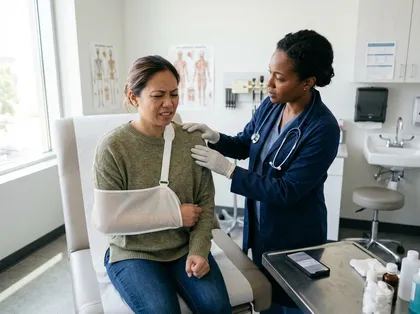
Medical evidence and damages may take longer to evaluate because an injured person’s condition, treatment needs, and financial losses can change over time. Early records may document initial symptoms reported shortly after the crash, while later examinations may provide more information about recovery, ongoing limitations, additional treatment, or future medical needs.
That’s why delays happen even when you file a property damage claim and a bodily injury claim at the same time. To avoid disputes on your pending bodily injury claim, do not skip treatment and follow your doctor’s recommendation. Also, keep all medical and financial records complete.
How a Delayed Injury Claim Can Affect You
A delayed injury claim can leave you covering for medical expenses and income losses while the insurer continues its review. It can also create uncertainty about what evidence remains outstanding and whether the insurer disputes part of the car accident claim.
A prolonged claim may affect you in several ways:
- Medical expenses may continue to accumulate while treatment remains ongoing.
- Lost income may increase if your injuries continue to limit your ability to work.
- Additional evidence may emerge as doctors update diagnoses, restrictions, or future care recommendations.
- Settlement decisions may become harder if the full medical picture remains unclear.
- Legal deadlines may continue running even while the insurance claim remains unresolved.
When an Injury Claim Delay May Need Closer Review
You may need to look more closely at a delayed injury claim when:
- The insurer repeatedly asks for documents you already provided.
- Long periods pass without a meaningful status update.
- The insurer does not explain what information it still needs.
- The reason for the delay changes without a clear explanation.
- The claim remains inactive despite the insurer having the requested medical and financial documentation.
You should also review any settlement or release carefully before signing it. A document that resolves more than the property damage portion may affect your ability to seek additional compensation for injuries.
A delay does not automatically mean the insurer has violated California claim-handling rules. If you cannot tell why the injury portion of your car accident claim remains open, keep records of the insurer’s requests and responses and consider asking an accident lawyer to review the delay and your next options.
Do Not Let a Pending Injury Claim Cause You to Miss a Lawsuit Deadline
A pending insurance claim does not necessarily extend the deadline for filing a car accident lawsuit. Even if the insurer has paid the property damage portion, you still need to track the deadline for the unresolved injury claim.
Important California deadlines may include:
- Personal Injury Lawsuits: Generally, two years from the date of injury under Code of Civil Procedure § 335.1.
- Wrongful Death Lawsuits: Generally, two years from the date of death under CCP § 335.1.
- Claims Involving a Public Entity: A claimant generally must present a government claim within six months of the injury or other event giving rise to the claim under Government Code § 911.2.
- After a qualifying written rejection, the claimant generally has six months to file a lawsuit under Gov. Code § 945.6.
- Different deadlines may apply if no qualifying rejection is sent or if a late-claim procedure is available.
Insurance negotiations and claim reviews do not necessarily stop these deadlines. Evidence can also disappear over time, including surveillance footage, physical conditions, records, and witness memories.
If you’re not sure which deadline applies to your case, a California personal injury or wrongful death lawyer can help identify the applicable deadline and explain your legal options.
What You Can Do While the Injury Claim Is Pending
You can take practical steps to keep your injury claim organized and documented while the insurer completes its review.
Consider taking the following steps:
- Continue medically appropriate treatment and follow your healthcare provider’s recommendations.
- Keep copies of medical records, bills, receipts, and other documents related to your injuries and losses.
- Document lost income and other financial losses connected to the incident.
- Keep a record of claim communications, including emails, letters, document requests, and the dates you provided requested information.
- Ask the adjuster what information remains outstanding and request a written status update when appropriate.
- Keep track of important legal deadlines rather than relying on the insurance process to preserve them.
- Review settlement documents and releases carefully to understand which claims they would resolve.
- Consider speaking with a car accident lawyer if the insurer disputes causation or damages, repeatedly requests the same information, or leaves the injury claim unresolved without a clear explanation.
These steps do not guarantee payment or a particular settlement. However, they can help preserve important evidence and clarify what remains to be done before the insurer can complete its injury evaluation.
How a California Lawyer Can Help With a Delayed Injury Claim
A California car accident lawyer can help determine what is preventing the injury portion of the case from moving forward after the property damage claim has already been resolved.
A lawyer can:
- Identify the reason for the delay and determine whether the insurer is waiting for relevant evidence or has not completed its review.
- Analyze causation disputes involving pre-existing conditions, delayed symptoms, or disagreements about whether the incident caused or aggravated an injury.
- Organize medical and financial evidence to address specific issues the insurer has raised.
- Evaluate requests for additional information and determine whether the requested material relates to the injury claim.
- Respond to insurer arguments about treatment, prognosis, lost income, future care, or other damages.
- Communicate with the insurer about outstanding issues, claim status, and settlement discussions.
- Review settlement offers and releases to determine whether they could affect unresolved bodily injury claims.
- Track legal deadlines and preserve litigation options while the insurance claim remains pending.
If the insurer has already resolved the property damage portion of your car accident claim but continues to evaluate the injury portion, a car accident attorney can help focus the dispute on the remaining medical, causation, and damages issues. They can guide you on which next steps are appropriate.
FAQs About Property Damage Payments and Pending Injury Claims
Does Paying Property Damage Mean the Insurer Accepted Fault for My Injuries?
Not necessarily. Paying a property damage claim may show that the insurer accepted responsibility for some or all of the property loss, but it does not automatically mean they accept liability for your injuries.
The insurer may still question whether the car accident caused certain injuries, whether a pre-existing condition contributed to your symptoms, or how much compensation your injuries support. If your injury claim remains open, keep medical and financial records that document how the incident affected you.
Can Insurance Pay for My Car but Not My Injuries?
An insurer may pay for your vehicle damage while your injury claim is still being reviewed or disputed. Property damage and bodily injury claims are often handled separately because they rely on different evidence. The insurer may agree on the cost to repair or replace your car while continuing to review your medical records, treatment, causation, lost income, or other injury-related losses.
How Long Can an Insurance Company Take to Decide an Injury Claim in California?
California does not set one absolute deadline for resolving every injury claim. An insurer generally must accept or deny the claim within 40 calendar days after receiving proof of claim, but it may take additional time if further investigation is reasonably necessary. In that situation, the insurer generally must explain the delay in writing and provide additional written notices every 30 days while the investigation continues.
Because an insurer may continue investigating while the lawsuit deadline approaches, hiring a lawyer can help you address unreasonable delays and preserve your right to file a lawsuit before time runs out.
Why Might the Insurer Ask for More Medical Information?
The insurer may ask for relevant medical information to evaluate whether the incident caused or aggravated your injuries and to assess your treatment and losses. That may include records related to diagnosis, treatment, prior conditions, future care, or work restrictions.
You should review requests carefully because the insurer should seek information that is relevant to evaluating the claim. If a request seems unusually broad or unrelated to your injuries, consider asking for clarification or speaking with a car accident lawyer before responding.
What Happens If I Sign a Release That Covers All Claims?
If you sign a release that covers all claims, you may give up the right to seek additional compensation for bodily injuries, even if you intended to settle only the property damage portion of your case.
Before signing, read the release carefully and confirm that it applies only to the claims you intend to settle. If the wording is broad, unclear, or includes bodily injury claims, consider having a personal injury lawyer review it first.
Do I Need a Lawyer If the Insurer Already Paid My Property Damage Claim?
Not necessarily, but a lawyer can help if your injury claim remains delayed, disputed, or difficult to document. Legal help may be especially useful if the insurer disputes that the accident was the cause of your injury, asks repeatedly for the same information, disputes your medical treatment or losses, or sends a release that may affect the injury claim.
Talk to Arash Law About Your Delayed California Injury Claim
If the insurer has paid your property damage claim but your injury claim remains unresolved, Arash Law can review what is causing the delay and what options may be available. Our attorneys can review the evidence, communicate with the insurer, address disputes, and track key legal deadlines.
Our past case results include car accident claims where liability was accepted, but payment or injury issues remained disputed:
$2.5 Million: The case initially settled for the at-fault driver’s policy limits, but the insurer did not issue the payment on time. Our firm pursued the matter further and ultimately recovered $2.5 million for the client.
Past results do not guarantee future outcomes. Every case is different.
Arash Law has recovered over $1 billion for injured clients. If we take your case, you do not pay attorney’s fees unless we obtain a recovery for you. The written contingency fee agreement will outline how case costs may apply.
Call (888) 488-1391 for a free case evaluation.
Make ‘Em Pay. Call AK.
Sources
- California Department of Insurance. Fair Claims Settlement Practices Regulations, including 10 CCR §§ 2695.5 and 2695.7: Claim Investigation, Decision, and Status-Update Requirements.
https://www.insurance.ca.gov/01-consumers/130-laws-regs-hearings/05-CCR/fair-claims-regs.cfm- California Legislature. California Code of Civil Procedure § 335.1: Two-Year Deadline for Personal Injury and Wrongful Death Lawsuits.
https://leginfo.legislature.ca.gov/faces/codes_displaySection.xhtml?sectionNum=335.1&lawCode=CCP- California Legislature. California Government Code § 911.2: Six-Month Government Claim Presentation Deadline for Personal Injury and Death Claims.
https://leginfo.legislature.ca.gov/faces/codes_displaySection.xhtml?sectionNum=911.2&lawCode=GOV- California Legislature. California Government Code § 945.6: Deadline for Filing Suit After a Public Entity’s Claim Rejection.
https://leginfo.legislature.ca.gov/faces/codes_displaySection.xhtml?sectionNum=945.6&lawCode=GOVDisclaimer
The information on this page is for general educational purposes and does not constitute legal advice. No attorney-client relationship is formed by reading or relying on this content. If you were injured, consult a licensed California personal injury attorney about your specific situation. Arash Law | (888) 488-1391.