TL;DR: Yes. If Proposition 213 applies, an uninsured driver can still recover economic damages such as medical bills, lost income, and property damage. However, pain and suffering and other non-economic damages are generally barred.
If another driver caused your crash, being uninsured does not automatically eliminate your injury claim. Proposition 213 limits certain categories of compensation rather than creating a blanket rule that prevents every uninsured driver from filing a claim.
The key questions are what losses you can prove, whether Civil Code § 3333.4 applies to your specific insurance situation, and whether an exception or other coverage issue changes the analysis.
Key Facts About Proposition 213 in California
- An uninsured driver may still have a claim. Proposition 213 can restrict non-economic damages without eliminating a claim for proven economic losses.
- Insurance status and collision fault are separate issues. Driving without qualifying coverage does not, by itself, establish that you caused the crash.
- The statute looks beyond whether you personally bought a policy. Vehicle ownership and an operator’s ability to establish the financial responsibility required by California law can affect whether the restriction applies.
- A narrow DUI exception may apply to some uninsured vehicle owners. If the at-fault driver is convicted of DUI under Vehicle Code § 23152 or § 23153, the uninsured owner may still recover non-economic damages.
- Documentation still drives the economic portion of the claim. Medical records, wage records, repair estimates, photographs, and other evidence can help establish the losses that remain recoverable.
Table of Contents

I Didn’t Have Insurance When Another Driver Caused the Crash. What Compensation Can I Still Recover Under Proposition 213?
If Proposition 213 applies to you, you can generally still pursue compensation for economic losses caused by the at-fault driver. These may include:
- Medical expenses: Emergency treatment, hospital care, surgery, rehabilitation, physical therapy, prescriptions, and other necessary medical care.
- Lost income: Wages or other earnings lost while your injuries prevented you from working.
- Reduced earning capacity: Future income losses when an injury limits your ability to work.
- Property damage: Reasonable vehicle repair or replacement costs and other crash-related property losses.
The principal restriction is on non-economic damages. Civil Code § 3333.4 bars qualifying uninsured owners and operators from recovering damages for pain, suffering, inconvenience, physical impairment, and disfigurement.
That means you may still have a claim even when Proposition 213 prevents recovery for pain and suffering. Your lack of insurance also does not determine who caused the collision. Fault and the types of damages you can recover are separate issues.
If you’re wondering, “Can I still file a claim in this situation?” Yes. Proposition 213 may limit the damages available, but it does not automatically prevent you from bringing a claim against the at-fault driver.
How This Scenario Works: When Proposition 213 Applies to an Uninsured Driver’s Claim
Proposition 213 does not simply ask, “Did the injured person have an insurance policy?” Civil Code § 3333.4 addresses different situations involving vehicle owners and operators.
The statute generally bars non-economic damages when the injured person owned an involved vehicle that was not insured as required by California’s financial responsibility laws. It also applies when an injured operator cannot establish the financial responsibility required by those laws.
As a result, the details matter when someone says, “I didn’t have insurance.” Relevant questions may include:
- Did you own the vehicle you were driving?
- Was the vehicle itself insured?
- Did another applicable form of financial responsibility exist?
- Were you driving a vehicle owned by your employer?
- Was the at-fault driver convicted of a qualifying DUI offense?
Those questions can affect whether Proposition 213 applies and which damages remain available.
Exceptions That Allow Uninsured Drivers to Recover Full Damages
Three factual scenarios entirely lift Prop 213’s bar. If your case fits any of them, you may be able to pursue pain and suffering damages alongside your economic losses, the same as an insured driver. Qualifying can sharply change what your claim is worth.
-
The DUI Conviction Exception: If the at-fault driver is convicted of DUI, the uninsured vehicle owner may still recover non-economic damages, such as pain and suffering. An arrest or DUI charge alone is not enough. A “wet reckless” is a reckless driving conviction involving alcohol or drugs, often used as a reduced charge in a DUI case. Still, it does not allow the uninsured owner to recover pain-and-suffering damages under this DUI exception.
For example, if you’re an uninsured vehicle owner and get injured by a drunk driver who is later convicted of DUI, you may be able to seek pain-and-suffering damages. If that driver instead pleads to wet reckless, the DUI exception would not apply. (Civil Code § 3333.4(c); Vehicle Code §§ 23103, 23103.5, 23152, 23153)
-
The Employer Vehicle Exception: Proposition 213 may not apply the same way if you were driving your employer’s vehicle for work.
In Montes v. Gibbens, the California Court of Appeals allowed an employee to seek non-economic damages even though the employer’s vehicle was uninsured. The court found that, in those circumstances, the employee was not personally required to prove financial responsibility for the employer’s vehicle.
Whether the same rule applies to your case depends on who owned the vehicle, whether you were working at the time, and the insurance facts.
- The Passenger Exception: If you were only a passenger in an uninsured vehicle and did not own or drive it, Proposition 213 generally does not bar your non-economic damages. You may still pursue compensation for pain and suffering from the at-fault driver.
Liability and Claim Issues Under Proposition 213
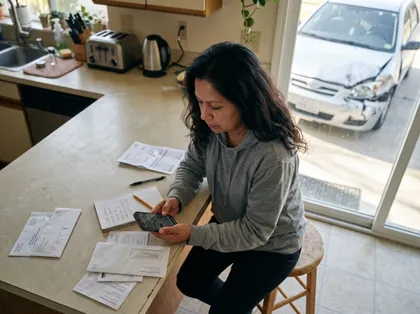
Proposition 213 affects the types of damages an uninsured driver may recover, but the rest of the claim still depends on ordinary liability and damages issues. Even when Proposition 213 applies, these questions can affect the amount you may recover:
- Shared Fault: If you contributed to the crash, your recoverable damages may be reduced based on your share of fault.
- Injury Causation: You still need to show that the crash caused the injuries and financial losses you are claiming. Gaps in treatment or preexisting conditions can create disputes.
- Other Responsible Parties: A vehicle owner, employer, business, or public entity may also be responsible, depending on how the crash occurred.
- Disputed Economic Losses: Because Proposition 213 may bar non-economic damages, documentation of medical expenses, lost income, and other economic losses can become especially important.
Suppose another driver rear-ends you while you are uninsured, but you wait several days before seeking medical care. Proposition 213 may limit the types of damages you can recover, while the treatment delay may create a separate dispute over whether the crash caused your injuries.
Insurance and Compensation Under Proposition 213
Uninsured drivers are not uncommon in California. According to the Insurance Research Council, an estimated 20.4% of California motorists were uninsured in 2023, compared with 15.4% nationwide. That makes insurance status and available coverage especially important when evaluating how a claim may be paid.
| Issue | What It Means |
|---|---|
| Economic Damages | You may still recover medical bills, lost income, reduced earning capacity, and property damage. |
| Pain and Suffering | If Proposition 213 applies, non-economic damages such as pain and suffering, inconvenience, physical impairment, and disfigurement may be barred. |
| At-Fault Driver’s Insurance | The other driver’s coverage can affect how your claim is paid. If that driver is also uninsured, collecting compensation may be more difficult. |
| Other Available Coverage | Other policies may matter if the vehicle belonged to someone else, was owned by an employer, or another policy applies. |
If Proposition 213 may affect your claim, a California car accident lawyer can review the available insurance and your options. Call (888) 488-1391 for a free case review.
Evidence That May Matter After a Car Crash if You Were an Uninsured Driver
What evidence or insurance issues can matter most in this case? Records showing how the crash happened, what losses you suffered, who owned the vehicle, and what insurance applied on the crash date can all affect the claim.
Useful records may include:
- Police or collision reports.
- Photographs of the vehicles and the crash scene.
- Dashcam, traffic-camera, or surveillance footage.
- Witness names and contact information.
- Medical records and bills.
- Prescription and rehabilitation records.
- Wage statements and employment records.
- Vehicle repair estimates or valuation records.
- Insurance cards and declarations pages.
- Policy cancellation or lapse notices.
- Correspondence concerning coverage on the crash date.
- Documents showing who owned the vehicle.
Preserve records related to insurance even if you believe you were uninsured. Whether you personally lacked a policy may not answer every question about the vehicle’s coverage or the financial responsibility applicable to you as its operator.
Evidence can disappear long before a legal filing deadline. Video may be overwritten, vehicles may be repaired or disposed of, and witnesses’ memories may fade. Promptly preserving available evidence can make later disputes easier to address.
Steps to Protect Your Claim After a Car Crash If You Were an Uninsured Driver
What you do after the crash can affect both the strength and value of your claim, especially if Proposition 213 may limit the damages you can recover. Taking the following steps can help preserve evidence, document your losses, and clarify which insurance or legal issues may affect your case.
- Seek Medical Care Without Delay: Get to a doctor or emergency room as soon as possible, even if your injuries feel minor. If treatment was delayed, keep records documenting when symptoms began and why care did not begin immediately.
- Preserve Crash Evidence: Save photographs, video, witness information, repair estimates, damaged-property records, and communications concerning the collision.
- Confirm the Insurance Facts: Obtain records showing who owned the vehicle, whether any policy covered it on the crash date, and whether another form of financial responsibility may apply. Do not assume that “I did not personally have insurance” resolves the Proposition 213 question.
-
Complete Any Required DMV Reporting: California law requires you to file Form SR-1 with the DMV within 10 days if the crash caused injury, death, or property damage exceeding $1,000. This requirement applies regardless of fault or insurance status and is separate from any law enforcement report or insurance claim.
Special reporting provisions apply in certain circumstances, including when employees drive employer-owned or employer-leased vehicles.
- Do Not Sign Any Release Before Speaking With an Attorney: Signing a release too early can waive your ability to rely on a Prop 213 exception, depending on its wording. A formal conviction under Vehicle Code § 23152 or § 23153 may come months later. If you sign a release before then, you may forfeit your right to seek non-economic damages. An attorney can structure the claim to preserve that window while the criminal case proceeds.
- Get Legal Help Early: A personal injury attorney can determine whether Proposition 213 applies, identify possible exceptions, review insurance coverage, and track important deadlines. They can also handle insurer communications and help protect your claim.
What Is the Deadline to File a Personal Injury Lawsuit in California?
Different deadlines can apply depending on the type of claim:
- Personal Injury: Generally, two years from the date of the accident under CCP § 335.1.
- Property Damage: Generally, three years under CCP § 338.
- Government Claim: Generally, six months to present a claim involving personal injury to a public entity under Government Code § 911.2.
For a government claim, the public entity generally has 45 days to act after the claim is presented. If it sends a written rejection notice, you generally have six months from the date that notice is delivered or mailed to file a lawsuit. If no written rejection notice is provided, the lawsuit deadline is generally 2 years from the date the claim arose.
Government-entity claim deadlines can be shorter and more complex than ordinary injury deadlines. Evidence such as video, records, and witness information may also disappear long before any legal deadline expires.
What Arash Law Has Recovered for Accident Clients
These auto accident results are relevant because they show how disputed fault, serious injuries, and insurance issues can affect a claim. They do not establish the value of a Proposition 213 case, but they reflect the types of complex matters featured in Arash Law’s case results. Our team has recovered more than $1 billion for injured clients.
$8.8 Million — Vehicle Accident Due to Speeding: A company van driver’s speeding caused severe injuries to a client. After multiple depositions, the case resolved in an $8,800,000 settlement.
Past results do not guarantee future outcomes. Every case is different, and results depend on the specific facts and evidence involved.
Frequently Asked Questions About Proposition 213 in California
Does Prop 213 Apply to Property Damage Claims in California?
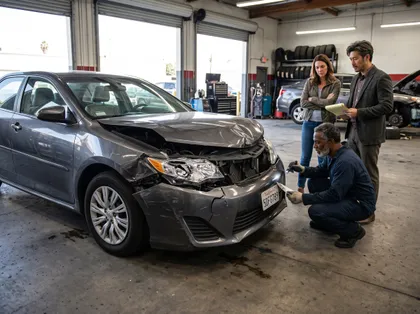
No. Proposition 213 restricts only non-economic damages such as pain and suffering. Property damage is an economic loss, and it remains recoverable even if you were uninsured at the time of the crash.
What If the At-Fault Driver Was Convicted of a Wet Reckless?
A wet reckless does not trigger the DUI exception under Prop 213. A plea to Vehicle Code § 23103 per § 23103.5 is not a driving under the influence (DUI) conviction under § 23152 or § 23153. Prop 213 still bars you from recovering non-economic damages, even if the other driver faced DUI charges and pleaded down.
Does Prop 213 Apply If the At-Fault Driver Was Also Uninsured?
Yes. Prop 213 depends on your insurance status, not the other driver’s. If both drivers were uninsured, you may still pursue economic damages from the at-fault driver. Collecting from an uninsured driver can be difficult.
What Happens to My Prop 213 Limits If the Other Driver Flees the Scene?
A hit-and-run does not remove Prop 213’s limits. If you had no insurance, the law still limits you to economic damages. You also have no uninsured motorist (UM) policy to claim against. If police later identify the driver, you can pursue economic damages from that driver.
Do Personal Injury Attorneys Take These Cases Without Upfront Fees?
Yes. Many personal injury attorneys, including those handling Prop 213 claims, work on a contingency basis, and California Business and Professions Code § 6147 requires a written contingency fee agreement. You pay no legal fees unless your attorney wins or settles your case, and there are no upfront costs to get started. The written agreement confirms the fee terms at the start of representation.
Talk to an Attorney About Your Proposition 213 Claim
Prop 213 limits what uninsured drivers can recover, but California law leaves more options open than many insurance adjusters will tell you. The exceptions are real, the economic damages are real, and the steps you take in the first days after the crash shape whether you protect or lose them.
If another driver caused the crash that hurt you and you had no insurance at the time, you may still have a meaningful claim.
Call Arash Law at (888) 488-1391 for a free case review. Speak with an uninsured motorist attorney before you sign any insurance release.
Sources
- California Legislative Information. Civil Code § 3333.4 — Proposition 213 restrictions on non-economic damages for certain uninsured owners and operators.
https://leginfo.legislature.ca.gov/faces/codes_displaySection.xhtml?lawCode=CIV§ionNum=3333.4- California Legislative Information. Code of Civil Procedure § 335.1 — Two-year statute of limitations for most personal injury claims.
https://leginfo.legislature.ca.gov/faces/codes_displaySection.xhtml?lawCode=CCP§ionNum=335.1- California Legislative Information. Government Code § 911.2 — Six-month claim-presentation deadline for certain claims involving death, personal injury, or personal property against a public entity
https://leginfo.legislature.ca.gov/faces/codes_displaySection.xhtml?lawCode=GOV§ionNum=911.2- California Legislative Information. Vehicle Code § 23152 — California DUI offenses relevant to the Proposition 213 DUI exception
https://leginfo.legislature.ca.gov/faces/codes_displaySection.xhtml?lawCode=VEH§ionNum=23152- California Legislative Information. Vehicle Code § 23153 — DUI offenses involving injury that are relevant to the Proposition 213 DUI exception.
https://leginfo.legislature.ca.gov/faces/codes_displaySection.xhtml?lawCode=VEH§ionNum=23153- California Legislative Information. Vehicle Code § 23103 — California reckless driving statute.
https://leginfo.legislature.ca.gov/faces/codes_displaySection.xhtml?lawCode=VEH§ionNum=23103- California Legislative Information. Vehicle Code § 23103.5 — Governs reckless-driving pleas substituted for DUI charges, commonly called “wet reckless” pleas.
https://leginfo.legislature.ca.gov/faces/codes_displaySection.xhtml?lawCode=VEH§ionNum=23103.5- California Department of Motor Vehicles. SR-1 Report of Traffic Accident Occurring in California: 10-day filing requirement; property damage exceeding $1,000 under Vehicle Code § 16000. https://www.dmv.ca.gov/portal/dmv-virtual-office/accident-reporting/
- California Highway Patrol. Form CHP 190, Application for Release of Information, is used to request a collision report; statewide collision data feeds the Statewide Integrated Traffic Records System (SWITRS). https://www.chp.ca.gov/notify-chp/collision-report-chp-190/
- Insurance Research Council (IRC). Estimated uninsured-motorist rates for 2023: 20.4% in California and 15.4% nationwide, based on the ratio of uninsured motorist claims to bodily injury claim frequencies. https://www-legacy.iii.org/fact-statistic/facts-statistics-uninsured-motorists
Disclaimer
Past results do not guarantee future outcomes. Every case is different. The information on this page is for general educational purposes and does not constitute legal advice. Reading or relying on this content does not form an attorney-client relationship. If you were injured, consult a licensed California personal injury attorney about your specific situation.