TL;DR: If a Los Angeles driver hits you and does not provide insurance information, having the license plate can still help identify the vehicle and possible coverage. Injured pedestrians can use the plate, crash evidence, reporting, and insurance status to understand what options remain and how quickly they must be pursued.
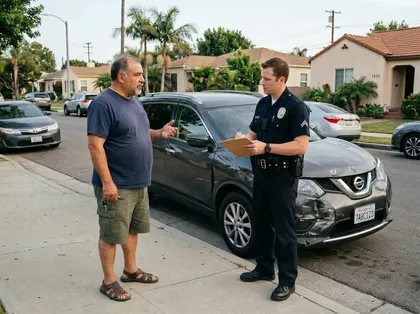
If a driver hits you in Los Angeles and does not provide insurance information, knowing what their license plate is can still help you pursue the matter. Report the crash, preserve the plate number and other evidence, and notify your insurer. The plate may help identify the vehicle owner and potentially lead to the driver or available insurance coverage.
In Los Angeles, the Los Angeles Police Department may become involved when a driver leaves the scene or fails to exchange required information. A traffic collision report can document the plate, involved vehicles, witnesses, and other details that may help identify the driver. Nearby traffic, business, or residential cameras may also provide useful evidence.
The California Department of Motor Vehicles is a key technical entity in this process. Vehicle and accident records may contain information linked to a license plate. However, privacy laws limit who can access certain personal information. If the driver remains unidentified, uninsured motorist coverage may also become relevant depending on the policy and circumstances.
Call Arash Law at (213) 277-5878, or reach our 24-hour line at (888) 488-1391.
Table of Contents

The Driver Who Hit Me Didn’t Give Me Their Insurance, but I Have the License Plate. Can I Still File a Claim?
Yes. If you’re missing the other driver’s insurance information after a crash, that does not automatically bar you from pursuing compensation for your losses. If you’re wondering, “Can I still file a claim in this situation?”, the answer depends on what the plate leads to: an insured driver, an uninsured driver, or a registered owner who was not driving.
- The Plate Leads to an Insured Driver: The driver’s insurer will investigate fault before paying anything. A plate shows whose vehicle was involved, not who caused the crash, so you still need evidence of what the driver did wrong.
- The Registered Owner Was Not Driving: Someone else may have had permission to use the vehicle. In some cases, California law makes an owner responsible for a permitted driver’s negligence, but only up to limited amounts. An attorney can review whether that law applies in your situation.
- No One Can Be Identified: If the plate does not lead to an identifiable driver or available liability coverage, your own uninsured motorist (UM) coverage may become relevant. If you later need to file a lawsuit before identifying the driver, California procedure may allow an unnamed “Doe” defendant to be included and replaced once the person is identified.
Five Things To Know When You Have the Plate but No Insurance Information
- The Plate May Help Identify the Vehicle Owner: A license plate can link the vehicle to its registered owner via California Department of Motor Vehicles (DMV) records. However, access to another person’s record is restricted to permissible uses. Protected personal information is not automatically available to the public.
- The Driver May Have Been Required to Exchange Information: California law requires drivers in qualifying crashes to stop and provide certain identifying information. Separate rules may also require drivers to exchange evidence of financial responsibility, including insurance information.
- Police May Help Document and Identify the Driver: If the driver left or refused to provide required information, report the crash to the appropriate agency. The Los Angeles Police Department (LAPD) generally handles collisions on city streets, while the California Highway Patrol (CHP) commonly handles freeway crashes. A report can preserve the plate number and other identifying details.
- Your Own Insurance May Still Provide a Claim Option: If the driver cannot be identified or has no applicable insurance, UM coverage from your own auto policy may become relevant, even if you weren’t driving when the crash occurred. These claims can have separate notice, reporting, and evidence requirements.
- Different Deadlines Can Apply: A personal injury lawsuit against a private driver generally has a two-year filing deadline. UM claims against unidentified drivers have additional requirements.
How Traffic Accident Claims in Los Angeles Are Different
Traffic accident claims in Los Angeles are shaped by the city’s unusually large mix of local streets, state freeways, and county court districts. The LAPD or CHP may hold the crash reports, depending on where the collision occurred. Meanwhile, the Los Angeles County Superior Court handles any resulting lawsuits under its venue and assignment rules.
Where Your Case is Actually Filed in Los Angeles
Personal injury lawsuits arising from traffic crashes in Los Angeles are filed in the Superior Court of California, County of Los Angeles. Since January 8, 2024, all personal injury cases in the Central District go to Independent Calendar (IC) departments at the Stanley Mosk Courthouse, located at 111 N. Hill St., Los Angeles, CA 90012. That procedural change matters because IC judges manage all aspects of a case from filing through trial.
If your crash occurred outside the City of Los Angeles but still within Los Angeles County (for example, on a surface street in a neighboring city), the filing courthouse and investigating agency may differ. An attorney familiar with the local court system can route your case correctly from the start.
What the Local Data Shows
The California Office of Traffic Safety (OTS) and the Los Angeles Department of Transportation (LADOT) each track hit-and-runs in Los Angeles. The OTS reports city-level totals for fatal and injury hit-and-run crashes. Meanwhile, LADOT’s Vision Zero Safety Study adds severity context, analyzes the share of crashes that involved hit-and-runs and resulted in fatalities or serious injuries. It also maps where the city’s most severe crashes are concentrated.
Neither source separately counts drivers who stayed at the scene but did not provide insurance information.
- Hit-and-Run Crashes in 2023: The OTS counted 2,549 crashes in Los Angeles in which a driver left the scene, and someone was killed or injured.
- Hit-and-Run Share of Severe Crashes: About 20% of crashes that killed or seriously injured someone were hit-and-run incidents. The share was 27% for bicycle-involved crashes and 30% for pedestrian-involved crashes.
- High Injury Network: The network spans 549 miles, accounting for 7.5% of the streets in Los Angeles. Despite that low percentage, this network accounts for 61.8% of collisions that resulted in death or serious injury.
- Highest-Scoring Intersections, All Travel Modes: The Los Angeles intersections that saw the most crashes include:
- Florence Avenue and Vermont Avenue.
- Avalon Boulevard and Century Boulevard.
- La Brea Avenue and Obama Boulevard.
How the Los Angeles Practice Market Operates
In our experience, claims involving a driver who left or refused to share insurance information turn on speed. The sooner the license plate, the collision report, and nearby video are secured, the more an attorney has to work with. A claim that starts weeks later has less.
Talk to a Los Angeles pedestrian accident lawyer about your plate number and your coverage options. Call Arash Law at (213) 277-5878, or reach our 24-hour line at (888) 488-1391.
What Arash Law Has Recovered in Cases Like This
Traffic accident claims arising in Los Angeles, particularly those involving a driver who refuses to cooperate or flees, can result in significant recoveries when the right evidence is preserved and the right legal strategy is applied. Below is a selection of recent results our firm has achieved for clients injured in pedestrian and vehicle collisions throughout California.
$10,000,000 — Pedestrian Accident: Our firm secured a significant financial recovery for a client who suffered serious injuries after being run over by a speeding vehicle. Beyond the monetary outcome, our team arranged his treatment with leading medical providers.
$5,000,000 — Pedestrian Accident: Our firm won this case for a client who sustained a mild traumatic brain injury when a large truck struck him while he was walking in a crosswalk. The truck company disputed responsibility, claiming he had been looking down at his phone as he walked. We challenged that account and pursued a favorable outcome on his behalf.
Case results displayed were dependent on the unique facts of each case. Different facts will bring different results. No guarantee of outcome is expressed or implied. Past results do not guarantee a similar outcome in your case.
How a Los Angeles Crash Claim Works When You Have the Other Driver’s Plate but No Insurance Information
Having the other driver’s license plate information can help move the claim forward even when insurance information was not exchanged. The plate may be used to identify the registered owner through DMV records via a legally permitted request. Identifying the vehicle’s owner can help determine who was driving and whether liability insurance may apply.
If no police report was made at the scene, the plate, vehicle description, photos, witness information, and any available video can help document the crash. Law enforcement may also use vehicle information during an investigation.
Once the driver, owner, or available insurance is identified, a liability claim may be presented to the appropriate insurer. If the driver cannot be identified or no applicable liability coverage is found, UM coverage may become relevant, depending on the policy and the circumstances of the crash. Through these claims, you can pursue compensation for the injuries and losses you sustained in the accident.
Liability Issues When a Driver Hits a Pedestrian and Does Not Give Their Insurance Information
Fault depends on what happened, not on whether the driver shared insurance information. A plate shows whose vehicle was involved, not who caused the crash, so a pedestrian claim still needs evidence of what the driver did.
California law generally requires drivers to yield to pedestrians in a marked crosswalk (Vehicle Code § 21950). For example, a driver or insurer may still argue that the pedestrian shared fault by crossing against a signal or outside a crosswalk. Under California’s comparative fault rules, a share of fault can reduce compensation without automatically ending the claim.
Who counts as a pedestrian can also matter. California’s definition covers people on foot and people using certain human-powered conveyances other than bicycles, such as a skateboard (Vehicle Code § 467). An attorney can confirm how the definition applies to your situation.
Evidence That Disappears First in Los Angeles Traffic Accidents
If the driver left without sharing information, this section explains which evidence disappears first and thus matters the most when building a claim for damages.
Video footage, witness contact details, and vehicle details can be lost quickly after a crash. Write down the plate and vehicle description right away, collect witness names, and photograph the scene. Ask an attorney about preservation requests before nearby cameras overwrite their recordings.
| Evidence | What to Preserve | Who May Control It |
|---|---|---|
| Plate and vehicle details | Full or partial plate; make, model, and color; distinguishing features such as damage, decals, or a roof rack | You and any witnesses |
| Crossing details | The crosswalk or intersection, the signal you had, the lighting, and the traffic | You, witnesses, and nearby cameras |
| Video footage | Recordings showing the crash, the vehicle, or the driver | Nearby businesses, parking garages, and public agencies |
| Witness information | Names and phone numbers of anyone who saw the crash or the driver’s refusal | Witnesses |
| Photos | Vehicle damage, visible injuries, and the scene | You |
| Damaged belongings | Clothing, shoes, phone, glasses, or gear such as a skateboard; do not repair or discard them | You |
| Medical records | The date of the first treatment and all follow-up care | Your medical providers |
| Collision report | The report number and a copy once it is filed | LAPD or CHP |
| Insurance policy | The declarations page shows UM, Medical Payments (MedPay), and collision coverage | Your insurer |
Retention periods vary by system, and some recordings may be overwritten within days. Gas stations, pharmacies, parking garages, and storefronts may have cameras facing the street. An early written preservation request gives an attorney the best chance of saving time-sensitive evidence.
If there is no police report, other records carry more weight. Video, witness statements, photos, and medical records can show what happened. You can still file a report with the LAPD or the CHP, depending on where the crash occurred. Once a report is filed, you can request a copy.
Your Compensation Pathways After a Los Angeles Traffic Accident
If the driver is identified and insured, you can pursue that driver’s liability coverage. If not, your own UM coverage, MedPay, or California Victim Compensation Board (CalVCB) funds may apply.
- Identified Driver with Insurance: The claim goes to the driver’s liability insurer, which may pay medical bills, lost wages, and pain and suffering when the driver is legally responsible. An attorney can send a demand once the owner and driver are identified.
- Driver Not Identified, or Uninsured: Your own UM coverage under Insurance Code § 11580.2 may pay for bodily injury losses, including when you are hit as a pedestrian. If you do not have your own auto policy, a policy covering a household member may apply. For an unidentified driver, Insurance Code § 11580.2 generally requires physical contact with the vehicle, a police report within 24 hours, and a sworn statement to your insurer within 30 days.
- Driver Identified but Underinsured: If the driver’s bodily injury limits are lower than your own underinsured motorist (UIM) limits, your UIM coverage may apply. The applicable liability limits generally must first be exhausted by payment of a settlement or judgment. Any amounts paid by legally liable parties reduce the maximum available UIM amount.
- MedPay: This is an optional part of an auto policy, not health insurance. It pays reasonable medical expenses up to your policy limit, regardless of who caused the crash, and may apply when you are hit as a pedestrian. Use it while the UM investigation continues.
- The California Victim Compensation Board (CalVCB): CalVCB may help qualifying crime victims after other sources, such as medical insurance and civil claims, are exhausted. Eligibility depends on the facts, so confirm current requirements and the filing deadline with CalVCB or a County Victim Witness Assistance Center before applying.
The pathway that pays you is one question. What you can recover is another. California law generally groups injury damages into two types.
- Economic damages cover measurable losses. Examples include past and future medical bills, lost wages, reduced earning capacity, and the cost of repairing or replacing damaged belongings such as a phone, glasses, or clothing.
- Non-economic damages cover losses that do not have a monetary value, such as physical pain and suffering, emotional distress, and loss of enjoyment of life. Your spouse or registered domestic partner can also file a separate claim for loss of consortium if your injuries impact your relationship with them.
- Punitive damages are different. They are meant to punish the at-fault party, not compensate you for your losses. That’s why courts only award them in rare cases. They also require clear and convincing evidence of malice, oppression, or fraud (Civil Code § 3294).
Steps to Take Now to Protect Your Los Angeles Claim
Report the crash to police, get medical care, notify your insurer, and speak with an attorney before giving a recorded statement. Some of these steps have deadlines, so the order matters.
- File or Confirm a Police Report: If no report exists, file one with the LAPD for crashes on city streets or the CHP for freeway crashes.
- Get Medical Care and Keep the Records: A gap between the crash and your first treatment may give an insurer reason to argue that something else caused your injuries.
- Notify Your Insurer: Tell your insurer that the other driver did not provide insurance information, that you have reported or are reporting the crash, and that you may make a UM claim. Late notice may give an insurer grounds to dispute coverage.
- Talk to an Attorney: A lawyer can request DMV records using the plate, track your deadlines, and show you what to do after a pedestrian accident.
How Long Do You Have to Take Legal Action After a Driver Hits You in Los Angeles?
You generally have two years from the date of the crash to file a personal injury lawsuit against a private at-fault driver. Any delays caused by the fact that you only have the driver’s license plate information, not their insurance details, will not extend this deadline. Filing windows can also vary depending on the type of legal action you’re taking:
- Personal Injury Lawsuits: You generally have two years from the date of the accident to sue (CCP § 335.1).
- Cases Involving Injured Minors: This deadline is “tolled,” or paused, and only begins when the injured minor turns 18 (CCP § 352).
- Property Damage Lawsuits: You generally have three years to sue for damage to personal property caused by the accident (CCP § 338).
-
Claims Against Public Entities: You generally have six months from the date the claim arose (typically the day you were injured) if a public vehicle or road condition contributed to the accident (Government Code § 911.2).
If the government agency denies the claim in writing, you have 6 months from the date the written rejection notice is personally delivered or mailed to file a lawsuit. If it takes no action for your claim and does not provide a written denial, you generally have two years from the date your claim arose to sue.
Taking early action matters more than just meeting these lawsuit-filing deadlines. Some evidence of a crash, such as surveillance footage, is time-sensitive, and it can be harder to build your case if you fail to preserve it on time.
Additionally, if you rely on UM coverage, you generally must protect the claim within 2 years of the crash. Within that period, you must file suit against the uninsured motorist, reach an agreement with your insurer on the amount due, or formally institute arbitration by written notice sent by certified mail, return receipt requested. Unlike the injury lawsuit deadline, this UM deadline is not paused for injured minors.
How to File a Claim Against the City of Los Angeles
Claims seeking damages from the City must be filed with the Los Angeles City Clerk. They can be submitted through the City’s online claims portal, mailed to the City Clerk, or delivered in person. After filing, a claim number is issued, and the matter is transferred to the City Attorney’s Office for investigation.
A claim against the City of Los Angeles may be required if a city employee, city vehicle, or dangerous condition on public property contributed to the crash. In most personal injury cases, this claim must be presented before a lawsuit for money damages can be filed against the City. It should identify when and where the injury occurred, explain why the City is believed to be responsible, and describe the claimed injuries or damages. You can also submit any available supporting documents.
Frequently Asked Questions About What Happens When a Driver Hits You in Los Angeles But Doesn’t Provide Their Insurance Information
Which Agency Should I Contact After a Crash on a Los Angeles Street or Freeway?
For a crash on a Los Angeles city street, the LAPD is typically the relevant local agency. The CHP generally handles crashes on freeways. The investigating agency may hold the collision report and related records, so the crash location often determines where those materials are requested.
Can I Request an LAPD Collision Report Online?
If the LAPD handled your crash, you can submit a request through the LAPD’s online report request page. A report must exist first, so file one if none was made.
Can Nearby Surveillance Cameras Help Identify the Driver?
Yes. Video from nearby businesses, homes, or private security systems may help show the vehicle, plate, driver, or crash itself. An attorney can help you send letters to request that this footage be preserved before security systems overwrite it.
Can a License Plate Number Really Help Identify an Uninsured Driver in Los Angeles?
Yes. Using the plate number from your collision report, a pedestrian accident lawyer can request the registered owner’s name and registration details, which can help identify the driver and possible coverage. Even a partial plate can help, because officers may combine it with your vehicle description to narrow the search.
California Vehicle Code § 1808.21 makes residence addresses in DMV records confidential, with exceptions for courts, law enforcement, and other government agencies. Under § 1808.22(d), an attorney may obtain that information when needed to represent a client in an actual or potential motor-vehicle action.
Can I Bring a UM Claim if the Driver Stayed but Refused to Share Insurance Information?
Possibly. Use the plate and the collision report to identify the owner and check for coverage. If the driver cannot be identified or is identified and turns out to be uninsured, your UM coverage may apply. If the driver has insurance, the claim would go to their insurer.
What Evidence or Insurance Issues Matter Most When a Driver Who Hit a Pedestrian Gave No Insurance Information?
Three issues can shape the claim: identifying the driver, proving what the driver did, and determining which coverage applies. The plate, the collision report, and any video footage matter most for identification. Crossing details and witnesses matter most for fault. Your declarations page shows which policy may pay. The sections above cover each issue in detail.
Talk to Arash Law About What That Plate Can Do for Your Case
Being hit by a driver who will not share their information is stressful, and it can feel like the trail ends at the roadside. It does not have to. A plate number, a collision report, and a few quick steps can still lead you to the driver and to the coverage that applies to you.
Arash Law represents injured people throughout Los Angeles, including in cases where the driver provided no insurance information. The firm reports more than $1 billion recovered for clients across California. After a free initial consultation, if your case is a fit, our attorneys can work to identify the driver, preserve evidence, and pursue the compensation options available under California law.
Call Arash Law at (213) 277-5878 to schedule a free initial consultation, or reach our 24-hour line at (888) 488-1391. We work on a contingency fee basis, so the attorney’s fees are paid from a recovery, and only if there is one. Hablamos español.
About This Guide
This guide draws on California statutes and on public notices from the Superior Court of California, County of Los Angeles. These include its December 14, 2023 announcement that, effective January 8, 2024, Central District personal injury cases are assigned to Independent Calendar departments at Stanley Mosk Courthouse. It also uses LAPD and CHP collision-report resources, the California Office of Traffic Safety’s 2023 Los Angeles city ranking, LADOT’s 2024 Vision Zero Safety Study, and California Victim Compensation Board materials.
Sources
- California Code of Civil Procedure § 335.1 (two-year personal injury limitations period): https://leginfo.legislature.ca.gov/faces/codes_displaySection.xhtml?lawCode=CCP§ionNum=335.1
- California Code of Civil Procedure § 338 (property damage): https://leginfo.legislature.ca.gov/faces/codes_displaySection.xhtml?lawCode=CCP§ionNum=338
- California Code of Civil Procedure § 352 (minors): https://leginfo.legislature.ca.gov/faces/codes_displaySection.xhtml?lawCode=CCP§ionNum=352
- California Vehicle Code § 16025 (exchange of information): https://leginfo.legislature.ca.gov/faces/codes_displaySection.xhtml?lawCode=VEH§ionNum=16025
- California Insurance Code § 11580.2 (uninsured motorist coverage): https://leginfo.legislature.ca.gov/faces/codes_displaySection.xhtml?lawCode=INS§ionNum=11580.2
- California Government Code § 911.2 (government claim deadline): https://leginfo.legislature.ca.gov/faces/codes_displaySection.xhtml?lawCode=GOV§ionNum=911.2
- California Office of Traffic Safety, Los Angeles 2023 city ranking: https://www.ots.ca.gov/rankings/los-angeles-2023/
- Los Angeles Department of Transportation, Vision Zero Safety Study (2024): https://ladot.lacity.gov/sites/default/files/documents/la-vision-zero-safety-study-2024.pdf
- Los Angeles Police Department, collision report requests. https://www.lapdonline.org/request-a-report
- California Victim Compensation Board, For Victims: https://victims.ca.gov/for-victims
- Los Angeles Superior Court, New Filing Procedures for Personal Injury Cases in the Central District (Dec. 14, 2023): https://www.lacourt.org/newsmedia/uploads/1420231214155823NTA23NEWPROCEDURESPIHUB.pdf
- California Vehicle Code § 21950 (pedestrian right-of-way at crosswalks): https://leginfo.legislature.ca.gov/faces/codes_displaySection.xhtml?lawCode=VEH§ionNum=21950
- California Vehicle Code § 467 (definition of pedestrian): https://leginfo.legislature.ca.gov/faces/codes_displaySection.xhtml?lawCode=VEH§ionNum=467
- California Code of Civil Procedure § 474 (unnamed or “Doe” defendants): https://leginfo.legislature.ca.gov/faces/codes_displaySection.xhtml?lawCode=CCP§ionNum=474
- California Civil Code § 3294 (punitive damages): https://leginfo.legislature.ca.gov/faces/codes_displaySection.xhtml?lawCode=CIV§ionNum=3294
- California Vehicle Code § 1808.21 (confidentiality of DMV residence addresses): https://leginfo.legislature.ca.gov/faces/codes_displaySection.xhtml?lawCode=VEH§ionNum=1808.21
- California Vehicle Code § 1808.22(d) (attorney access to DMV address information for qualifying motor-vehicle actions): https://leginfo.legislature.ca.gov/faces/codes_displaySection.xhtml?lawCode=VEH§ionNum=1808.22
- California Highway Patrol, Request a Crash Report: https://www.chp.ca.gov/traffic/request-a-crash-report/
- City of Los Angeles, Office of the City Attorney, Claims: https://cityattorney.lacity.gov/claims
- California Government Code § 945.6 (deadline to sue after rejection or absence of compliant written rejection): https://leginfo.legislature.ca.gov/faces/codes_displaySection.xhtml?lawCode=GOV§ionNum=945.6
- California Vehicle Code § 17150 (owner liability for permitted use): https://leginfo.legislature.ca.gov/faces/codes_displaySection.xhtml?lawCode=VEH§ionNum=17150
- California Vehicle Code § 17151 (statutory limits on owner liability): https://leginfo.legislature.ca.gov/faces/codes_displaySection.xhtml?lawCode=VEH§ionNum=17151
DISCLAIMER: This page is for informational purposes only and does not constitute legal advice. Reading this page does not create an attorney-client relationship between you and Arash Law or any of its attorneys. Every case is different, and outcomes depend on the specific facts and circumstances involved. Attorney fees are paid on a contingency basis, and case costs may apply. If you have been injured in a crash, consult a licensed California attorney about your specific situation.