TL;DR: Yes, an e-scooter rider can use a crosswalk in California. Whether they may legally ride through it depends on the applicable state traffic rules and local restrictions. If a right-turning driver hits them, the driver may be liable for an unsafe turn. The rider may also share fault if their riding location, speed, signal compliance, or other conduct contributed to the crash.
In California, an e-scooter rider can use a crosswalk. A driver who turned right into them may be liable for any resulting injuries and losses if that driver turned without checking for road users, cut across the rider’s path, or otherwise failed to make the right turn safely.
If the rider also contributed to the crash, such as by entering the roadway suddenly, ignoring a traffic signal, or otherwise traveling unsafely, they may share liability for the crash. California’s comparative fault system can reduce the rider’s recovery rather than automatically eliminate it.
The key question is what each person did before the collision, not simply whether the rider was inside a crosswalk. A driver’s failure to look or yield may still be an important cause of the crash even when the rider stayed on the scooter.
Table of Contents

I Was Riding An E-Scooter Through a Crosswalk When a Right-Turning Driver Hit Me. Can the Driver Still Be Liable, and Can My Scooter Position Affect Comparative Fault?
Yes. A right-turning driver can still be liable even if you were riding the e-scooter through the crosswalk. Your position does not automatically make you fully responsible for the crash.
However, depending on your conduct, California’s comparative fault rule may apply to your case. If you entered from a prohibited sidewalk, crossed against a signal, rode too fast, or moved into the driver’s path with little time to react, you may be assigned part of the fault.
Key Facts About Liability in California E-Scooter Crosswalk Accidents
- Walking the scooter inside a crosswalk legally makes you a pedestrian. A rider who gets off and walks the scooter is generally treated as a pedestrian. California Vehicle Code (CVC) § 21950 requires drivers to yield to pedestrians in marked crosswalks and unmarked crosswalks at intersections, although pedestrians must also use due care.
- Riding makes you subject to vehicle rules. Under CVC § 21221, a person operating a motorized scooter on a highway generally has the rights and duties of a vehicle driver, including traffic rules that apply when approaching or traveling through intersections and crosswalks.
- Right-turning drivers have specific duties. The CVC requires drivers to take specific actions before turning right at an intersection. If they violate the relevant traffic law and hit an e-scooter rider in a crosswalk, they may be found liable for the resulting injuries and losses.
- The rider may also share fault. If the rider entered from a prohibited area, violated an applicable traffic rule, rode too fast, or moved into the driver’s path unexpectedly, they may be partially liable for the crash.
- Shared fault does not automatically bar recovery. California’s pure comparative fault rule reduces an injured person’s damages by their percentage of fault, rather than eliminating recovery solely because they were partly responsible.
- Leaving the scene of an injury crash is illegal. CVC § 20001 requires a driver involved in an injury or fatal crash to stop and comply with statutory duties that include providing identifying information and rendering reasonable assistance.
California E-Scooter Operating Rules: Roadways, Bike Lanes, Crosswalks, and Rider Requirements
California law applies different rules depending on where and how an e-scooter is being operated. For a crosswalk or right-turn crash, the most important issues are whether the rider was mounted or walking, where the scooter was traveling, and whether either person violated a traffic rule:
- Rules of the Road Apply (CVC § 21221): A motorized scooter rider on a highway generally has the rights and duties of vehicle drivers, except for rules that cannot reasonably apply to scooters.
- Keep Right or Use the Bike Lane (CVC §§ 21228, 21229): A rider traveling slower than traffic generally must stay as close as practicable to the right-hand curb. When a Class II bike lane is available, the rider generally must use it, subject to the listed exceptions.
- Do Not Ride on Roads with Higher Posted Speed Limits (CVC § 21235(b)): Motorized scooters generally may not be operated on roads with speed limits above 25 mph unless they are within a Class II or Class IV bikeway. Local rules may allow operation on certain roads posted up to 35 mph.
- Sidewalk Riding is Restricted (CVC § 21235(g)): Operating a motorized scooter on a sidewalk is prohibited except when necessary to enter or leave adjacent property.
- Crosswalks are Part of the Roadway (CVC § 275): A crosswalk is legally part of the roadway. California’s sidewalk prohibition does not, by its terms, classify a crosswalk as a sidewalk.
- Some Turns Require Dismounting (CVC §§ 21228, 21229): California law requires scooter riders to stop, dismount, and complete certain turns on foot under the rules that apply to pedestrians. Section 21229 specifically applies this requirement to a rider preparing for a left turn from a Class II bike lane.
- Speed Is Limited to 15 mph (CVC § 22411): A motorized scooter may not be operated faster than 15 mph, even when the posted speed limit for other vehicles is higher.
- A License or Permit is Required (CVC § 21235(d)): A rider must have a valid driver’s license or instruction permit to operate a motorized scooter.
- Minors Must Wear Helmets (§ 21235(c)): Riders under 18 must wear a compliant bicycle helmet. California does not impose the same statewide helmet requirement on adult e-scooter riders.
Local ordinances may impose additional restrictions.
A traffic violation does not automatically make a scooter rider responsible for a crash. The violation must still be relevant to the manner in which the collision occurred to support a comparative fault argument.
Walking vs. Riding Through a Crosswalk
California treats a crosswalk as part of the roadway. Crosswalks may be marked or, at some intersections, unmarked. State law generally does not prohibit riding an e-scooter through a crosswalk. However, other traffic rules may still make a particular crossing unlawful:
- Walking the Scooter: A rider who dismounts and walks is treated as a pedestrian. Under CVC § 21950, that means:
- Drivers must yield to riders who walk alongside their e-scooters in marked and unmarked crosswalks at intersections.
- Riders must still use due care and must not suddenly enter the path of a vehicle that is so close as to create an immediate hazard.
- Riding the Scooter: A rider who remains mounted is generally treated as a motorized scooter operator rather than a pedestrian. A scooter operator on a highway generally has the same rights and duties as a vehicle driver. That means:
- Pedestrian protections do not automatically apply merely because the rider is in a crosswalk.
- How the rider entered and crossed the crosswalk matters. Riding from a prohibited sidewalk area, entering at an unsafe speed, traveling against the applicable flow of traffic, or failing to follow required bike-lane rules may support a comparative fault argument.
How Local E-Scooter Rules May Affect a Claim
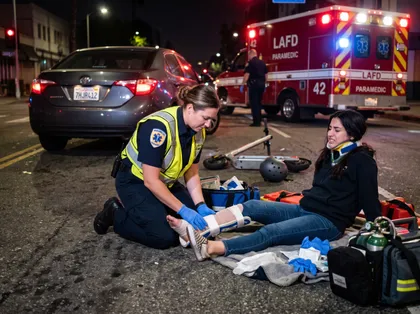
California cities may adopt additional rules governing motorized scooters, particularly shared or rental scooters. These local rules can affect where scooters may be operated, parked, or used. They may also impose restrictions beyond statewide requirements.
Depending on the city, local rules may address:
- Where shared scooters may be ridden or parked.
- Designated or prohibited riding areas.
- Lower speed limits or geofenced speed restrictions in certain zones.
- Sidewalk or pedestrian-area restrictions.
- Parking and obstruction requirements.
- Rules that apply specifically to rental or shared-mobility devices.
Rental scooter companies may also impose terms of use through their apps or user agreements. Those private terms differ from traffic laws. However, they may become relevant in disputes involving the rider’s conduct or use of the device.
Because local requirements vary, the rules in effect where the crash occurred should be checked before determining whether the rider violated an applicable ordinance. Scooter accident lawyers can help review how state law, local rules, and the facts of the crash may affect liability.
Duties of a Right-Turning Driver in California
California law places several duties on a driver before and during a right turn:
- Yield on a green light. A driver facing a green signal must yield to other traffic lawfully within the intersection and to pedestrians lawfully within the intersection or an adjacent crosswalk. A mounted e-scooter rider may also be protected by other traffic and turning rules, depending on where and how they operate their scooter (CVC § 21451(a)).
- Stop and yield on a right turn at a red. A driver turning right on red must stop completely and yield to pedestrians lawfully within an adjacent crosswalk and to any vehicle close enough to be an immediate hazard (CVC § 21453(b)).
- Turn only when it is reasonably safe. A driver may not turn from a direct course until the movement can be made safely. They must also signal when required (CVC § 22107).
- Yield at an uncontrolled intersection when required. At an intersection without traffic controls, a driver approaching at about the same time as another vehicle from a different highway generally must yield to the vehicle on the right. A mounted e-scooter operating under roadway rules may be part of this right-of-way analysis (CVC § 21800(b)(1)).
- Enter the bike lane before turning when required. When a driver must cross an adjacent bike lane to turn right, the driver must enter the bike lane before making the turn and then comply with the applicable right-turn rules. A driver may enter the bike lane within 200 feet of the intersection to prepare for the turn. A driver who instead turns across an adjacent bike lane without following these requirements may violate these rules (CVC §§ 21717, 22100(a), 21209).
A driver who turns without adequately checking for traffic, riders, or pedestrians may violate one or more of these duties if the turn cannot be made with reasonable safety.
Who Is at Fault When a Right-Turning Car Hits an E-Scooter Rider?
Liability in an e-scooter right-turn crash depends on the conduct of both the driver and the rider. California’s comparative fault system allows responsibility to be divided when both parties contributed to the collision.
A driver may be liable if they:
- Failed to check for riders, pedestrians, or other traffic before turning.
- Turned across the rider’s path without enough time to avoid the collision.
- Failed to yield when required.
- Crossed a bike lane without following applicable turning rules.
- Made a turn that could not be completed safely.
An e-scooter rider may share fault if the rider:
- Entered the intersection against a signal.
- Rode from a prohibited area into traffic.
- Rode in a crosswalk when traffic laws prohibited them from doing so.
- Traveled at an unsafe speed.
- Failed to follow applicable roadway or bike lane rules.
- Entered the driver’s path when the driver had no reasonable opportunity to avoid impact.
These types of conduct are also among the main reasons for scooter accidents. However, a traffic violation or unsafe act does not automatically establish liability. The key question is which specific actions actually contributed to or caused the crash.
If both the driver and rider were negligent, fault may be divided between them. For example, a driver may have failed to check before turning while the rider was also traveling too fast or entering from an improper location. In that situation, California law can assign each party a percentage of responsibility.
How Pure Comparative Fault Works
California follows pure comparative fault, which the California Supreme Court adopted in Li v. Yellow Cab Co., 13 Cal.3d 804 (1975). Under this rule, an injured rider’s compensation is reduced in proportion to the rider’s share of fault rather than being automatically barred because the rider contributed to the crash.
For example, if a rider has $100,000 in recoverable damages and is found 30% at fault, the award may be reduced to $70,000.
Negligence Per Se and Causation
California Evidence Code § 669 sets forth the rules governing when a violation of a statute, ordinance, or regulation may create a presumption of negligence. The presumption generally applies when:
- The person violated a statute, ordinance, or regulation.
- The violation was a substantial factor in causing the injury.
- The injury resulted from an occurrence the law was designed to prevent.
- The injured person was within the class the law was designed to protect.
For example, suppose an e-scooter rider was traveling in an improper location. However, the driver would have struck the rider regardless because the driver failed to look before turning. In this case, the rider’s violation may not have been a substantial factor in causing the collision.
The same principle applies to drivers. A driver’s violation of a turning or right-of-way rule may support a finding of fault if that violation contributed to the crash.
Proving what happened requires evidence showing where each person was, how they moved, and whether either person had an opportunity to avoid the collision.
Gathering Evidence: Video, Witnesses, and What to Do If the Driver Refuses to Provide Insurance Information
Evidence can help determine how fault is assigned after an e-scooter right-turn crash. Photos, witness statements, video footage, and collision records can help show where the rider and vehicle were positioned, how the turn occurred, and whether either person had enough time to avoid the collision.
Additionally, preserve records of any statements the driver made at the scene and any documents or images showing identifying or insurance details. Law enforcement records and later insurer communications may also help confirm which policy, if any, applies to the crash. If the driver refuses to provide insurance information, this evidence may help identify the driver and available coverage.
Some evidence may become harder to obtain as time passes. Businesses, residences, vehicles, and public agencies may have different video retention periods, and witnesses may become more difficult to locate over time. Preserving evidence as soon as possible can help protect your claim.
Evidence That Can Help Prove Fault in an E-Scooter Crash
In a crosswalk right-turn case, the key issue is usually not just where the scooter was located. Evidence should show whether the driver turned safely and whether the rider’s position, speed, signal compliance, or route contributed to the collision.
Different types of evidence can help establish how a right-turn e-scooter crash occurred:
- Witness Information: The names and contact information of people who saw the collision. Independent witnesses may help explain the rider’s path, the vehicle’s movement, and whether the driver had time to avoid impact.
- Scene Photos: Photographs of the scooter, vehicle damage, traffic signals, signs, road markings, bike lanes, crosswalks, debris, and the surrounding area. These images can help preserve the position and conditions at the time of the crash.
- Video Footage: Nearby businesses, homes, vehicles, and public agencies may have recordings that capture the collision. Retention periods vary by camera system and owner, so quickly identifying and preserving any available footage is important.
- Scooter Condition: If a mechanical issue may have contributed to the crash, it’s ideal to document or preserve the scooter’s post-crash condition before any repairs or modifications are made. An inspection may help determine whether a defect or maintenance issue contributed to the collision.
- Rental Scooter Records: If the scooter came from a rental platform, the company may have account, trip, location, or maintenance records relevant to the crash. The type of information available depends on the provider and its data-retention practices.
- Traffic Collision Report: A responding agency, such as the California Highway Patrol or a local law enforcement agency, may prepare a collision report. Access depends on the agency and applicable disclosure rules.
Evidence can strengthen an e-scooter injury claim, but the claim must still be pursued within the deadlines that apply to the case. Missing a required lawsuit-filing or claim-presentation deadline can prevent recovery even when the evidence supports the claim.
What to Do After a Right-Turn E-Scooter Crash in a Crosswalk
After a right-turn crash, the most important next steps are to protect your health and preserve evidence showing where you were, how the driver turned, and whether either person violated an applicable traffic rule:
- Get medical care. Seek appropriate treatment for your injuries. Medical records can document your symptoms, diagnosis, treatment, and the onset of your complaints. A delay in care does not automatically defeat a claim, but gaps in treatment may become part of a dispute about the cause or severity of an injury.
- Preserve evidence about the crosswalk and turn. Save photos and videos showing the crosswalk, traffic signals, bike lanes, curb lines, vehicle position, scooter position, and any road markings. Witness statements and nearby surveillance footage may also help show whether the driver checked before turning and how the rider entered the intersection.
- Keep records of your losses. Save medical bills, repair estimates, receipts, proof of missed work, and insurance correspondence. These records can help document both injury-related and property losses.
- Identify available insurance coverage. The right-turning driver’s liability insurance may provide compensation if the driver is legally responsible. If the driver is uninsured or underinsured, UM/UIM coverage may be available depending on the injured person’s policy and the facts of the collision.
- Be careful when discussing fault with insurers. An insurer may ask where the scooter was positioned, whether the rider was mounted, how fast the rider was traveling, and what traffic signal applied. Those details can affect comparative fault, so statements made during the claim may become important evidence.
- Watch the applicable filing deadlines. Code of Civil Procedure (CCP) § 335.1 generally provides two years to file a personal injury lawsuit, while CCP § 338(c)(1) generally provides three years for property damage. Different rules and exceptions may change those deadlines.
- Act quickly if a public entity may share responsibility. If the crash involved a defective signal, unsafe roadway design, missing signage, or another condition involving public property, Government Code § 911.2 may require a written claim within six months after accrual for claims covered by the Government Claims Act.
If the Driver Refuses to Cooperate or Leaves
California law requires a driver involved in an injury crash to stop, provide required identifying information, and render reasonable assistance to anyone who is injured. Leaving the scene without completing those duties may violate California’s hit-and-run laws (CVC §§ 20001, 20003).
CVC § 16025 also generally requires drivers involved in an accident to exchange evidence of financial responsibility with another driver or property owner involved and present at the scene. If the driver is insured, that includes the insurance company’s name and address, as well as the policy number. In an injury crash, CVC § 20003 separately requires the driver to provide identifying information to the person struck and render reasonable assistance.
If the driver refuses to provide insurance information or leaves the scene, evidence matters because it can help identify the driver, locate the vehicle, determine available insurance coverage, and establish how the crash occurred.
Focus on preserving as much identifying evidence as possible. Here’s how:
- Record vehicle details. Write down or photograph the license plate, vehicle make, model, color, and any identifying damage or markings.
- Note the driver’s direction of travel. Record which way the driver went and any details that may help law enforcement identify the vehicle.
- Get witness information. Ask witnesses what they remember about the other driver and their vehicle.
- Preserve video. Look for nearby businesses, homes, vehicles, or public cameras that may have recorded the collision or the driver leaving.
- Contact law enforcement when appropriate. Call 911 if the driver leaves the scene of an injury crash, someone needs emergency assistance, or there is an immediate safety concern. If the driver refuses to provide the required information, but there is no emergency, contact the appropriate local law enforcement agency.
Did a right-turning driver hit you while you were riding your e-scooter near a crosswalk? Arash Law handles e-scooter accident claims across California — call (888) 488-1391 for a free case evaluation.
Frequently Asked Questions About California E-Scooter Accidents
Can I Still Recover Compensation If I Was Riding in a Crosswalk When the Crash Happened?
Yes, in many cases. California’s pure comparative fault rule means that your own negligent conduct can reduce your potential recovery if it contributed to the crash. It does not automatically eliminate your claim.
If the driver failed to check before turning right and that failure contributed to causing the collision, the driver may still be liable.
The scooter rider can also share fault based on where they were riding if that position or route contributed to the crash. For example, entering from a prohibited sidewalk, riding against an applicable traffic rule, or approaching from an unexpected location may support a comparative fault argument. The critical question is whether the rider’s conduct contributed to causing the crash or whether the driver’s unsafe turn would have caused the collision regardless of the rider’s exact position.
Can I Sue the Scooter Rental Company If the Scooter Malfunctioned?
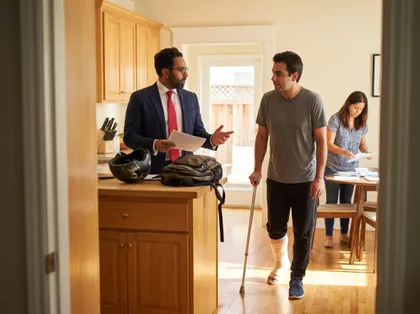
Possibly. If a defect in the rental scooter, such as a brake or steering defect, contributed to the crash, the manufacturer or a rental company that commercially supplied the scooter may face product liability claims, depending on its role and the facts of the case.
To preserve that option, do not authorize repairs to the scooter until an attorney or expert has inspected it. Rental company trip, GPS, or telemetry records may contain information about the scooter’s location, movement, or speed, depending on the provider and the data it retains. Those records may be relevant to liability and comparative fault.
How Does Going Over 15 Mph Actually Affect My Compensation If a Turning Driver Hits Me?
If you were traveling faster than the 15 mph limit set by CVC § 22411, the defense may argue that your speed contributed to the collision. Under California’s pure comparative fault system, your percentage of fault can reduce your potential recovery.
For example, a jury may find that because you were traveling so fast, the driver had less time to spot and avoid you. It may then find you partially liable, even if the driver also caused the crash because they failed to yield.
How much your speed mattered depends on the specific facts of the crash, including the rider’s approach, the driver’s turn, visibility, distance, and timing. An e-scooter accident attorney can evaluate whether the rider’s speed was a substantial factor in causing the collision or only a minor factor.
Does My Comparative Fault Percentage Get Decided by a Jury or an Insurance Adjuster?
It depends on how the case is resolved. In a settlement, the parties may negotiate based on competing views of comparative fault without formally agreeing on a percentage. An insurer may argue that the rider bears a greater share of fault, which can affect the amount offered in settlement.
If the case goes to trial, the jury generally determines the parties’ percentages of fault, or the judge does so in a bench trial.
Comparative fault can become a disputed issue in e-scooter crosswalk claims. Evidence showing the rider’s path, speed, traffic signal, and the driver’s turn can help evaluate whether the facts support an insurer’s fault assessment.
What Happens If the Intersection Lacks Proper Signage? Can the City Be Liable?
Yes, possibly. A city or other public entity may share liability if missing or inadequate signage created a dangerous condition that contributed to the crash.
The claimant generally must show that the condition was dangerous, contributed to the injury, and created a reasonably foreseeable risk of that type of injury. The claimant must also show that a public employee created the condition or that the entity had actual or constructive notice of it in time to take protective measures (Gov. Code § 835).
These claims also have shorter deadlines. A government claim for personal injury or property damage generally must be presented within six months after it accrues (Gov. Code § 911.2).
Talk to Arash Law About Your California E-Scooter Accident Claim
If a right-turning driver hit you while you were on an e-scooter, the time to act is now. Video footage may be overwritten. Witnesses move on. Some deadlines can arrive much sooner than riders expect, especially when a public entity is involved.
Arash Law represents injured e-scooter riders throughout California. Our attorneys understand how insurers use comparative fault arguments and how to counter them with evidence. We handle every personal injury case on a contingency fee basis: you pay no attorney’s fees unless we recover compensation for you.
Call Arash Law at (888) 488-1391 for a free case evaluation.
Sources
- California Vehicle Code § 16025: Requires every driver involved in an accident, unless rendered incapable, to exchange identifying information and evidence of financial responsibility with any other driver or property owner involved and present at the scene, including the insurer’s name and address and the policy number if the driver is insured. https://leginfo.legislature.ca.gov/faces/codes_displaySection.xhtml?sectionNum=16025.&lawCode=VEH
- California Vehicle Code § 21221: Gives a motorized scooter operator on a highway the rights and duties applicable to vehicle drivers, except provisions that by their nature cannot apply. https://leginfo.legislature.ca.gov/faces/codes_displaySection.xhtml?sectionNum=21221.&lawCode=VEH
- California Vehicle Code §§ 21228 and 21229: Govern roadway position, Class II bike-lane use, listed exceptions, and certain turns that require a scooter rider to dismount and cross on foot.
https://leginfo.legislature.ca.gov/faces/codes_displaySection.xhtml?sectionNum=21228.&lawCode=VEHhttps://leginfo.legislature.ca.gov/faces/codes_displaySection.xhtml?sectionNum=21229.&lawCode=VEH- California Vehicle Code § 21235: Motorized scooter operation rules, including roadway and bike lane use, sidewalk prohibition, license requirement, and helmet rule for riders under 18. https://leginfo.legislature.ca.gov/faces/codes_displaySection.xhtml?sectionNum=21235.&lawCode=VEH
- California Vehicle Code § 22411: 15 mph speed maximum for motorized scooters on public roads and bikeways. https://leginfo.legislature.ca.gov/faces/codes_displaySection.xhtml?sectionNum=22411.&lawCode=VEH
- California Vehicle Code § 275 defines marked and certain unmarked crosswalks as portions of the roadway. https://leginfo.legislature.ca.gov/faces/codes_displaySection.xhtml?sectionNum=275.&lawCode=VEH
- California Vehicle Code § 467: Defines “pedestrian,” including a person who is afoot. https://leginfo.legislature.ca.gov/faces/codes_displaySection.xhtml?sectionNum=467.&lawCode=VEH
- California Vehicle Code § 21950: Governs drivers’ duty to yield to pedestrians in marked crosswalks and unmarked crosswalks at intersections and the pedestrian’s duty of due care. https://leginfo.legislature.ca.gov/faces/codes_displaySection.xhtml?sectionNum=21950.&lawCode=VEH
- California Vehicle Code § 21451(a): Governs traffic facing a green signal, including duties toward other traffic and pedestrians lawfully within the intersection or adjacent crosswalk. https://leginfo.legislature.ca.gov/faces/codes_displaySection.xhtml?sectionNum=21451.&lawCode=VEH
- California Vehicle Code § 21453(b): Right-turn on red requires a full stop and yield to pedestrians lawfully within an adjacent crosswalk and to any vehicle approaching so closely as to constitute an immediate hazard before proceeding. https://leginfo.legislature.ca.gov/faces/codes_displaySection.xhtml?sectionNum=21453.&lawCode=VEH
- California Vehicle Code § 21800(b)(1): When two vehicles enter an intersection from different highways at the same time, the driver on the left must yield to the vehicle on the immediate right, except that a driver on a terminating highway must yield to traffic on the continuing highway. https://leginfo.legislature.ca.gov/faces/codes_displaySection.xhtml?sectionNum=21800.&lawCode=VEH
- California Vehicle Code §§ 21717, 22100(a), and 21209: Govern turns across adjacent bicycle lanes, right-turn positioning, and when a motor vehicle may enter a bicycle lane to prepare for a turn.
https://leginfo.legislature.ca.gov/faces/codes_displaySection.xhtml?sectionNum=21717.&lawCode=VEH
https://leginfo.legislature.ca.gov/faces/codes_displaySection.xhtml?sectionNum=22100.&lawCode=VEH
https://leginfo.legislature.ca.gov/faces/codes_displaySection.xhtml?sectionNum=21209.&lawCode=VEH- California Vehicle Code § 22107: Requires a turn or other movement from a direct course to be made with reasonable safety and requires signaling when applicable.
https://leginfo.legislature.ca.gov/faces/codes_displaySection.xhtml?sectionNum=22107.&lawCode=VEH- California Vehicle Code §§ 20001 and 20003: Require a driver involved in an injury or fatal crash to stop and comply with duties that include providing identifying information and rendering reasonable assistance.
https://leginfo.legislature.ca.gov/faces/codes_displaySection.xhtml?sectionNum=20001.&lawCode=VEH
https://leginfo.legislature.ca.gov/faces/codes_displaySection.xhtml?sectionNum=20003.&lawCode=VEH- California Vehicle Code § 20012: Governs confidentiality and disclosure of required accident reports and permits disclosure to persons having a proper interest.
https://leginfo.legislature.ca.gov/faces/codes_displaySection.xhtml?sectionNum=20012.&lawCode=VEH- Code of Civil Procedure § 335.1: Generally provides a two-year limitations period for personal injury actions.
https://leginfo.legislature.ca.gov/faces/codes_displaySection.xhtml?sectionNum=335.1.&lawCode=CCP- Code of Civil Procedure § 338(c)(1): Generally provides a three-year limitations period for injury to personal property.
https://leginfo.legislature.ca.gov/faces/codes_displaySection.xhtml?sectionNum=338.&lawCode=CCP- California Evidence Code § 669: The statutory presumption of negligence based on qualifying violations of statutes, ordinances, or regulations, including causation and protected-class requirements.
https://leginfo.legislature.ca.gov/faces/codes_displaySection.xhtml?sectionNum=669.&lawCode=EVID- California Government Code § 835: Establishes the requirements for public-entity liability for a dangerous condition of public property, including causation, foreseeable risk, and either public-employee creation or actual or constructive notice.
https://leginfo.legislature.ca.gov/faces/codes_displaySection.xhtml?sectionNum=835.&lawCode=GOV- Government Code § 911.2: Six-month written government tort claim deadline before suing a public entity in California. https://leginfo.legislature.ca.gov/faces/codes_displaySection.xhtml?sectionNum=911.2.&lawCode=GOV
- Li v. Yellow Cab Co., 13 Cal.3d 804 (1975): California Supreme Court decision adopting pure comparative negligence in California. https://scholarlycommons.pacific.edu/cgi/viewcontent.cgi?article=2458&context=mlr
Disclaimer
The information on this page is for general educational purposes and does not constitute legal advice. No attorney-client relationship is formed by reading or relying on this content. If you were injured, consult a licensed California personal injury attorney about your specific situation. Contact Arash Law at (888) 488-1391.