TL;DR: You may be able to sue if a scare actor grabs, pushes, or hurts you beyond the normal risks of a haunted attraction. Even if you signed a waiver, you may still have legal options. Depending on what happened, you could seek compensation for medical bills, lost income, and pain and suffering. California generally gives you two years to sue, although shorter deadlines may apply.
Yes, you may be able to sue if a scare actor touched, grabbed, or pushed you and caused an injury. Under California law, haunted attractions and their employees may be held liable for negligent or intentional conduct that causes harm beyond the risks visitors reasonably accept.
Haunted houses are designed to frighten guests. However, a staged scare is different from harmful physical contact.
An actor who forcefully grabs your arm, shoves you into a wall, or causes you to fall may create grounds for a personal injury claim. The outcome depends on what happened, the attraction’s safety practices, and whether the conduct went beyond the experience’s inherent risks.
State law recognizes that some dangers are inherent in recreational activities. However, accepting those risks does not automatically mean giving up every legal right when someone gets hurt.
Key Facts About Scare Actor Injury Claims in California
- Unwanted physical contact may create liability. A scare actor who intentionally strikes, grabs, or pushes a visitor may face a civil battery claim, depending on the circumstances.
- Attractions must exercise reasonable care. California Civil Code §1714 establishes general negligence principles that may apply to unsafe premises and attraction operations.
- Not every frightening encounter is negligence. California courts recognize that being startled, running away, and falling can be inherent risks of haunted attractions.
- Liability waivers have legal limits. A signed release generally cannot excuse gross negligence or intentional misconduct.
- More than one party may be responsible. An actor, attraction operator, employer, or property controller may share liability depending on their conduct and legal duties.
- Filing deadlines matter. California generally allows two years for personal injury lawsuits, although certain claims against government entities require earlier action.
Table of Contents

When Can You Sue a Scare Actor for Touching or Pushing You?
You may have grounds to sue when a scare actor’s conduct constitutes negligence, battery, or another legally recognized wrong that causes compensable harm.
A haunted attraction’s purpose is to frighten visitors. Actors may approach unexpectedly, make loud noises, or appear to threaten guests with harmless props. These activities do not necessarily create liability simply because someone becomes scared.
However, physical contact can raise different legal questions, particularly when an actor uses force or crosses boundaries established by the attraction.
Examples of potentially actionable conduct include:
- Forceful Grabbing: An actor grabs your wrist or shoulder with enough force to cause injury.
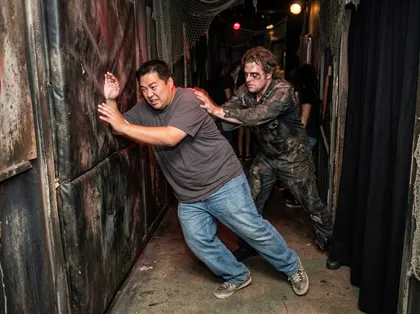
- Pushing or Shoving: A performer pushes you into a wall, prop, railing, or another visitor.
- Striking With a Prop: An actor carelessly or deliberately hits you with an object used during the performance.
- Inappropriate Touching: A performer makes unwanted sexual contact or touches a guest outside the attraction’s permitted activities.
- Dangerous Pursuit: An actor unreasonably increases the risk of injury beyond the attraction’s expected scares.
An injury does not automatically establish negligence. The actor’s conduct, the circumstances surrounding the contact, and the resulting harm must support the legal claim.
What Is the Difference Between Assault and Battery?
In California, assault and battery are different legal claims. Assault can occur without physical contact, while battery involves actual physical contact.
| Point of Comparison | Assault | Battery |
|---|---|---|
| What does it mean? | An intentional act that causes someone to reasonably believe that harmful or offensive contact is imminent. | Intentional harmful or offensive physical contact without consent. |
| Does physical contact have to happen? | No. The threat of immediate contact may be enough. | Yes. There must be actual physical contact. |
| What is an example? | A scare actor swings a metal prop toward your face, making you reasonably believe they are about to hit you, but stops before making contact. | A scare actor grabs your arm, pushes you against a wall, or hits you with a prop without your consent. |
| When could you have a claim? | When an actor intentionally makes you reasonably fear immediate harmful or offensive contact that goes beyond the scares you agreed to experience. | When an actor intentionally makes harmful or offensive physical contact that goes beyond what you agreed to experience. |
| Do you need to be physically injured? | Not always. However, you generally need to show legally recognized harm to recover compensation. | Not always. Even unwanted contact that leaves no visible injury may qualify as battery. |
| What if you agreed to be scared? | An expected jump scare generally isn’t assault simply because it frightens you. | Agreeing to enter a haunted house doesn’t automatically mean you agreed to be grabbed, shoved, or hit. |
The key difference is whether physical contact actually happens. A scare actor who makes you reasonably believe you’re about to be hit may commit assault. If the actor actually hits or forcefully grabs you without consent, the conduct may qualify as battery.
However, not every frightening interaction is grounds for a lawsuit. What matters is what the actor did, what you agreed to when entering the attraction, and whether the conduct crossed the line from an expected scare into something legally actionable.
Are California Theme Parks Responsible for Scare Actor Injuries?
California theme parks may be held responsible if a scare actor’s actions or unsafe conditions at an attraction cause someone to get hurt. Whether the park is legally responsible depends on what happened and whether it failed to take reasonable steps to prevent the injury.
Several California theme parks host Halloween events where live scare actors dress as frightening characters, surprise visitors, and interact with guests inside haunted houses, mazes, and scare zones. Examples include:
- Universal Studios Hollywood: Halloween Horror Nights features live scare actors in haunted houses, scare zones, and the Terror Tram experience.
- Knott’s Berry Farm: Knott’s Scary Farm features costumed scare actors who frighten visitors throughout haunted mazes and scare zones.
- Six Flags Magic Mountain: Fright Fest uses live scare actors in haunted attractions and designated scare zones.
- SeaWorld San Diego: Howl-O-Scream features costumed characters, haunted houses, and scare zones where performers interact with visitors.
These examples illustrate the types of attractions involved, not any finding that these parks violated safety rules.
Whether an incident occurs at a theme park, independent haunted house, or temporary Halloween maze, the central questions remain similar: What caused the injury, who had a legal duty to prevent the harm, and was that duty breached?
When Could the Attraction Operator Be Liable?
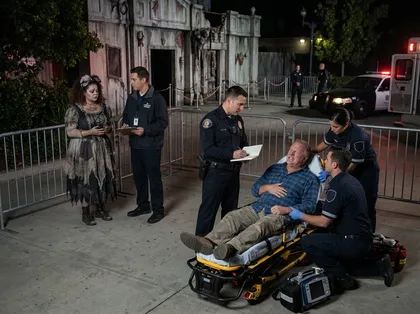
Under California Civil Code §1714, attraction operators and property owners generally have a duty to take reasonable steps to keep visitors safe. They may be held responsible if they fail to do so and someone gets hurt as a result.
Examples of safety failures that could lead to liability include:
- Poor Actor Training: Not teaching scare actors which types of physical contact are prohibited or how to interact safely with guests.
- Ignoring Safety Complaints: Failing to act after visitors or employees report that a scare actor has been grabbing, pushing, or hurting guests.
- Unsafe Props or Equipment: Continuing to use broken props, unstable decorations, or equipment that could injure visitors.
- Poor Crowd Control: Allowing overcrowding or failing to manage areas where frightened visitors could collide, fall, or get pushed.
- Inadequate Safety Warnings: Failing to warn visitors about dangerous conditions they may not reasonably expect or notice.
A theme park or haunted house may also be responsible for injuries caused by its employees while performing their duties. Under a legal principle called respondeat superior, an employer can be held liable for certain wrongful actions committed by an employee within the scope of their employment.
However, this does not mean an attraction is automatically responsible for everything a scare actor does. Courts consider whether the actor’s actions were sufficiently connected to their job, even if those actions violated the attraction’s rules.
Can Other Parties Share Responsibility?
Yes. If you were injured at a haunted house or Halloween attraction, the scare actor or attraction operator may not be the only ones responsible. Other people or companies involved in running or maintaining the attraction may also share responsibility for what happened to you.
For example, if you were pushed or knocked down in an overcrowded area, the company handling security or crowd control may share responsibility if it failed to take reasonable safety precautions. If you were injured because of a haunted-house prop that broke or equipment that malfunctioned, the company responsible for maintaining it may also be liable.
The property owner could also be responsible if an unsafe condition on the premises contributed to your injury and the owner failed to take reasonable steps to address it.
You don’t have to know exactly who was at fault before seeking legal help. A California personal injury attorney can investigate what happened, identify the parties who may be responsible, and help you understand your options for pursuing compensation.
Does Assumption of Risk Prevent a Haunted House Injury Lawsuit?
Not always. Just because you agreed to enter a haunted house doesn’t mean you gave up your right to seek compensation if someone hurts you.
Under California’s assumption-of-risk rule, visitors generally accept certain dangers inherent to the experience. For example, you can expect scare actors to:
- Jump out unexpectedly.
- Make loud noises.
- Chase you through dark hallways.
Getting startled or falling while trying to get away may be considered part of the risks you accepted when entering the attraction.
A California court addressed this issue in Griffin v. The Haunted Hotel, Inc. (2015). In that case, a visitor at The Haunted Trail in San Diego’s Balboa Park was frightened by a scare actor carrying a gas-powered chainsaw without a chain. The visitor ran away, fell, and injured his wrist.
The visitor sued the attraction, but the California Court of Appeal ruled in favor of the operator. The court explained that being frightened, running away, and potentially falling were risks visitors could reasonably expect at a haunted attraction. It also found insufficient evidence that the operator had made those risks unreasonably more dangerous or acted recklessly.
However, this ruling doesn’t mean haunted attractions are free to put visitors in unnecessary danger. For example, an actor deliberately pushing you into a wall raises different legal concerns than an actor simply jumping out and frightening you.
What matters is how your injury happened. If you were hurt because a scare actor or attraction operator created a danger beyond the risks normally associated with a haunted house, you may still have grounds to pursue a personal injury claim.
What If a Scare Actor Puts You in Unnecessary Danger?
You may have a claim if the actor’s actions put you at greater risk than you would normally expect at a haunted attraction. Just because you expect to be scared at a haunted house doesn’t mean you should expect to get hurt because someone acted carelessly or went too far.
For example, if a scare actor deliberately pushes you into a metal barrier and you suffer an injury, that’s different from falling after an ordinary jump scare.
The same applies if you’re injured because of:
- Broken flooring.
- Exposed electrical wires.
- Unstable decorations.
- Malfunctioning props.
These are safety hazards that visitors shouldn’t have to worry about while enjoying the attraction.
If you were injured because a scare actor went too far or the attraction failed to address a dangerous condition, you may have grounds to seek compensation. Whether you have a claim depends on what caused your injury and whether the person or company responsible failed to take reasonable safety precautions.
Does Signing a Haunted House Waiver Prevent You From Suing?
No. Even if you signed a waiver before entering a haunted house, you may still have the right to sue if you get hurt.
In California, liability waivers can protect attractions from certain claims involving ordinary negligence. However, whether a waiver applies depends on what it says and how your injury happened.
Under California Civil Code §1668 and applicable court decisions, waivers generally cannot protect attractions from liability for intentional misconduct or gross negligence. Gross negligence means showing an extreme lack of care for someone’s safety, beyond an ordinary mistake.
For example, a waiver might limit your options if you trip during a typical haunted house experience. However, it generally won’t protect an attraction from liability if an actor deliberately injures you.
Keep copies of any:
- Waiver.
- Ticket.
- Attraction rules.
Can Emotional Distress From an Extreme Scare Support a Lawsuit?
Yes, but being frightened or upset at a haunted house usually isn’t enough to bring a successful lawsuit. After all, getting scared is part of the experience.
However, if a scare actor goes far beyond an ordinary scare and causes you severe emotional distress, you may have grounds for a claim. Under California law, intentional infliction of emotional distress generally requires extreme and outrageous behavior that intentionally or recklessly causes severe emotional suffering.
Depending on what happened, negligence may also support a claim for emotional harm.
For example, you might experience:
- Ongoing anxiety.
- Nightmares.
- Trouble sleeping.
- Post-traumatic stress symptoms.
These symptoms may occur after a particularly harmful incident.
Medical or mental health records can help show how the experience affected you. However, having these symptoms or receiving a diagnosis doesn’t automatically mean you have a valid claim.
What Should You Do After a Scare Actor Injures You?
If you get hurt at a haunted house or Halloween attraction, get medical attention and document what happened as soon as possible. Taking these steps may help protect your health and support a potential injury claim.
- Get medical attention. Have a healthcare professional examine your injuries, especially if you’re experiencing pain, dizziness, or other concerning symptoms.
- Report what happened. Inform attraction management or security about the incident and request a written report.
- Take photos. If it’s safe, photograph where you were injured, nearby props or barriers, and any visible injuries.
- Get witness information. Ask anyone who saw what happened for their name and contact details.
- Keep your tickets and other documents. Save admission tickets, receipts, waivers, event details, and relevant messages.
- Ask for evidence to be preserved. Request that the attraction keep any security footage, incident reports, or other relevant records.
- Write down what happened. Record what the scare actor did, how you were injured, and what anyone said afterward.
- Speak with an attorney. A California personal injury attorney can review your situation and help determine whether you have a claim.
Don’t wait too long to gather evidence. Security footage may be erased, witnesses may become difficult to reach, and important details can be forgotten.
How Can a California Personal Injury Attorney Help With a Haunted Attraction Claim?
If you were hurt by a scare actor or an unsafe condition at a haunted attraction, you may be unsure who was responsible or whether you have a case. A California personal injury attorney can look into what happened and help you understand your options.
To determine whether you may have a claim, an attorney can:
- Review What Happened: Look into the scare actor’s actions and whether the attraction failed to take reasonable safety precautions.
- Gather Evidence: Review security footage, witness statements, medical records, and attraction rules to help establish what caused your injury.
- Identify Who May Be Responsible: Determine whether the scare actor, attraction operator, property owner, or another party may be liable.
- Explain Your Options: Help you understand whether you can pursue compensation for your injuries and related losses.
Arash Law handles injury claims involving unsafe premises and negligent conduct throughout California. Our California premises liability attorneys can review your incident and discuss available legal options.
You don’t have to figure everything out on your own. Call (888) 488-1391 for a free initial consultation. We can discuss what happened, answer your questions, and help you understand whether you may have grounds to seek compensation.
What Compensation May Be Available for a Scare Actor Injury?
If a scare actor or another responsible party caused your injury, you may be able to seek compensation for your expenses and the ways your injury has affected your life.
Depending on your situation, you may be able to recover compensation for:
- Medical Expenses: The cost of emergency care, doctor visits, medications, physical therapy, and other treatment you need because of your injury.
- Future Medical Costs: Expenses for ongoing treatment or medical care you may need.
- Lost Income: Wages or other earnings you missed because your injury kept you from working.
- Reduced Earning Capacity: Income you may lose in the future if your injury affects your ability to work or earn as much as you did before.
- Pain and Suffering: The physical pain, discomfort, and changes to your daily life caused by your injury.
- Emotional Distress: Anxiety, trauma, sleep problems, or other emotional difficulties resulting from the incident.
In some cases, you may also be able to seek punitive damages under California Civil Code §3294. These damages are meant to punish particularly serious misconduct involving oppression, fraud, or malice. They aren’t available in every injury case.
Insurance coverage can also affect how much compensation you may be able to recover. For example, some insurance policies don’t cover injuries caused intentionally, which can make a difference if a scare actor deliberately hurt you.
There is no fixed amount you can expect to receive for a scare actor injury. What you may recover depends on how badly you were hurt, how the injury has affected your life, the available evidence, and who can be held legally responsible.
How Long Do You Have To Sue After a Haunted Attraction Injury in California?
California generally gives injured people two years to file a personal injury lawsuit. Other deadlines may apply depending on the claim.
| Type of Claim | General California Deadline |
|---|---|
| Personal injury | Two years from the injury, subject to applicable exceptions. |
| Property damage | Three years from the date the damage occurred, subject to applicable exceptions. |
| Government claim for personal injury | A written claim generally must be presented within six months after accrual (when the claim arose). |
Legal basis: Code of Civil Procedure §335.1, Code of Civil Procedure §338, and Government Code §911.2.
If your injury happened at a publicly operated attraction or facility, you may need to file a government claim before you can sue. In California, you generally have just six months to take this step, and special filing rules apply.
Additionally, many haunted attractions allow visitors aged 13 and above to enter. If a minor gets injured due to the actions of a scare actor, their legal deadline for filing a personal injury lawsuit may be tolled, or paused, until they turn 18 (California Code of Civil Procedure § 352). However, this tolling does not apply to government claims.
Missing a legal deadline could mean losing your right to pursue compensation altogether. That’s why it’s important to find out which deadline applies to your situation.
You should also report your injury to the attraction’s staff as soon as possible. While an incident report doesn’t replace a legal claim, waiting too long could make it harder to prove what happened.
Don’t wait until the filing deadline to gather evidence. Security footage may be deleted, witnesses may forget important details, and other evidence could disappear long before your time to file a lawsuit runs out.
Frequently Asked Questions About Scare Actor Injuries in California
Can I Sue a Haunted House if a Scare Actor Accidentally Hits Me?
You may have grounds to sue a haunted house if a scare actor accidentally hits you because they acted carelessly and caused your injury. An accidental hit may constitute negligence if the actor failed to exercise reasonable care. For example, an actor might swing a prop too close to visitors or move recklessly through a crowded hallway.
The haunted house may face liability if inadequate training or supervision contributed to the accident. However, an accidental injury alone does not establish negligence.
Can I Sue if a Scare Actor Intentionally Grabs Me?
Yes, intentional grabbing may support a civil battery claim when the contact is harmful or offensive and exceeds the consent given for the attraction.
Courts may examine the contact, attraction rules, and whether the visitor agreed to that type of interaction.
Can I Sue a Theme Park if a Scare Actor Pushes Me?
Yes, a theme park may face liability when a scare actor’s conduct causes a legally actionable injury and the applicable rules establish the park’s responsibility.
Employer liability or direct negligence in training and supervision may be relevant.
What if a Scare Actor’s Prank Causes Me To Fall?
You may have a claim if the actor unreasonably increased the attraction’s inherent risks and caused the fall.
However, Griffin v. The Haunted Hotel shows that ordinary fear-related reactions may fall within the risks visitors assume.
Can I Sue If Another Guest Pushed Me During a Scare?
Yes. If another visitor pushes you or knocks you down, you may have a claim against that person. The attraction could also share responsibility if its failure to take reasonable safety precautions contributed to your injury.
For example, if frightened visitors rush through an overcrowded hallway and someone pushes you into a wall, the attraction’s crowd control, lighting, and visitor spacing may be relevant.
However, the attraction isn’t automatically responsible whenever another guest hurts you. Its actions or failure to address a foreseeable danger must have contributed to your injury.
Does a Haunted House Waiver Prevent Me From Filing a Lawsuit?
No, a waiver does not automatically prevent a lawsuit. Its enforceability depends on California law and the circumstances.
A valid waiver may limit ordinary negligence claims, but generally cannot release liability for future gross negligence or intentional misconduct.
Can I Sue for Emotional Distress if a Scare Actor Goes Too Far?
Yes, severe emotional distress may support a claim when the facts satisfy California’s legal requirements.
Intentional infliction of emotional distress generally requires extreme and outrageous conduct that intentionally or recklessly causes severe emotional harm.
How Do I Prove That a Scare Actor Caused My Injury?
You can prove that a scare actor caused your injury by connecting the actor’s conduct to your injury and claimed losses.
Evidence may include surveillance footage, witness statements, photographs, incident reports, medical records, and copies of the haunted attraction’s safety policies.
How Much Is a Haunted House Injury Lawsuit Worth?
There is no fixed value for a haunted house injury lawsuit. Compensation depends on injuries, financial losses, available evidence, liability defenses, and other circumstances.
Medical expenses, lost income, pain and suffering, and future treatment needs may be relevant when supported by evidence.
Injured by a Scare Actor? Contact Arash Law for a Free Case Evaluation
A Halloween attraction can be frightening without being unsafe. When a scare actor crosses the line into harmful physical contact or an operator fails to address an unreasonable danger, an injured visitor may have legal options worth examining.
If you were grabbed, pushed, struck, or otherwise hurt at a California haunted house or theme park, Arash Law can review your injury. Our attorneys can assess potential liability, identify relevant evidence, and explain possible next steps.
Call (888) 488-1391 for a free case evaluation.
Sources
- California Court of Appeal. Griffin v. The Haunted Hotel, Inc., 242 Cal.App.4th 490 (2015), Case No. D066715. https://www.leagle.com/decision/incaco20151023119
- California Legislature. California Civil Code §1668, Contractual Exemptions From Liability. https://leginfo.legislature.ca.gov/faces/codes_displaySection.xhtml?sectionNum=1668.&lawCode=CIV
- California Legislature. California Civil Code §1714, General Duty of Care and Liability for Injuries. https://leginfo.legislature.ca.gov/faces/codes_displaySection.xhtml?sectionNum=1714.&lawCode=CIV
- California Legislature. California Civil Code §3294, Exemplary Damages. https://leginfo.legislature.ca.gov/faces/codes_displaySection.xhtml?sectionNum=3294.&lawCode=CIV
- California Legislature. Code of Civil Procedure §335.1, Personal Injury Statute of Limitations. https://leginfo.legislature.ca.gov/faces/codes_displaySection.xhtml?sectionNum=335.1.&lawCode=CCP
- California Legislature. Code of Civil Procedure §338, Property Damage Statute of Limitations. https://leginfo.legislature.ca.gov/faces/codes_displaySection.xhtml?sectionNum=338.&lawCode=CCP
- California Legislature. Code of Civil Procedure § 352(a), Tolling of Statutes of Limitations for Minors. https://leginfo.legislature.ca.gov/faces/codes_displaySection.xhtml?sectionNum=352.&lawCode=CCP
- California Legislature. Government Code §911.2, Government Claim Presentation Deadlines. https://leginfo.legislature.ca.gov/faces/codes_displaySection.xhtml?sectionNum=911.2.&lawCode=GOV
- California Supreme Court. City of Santa Barbara v. Superior Court, 41 Cal.4th 747 (2007), Case No. S141643. https://www.leagle.com/decision/200758962calrptr3d5271542
- Judicial Council of California. California Civil Jury Instructions (CACI) Nos. 1300 (Battery) and 1301 (Assault). https://courts.ca.gov/partners/california-jury-instructions/civil-jury-instructions-resource-center
- Judicial Council of California. California Civil Jury Instructions (CACI) No. 1600, Intentional Infliction of Emotional Distress: Essential Factual Elements. https://courts.ca.gov/partners/california-jury-instructions/civil-jury-instructions-resource-center
Disclaimer
This content is provided for general educational purposes only and does not constitute legal advice. Reading this article or contacting Arash Law does not establish an attorney-client relationship. California injury claims depend on individual circumstances, and applicable laws or deadlines may vary.
Readers should consult a licensed California attorney for advice concerning their specific circumstances.
Arash Law — (888) 488-1391.