TL;DR: Yes. You can hire a California personal injury lawyer after getting injured while driving a friend’s car. Your attorney can pursue compensation for your injuries without automatically representing the vehicle owner or handling their property damage claim. Available compensation depends on fault, insurance coverage, and supporting evidence. Filing deadlines apply, including shorter requirements for claims against public entities.
You can hire a lawyer if you were injured while driving your friend’s car in California. A personal injury attorney can investigate the collision, establish liability, identify applicable insurance coverage, and negotiate compensation on your behalf. Your ability to pursue a claim depends on the circumstances of the crash, not simply on who owns the car.
Your injury claim is separate from your friend’s property damage claim. An attorney can represent your interests without automatically representing the vehicle owner or handling their repair costs. California law allows injured drivers to pursue compensation from responsible parties, subject to the circumstances of the accident and available evidence.
Table of Contents

I Was Driving a Vehicle Borrowed from a Friend When I Was Injured. Can I Seek Legal Assistance for My Injuries, and What Documents Should I Separate from the Owner’s Property Damage?
If you borrowed a friend’s vehicle and got injured in an accident while driving it, you can seek legal assistance after the crash. A car accident lawyer can help you pursue a claim for compensation without automatically representing the vehicle owner or managing their property damage claim.
Your injury claim generally involves medical expenses, lost income, pain and suffering, and other accident-related losses. In contrast, your friend’s property damage claim concerns the vehicle itself.
Since these claims are separate, keep copies of relevant documents and organize them according to the claim they support:
- Your Injury Claim: Medical records, treatment bills, employment documents, and injury-related insurance correspondence.
- Your Friend’s Property Damage Claim: Repair estimates, towing expenses, registration records, and vehicle damage settlements.
Some records, such as agreements about borrowing your friend’s car, can support both claims. An attorney can help you review all relevant documents to determine which ones you need for your case.
Key Facts About Borrowed-Car Injury Claims in California
- Your injury claim is separate from the car owner’s property damage claim. If another driver caused the accident, you can seek compensation for your injuries through that driver’s liability insurance. Your friend can pursue a separate property damage claim.
- Permission to drive can affect your injury claim. Whether your friend allowed you to use the vehicle can affect insurance coverage and questions about who may be legally responsible for the accident.
- Sharing fault does not automatically prevent compensation. Under California’s comparative fault rule, you may still recover damages even if you contributed to the accident. However, your percentage of responsibility reduces your compensation.
- Legal representation does not automatically extend to the owner. An attorney hired for your injury claim does not automatically represent your friend or control their property damage settlement.
- Existing agreements and insurance communications matter. Recorded statements, settlement offers, signed releases, and prior agreements can affect how an attorney evaluates your claim.
- Legal filing deadlines apply. California generally allows two years to file a personal injury lawsuit under Code of Civil Procedure § 335.1. Claims against public entities usually require a written claim within six months under Government Code § 911.2. Some exceptions may apply.
Establishing Fault, Shared Blame, and Legal Deadlines
If another driver caused your injuries while you were driving a borrowed car, establishing their negligence is essential to pursuing a liability claim.
Civil Code § 1714 establishes California’s general duty of care. To pursue compensation, you must demonstrate that the other driver owed you a duty to act with reasonable care and prevent harm but breached it, causing the accident, your injuries, and your losses.
For example, a driver who rear-ends your vehicle may be responsible because they failed to maintain a safe following distance.
Other parties may also share responsibility for your injuries, depending on the circumstances:
- A Vehicle Manufacturer: Defective brakes, steering components, or other vehicle parts may support a product liability claim.
- Your Friend: If they, as the vehicle owner, knew about a dangerous mechanical problem but failed to address it or warn you, they could share responsibility.
- A Government Entity: A dangerous road condition may support a claim against a public entity under Government Code § 835, subject to applicable requirements and deadlines.
Evidence such as police reports, accident photos, and witness statements can help establish what happened. An attorney can review them to investigate liability and support your injury claim.
What If I Contributed to the Crash?
You may still have a claim. California’s pure comparative fault rule allows you to seek compensation even if you contributed to the accident.
The California Supreme Court established this rule in Li v. Yellow Cab Co. (1975) 13 Cal.3d 804, and it reduces your recovery according to your percentage of fault. For example, if you were 20% responsible for the crash, you could recover 80% of your damages.
Legal Filing Deadlines Still Apply
Driving a borrowed vehicle does not change the usual deadline for filing a personal injury lawsuit in California.
You generally have two years from the date of injury to file a personal injury lawsuit against a private party under Code of Civil Procedure (CCP) § 335.1. Your friend, as the vehicle owner, may instead have three years to sue for property damage against a private party (CCP § 338).
If your claim involves a public entity, you must generally file it within six months (Government Code § 911.2).
Exceptions and different deadlines may apply. Additionally, although your injury claim and your friend’s property damage claim arise from the same accident, each may involve different deadlines and legal requirements.
An attorney can review the circumstances and identify which filing deadlines apply to your injury claim.
Whose Insurance Applies to a Borrowed Vehicle Accident in California?
If another driver caused your injuries while you were driving a friend’s car, you can generally pursue compensation through that driver’s liability insurance. This coverage may compensate you for medical expenses, lost income, pain and suffering, and other covered losses.
California’s minimum auto liability insurance limits increased on January 1, 2025, to:
- $30,000 per injured person.
- $60,000 per accident for bodily injuries.
- $15,000 for property damage.
However, these minimums do not guarantee sufficient compensation for serious injuries.
Can Your Friend’s Insurance Cover Your Injuries?
Certain benefits under your friend’s auto insurance policy may cover your injuries, depending on the coverage purchased and the circumstances of the accident. These include:
- Uninsured Motorist (UM) Coverage: May cover your injuries if the responsible driver has no applicable liability insurance.
- Underinsured Motorist (UIM) Coverage: May provide additional compensation when the responsible driver’s liability limits are insufficient, subject to policy limits and legal requirements.
- Medical Payments (MedPay) Coverage: May help pay medical expenses regardless of who caused the accident.
Permission to drive can affect insurance coverage. Whether your friend authorized you to use the vehicle, along with the applicable policy terms, can determine which benefits are available.
Can Your Own Auto Insurance Cover Your Losses?
Yes. Your personal auto insurance may provide UM/UIM or MedPay benefits, depending on your policy and the circumstances. However, the applicable policies and California law determine which coverage is available and how multiple policies interact.
Need help understanding how insurance works after you get in an accident while driving your friend’s car? An attorney can review the at-fault driver’s insurance, the borrowed vehicle’s policy, and your own coverage to identify potential sources of compensation and address coverage disputes. Call (888) 488-1391 to get started.
Driver and Vehicle Owner: Documents and Responsibilities
After an accident in a borrowed car, the injured driver and vehicle owner may need different documents and take separate steps to protect their interests. The following table outlines which records each person should gather, who can communicate with insurers, and who generally makes decisions about their respective claims.
| Records or Actions | Injured Driver | Vehicle Owner |
|---|---|---|
| Permission to Drive | Keeps messages or agreements showing authorization to use the vehicle. | Provides relevant permission records and clarifies what use they authorized. |
| Medical and Injury Records | Keeps medical bills, treatment records, prescriptions, and proof of lost income. Authorizes access to personal medical records. | Generally does not control the driver’s medical information. |
| Vehicle Damage Documents | May provide accident photos and details about the collision. | Keeps repair estimates, towing receipts, vehicle registration, and proof of ownership. Generally authorizes repairs and property damage settlements. |
| Insurance Information | Can share their own insurance documents and injury-related correspondence. May request relevant coverage information from applicable insurers. | Can provide the vehicle’s insurance information and authorize sharing policy documents they control. |
| Insurance Contacts | May communicate with relevant insurers about personal injuries, subject to applicable policy duties. Cannot authorize settlements on the owner’s behalf. | May communicate with relevant insurers about vehicle damage, ownership, and permission. Does not control the driver’s injury settlement. |
| Legal Representation | Chooses an attorney for the personal injury claim and decides whether to accept an injury settlement. | Can hire an attorney for their own legal interests and make decisions about their property damage claim. |
Although the injured driver and vehicle owner may need some of the same records, each generally makes decisions about their own claim.
An attorney representing the injured driver can help obtain relevant documents and communicate with insurers. However, they do not automatically represent the owner or control their property damage settlement.
Can the Same Lawyer Represent Both the Driver and the Vehicle Owner?
Yes, the same lawyer may represent both parties if their interests are compatible and the arrangement satisfies California’s conflict-of-interest rules. However, disagreements over permission to drive, responsibility for the accident, or related expenses may lead to conflicts.
Under California Rule of Professional Conduct 1.7, certain conflicts require the informed written consent of each affected client. Some conflicts may prevent joint representation altogether.
An attorney hired by the injured driver does not automatically represent the vehicle owner. Each person may seek independent legal advice to protect their interests.
How Can a Lawyer Help After an Accident in a Borrowed Vehicle?
A California personal injury lawyer can review your accident, identify potentially liable parties, and assess available insurance coverage. Your attorney can also help distinguish your injury claim from the vehicle owner’s property damage claim without automatically representing the vehicle owner or controlling their property damage settlement.
What Steps Should I Take Before Consulting a Lawyer?
Before consulting a lawyer, you can begin organizing your injury claim by taking the following steps:
- Document Your Injuries and Losses: Seek appropriate medical care and preserve treatment records, medical bills, and proof of missed work.
- Preserve Collision Evidence: Keep accident photographs, witness contact information, and the police report or report number, if available.
- Identify Relevant Insurance: Gather available information about your insurance, the vehicle owner’s policy, and the other driver’s coverage.
Additionally, prepare answers to the following questions:
- Permission to Drive: Did the owner authorize you to use the vehicle, and are there messages or other records confirming it?
- Insurance Communications: Have you or the owner contacted an insurer or provided a recorded statement?
- Signed Documents: Has either person signed a settlement agreement, release, or other insurance document?
- Payments or Offers: Has anyone made a payment or offered a settlement?
- Legal Representation: Have you or the owner already hired an attorney?
These details can help an attorney evaluate your injury claim, identify potential conflicts of interest, and determine what further information or authorization is needed.
Arash Law’s Experience Handling California Rear-End Collisions
Arash Law has represented clients injured in California traffic accidents, including rear-end collisions. In one of our past case results, our firm secured a $3.5 million settlement for a client who suffered severe spinal injuries and needed to undergo surgery after a distracted driver rear-ended their vehicle at a red light. The case settled three days before trial.
Although this case did not specifically involve a borrowed vehicle, it demonstrates our firm’s experience pursuing compensation for injuries caused by negligent drivers.
Past results do not guarantee future outcomes. Each case depends on its specific facts, evidence, and circumstances.
Frequently Asked Questions About Borrowed Vehicle Accidents in California
Borrowing a friend’s car can raise questions about insurance, responsibility, and what to do after an accident. The following answers explain how driving privileges, accident reporting, and available coverage may affect your options when seeking compensation for injuries.
What Should I Do at the Scene of an Accident in Someone Else’s Car?
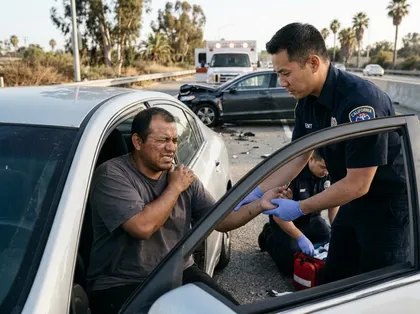
Check for injuries, call 911 if anyone needs emergency assistance, and notify the vehicle owner. When it is safe, exchange insurance and contact information with the other driver, photograph the damage, and collect witness information.
California also requires an SR-1 report to the DMV within 10 days if the crash injured or killed anyone or caused more than $1,000 in property damage. This requirement applies regardless of fault and is separate from a police report. Failing to file when required may result in a driver’s license suspension.
Is the Car Owner Liable for My Injuries?
Not automatically. The vehicle owner is generally not responsible for your injuries simply because you borrowed their car. If another driver caused the collision, that driver’s negligence may form the basis of your injury claim.
However, a court may hold an owner responsible if their negligence contributed to the accident or your injuries. California also recognizes certain forms of owner liability when drivers using a vehicle with permission cause harm to third parties. The circumstances determine whether any such liability applies.
What If I Did Not Have Explicit Permission to Drive the Car?
You may still have had permission under California law. Permission can be express, meaning directly given, or implied through the owner’s words or actions. For example, regularly borrowing the vehicle with the owner’s knowledge may support implied permission.
If the owner did not authorize your use of the car, this may affect insurance coverage. Your own policy does not automatically cover the accident. Preserve any messages or records of prior use, and ask an attorney to review the circumstances and applicable policies.
Will My Friend’s Insurance Premiums Increase If Another Driver Hits Me?
Generally, no accident surcharge should apply if another driver caused the collision. California generally prohibits treating a driver as principally at fault unless the driver was at least 51% responsible. However, other factors may affect premiums. Your friend can ask their insurer how it classified the accident and request a review if the insurer incorrectly assigned fault.
Do I Need a Lawyer for the Car’s Property Damage Claim?
Not necessarily. Your friend, as the vehicle owner, can generally handle repair estimates, vehicle damage claims, and settlement decisions without hiring an attorney.
Personal injury lawyers can pursue compensation for your injuries without automatically representing your friend or controlling their property damage claim. If a dispute arises over vehicle ownership, liability, or settlement terms, the owner may consider obtaining separate legal advice.
Will Hiring a Lawyer Affect My Friendship With the Car Owner?
Not necessarily. Hiring a lawyer does not automatically mean suing your friend. If another driver caused your injuries, your claim may proceed against that driver without involving the vehicle owner’s liability.
However, disagreements over permission, fault, or vehicle maintenance could create conflicts of interest. An attorney can explain these issues and whether separate representation would help protect both parties.
Request a Free Case Evaluation from Arash Law
If you were injured in an accident while driving a borrowed vehicle, Arash Law can help you understand your legal options.
Our firm has recovered over $1 billion for injured clients across California. We can investigate who caused the crash, examine relevant insurance policies, and assess your potential compensation. Our team can also review medical records, insurance communications, and vehicle-related agreements to identify issues that may affect your claim.
We offer free case evaluations and handle personal injury cases on a contingency fee basis. That means you pay no attorney’s fees unless we win or settle your case. Some case-related costs may still apply. Our written agreement explains how we handle case costs and expenses.
Call (888) 488-1391 to discuss your accident and request a free case evaluation.
Sources
- California Department of Insurance. Bulletin 2023-1: Increase in Private Passenger Motor Vehicle Financial Responsibility Requirements — Senate Bill 1107. https://www.insurance.ca.gov/0250-insurers/0300-insurers/0200-bulletins/bulletin-notices-commiss-opinion/upload/bulletin-2023-1-re-sb-1107-final-003.pdf
- California Department of Motor Vehicles. Report of Traffic Accident Occurring in California (SR-1). https://www.dmv.ca.gov/portal/dmv-virtual-office/accident-reporting/
- California Legislative Information. Code of Civil Procedure § 335.1 — Personal Injury Statute of Limitations. https://leginfo.legislature.ca.gov/faces/codes_displaySection.xhtml?sectionNum=335.1.&lawCode=CCP
- California Legislative Information. Code of Civil Procedure § 338 — Property Damage Statute of Limitations. https://leginfo.legislature.ca.gov/faces/codes_displaySection.xhtml?sectionNum=338.&lawCode=CCP
- California Legislative Information. Civil Code § 1714 — General Duty of Care. https://leginfo.legislature.ca.gov/faces/codes_displaySection.xhtml?sectionNum=1714.&lawCode=CIV
- California Legislative Information. Vehicle Code § 17150 — Vehicle Owner Liability. https://leginfo.legislature.ca.gov/faces/codes_displaySection.xhtml?sectionNum=17150.&lawCode=VEH
- California Legislative Information. Government Code § 835 — Liability for Dangerous Conditions of Public Property. https://leginfo.legislature.ca.gov/faces/codes_displaySection.xhtml?sectionNum=835.&lawCode=GOV
- California Legislative Information. Government Code § 911.2 — Government Claim Presentation Deadlines. https://leginfo.legislature.ca.gov/faces/codes_displaySection.xhtml?sectionNum=911.2.&lawCode=GOV
- California Legislative Information. Insurance Code § 11580.2 — Uninsured and Underinsured Motorist Coverage. https://leginfo.legislature.ca.gov/faces/codes_displaySection.xhtml?sectionNum=11580.2.&lawCode=INS
- California Supreme Court. Li v. Yellow Cab Co. (1975) 13 Cal.3d 804, Establishment of California’s Pure Comparative Negligence Rule. University of the Pacific, McGeorge Law Review. https://scholarlycommons.pacific.edu/cgi/viewcontent.cgi?article=2458&context=mlr
- State Bar of California. Rule 1.7 — Conflict of Interest: Current Clients. https://www.calbar.ca.gov/legal-professionals/rules/rules-professional-conduct/current-rules-professional-conduct/chapter-1-lawyer-client-relationship
Disclaimer
Past results do not guarantee future outcomes. Every case is different. The information on this page is for general educational purposes and does not constitute legal advice. Reading or relying on this content does not create an attorney-client relationship. If you were injured, consult a licensed California personal injury attorney about your specific situation.