TL;DR: A lawyer can help you document and pursue lost wages after a car accident by reviewing medical restrictions, employment records, and earnings history. This may include missed paychecks, overtime, bonuses, commissions, and reduced future earning capacity. An attorney can also address disputed claims, negotiate with insurers, and file a lawsuit when necessary. Legal compensation is not immediate financial assistance, and not every missed paycheck is necessarily recoverable.
A car accident lawyer can help you pursue compensation for lost income by showing how your injuries affected your ability to work and what those financial losses are worth. Attorneys examine employment records, medical restrictions, and earnings history to build an evidence-based claim.
Under California Civil Jury Instructions (CACI) No. 3903C, you must prove the amount of income you have lost to date. This means missing work alone is not enough. You need evidence connecting your injuries to the income you lost. An attorney can identify gaps in that proof, address insurer disputes, and pursue compensation that reflects the financial impact of your accident.
For injured Californians facing unpaid bills and interrupted paychecks, understanding how lawyers and insurers calculate lost wages is an important first step toward protecting their financial recovery.
Table of Contents

I Lost My Job After the Accident. Can a Lawyer Help Me Document My Lost Income, and What Evidence and Questions Should I Prepare?
If you lost your job after a car accident, a lawyer can investigate whether your injuries contributed to your employment loss and help document the resulting financial damage. This includes reviewing medical restrictions, employment decisions, and your earnings before and after the crash.
However, losing your job after an accident does not automatically make every missed paycheck recoverable. Your attorney must establish which income losses resulted from the injuries rather than unrelated circumstances, such as layoffs or business closures.
To evaluate the connection, a lawyer may compare your medical restrictions with your regular job duties, attendance records, and the employer’s stated reason for termination. For example, a doctor’s restriction against heavy lifting may explain missed shifts if lifting was an essential part of your job. Employer communications and payroll records can help determine whether those restrictions affected your earnings or contributed to your job loss.
Before your consultation, prepare a timeline of your accident, medical restrictions, missed workdays, changes in pay, and employment termination. Ask which records are still needed and whether the available evidence supports your claimed losses.
Key Facts About Lost Wage Claims in California
- Proof of Income Loss: Medical restrictions, work schedules, payroll records, and employer communications can help establish whether accident-related injuries caused missed work or reduced earnings.
- Government Claims Have Shorter Deadlines: Under Government Code § 911.2, you generally must present a written injury claim to a public entity within six months. This deadline is separate from the time limit for filing a lawsuit.
- Insurers Must Investigate Claims Fairly: Under 10 CCR § 2695.7, insurers must conduct thorough, fair, and objective investigations. They must also provide written notice when disputing liability or damages in third-party claims.
- State Disability Insurance May Replace Some Lost Income: California’s Employment Development Department (EDD) provides temporary wage replacement to eligible workers unable to work due to an injury. You should generally file your application within 49 days of the onset of your disability.
Work-Loss Evidence Organizer: What Should You Gather?
A lawyer can compare your medical, employment, and income records to evaluate which losses may be connected to the accident. Use the following organizer to prepare for your consultation.
| Information | Records to Gather | What the Lawyer May Evaluate |
|---|---|---|
| Accident and Work-Loss Dates | Accident date, last day worked, first missed shift, dates of medical restrictions, and termination date. | Whether missed work occurred during documented injury-related limitations. |
| Medical Restrictions | Treatment notes, disability certifications, and written work restrictions. | Whether the injuries prevented specific duties or reduced working hours. |
| Normal Work Schedule | Regular shifts, weekly hours, pay rate, and expected overtime. | Your usual work hours and earnings before the accident. |
| Actual Time Missed | Attendance records, timesheets, reduced-hour schedules, and missed-shift logs. | Which days or hours were missed and whether the injuries caused those absences. |
| Payroll and Tax Records | Pay stubs, W-2s, 1099s, tax returns, and commission statements, as applicable. | Normal earnings, variable income, and changes in pay. |
| Employment Communications | Termination notices, accommodation requests, emails, and changes to work schedules. | Whether medical restrictions contributed to job loss or reduced work. |
| Benefits Received | Sick leave, PTO, employer payments, workers’ compensation, and disability payment statements. | Payments received and any potential reimbursement obligations. |
| Unresolved Questions | Missing records, unexplained payroll changes, disputed restrictions, and employer responses. | What additional evidence or clarification may be needed. |
You do not need every document before speaking with car accident lawyers. An attorney can identify missing records and request additional evidence. Understanding how you prove lost wages and other accident-related damages can also help you prepare for your consultation.
How Can a Lawyer Document Variable Income?
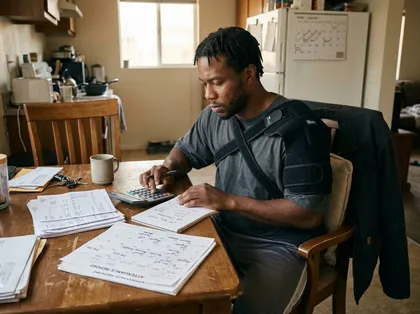
Self-employed workers, contractors, and gig workers, like rideshare and delivery drivers, may not have regular paychecks. An attorney can examine tax returns, invoices, business records, and historical earnings to establish income patterns.
Hypothetical Example: A freelance contractor earned income from several recurring clients before a crash. Medical restrictions prevented the contractor from completing scheduled projects for three months. An attorney could compare prior earnings, canceled projects, business expenses, and client communications to estimate the lost income or net profit resulting from the injuries. The review would also consider whether the contractor avoided expenses by failing to complete the projects.
This example is illustrative, not an actual client case. Variable earnings do not automatically establish recoverable damages; the evidence must support the claimed loss.
What Is the Difference Between Lost Wages and Lost Earning Capacity?
California recognizes different types of income-related damages:
- Past Lost Earnings: Income already lost because of accident-related injuries, such as missed wages, overtime, commissions, or other provable earnings. CACI No. 3903C addresses past and future lost earnings.
- Future Lost Earning Capacity: A reduction in your ability to earn money because of your injuries. Under CACI No. 3903D, you must establish that the injury will cause a reasonably certain reduction in future earning capacity and prove the reasonable value of that loss.
An attorney may consult vocational or economic experts when evaluating long-term limitations. Losing a particular job does not automatically establish a permanent loss of earning capacity.
Can a Lawyer Help You Get Income While Your Claim Is Pending?
A personal injury claim does not guarantee immediate payment. While your attorney pursues compensation, California’s State Disability Insurance (SDI) program may provide temporary wage replacement if you qualify.
SDI applications have separate eligibility requirements and deadlines. Review the California EDD’s application guidelines before applying.
Hiring a car accident lawyer does not replace applying for disability benefits. Your attorney can help explain how any payments received may affect your injury claim. Eligibility for immediate wage-replacement benefits is evaluated separately from the compensation sought through a personal injury claim.
What Questions Should You Ask During Your Consultation?
- Can my medical records establish that the accident caused my missed work or contributed to my job loss?
- What documents can help prove my normal income and the amount I lost?
- How can we distinguish injury-related absences from missed work caused by other circumstances?
- Can I claim reduced future earning capacity if I cannot return to my previous position?
- How will PTO, disability benefits, or employer payments affect my claim?
- What additional records should I request from my employer?
- What filing deadlines apply, and what happens if the insurer disputes my lost income?
An attorney can review these records, identify gaps in evidence, and evaluate potential compensation without assuming that every missed paycheck is recoverable.
How a Lawyer Can Help You Recover Lost Wages After a Crash
Car accident lawyers can use your documented income losses to pursue compensation from the responsible party. After reviewing the evidence, an attorney can evaluate which losses may be legally recoverable and address disputes that affect your claim.
Attorneys handling car accident claims in California may take the following steps:
- Calculate Recoverable Income Losses: An attorney reviews missed wages, overtime, bonuses, commissions, and other earnings to determine which losses the available evidence can support.
- Identify Responsible Parties: Depending on the circumstances of the accident, liability may extend beyond the driver to an employer, a vehicle owner, or a public entity. Identifying responsible parties can help determine which claims and insurance policies may apply.
- Negotiate With Insurers: Your lawyer presents evidence of your financial losses, addresses disputed calculations, and evaluates settlement offers against the available documentation.
- File a Lawsuit When Necessary: If negotiations fail, your attorney can pursue compensation through litigation, including discovery, depositions, and trial when appropriate.
These steps allow an attorney to present documented earnings losses as part of the injury claim. Understanding how an attorney can help with a car accident claim can also clarify the broader legal process.
What Happens If the Insurance Company Disputes Your Income Loss?
If an insurance company disputes your lost wages, a lawyer can review the reasons for the dispute, provide supporting evidence, and challenge an unjustified reduction or denial. Insurers may question whether your injuries required time away from work, whether the accident directly caused your income loss, or whether your claimed earnings match your employment history. Medical restrictions, payroll records, and employer statements can help address these concerns and support negotiations for fair compensation.
How Can a Medical Examination Affect a Disputed Lost Wage Claim?
In some cases, an insurer may request a medical examination to evaluate the claimed injuries and work restrictions. However, an insurer’s request does not automatically require you to attend. Once a lawsuit is filed, a defendant may be required to undergo a qualifying physical examination under California’s civil discovery rules. Additional examinations may require court approval. The examination findings may differ from your treating physician’s conclusions. An attorney can review the applicable requirements and compare the findings with your medical records, job duties, and documented time away from work.
What If an Insurer Unreasonably Disputes Your Lost Wages?
California Code of Regulations, Title 10, § 2695.7, requires insurers to conduct thorough, fair, and objective investigations. If an insurer disputes the wage-loss portion of your claim, an attorney can examine the reasons given and determine whether additional medical, payroll, or employer records may address the dispute. Depending on the circumstances, improper claims handling may also warrant a complaint to the California Department of Insurance.
Shared Fault Does Not End Your Claim
California follows a pure comparative fault rule, which reduces your compensation according to your percentage of responsibility for the accident. For example, if a court or jury finds you 20% at fault, you may still recover 80% of your proven damages, including eligible lost earnings. An insurer’s initial fault assessment is not a final legal determination.
If the insurer’s pushback has you thinking it’s time to get serious, you’re probably right. The rules on when and how you file can matter as much as the strength of your evidence.
Deadlines and Mistakes That Can Ruin Your Lost Wage Claim
Missing a filing deadline can prevent you from recovering lost wages after a car accident. Poor documentation can also make it harder to prove how much income you lost. Understanding these risks can help protect your claim.
California Filing Deadlines for Lost Wage Claims
California has different deadlines depending on who caused the accident:
- Personal Injury Lawsuits: Under Code of Civil Procedure (CCP) § 335.1, you generally have two years from the date of your injury to file a lawsuit.
- Claims Against Government Entities: Under Government Code § 911.2, you generally must present a written injury claim within six months if a public entity may be responsible. This requirement can apply to accidents involving government vehicles or dangerous road conditions.
- Lawsuits After Government Claim Rejection: Under Government Code § 945.6(a)(1), you generally have six months to file a lawsuit after the public entity delivers or mails a legally compliant written rejection notice. If the public entity does not provide a notice that meets statutory requirements, a two-year deadline from the date the claim arose generally applies under § 945.6(a)(2).
Government claims must be presented to the appropriate public entity in accordance with the applicable filing rules. For example, claims involving state agencies may need to be presented through the California Department of General Services, while claims involving local governments generally go to the responsible entity.
Limited exceptions and late-claim procedures may apply. Under Government Code § 911.4, you generally must submit an application to present a late government claim within a reasonable time, not exceeding one year after the claim arose, subject to statutory exceptions.
For many personal injury claims against private parties, California law may pause the filing deadline while the injured person is a minor. Different rules may apply to government claims and certain other cases. An attorney can help identify the deadlines that apply to your situation.
Documentation Mistakes That Can Weaken Your Lost Wage Claim
Even if you file on time, incomplete records can make it harder to establish your financial losses. Common mistakes include:
- Delaying Medical Documentation: Failing to tell your doctor about work limitations may make it harder to connect missed workdays to your accident-related injuries.
- Losing Employment Records: Missing pay stubs, work schedules, or employer communications can make it difficult to establish your usual earnings and the income you lost.
- Not Recording Reduced Work Hours: If you return to work part-time or with restricted duties, keep track of your actual hours and pay. These records can help establish any reduction in earnings.
- Failing to Document the Reason for Job Loss: Keep termination notices and employer communications that may help establish whether your injuries contributed to the employment decision.
An attorney can review your medical and employment records, identify missing evidence, and assess whether your documented income losses support a claim. Seeking legal guidance early may also help you avoid missing important filing deadlines.
What Arash Law Has Recovered in Car Accident Cases
Arash Law has recovered over $1 billion for injured Californians. The following case results illustrate how our attorneys have handled car accident claims involving serious injuries and disputed liability. One case also involved injuries that prevented the client from returning to work.
$17,900,000 (Traffic Accident): After hearing evidence involving two people injured in a vehicle collision, jurors reached a unanimous decision in just 90 minutes. Arash Law represented both clients, whose injuries included a fractured tibia, a permanent brain injury, and a knee injury requiring physical therapy.
$8,800,000 (Company Van Collision): A speeding company van driver caused a collision that severely injured our client. Arash Law pursued the case through multiple key depositions that helped advance the litigation. The case resulted in an $8.8 million recovery for the injured client.
Past results do not guarantee future outcomes. Every case is different, and results depend on the specific facts and evidence involved.
If your injuries caused you to miss work, lose your job, or earn less than before, Arash Law can review your employment records, medical restrictions, and accident details. Our attorneys can help assess whether your income losses may support a personal injury claim. Call us at (888) 488-1391 for a free case evaluation.
Frequently Asked Questions About Recovering Lost Wages After a Car Accident in California
Lost wage claims can raise questions about paid leave, employment status, reduced working hours, and compensation from other sources. The following answers address situations that may affect your ability to recover income losses from an accident.

Can I Claim Lost Wages If I Used PTO or Sick Time?
Yes, depending on the circumstances. Using earned PTO or sick leave does not automatically prevent you from claiming accident-related lost earnings. California’s collateral source rule generally prevents a responsible party from reducing damages simply because you received qualifying benefits from an independent source.
In Helfend v. Southern California Rapid Transit District (1970) 2 Cal.3d 1, the California Supreme Court recognized this protection. Keep payroll records showing the leave used, its value, and the dates covered. Whether those amounts are recoverable depends on the circumstances.
Does California Workers’ Compensation Affect My Personal Injury Claim?
Yes. If you got hurt in a car accident while working, you may qualify for workers’ compensation benefits and have a separate personal injury claim against a responsible third party.
Under California Labor Code § 3852, receiving workers’ compensation does not eliminate your right to pursue damages from that third party. However, your employer or its insurer may have reimbursement or lien rights against your recovery. An attorney can review these obligations before you settle.
Can I Recover Lost Wages If I Was Unemployed at the Time of the Crash?
Possibly. Although you may not have been receiving wages when the crash occurred, you could still pursue damages for lost earning capacity if the evidence supports the claim. This is different from claiming wages you were already earning.
Under CACI No. 3903D, you do not need an employment history to seek lost earning capacity damages. You must establish that your injuries will reduce your future ability to earn money and prove the reasonable value of that loss. Medical evidence, education, skills, and vocational assessments may help support your claim.
What If My Doctor Says I Can Only Work Part-Time?
You may recover income lost because accident-related medical restrictions prevent you from working your regular hours. For example, if you used to work 40 hours per week but can now work only 20, the resulting earnings difference may support your claim.
Keep your doctor’s written restrictions, updated schedules, and pay records. An attorney can compare your pre-accident earnings with your actual income and assess whether the limitations support additional damages.
How Do I Prove Lost Tips or Cash Bonuses?
You can prove lost tips or cash bonuses using tip logs, tax returns, pay stubs, point-of-sale records, and employer statements. These records can help establish how much you normally earned before the accident.
For lost tips, consistent income records can show your usual earnings. For cash bonuses, past payments, employment agreements, and bonus policies may help show what you could reasonably expect to receive. You must also show that your accident-related injuries caused you to miss out on that income.
Can I Recover Lost Income If My Employer Paid Me While I Was Recovering?
Possibly. Continued salary payments do not automatically eliminate a personal injury claim for lost earnings. California’s collateral source rule may protect qualifying employer-provided payments from being deducted from your damages.
However, the source and terms of those payments matter. An attorney can examine whether the payments came from earned benefits, continued salary, or an arrangement requiring reimbursement. Payroll records and employer payment statements can help determine how those payments affect the claimed loss and whether any repayment obligations apply.
Lost Income After a Car Accident? Talk to Arash Law
If a car accident caused you to miss work, lose your job, or experience reduced earnings, Arash Law can help you explore your legal options. Our attorneys can review your medical restrictions, employment records, and earnings history to assess whether the evidence connects your income losses to the accident and what additional documentation may be needed.
Arash Law has recovered over $1 billion for injured clients in California. We work on a contingency fee basis, which means you pay no attorney’s fees unless we win or settle your case. Responsibility for case expenses depends on the written fee agreement.
Call (888) 488-1391 for a free case evaluation, available 24 hours a day, seven days a week. Protect your right to seek compensation by having an attorney review your injury and employment records before important filing deadlines expire.
Sources
- California Code of Civil Procedure § 335.1: Two-Year Statute of Limitations for Personal Injury Claims. California Legislative Information. https://leginfo.legislature.ca.gov/faces/codes_displaySection.xhtml?lawCode=CCP§ionNum=335.1
- California Government Code § 911.2: Government Claim Filing Deadline (Six Months). California Legislative Information. https://leginfo.legislature.ca.gov/faces/codes_displaySection.xhtml?lawCode=GOV§ionNum=911.2
- California Government Code § 911.4: Applications to Present Late Government Claims. California Legislative Information. https://leginfo.legislature.ca.gov/faces/codes_displaySection.xhtml?lawCode=GOV§ionNum=911.4
- California Government Code § 945.6: Deadlines for Filing Lawsuits Against Public Entities. California Legislative Information. https://leginfo.legislature.ca.gov/faces/codes_displaySection.xhtml?lawCode=GOV§ionNum=945.6
- California Labor Code § 3852: Workers’ Compensation and Third-Party Personal Injury Claims. California Legislative Information. https://leginfo.legislature.ca.gov/faces/codes_displaySection.xhtml?lawCode=LAB§ionNum=3852
- California Code of Civil Procedure § 2032.220 — Physical examinations of personal injury plaintiffs during civil discovery. https://leginfo.legislature.ca.gov/faces/codes_displaySection.xhtml?lawCode=CCP§ionNum=2032.220
- Judicial Council of California: California Civil Jury Instructions (CACI), 2026 Edition, including Nos. 3903C and 3903D. https://courts.ca.gov/system/files/file/judicial_council_of_california_civil_jury_instructions_2026.pdf
- Helfend v. Southern California Rapid Transit District, 2 Cal. 3d 1 (Cal. 1970): Collateral Source Rule. https://www.leagle.com/decision/197032cal3d113
- California Department of Insurance: Consumer Complaints and Insurance Claim Assistance. California Department of Insurance. https://www.insurance.ca.gov/01-consumers/101-help/
- California Employment Development Department: State Disability Insurance (SDI) Eligibility and Filing Requirements. California EDD. https://edd.ca.gov/en/Disability/How_to_File_a_DI_Claim_in_SDI_Online/
- California Department of General Services / Office of Risk and Insurance Management: Government Claims Program. California DGS. https://dgs.ca.gov/orim/file-a-claim
- California Department of Transportation: Government Claims and Damage Claim Filing Procedures. Caltrans. https://dot.ca.gov/online-services/submit-damage-claim
- Internal Revenue Service: Tip Recordkeeping and Reporting Requirements. IRS. https://www.irs.gov/businesses/small-businesses-self-employed/tip-recordkeeping-and-reporting
- Arash Law: Personal Injury Case Results. Arash Law. https://arashlaw.com/case-results/
Disclaimer
Past results do not guarantee future outcomes. Every case is different. The information on this page is for general educational purposes and does not constitute legal advice. Reading or relying on this content does not create an attorney-client relationship. If you suffered an injury, consult a licensed California personal injury attorney about your specific situation.