TL;DR: An attorney can strengthen a car accident claim by proving fault, preserving evidence, handling insurers, and documenting injuries and financial losses. Injured motorists, passengers, pedestrians, bicyclists, and families pursuing wrongful death claims may benefit from early legal assistance. An attorney preserves medical evidence, prevents the loss of footage, identifies liable parties, and protects against missed filing deadlines.
Highlights:
- Photograph the scene, vehicle damage, and visible injuries as soon as possible.
- Request a dashcam or nearby business footage before it is overwritten.
- Get the police or CHP report, then confirm key details against other evidence.
- Track all medical care, bills, and symptoms to connect injuries to the crash.
- Document missed work and lost income with employer records and pay information.
- Review any recorded statement requests and your policy duties before responding.
- Identify calendar deadlines – Generally **2 years** for injury/death lawsuits and **6 months** to present certain claims against a public entity.
Tip: Save copies of every insurer message, form, and medical bill, and when describing the crash, stick to facts you personally observed and avoid guessing.
Table of Contents
Understanding how an attorney can help with your car accident claim starts with knowing what you are up against. After a crash, you may be in pain, unable to drive, and overwhelmed by medical appointments while trying to recover.
Hiring a lawyer can shift much of the investigative, administrative, and insurance-related burden. An attorney gathers evidence, deals with the insurance company, and protects the value of your claim. You do not have to figure out what to say to an adjuster or which documents to collect. Your attorney handles that work for you.
Your continued involvement still matters. Attending recommended medical care, providing accurate information, and preserving your own records can all support the value of your claim.
Lawyers can also preserve physical evidence and obtain camera footage before it disappears. They also take over communication with the insurance company to help prevent tactics that may reduce the value of your claim. At the same time, they begin building a demand that reflects the full extent of your losses. Each of these steps can affect the outcome of your case.
Depending on the facts of your case, an attorney for car accident claims may help with:
Investigating The Accident And Preserving Evidence
Evidence is often easier to obtain shortly after a crash. A lawyer can begin an investigation before important information disappears.
Useful evidence may include:
- Photographs and videos from the accident scene.
- Business or residence surveillance footage.
- Police or California Highway Patrol reports.
- Vehicle repair estimates.
- Cellphone or driving records, when legally available.
- Medical records and bills.
- Employment and wage records.
- Dashcam recordings.
- Witness statements.
An attorney may use several tools to preserve evidence, including:
- Sending preservation letters to businesses or trucking companies to prevent footage or data from being deleted.
- Arranging vehicle inspections before repairs are made.
- Requesting downloads of a vehicle’s event data recorder (EDR).
- Issuing subpoenas or public-records requests for surveillance or maintenance records.
A collision report may contain helpful information, including the officer’s observations, statements from drivers and witnesses, diagrams, and possible traffic violations. However, a police report does not automatically decide who is legally responsible.
If the at-fault driver fled the scene, promptly reporting the collision to the police is generally important for pursuing an uninsured motorist claim. For certain hit-and-run UM claims involving an unknown driver, California law generally requires physical contact, a police report within 24 hours, and a sworn statement to the insurer within 30 days.
In a complicated case, an attorney may consult an accident-reconstruction expert. The expert may study vehicle damage, road conditions, impact points, skid marks, photographs, and electronic vehicle data to explain how the collision happened.
Proving Negligence And Liability
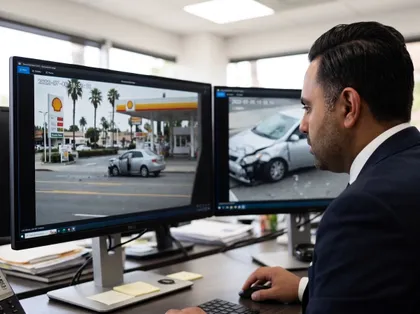
To pursue compensation under a negligence claim, an injured person generally must prove four legal elements: duty, breach, causation, and damages. California Civil Jury Instructions (CACI) No. 400 and related instructions explain these elements. They require proof that the defendant was negligent, the plaintiff suffered harm, and the defendant’s negligence was a substantial factor in causing that harm.
Car accident claim lawyers will gather evidence to establish each of the following:
- Duty of Care: Every driver has a legal duty to use reasonable care and operate a vehicle safely. This duty applies to everyone who shares the road. Attorneys establish this element by showing that the other driver owed the same duty that all California drivers owe.
- Breach of Duty: A breach occurs when a driver fails to use reasonable care. This may happen when a driver runs a red light, follows another vehicle too closely, drives while distracted, or travels too fast for road or weather conditions. Attorneys can prove a breach by showing the driver violated a traffic law or otherwise acted carelessly. To prove it, they can:
- Gather traffic citations or evidence of traffic law violations.
- Collect witness statements.
- Secure dashcam or surveillance camera footage.
- Review cell phone records, when available.
- Work with accident reconstruction experts in complex cases.
- Causation: An attorney must show that the driver’s negligence was a substantial factor in causing the collision and your injuries. To establish causation, attorneys may use:
- Medical records.
- Treating physician opinions.
- Expert testimony.
- Vehicle damage.
- Skid marks and other physical evidence.
- Accident reconstruction findings.
- Damages: Damages are the losses you suffered because of the crash. To show both your financial losses and the effect of the injuries on your daily life, an attorney can gather the following:
- Medical bills and treatment records.
- Lost wage documentation.
- Expert opinions on future medical care or lost earning capacity.
- Photographs of injuries.
- Testimony from you, your family, or others about how the injuries affect your daily activities.
When an attorney develops evidence supporting all four elements, they are in a better position to negotiate with the insurance company or present the case in court.
What If I Was Partially At Fault?
California follows a pure comparative negligence rule. Being partially responsible for a crash does not automatically bar you from recovering compensation. Instead, your recovery may be reduced by your percentage of fault.
Insurance companies frequently try to shift a larger share of fault onto an injured claimant to reduce what they pay. An attorney can challenge an insurer’s fault allocation with evidence rather than accepting the insurer’s initial assessment.
Identifying All Potentially Responsible Parties
An attorney investigates the facts of the crash to identify every person or business that may share legal responsibility. The other driver is not always the only liable party.
Depending on the circumstances, motor vehicle accident attorneys may find that one or more of the following parties contributed to the collision:
| Potentially Responsible Party | When They May Be Liable |
|---|---|
| The at-fault driver | When their negligence caused or contributed to the collision. |
| The vehicle owner | An owner may be liable for a permissive driver’s negligence regardless of the owner’s own fault. This is separate from negligent entrustment, which applies when an owner knew or should have known the driver was unfit. |
| A driver’s employer | When the driver caused the crash while acting within the course and scope of their employment. |
| A rideshare or delivery company | Drivers may be classified as independent contractors, so the company itself may not be directly liable. Liability depends on the specific facts and applicable law. California requires tiered insurance coverage based on the driver’s status at the time of the crash. |
| A trucking company | When the company contributed to the crash through negligent hiring, training, supervision, maintenance, cargo loading, or other acts or omissions. |
| A vehicle maintenance or repair provider | When negligent inspection, maintenance, or repairs contributed to the collision. |
| A vehicle or parts manufacturer | When a defective vehicle or component caused or worsened the crash or the resulting injuries. |
| A government entity | When a dangerous condition on public property substantially contributed to the collision. California law must also allow the government entity to be held liable. |
Identifying every responsible party matters beyond assigning blame. Under California law, when multiple parties share fault, each defendant’s share of non-economic damages (such as pain and suffering) is generally based on that party’s percentage of responsibility.
Defendants are generally responsible only for their proportionate share of non-economic damages, while different rules apply to economic damages. An attorney evaluates how fault may be divided among multiple parties to pursue full compensation.
Protecting You During Insurance Communications
Insurance communications are another important part of a car accident lawyer’s work. An attorney can speak with the insurance company on your behalf, protect your claim, and help you avoid mistakes that could affect your right to compensation.
Your obligations may differ when dealing with your own insurer, such as in a UM/UIM claim, compared with the other driver’s liability insurer.
Common insurance issues include:
- Early Settlement Offers: An insurer may make an offer before you know the full extent of your injuries. An attorney evaluates early settlement offers to determine whether they fairly compensate you.
- Recorded Statements: An adjuster may ask you to give a recorded description of the crash or your injuries. Depending on the circumstances and the type of claim, you may not be required to give a recorded statement to the other driver’s insurer. Your insurance policy may require reasonable cooperation. An attorney can review the policy and help you understand your obligations before you respond.
- Broad Medical Authorizations: An insurer may ask you to sign an authorization that provides access to medical information. An attorney can review the request and determine whether it is broader than necessary.
- Delays and Repeated Document Requests: An insurer may request additional records or state that the investigation is ongoing. A lawyer can track communications, provide relevant documents, and ask the insurer to explain what information remains necessary.
Evaluating Available Damages And Benefits
A lawyer evaluates every type of compensation that may be available after a car accident. Depending on the facts of your case, you may qualify for compensatory damages, punitive damages, workers’ compensation benefits, or a combination of these remedies.
| Type of Damages or Benefits | How an Attorney Helps | Common Examples |
|---|---|---|
| Compensatory Damages | Calculates current and future losses using:
|
Economic damages:
Non-economic damages:
|
| Punitive Damages | Evaluates whether the facts support a claim for punitive damages and gathers evidence of oppression, fraud, or malice when permitted under California law. | May apply in limited cases involving particularly egregious conduct, such as certain drunk driving or intentional misconduct cases. |
| Wrongful Death Damages | Determines who may bring a wrongful death claim, identifies recoverable damages, and gathers evidence to document the family’s losses. |
|
| Workers’ Compensation Benefits | Determines whether the crash occurred within the course and scope of employment and helps pursue available workers’ compensation benefits while evaluating any third-party claim. |
|
Handling Medical Liens And Reimbursement Claims
A settlement is not always the same as the amount you receive after the case ends. Health insurers, medical providers, government benefit programs, or other entities may claim a right to repayment from the settlement. These claims are often referred to as liens or reimbursement claims.
An attorney can help by:
- Identifying possible repayment obligations.
- Requesting itemized balances.
- Reviewing whether the claimed amount is correct.
- Challenging unrelated or duplicate charges.
- Seeking reductions when legally and factually appropriate.
- Calculating the expected net recovery before settlement.
This work can help you understand how much of a proposed settlement you may ultimately receive after fees, costs, and valid repayment obligations.
Filing A Lawsuit
An attorney can file a lawsuit when settlement negotiations do not resolve your claim. They can also prepare your case for litigation while continuing to pursue a fair settlement when appropriate.
A lawsuit may become necessary when:
- The insurer denies responsibility.
- The parties disagree about fault.
- The insurer disputes whether the crash caused the injuries.
- The settlement offer does not reasonably account for the losses.
- The filing deadline is approaching.
After a lawsuit is filed, the parties enter a process called discovery. Discovery is the formal exchange of information and evidence.
It may include:
- Written questions.
- Requests for documents.
- Depositions under oath.
- Medical examinations.
- Expert reports.
- Requests that the other party admit or deny specific facts.
Preparing a case as though it may proceed to trial can also strengthen settlement negotiations. It shows the insurer that the evidence has been organized and that the claim is ready to be presented in court if necessary.
Managing California’s Filing Deadlines
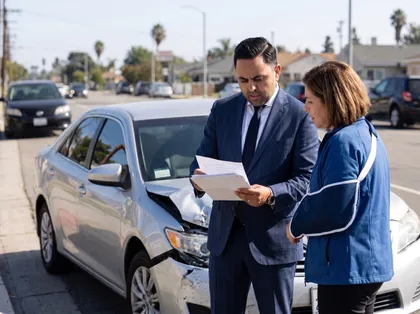
An attorney identifies and tracks the filing deadlines that apply to your car accident claim. Missing a legal deadline can prevent you from pursuing compensation, even if you have a valid case.
-
Personal Injury Lawsuit: California Code of Civil Procedure Section 335.1 generally provides two years to file a lawsuit for injury or death caused by another person’s wrongful act or negligence.
The two-year period is a general rule. A different deadline or exception may apply based on the people involved and the facts of the case.
- Personal Property Damage: California Code of Civil Procedure Section 338 generally provides three years to file a lawsuit for damage to personal property, such as damage to a vehicle or other property caused by a collision. Different rules may apply depending on the parties involved and the circumstances of the claim.
- Uninsured and Underinsured Motorist Claims: Under Insurance Code § 11580.2(i), within two years of the accident, the insured generally must take one of the specified actions, such as filing a bodily-injury lawsuit against the uninsured motorist, reaching an agreement regarding the amount due, or formally instituting arbitration through the required written notice.
-
Claims Against Government Entities: Under California Government Code Section 911.2, a claim relating to personal injury, death, or damage to personal property generally must be presented to the proper public entity no later than six months after the claim accrues, typically the date of the accident.
This requirement may apply when a crash involves:
- A city or county vehicle.
- A public bus.
- A law enforcement vehicle.
- A state-owned vehicle.
- A dangerous condition on public property.
- A roadway maintained by a government entity.
The six-month administrative claim requirement is not the same as filing a lawsuit. If the public entity rejects your claim in writing, California Government Code Section 945.6 generally gives you six months from the date the rejection notice was personally delivered or deposited in the mail to file a lawsuit. If the entity does not provide a legally sufficient written rejection, a different limitations period may apply, often measured from the date of the injury. An attorney should calculate the deadline from the specific claim and notices.
Special rules may also apply to minors, incapacitated people, delayed discovery, late government claims, and defendants who leave California. Never assume that a deadline has been extended. An attorney can determine the deadline from the specific facts.
Why Choose Arash Law After A Car Accident?
An experienced attorney can strengthen your car accident claim by thoroughly investigating, preparing, and presenting your case. Arash Law has recovered substantial compensation for injured clients in a wide range of motor vehicle accident cases.
| Case Result | The Client’s Situation | How Arash Law Helped |
|---|---|---|
| $6,000,000 | A drunk driver crossed the double yellow lines on a two-lane highway and struck our client’s vehicle head-on while the client was traveling with his wife and son. The collision tragically claimed the life of the client’s wife. | The defense challenged both insurance coverage and liability. Arash Law successfully overcame those disputes and recovered the maximum available policy limits for the client. |
| $3,000,000 | The investigating officer’s report incorrectly identified our client as the driver who failed to stop at a stop sign. | Arash Law obtained the other vehicle’s black box data, which showed the other driver was speeding. By using that evidence and physics analysis, the firm established the true cause of the collision and recovered the full policy limits for the client and the client’s family. |
| $1,250,000 | Although the other driver accepted responsibility for the collision, they disputed the seriousness of our client’s injuries. | Arash Law litigated the case for two years, increasing the settlement offer from $150,000 to $1,250,000. The case resolved after expert depositions began and three weeks before trial. |
Every car accident case presents different facts, legal issues, and insurance coverage. Arash Law investigates each claim individually and develops a strategy based on the available evidence and the client’s specific circumstances.
Disclaimer: These case results reflect the outcomes of specific cases handled by Arash Law. Past results do not guarantee, warrant, or predict a similar outcome in any future case. Hiring an attorney does not guarantee a particular result, settlement amount, or timeline; the outcome of any claim depends on its specific facts.
Frequently Asked Questions About Car Accident Claims In California
Car accident claims in California can involve insurance requirements, medical treatment, settlement negotiations, and, in some cases, litigation. These answers address several common issues, but the outcome of any claim depends on its specific facts.
Will My Car Accident Case Have To Go To Court?
It depends on the facts of your case. Many car accident claims settle without a trial. However, filing a lawsuit may be necessary when fault or injuries are at issue or when the opposing party disputes the claim’s value. Work with a lawyer for car accident claims as early as possible. They can prepare your case for trial.
Should I Talk To The Insurance Adjuster Before Hiring A Lawyer?
It is generally advisable to speak with a lawyer before talking to an insurance adjuster. An attorney can explain your rights, advise you on what information to provide, and help protect your claim. They can also communicate with the insurance company on your behalf.
What Happens If The At-Fault Driver Is Uninsured?
If the at-fault driver has no insurance, you may be able to seek compensation through your own uninsured motorist (UM) coverage. If the at-fault driver has insurance but not enough to cover your losses, underinsured motorist (UIM) coverage may apply instead. California law generally requires insurers to offer UM/UIM coverage, and a policyholder must reject it in writing. Note that California law (Civil Code § 3333.4) may bar certain uninsured motorists from recovering non-economic damages. However, an exception may apply to an uninsured vehicle owner injured by a driver who is convicted of DUI in connection with the crash.
As of January 1, 2025, California drivers are required to carry liability insurance of at least $30,000 per person and $60,000 per accident for injuries, and $15,000 for property damage. These minimums often are not enough to cover serious injuries. An attorney can help identify whether additional coverage through the at-fault driver’s policy, your own underinsured motorist coverage, or another liable party may be available.
How Long Does It Take To Settle A Claim In California?
There is no standard settlement timeline. A straightforward claim may resolve within several months, while a case involving serious injuries, disputed liability, extensive treatment, or litigation may take substantially longer. The timeline depends on the evidence, medical recovery, negotiations, and court schedule. Having legal counsel can help prevent avoidable delays.
When Should I Consider Settling My Car Accident Claim?
You do not necessarily need to reach maximum medical improvement before settling. However, your injuries, prognosis, and future treatment needs should be reasonably understood. An attorney can review the medical evidence and help determine whether a settlement offer adequately accounts for your current and future losses.
How Do Attorney Fees Work?
Attorney fees and litigation costs affect how much you ultimately receive from a settlement or verdict. Personal injury attorneys, including car accident lawyers, typically work on a contingency basis, meaning fees are generally paid only if your case results in a settlement or verdict. The written fee agreement should specify how costs and fees are calculated and whether costs are deducted before or after fees, so you know what to expect before signing.
Discuss Your Car Accident Case With Arash Law
Every car accident claim raises different legal and insurance issues. You may need to determine who was at fault, identify available insurance coverage, calculate your damages, or meet California’s filing deadlines. An attorney can evaluate these issues and explain how they may affect your claim.
Arash Law, also known as AK Law, can investigate your accident. Our team can then gather supporting evidence, communicate with the insurance company, and pursue compensation or benefits based on the facts of your case.
Call (888) 488-1391 for a free consultation. We can review your case, answer your questions, and discuss the next steps based on your situation.