TL;DR: Postal carriers in California can sue dog owners for bite injuries under strict liability, even if the dog had no prior aggression. They may recover pain, scarring, or wage losses beyond FECA benefits, but missing the 2-year lawsuit deadline can bar compensation for medical bills or scars.
Highlights:
- Call 911 for a serious injury or immediate danger, and report the attack to local animal control.
- Photograph the dog, property hazards, and your injuries before leaving.
- Get the dog owner’s name, address, and homeowners/renters insurance information.
- Seek same-day medical evaluation, even if the wound seems minor.
- Preserve your USPS uniform unwashed to retain blood, dirt, and other physical evidence.
- Give USPS written notice within 30 days to protect FECA benefits.
- Have a lawyer review settlements for FECA subrogation before you sign anything.
Tip: If an insurer asks for a recorded statement, stick to facts you personally observed and avoid guessing about fault, distance, or timing.
Table of Contents
Postal carriers can sue dog owners in California for bite injuries. The state’s strict liability law generally makes owners responsible even if the dog had no history of aggression. If you were bitten while delivering mail, you may have rights beyond federal employees’ compensation.
Federal benefits may cover medical bills and part of your lost wages. A personal injury claim against the dog’s owner may provide compensation for pain, suffering, scarring, and other losses that federal benefits may not cover.
How California’s Strict Liability Protects Postal Carriers
California Civil Code § 3342 covers dog bites that happen in a public place or while the victim is lawfully on private property. Under this law, the owner may be held liable in case the dog bites someone who was lawfully present. Victims do not need to prove the dog was aggressive before or that the owner did anything wrong. In these incidents, the dog owner may be held liable even if:
- The dog had never bitten anyone before.
- The owner did not know the dog was dangerous.
- The owner was not otherwise negligent.
United States Postal Service (USPS) workers delivering mail are generally lawfully on the property and are not treated as trespassers. A homeowner usually cannot avoid liability simply by arguing that the carrier had no right to approach the delivery area.
California also does not follow the “one bite” rule. A dog owner may be held liable for the first reported bite, even if the dog had no known history of aggression.
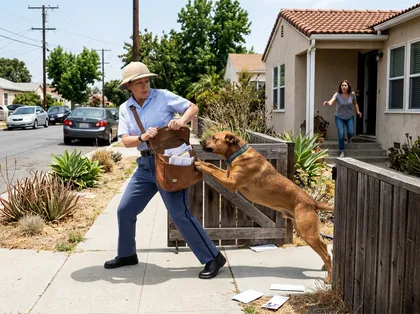
Strict liability under Civil Code § 3342 applies specifically to bites. However, a carrier may still have a negligence claim if a charging or attacking dog:
- Knocks them down.
- Causes them to fall from steps.
- Makes them trip while backing away or escaping.
For these non-bite injuries, the carrier may need to prove negligence or show that the owner knew or should have known about the dog’s dangerous behavior.
Dog owners and insurers may still raise defenses. They may argue that the carrier provoked the dog or was not lawfully on the property. However, reasonable protective actions, such as backing away or using authorized dog repellent, are not automatically considered provocation.
A warning sign or closed gate also does not automatically make a carrier a trespasser. The outcome may depend on the delivery instructions, property boundaries, access restrictions, and the circumstances of the carrier’s entry.
Who Can Be Sued For A Mail Carrier’s Dog Bite Injuries?
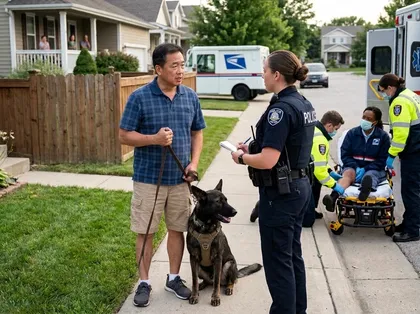
When a mail carrier is injured in a dog attack, more than one party can be held responsible. The dog owner is often the starting point, but others who helped create or ignore the risk can also be held accountable.
Here are the parties who may be responsible for your damages:
- Dog Owner: The dog’s owner is usually the primary liable party. Compensation may be available through the owner’s homeowners or renters insurance, depending on the policy. If the insurer disputes liability, denies coverage, or refuses a fair settlement, the injured party may need to file a lawsuit.
- Property Owner or Landlord: A landlord may be liable if they knew the tenant’s dog was dangerous and could have removed the dog or otherwise prevented the harm.
Holding any of these parties accountable starts with the evidence you collect right after the dog bite incident. The stronger the evidence is, the clearer it becomes who bears responsibility for your injuries. Apart from knowing who may be liable, it’s also important to understand what your legal options are after a dog bite.
FECA Workers’ Compensation Vs. Third-party Lawsuits
As a USPS employee injured by a dog bite, you generally do not have to choose between federal workers’ compensation and a civil claim. You may pursue federal benefits while also seeking compensation from the dog owner or another responsible third party.
The Federal Employees’ Compensation Act (FECA) provides benefits to eligible federal employees injured on the job. These benefits may include:
- Medical treatment related to the injury.
- Partial wage replacement while you recover.
- Certain schedule awards for permanent impairment and limited benefits for qualifying disfigurement.
You do not need to prove that the dog owner was at fault to receive FECA benefits. However, FECA generally does not compensate you for pain, suffering, emotional distress, or the full effect of permanent scarring and disfigurement.
A third-party personal injury claim may help cover those additional losses. This claim is filed against the dog owner or another responsible party, not USPS. Under California’s strict liability law, a dog owner may be responsible when the bite occurs in a public place or while the carrier is lawfully on private property. The victim usually does not have to prove a prior bite or any wrongdoing by the owner.
A third-party claim may provide compensation for:
- Pain and suffering.
- Emotional distress.
- Scarring and disfigurement.
- Medical expenses and wage losses that FECA does not fully cover.
- Future treatment or reduced earning capacity.
Provocation and comparative fault may still affect the claim, depending on the circumstances. California follows a pure comparative negligence rule. A victim may still recover damages if they share some fault, but their percentage of responsibility reduces their compensation. For example, if you are found 20% at fault, you may recover 80% of your damages.
Comparative fault is not the only issue that can affect how much compensation you ultimately keep. FECA also has reimbursement rights under 5 U.S.C. §§ 8131 and 8132. If you recover money from the dog owner or their insurer, you generally must repay part of the FECA benefits you received. Any remaining funds may also affect future FECA benefits for the same injury.
Dog bite lawyers can review the FECA lien calculation and ensure that allowable costs, attorney’s fees, and other permitted deductions are properly included. Addressing the reimbursement obligation before settlement can clarify how much compensation the postal worker may ultimately keep.
What To Do After A Dog Attack On Your Delivery Route
Your first actions after the bite are your first evidence. Acting quickly and deliberately can help preserve both your health and your legal rights.
- Photograph the Scene: Once you are safe, photograph your injuries, the location, and any visible hazards, such as broken fences or damaged latches. Photograph the dog only if you can do so safely without approaching it.
- Gather Contact Information: Collect the dog owner’s name and contact details, as well as any witnesses’ contact information. Ask for the owner’s homeowners insurance information, if available.
- Report the Injury Through USPS: Notify your supervisor or postmaster promptly and file Form CA-1, Federal Employee’s Notice of Traumatic Injury and Claim for Continuation of Pay/Compensation. Follow USPS instructions for reporting the dog hazard through the appropriate safety system.
- Seek Medical Care: Obtain prompt medical evaluation, even if the wound looks small. Seek emergency care for severe bleeding, serious injuries, or other urgent symptoms. Ask whether you need wound treatment, antibiotics, a tetanus booster, or a rabies evaluation.
- Preserve Your USPS Uniform: Keep any torn or bloodstained uniform items unwashed and store them safely because they may help document the attack and your injuries.
- Be Careful When Speaking With Third-Party Insurers: Before giving a recorded statement or signing documents for the dog owner’s insurer, consider having a lawyer review the request. Avoid guessing or making statements about facts you do not know.
These steps must be taken promptly. The legal window to file a postal worker dog bite claim in California is strictly limited.
Deadlines For Filing A Postal Worker Dog Bite Claim
A postal worker dog bite claim is governed by two separate deadlines that run concurrently. One is a short federal notice window under FECA. The other is for civil lawsuits under California law. Both start the moment the dog bites you.
- Civil Lawsuit Deadline: California Code of Civil Procedure §335.1 gives you two years from the date of the bite to file a civil lawsuit against the dog’s owner or any other liable party.
- FECA Deadline: Report the dog-bite injury to USPS and file Form CA-1 as soon as possible. Filing within 30 days is generally required to qualify for continuation of pay. An original FECA claim for disability, medical care, or death generally must be filed within three years of the injury.
Waiting can also make evidence harder to preserve. Photos may no longer reflect the injury’s early appearance, witnesses may become harder to locate, and property conditions may change.
Frequently Asked Questions
Dog attacks on mail routes raise complex legal questions. You may be unsure whether your injury is serious enough to pursue or what defenses the dog owner might raise. Below are answers to common questions victims may have.
Can You Sue For A Minor Dog Bite In California?
Yes. Under California law, Civil Code § 3342 holds dog owners responsible for bites in most circumstances. The owner can be held liable without proof that they knew the dog was dangerous. Even a minor wound can lead to medical costs, serious infection, and emotional distress.
What If The Homeowner Claims Their Dog Has Never Bitten Anyone Before?
That is not a valid legal defense. Prior bite history does not matter under California’s strict liability rule. The owner can be liable for any bite in a public place or on private property where the victim is lawfully present.
Can A Dangerous Dog Be Euthanized Under California Law?
Yes, in some cases. After a court or administrative hearing, a dog found to be vicious may be euthanized if its release would pose a significant threat to public health and safety. The outcome depends on the severity and history of the dog’s behavior, as well as any applicable local rules.
Is It Worth Pursuing A Lawsuit Against The Dog Owner?
It may be worth pursuing a claim if the bite caused medical expenses, lost income, scarring, emotional distress, or other lasting harm. Many dog-bite cases are resolved through the owner’s homeowners or renters insurance rather than a trial.
Even a seemingly minor bite can lead to infection, nerve damage, or permanent scarring. A legal evaluation can help determine whether insurance coverage is available and whether the potential recovery justifies pursuing a lawsuit.
Get Legal Support After A Dog Bite Incident In California
You have two possible legal claims, and both have strict deadlines. Evidence fades, witnesses become harder to reach, and filing windows close. Early consultation with an attorney can help you make informed decisions about your next steps.
Arash Law handles every personal injury case on a contingency basis, meaning no upfront costs and no attorney’s fees unless we win for you. Although AK Law cannot promise a specific outcome for your case, our past results can demonstrate how we handle injury cases:
- $2,300,000: Our elderly client was visiting from Canada when an unleashed dog attacked him during his daily walk. The attack caused him to fall and strike his head on the asphalt. We secured the maximum recovery from the dog owners’ homeowners’ insurance policy.
- $3,500,000: Our client suffered a spinal injury after falling in a poorly lit area. The injury significantly disrupted their life, but we secured compensation on their behalf.
- $1,500,000: Our client was hired by a homeowner to perform wood-cutting work despite being unlicensed. The homeowner instructed him to use a sander that was not designed for cutting. He lost control of the tool and suffered the amputation of three fingers. The case resulted in a $1.5 million settlement.
Disclaimer: These results are from specific cases and are provided for informational purposes only. Every case is unique, and the outcome or value of any claim depends on its individual facts and circumstances.
Our dog bite lawyers can review your case details and explain your rights under FECA and California law. Call (888) 488-1391 today for a free, no-obligation consultation.