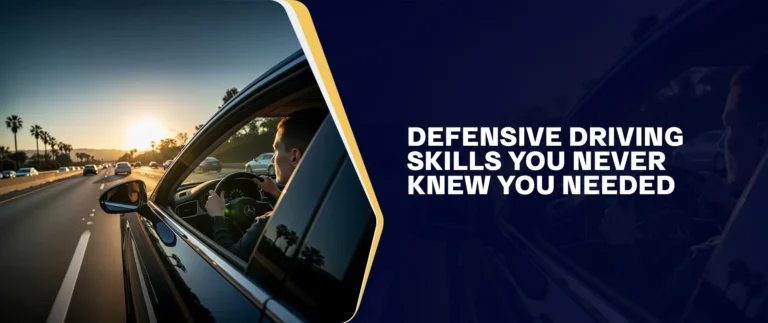
TL;DR: Adaptive cruise control increases speeding risk because drivers using ACC exceed posted speed limits more often, which raises the chance of high‑speed crashes and fatal injuries. Injured drivers and passengers can hold a speeding motorist liable for negligence, and delayed medical care or lost crash evidence can weaken an injury claim.
Highlights:
- Confirm whether your vehicle has ACC or standard cruise control.
- Read the owner’s manual and test ACC controls in low-risk conditions.
- Set a conservative speed and re-check it regularly while cruising.
- Increase following-distance settings to give yourself more reaction time.
- Turn off cruise control in rain, snow, mud, or standing water.
- Avoid cruise control in stop-and-go traffic or rapidly changing patterns.
- Slow below the limit when traction or visibility is reduced.
Tip: If you’re hit by a speeding driver, take photos, save dashcam footage, and share only verified facts with insurers.
Table of Contents
Cruise control is a convenient feature that has made it easier for drivers to go long distances. Unfortunately, research has found that this feature also makes it easier for drivers to speed, especially when the system is adaptive. Adaptive cruise control can be dangerous for drivers who rely on it without considering their surroundings.
If a speeding driver injures you, an experienced car accident lawyer can help you file a claim and answer your case-related questions. Learn more about the research on adaptive cruise control, why it makes drivers more likely to speed, and what motorists must do to stay safe on the road.
What Is Adaptive Cruise Control?
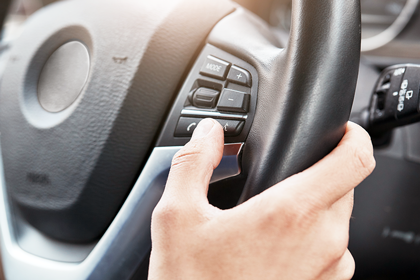
Before learning why adaptive cruise control causes drivers to speed, it is important to understand exactly what this technology does. Regular cruise control allows a driver to set the vehicle to a specific speed. The vehicle maintains this speed until the driver cancels the control (by either braking or pressing the cancel button). Adaptive cruise control (ACC) takes this technology a step further.
According to J.D. Power, ACC uses a combination of radars, lasers, and cameras to calculate a car’s surroundings. The car uses this information to maintain a safe following distance from other vehicles. If another vehicle cuts in front of you, an adaptive cruise control (ACC) system will slow your car down until you have once again reached a safe following distance.
If the vehicle leaves, your adaptive cruise control can accelerate to close the gap. ACC relies on many technologies that are relatively new in the automotive industry. Front cameras, sensors, and lasers have not been widely used in passenger vehicles for long.
Despite this, they have been used successfully, and drivers who understand these new technologies can use them to stay safe on the road. Cruise control is likely to be improved by even more technologies in the coming years.
J.D. Power reports on a new detection system called LiDAR (Light Detection and Ranging). LiDAR uses a pulsed laser to create a comprehensive, 3-D “map” of the area surrounding a vehicle. This technology enables ACC to respond more accurately to surrounding traffic conditions. This technology is currently being integrated into the advanced driver-assistance systems of some vehicles available in the U.S.
The Research On Adaptive Cruise Control
Interestingly, research indicates that drivers using this technology are more likely to exceed speed limits. Newsweek reported on a study by the Insurance Institute for Highway Safety into this very issue. The researchers found that drivers using ACC traveled faster than the posted speed limit 95% of the time, while those without ACC traveled faster than the posted speed limit 77% of the time. Drivers using ACC also drove even faster than those without it, indicating that speeding was more prevalent among drivers using adaptive cruise control.
Why Are Drivers More Likely To Speed And Crash?
So, why do drivers speed when using adaptive cruise control? There are many possible explanations. First, researchers found that speeding with ACC was more likely to occur on roads with lower speed limits, indicating that the problem is often due to simple impatience. When speed limits are low, some drivers become frustrated and speed through them to get past. There is also the simple problem of paying attention.
Whenever a driver uses cruise control, they tend to pay less attention to their speed, which can lead to high-speed accidents that are more likely to be fatal. There is another common problem associated with new technologies and safety features in cars. When drivers do not understand these features, they can actually increase the likelihood of an accident occurring.
Consider lane assist technologies: Some of these programs actually steer a vehicle back to the center of its lane if it starts to drift outside of it. But other programs simply sound an alert to warn the driver. If a driver thinks the vehicle will correct the drift, but it does not, an accident could occur. A similar problem can occur with cruise control.
ACC is designed to adjust to the space between your vehicle and other cars nearby. But if you have not set it properly, you could crash, thinking that the ACC would correct your distance for you. Drivers may also experience issues if their vehicle is equipped with traditional cruise control.
If the driver thinks there is ACC, they might assume the vehicle will adjust itself for traffic. Instead, the vehicle would simply maintain the set speed. Drivers must understand exactly how all their safety features work before heading out on the road. If they do not, they can be financially responsible for any accidents that occur.
Why Speed Is More Likely To Cause Fatal Injuries
Researchers have long known that speed is a factor in fatal accidents. Speed increases the likelihood of accidents because drivers have less reaction time to avoid obstacles on the road. Speed also makes injuries more serious. Additional speed causes more momentum in a collision, which in turn creates stronger forces that can injure the persons involved. It’s no surprise that accidents involving speeding are more likely to be fatal.
The National Safety Council reports that speed was a factor in 26 percent of all fatal accidents across the U.S. in 2019. Nearly ten thousand people were killed in speeding accidents that year, an average of more than 25 deaths per day. In the case of ACC, researchers noted that the observed increase in speed could elevate the risk of a serious or fatal accident.
Who Is More Likely To Speed
Speeding research has also demonstrated that certain factors are more likely to make a driver speed. The National Safety Council has found that speeding-related fatalities are more likely to occur:
- With male drivers
- On slippery road surfaces
- When a driver is impaired by alcohol
Of course, a driver cannot speed even if these categories do not apply. All drivers have a legal obligation to operate their vehicles with due care and attention. If they do not, and an accident occurs, they can be held legally responsible for any deaths or injuries that occur.
What Drivers Must Do To Reduce The Risk Of Injury And Death
So what does it mean to operate a vehicle with “due care”? Drivers must take reasonable precautions to prevent accidents. One of the easiest ways to avoid an accident is to simply slow down. “Due care” means that a driver may not travel faster than is safe under the current conditions.
It is essential for drivers to recognize that the posted speed limit is not typically the safest speed for current conditions. If it is raining or snowing, for example, you will need to slow down to accommodate the slippery road conditions. (Remember that there could be black ice, which you aren’t able to see, to avoid it.) If there is mud or standing water on the road, this can also require slower speeds.
Traffic conditions can also require you to slow down. In California, we experience some of the worst traffic congestion in the country. Few Californians enjoy the commute across L.A. or San Francisco during rush hour. The frustration of sitting in traffic can cause some drivers to engage in road rage.
Resist the temptation to tailgate, speed around slower cars, or engage in any other dangerous driving behaviors. Road rage has deadly consequences in far too many cases. Finally, be sure to remember the risks associated with cruise control, particularly adaptive cruise control. It is far too easy to turn on the cruise control and forget to pay attention to your speed.
When using ACC, leave plenty of space between your car and other vehicles, and maintain a speed that is safe for the current conditions. Do not use cruise control when there are changing traffic patterns or obstructions in the roadway. Do not use it when there is rain, sleet, hail, or snow, or when there are other slick substances on the roadway (such as mud or standing water). Pay attention to your speed whenever you activate your cruise control.
The Right Injury Lawyers For Speeding Accident Cases
Have you been spending hours searching online for “speeding injury lawyers near me”? Our law firm has experienced California accident attorneys who can help with your car accident case. Our legal team handles claims involving speeding-related accidents and can offer guidance on what steps to take after a collision.
Furthermore, our lawyers serve clients in Los Angeles, San Francisco, Riverside, Bakersfield, Santa Barbara, San Jose, San Diego, Fresno, Sacramento, Sherman Oaks, and throughout the state of California. Call (888) 488-1391 to schedule your free initial consultation.