TL;DR: Yes. Homeowners insurance may cover a guest’s Thanksgiving football injury through medical payments or liability coverage. Household exclusions and policy limits can restrict coverage. Another player’s policy may also apply, but liability claims against another player generally require intentional injury or reckless conduct entirely outside the sport’s ordinary activities.
Homeowners insurance may cover a serious injury from a family Thanksgiving football game, but whether it does depends on who got hurt, who caused the injury, and how it happened. A relative may go down hard on a bad tackle, and the holiday ends at an emergency room instead of over pie. The questions that follow are practical: whose policy pays, how much does it cover, and does it matter that everyone chose to play?
More than one policy may apply. The host’s homeowners or renters insurance may cover a guest’s medical bills. Personal liability coverage may also apply when the homeowner or another insured is legally responsible. If a visiting player caused the injury, that player’s own homeowners or renters policy may provide additional coverage.
For a liability claim against another player, California law generally requires proof that the player intentionally caused the injury or acted so recklessly that the conduct fell entirely outside the sport’s ordinary activities.
Key Facts
- Coverage Depends on Fault: Medical payments coverage may pay a guest’s medical expenses regardless of fault; personal liability coverage requires an insured’s legal responsibility for covered injuries.
- Household Members May Be Excluded: Medical payments coverage generally excludes household residents; personal liability coverage may also exclude injuries to people the policy defines as insureds.
- Another Player’s Policy May Apply: A visiting player’s own homeowners or renters liability insurance may cover injuries they cause away from home, subject to policy terms.
- Player Liability Requires More Than Carelessness: Under Knight v. Jewett and CACI No. 470, a player generally can recover from another player only for intentional or reckless conduct outside the ordinary range of the sport.
- Unsafe Property May Create Host Liability: Hosts may face liability when their failure to use reasonable care creates property hazards that increase risks beyond those inherent in football. (CACI No. 472)
- A Two-Year Filing Deadline Generally Applies: California allows two years to file a personal injury lawsuit, though exceptions can extend or shorten the deadline. (Code Civ. Proc. § 335.1)
Table of Contents

When Does Homeowners Insurance Cover a Thanksgiving Football Injury?
A standard homeowners policy may provide medical payments coverage for guests injured during a Thanksgiving football game, even without homeowner negligence. Personal liability coverage may also apply when an insured is legally responsible. However, coverage depends on the injured person’s relationship to the household, the circumstances of the injury, and applicable exclusions.
If your spouse or adult child who lives with you suffers an injury in the same play, those guest injury coverages do not apply. Household members typically need to look to their own health insurance, as many policies exclude resident relatives from coverage.
Even when the injured person is a guest, their role in the game matters. An insurer may argue that a spectator standing close to the field accepted some risk of contact, but that argument is weaker for a guest who never chose to be near the action, such as someone walking to the patio. For players, California’s primary assumption of risk doctrine becomes the central question.
Does a California FAIR Plan Policy Cover Guest Injuries?
No. A standard California FAIR Plan policy does not provide personal liability or medical payments coverage for injured guests. Homeowners seeking that protection typically purchase a separate difference-in-conditions (DIC) policy or standalone liability coverage. If the host has only a FAIR Plan policy, other sources may still apply, including another player’s homeowners or renters liability policy or the injured guest’s health insurance.
The California Supreme Court is reviewing a dispute over whether the Insurance Commissioner can require the FAIR Plan to offer expanded homeowners coverage, including liability protection. For now, homeowners should review their existing policies and consider separate liability coverage to address the FAIR Plan’s limitations.
Whose Insurance Applies When Another Player Causes the Injury?
If the homeowner or an insured household member causes the injury, the homeowner’s liability coverage may respond. If a visiting friend or relative causes the injury, that person’s homeowners or renters liability policy may provide coverage.
However, insurance does not automatically pay simply because a player caused an injury. California’s assumption-of-risk doctrine may bar liability for ordinary football contact. Coverage also depends on whether the responsible player qualifies as an insured and whether any policy exclusions apply.
How California’s Assumption of Risk Doctrine Affects Football Injury Claims
California’s primary assumption-of-risk doctrine generally bars claims against fellow players for injuries caused by ordinary football contact or carelessness. Under Knight v. Jewett (1992), players generally owe no duty to protect each other from risks inherent in the game.
The doctrine does not excuse intentional injury or reckless conduct entirely outside the sport’s ordinary activities. Under CACI No. 470, either may support a claim against another player. The game’s format and circumstances matter, including whether participants played tackle or touch football.
California Insurance Code § 533 generally bars coverage for losses caused by an insured’s willful acts, including intentionally inflicted injuries. Reckless conduct does not automatically trigger that bar, but coverage still depends on the facts and policy exclusions.
Hosts may also face liability for unsafe property conditions that unreasonably increase risks beyond those inherent in football. Joining the game does not automatically eliminate a claim involving those hazards.
Videos, witness accounts, and evidence of the agreed rules can help distinguish ordinary play from conduct that may support a finding of liability. Establishing liability, however, does not guarantee insurance coverage.
What Costs Do Medical Payments And Liability Policies Cover?
Medical payments coverage (MedPay) helps pay eligible treatment costs, while personal liability coverage may address a broader range of injury-related losses. The available compensation depends on the coverage involved, its limits, and whether an insured bears legal responsibility.
- Medical Payments to Others (MedPay): May cover a guest’s medical bills regardless of fault, subject to policy terms. Limits commonly range from a few hundred to several thousand dollars, depending on the policy. This coverage can apply to an emergency room visit, imaging, or chiropractic care after a football injury. It does not require the guest to prove the homeowner did anything wrong.
- Personal Liability: May cover injuries when the homeowner or another insured household member is legally responsible. Depending on the policy, it can address medical expenses, lost income, and pain and suffering. Coverage also depends on applicable exclusions, liability limits, and the circumstances of the injury.
A serious football injury, such as a concussion, fracture, or torn ligament, can generate medical expenses that exceed MedPay limits. Personal liability coverage may address additional losses when an insured is legally responsible. However, liability coverage does not automatically begin when MedPay is exhausted. Each coverage has separate conditions, limits, and exclusions.
What If the Insurance Company Denies the Claim?
An insurer’s denial is not always the end of your claim. Insurers may deny or dispute football injury claims by citing assumption of risk, a policy exclusion, or the household-member exclusion. Whether those reasons hold up depends on the facts and the exact policy language.
California’s Fair Claims Settlement Practices Regulations establish requirements for insurer investigations and claim responses. Insurers must communicate claim denials or liability disputes in writing. If the insurer rejects your claim, request an explanation of its decision and identify any exclusions or policy provisions it relies on.
When a guest files suit, the homeowner’s insurer often defends the case under a “reservation of rights,” meaning it provides a defense while reserving the right to dispute coverage later. In some cases, an insurer’s unreasonable refusal to accept a reasonable settlement offer within policy limits can create additional liability. However, recovery beyond policy limits depends on specific legal requirements and the circumstances of the case.
A sports injury attorney can review the denial and every policy that might apply before you accept the insurer’s answer.
Can Homeowners Be Liable for Dangerous Conditions During a Backyard Football Game?
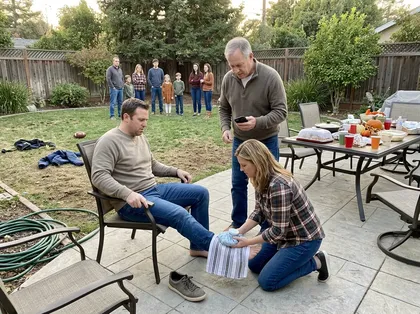
Yes. A homeowner may face liability when an unsafe property condition contributes to a football injury. California Civil Code § 1714 generally requires property owners to exercise reasonable care, while assumption-of-risk principles may limit liability for dangers inherent in the activity.
Potential hazards include:
- Hidden Holes or Uneven Ground: A concealed hole or dangerous surface condition may cause a player to fall and sustain serious injuries.
- Unsecured Equipment: Tools, lawn equipment, or other objects left on the playing field may create avoidable collision or tripping hazards.
- Dangerous Playing Areas: A homeowner who directs players toward an unsafe area may increase the risk of injury beyond the ordinary dangers of football.
Liability depends on whether the homeowner owed and breached an applicable duty of care and whether that breach caused the injury. Not every fall or dangerous condition establishes negligence.
Other Thanksgiving Injuries and California Liability Law
A holiday gathering creates risks beyond the game, and California applies a different liability standard to different types of injury causes:
- Slip-and-Falls: Under Civil Code § 1714, homeowners must use ordinary care in managing their property. A host may be liable when they knew or reasonably should have known about a hazard, such as a spill, a loose rug, or a broken step, and failed to fix it or warn guests.
- Dog Bites: Under Civil Code § 3342, a dog owner is generally strictly liable when their dog bites someone lawfully on the property, even if the dog has never bitten anyone before. For non-bite injuries, such as a guest knocked down by a dog, liability may rest on negligence or on strict liability for known dangerous tendencies.
- Cooking and Grill Burns: Liability usually turns on whether the host handled cooking equipment carelessly or ignored a known defect or unsafe condition. A homeowners policy’s liability coverage may pay for guest burn injuries, while dwelling coverage may address fire damage to the home.
What To Do After A Thanksgiving Football Injury
After a Thanksgiving football injury, seek medical care and document what happened. Keep records of your treatment and expenses, and avoid guessing about fault when speaking with insurers.
Taking these steps early can help protect your claim:
- Get medical care. See a doctor even if the injury seems minor. Medical records link the injury to the game and document how it happened.
- Preserve evidence of the play. Save any videos or photos from the game, and photograph the field, including uneven ground, obstacles, lighting, and anything that contributed to the injury.
- Collect witness information. Get names and contact details from everyone who saw the play before the gathering breaks up.
- Identify the insurance. Ask the host for their homeowners or renters insurance and policy information. If another player caused the injury, find out whether that person has their own homeowners or renters policy, which may also apply.
- Keep records. Save medical bills, treatment records, claim numbers, and all correspondence with insurers.
- Be careful with adjusters. Avoid speculating about fault, and speak with an attorney before giving a recorded statement to another person’s insurer or signing any release.
Under California Code of Civil Procedure § 335.1, you generally have two years from the date of injury to file a lawsuit. California law may pause the deadline for injured minors, and claims involving a government entity typically require a formal claim within six months. A football injury lawyer can confirm which deadline applies.
If you were injured at a Thanksgiving gathering, Arash Law offers free case evaluations to review your coverage, the facts, and your deadlines. Call (888) 488-1391.
Frequently Asked Questions About Homeowners Insurance and Thanksgiving Injury Claims in California
Can I Make a Claim Against a Family Member’s Insurance if I Was Injured at Their Home?
Yes. If you were injured at a relative’s home and you don’t live there, you are generally treated like any other guest. A claim for a covered injury is typically handled by your relative’s homeowners or renters insurer, which investigates and may provide a defense, rather than being paid directly from your relative’s pocket.
Your relative should promptly report the incident to their insurer, cooperate with the investigation, and avoid admitting fault or promising payment. If your damages exceed their policy limits, however, your relative could be responsible for the difference. An attorney can explain how to pursue a claim while minimizing the effect on family relationships.
Is It Worth Filing a Home Insurance Claim Against a Friend?
It may be worth filing if your friend’s homeowners insurance covers your injury. The insurer may pay covered losses up to the policy limits. Your friend could face personal liability for losses insurance does not cover. Whether filing is worthwhile depends on your injury, legal responsibility, and available insurance.
Does My Homeowners Insurance Cover Resident Relatives?
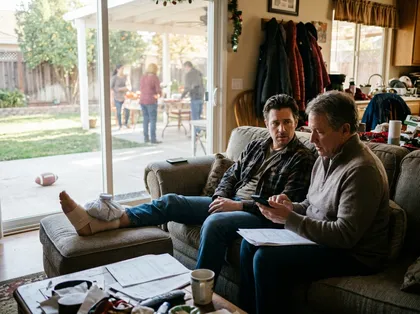
Homeowners insurance generally excludes coverage for injuries to relatives who qualify as insured household members.
A cousin visiting for Thanksgiving may qualify for MedPay coverage if injured during the game, but resident relatives are usually not covered. That being said, being related to the homeowner does not, by itself, exclude a guest from coverage.
Some policies also treat college students temporarily living away at school as insured household members. Check the policy’s definitions and exclusions.
Can Renters Insurance Cover Injuries During a Thanksgiving Football Game?
Yes. Renters insurance may provide medical payments coverage for an injured guest and personal liability coverage when the renter or another insured is legally responsible. If an unsafe property condition contributed to the injury, the landlord may also face liability, depending on the circumstances. Coverage depends on the applicable policies and exclusions.
What Happens if a Guest’s Injury Costs Exceed the Liability Limits?
An umbrella policy may cover additional losses, or the legally responsible person may have to pay them personally. Umbrella coverage depends on its own terms, limits, and exclusions. The amount recoverable also depends on legal responsibility and available assets.
Premises liability attorneys can review all available policy layers, including homeowners and umbrella coverage, to identify the full recovery available to an injured guest.
Will Filing a Claim Increase My Insurance Premiums?
Possibly. A claim may affect future premiums or renewal decisions, but an increase is not automatic. The outcome depends on the insurer, claims history, and circumstances. Homeowners should still report potentially covered injuries promptly, as their policies may require.
Get Legal Help From Arash Law’s Experienced Attorneys
Did you or a loved one suffer a serious injury during a Thanksgiving gathering in California? Arash Law handles premises liability and recreational injury claims across California.
Our attorneys offer a free case evaluation. Call (888) 488-1391 today to protect your right to compensation.
Sources
- California Code of Civil Procedure § 335.1 — Two-year statute of limitations for personal injury lawsuits. https://leginfo.legislature.ca.gov/faces/codes_displaySection.xhtml?lawCode=CCP§ionNum=335.1
- California Courts Self-Help Guide, Deadlines to Sue Someone — Overview of personal injury filing deadlines, minor tolling, and government-entity claims. https://selfhelp.courts.ca.gov/civil-lawsuit/statute-limitations
- California Civil Code § 1714 — General duty of reasonable care, including liability for dangerous property conditions. https://leginfo.legislature.ca.gov/faces/codes_displaySection.xhtml?lawCode=CIV§ionNum=1714
- California Insurance Code § 533 — Restrictions on insurance coverage for an insured’s willful misconduct. https://leginfo.legislature.ca.gov/faces/codes_displaySection.xhtml?lawCode=INS§ionNum=533
- California Department of Insurance, Residential Insurance: Homeowners and Renters (2026) — Explains medical payments coverage, personal liability coverage, policy exclusions, and renters insurance. https://www.insurance.ca.gov/01-consumers/105-type/95-guides/03-res/res-ins-guide.cfm
- Judicial Council of California, CACI No. 470 (2026) — Primary assumption of risk and exceptions to nonliability for coparticipants in sports or recreational activities. https://courts.ca.gov/system/files/file/judicial_council_of_california_civil_jury_instructions_2026.pdf
- Judicial Council of California, CACI No. 472 (2026) — Primary assumption of risk and exceptions to nonliability involving recreational facilities owners, operators, and event sponsors. https://courts.ca.gov/system/files/file/judicial_council_of_california_civil_jury_instructions_2026.pdf
- Knight v. Jewett (1992) 3 Cal.4th 296 — California Supreme Court decision addressing the primary assumption of risk and liability between participants in an informal touch football game. https://scocal.stanford.edu/opinion/knight-v-jewett-31380/
- California Supreme Court, California FAIR Plan Association v. Lara, Case No. S294806 — Pending review concerning whether the Insurance Commissioner can require expanded homeowners insurance coverage, including liability protection. https://appellatecases.courtinfo.ca.gov/search/case/mainCaseScreen.cfm?dist=0&doc_id=3150523&doc_no=S294806
- California Department of Insurance, Fair Claims Settlement Practices Regulations (10 CCR § 2695.7) — Requirements for claim investigations, insurer responses, and written claim denials or disputes. https://www.insurance.ca.gov/01-consumers/130-laws-regs-hearings/05-CCR/fair-claims-regs.cfm
Disclaimer
The information on this page is for general educational purposes and does not constitute legal advice. Reading or relying on this content does not form an attorney-client relationship. If you suffered an injury, consult a licensed California personal injury attorney about your specific situation. Arash Law – (888) 488-1391.