TL;DR: You may have a legal claim if your child trips or slips on a homeowner’s property while trick-or-treating. California law requires homeowners to take reasonable steps to protect visitors from hazards like broken stairs, loose decorations, and unsafe walkways. If the homeowner failed to address a danger that led to your child’s injury, you may be able to recover compensation. Homeowners insurance may also help cover medical bills and other losses.
Yes, you may be able to sue a homeowner if your child gets hurt while trick-or-treating in California. A fun night of collecting candy can quickly turn into a trip to the emergency room if your child falls on a broken porch step, trips over a loose decoration, or slips on an unsafe walkway. If the homeowner failed to take reasonable steps to prevent the accident, they may be held responsible for your child’s injuries.
California law requires homeowners to take reasonable care to keep their property safe for visitors, including children stopping by for Halloween candy. That doesn’t mean homeowners are responsible for every fall. What matters is whether a dangerous condition caused the injury and whether the homeowner knew or reasonably should have known about the risk.
If you’re worried about how to pay your child’s medical bills, the homeowner’s insurance may help. Personal liability coverage may pay for injuries caused by the homeowner’s negligence, while medical payments coverage may cover certain medical expenses even if no one is found at fault.
Key Facts About Halloween Trick-or-Treating Liability in California
- Homeowners have a duty to keep visitors reasonably safe. Under California Civil Code §1714, homeowners must use reasonable care when maintaining their property, including areas where trick-or-treaters are expected to walk.
- Handing out candy comes with responsibilities. If a homeowner welcomes trick-or-treaters, they should take reasonable steps to fix dangerous conditions or warn visitors about hazards they might not notice.
- A hidden hazard could make a homeowner liable. Broken porch steps, loose extension cords, and poorly lit walkways may lead to a valid injury claim if the homeowner’s negligence caused the fall.
- Homeowners insurance may help pay for injuries. Liability coverage may cover damages when the homeowner is legally responsible, while medical payments coverage may help with eligible medical bills even without proof of negligence.
- Being partly at fault doesn’t always prevent recovery. California follows comparative negligence rules, meaning compensation may be reduced if the injured person shares responsibility for the accident.
- There are deadlines for taking legal action. California generally gives injured people two years to file a personal injury lawsuit. Special rules may apply when the injured person is a child or the claim involves a government entity.
Table of Contents

When Is a Homeowner Liable for a Child’s Halloween Injury?
Imagine your child rushing up a neighbor’s porch to collect candy, only to trip over a broken step or a decoration blocking the walkway. If the homeowner knew about the danger, or reasonably should have noticed it, they may be legally responsible for your child’s injuries.
Under California Civil Code §1714, homeowners must use reasonable care to keep their property safe for visitors. That includes checking for dangerous conditions, fixing hazards, or warning guests when something could cause an injury. The Judicial Council of California’s Civil Jury Instructions also recognize these responsibilities.
Still, homeowners aren’t expected to prevent every accident. Whether they’re liable depends on what caused the fall, what they knew or should have known, and whether they took reasonable precautions.
Does Offering Halloween Candy Count as Inviting Trick-or-Treaters?
Yes. When a homeowner puts out Halloween decorations, turns on the porch light, and welcomes children with a bowl of candy, it’s reasonable to expect trick-or-treaters to approach the front door.
That means homeowners should consider the safety of the steps, walkways, and other areas children will use. A loose electrical cord across the porch or a broken step hidden in the dark could put young visitors at risk.
However, being a guest doesn’t automatically make the homeowner responsible for an injury. California law focuses on whether the homeowner acted reasonably under the circumstances, not simply whether the child was an invited visitor.
For example, suppose your child trips over an extension cord running across the walkway to power an inflatable holiday yard decoration. If the homeowner knew the cord was there and failed to secure it or warn visitors, that could support a negligence claim. The key question is whether reasonable precautions could have prevented the injury.
What Must Parents Prove in a California Premises Liability Claim?
Just because your child got hurt on someone’s property doesn’t automatically mean the homeowner is responsible. To pursue a claim in California, you’ll need to show that an unsafe condition caused the injury and that the homeowner failed to take reasonable care to prevent it. Our premises liability attorneys can review what happened and help determine whether you have a valid claim.
There are four things you’ll generally need to prove:
- Duty of Care: The homeowner or another responsible party had a legal responsibility to take reasonable steps to keep your child safe while visiting the property.
- Breach of Duty: The homeowner failed to address a dangerous condition, such as leaving a broken step unrepaired or an extension cord across the walkway without a warning.
- Causation: The dangerous condition played a substantial role in causing your child’s fall and injury.
- Damages: Your child suffered actual harm, such as a broken bone, medical expenses, or pain and suffering resulting from the accident.
You don’t have to rely on your word alone to show what happened. Photos of the accident scene, statements from witnesses to the fall, and your child’s medical records can help support the claim. Evidence that the homeowner knew about the hazard, such as previous complaints or repair records, may also help establish responsibility.
Common Halloween Hazards That May Make Homeowners Responsible
Halloween decorations are fun, but they can also make unfamiliar steps and walkways harder for children to navigate. If a homeowner overlooks a dangerous condition, a night of trick-or-treating could end with an injury.
Here are some hazards that may lead to a premises liability claim.
- Broken Porch Steps and Uneven Driveways: A cracked step, a loose paving stone, or an uneven driveway can easily trip up a child excited to reach the next house. If the homeowner knew or should have noticed the hazard but failed to address it, they may be liable if it caused the injury.
- Dark Walkways and Poorly Lit Stairs: It’s harder to spot broken steps or uneven pavement in the dark. If poor lighting hides a dangerous condition that causes your child to fall, the homeowner may be responsible for failing to take reasonable precautions.
- Electrical Cords and Halloween Decorations: That glowing pumpkin or inflatable ghost may look harmless, but the cords powering decorations can create tripping hazards. A homeowner may be liable if an unsecured cord or poorly placed decoration causes an injury.
- Wet Leaves and Slippery Surfaces: Wet leaves, rain, and slippery walkways can make a quick stop for candy dangerous. Liability depends on whether the homeowner knew or should have discovered the hazard and had a reasonable opportunity to address it.
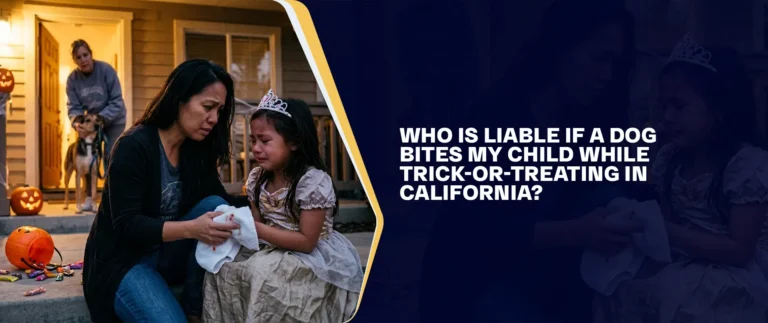
- Dog Bites During Trick-or-Treating: An excited or frightened dog may bite a child approaching the front door. Under California Civil Code §3342, dog owners are generally liable when their dog bites someone lawfully on their property, subject to legal exceptions. Parents generally don’t need to prove the owner knew the dog was aggressive.
Does Homeowners Insurance Cover Halloween Trick-or-Treating Injuries?
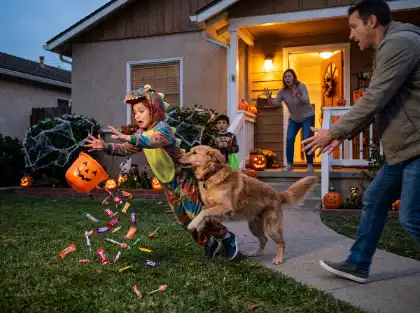 Yes, homeowners insurance may cover a visitor’s Halloween injury. Whether the insurer pays depends on the policy terms, coverage limits, exclusions, and circumstances of the injury.
Depending on the policy, two types of coverage provided by homeowners insurance may apply: personal liability or medical payments to others. The California Department of Insurance identifies both types of protection in its Residential Insurance: Homeowners and Renters guide.
However, coverage isn’t automatic. The insurance company will review what happened, along with the policy’s limits and exclusions, before deciding what it will pay.
What Is the Difference Between Personal Liability and Medical Payments Coverage?
Personal liability insurance may help address a larger injury claim involving substantial medical expenses, pain and suffering, or other recoverable losses.
Medical payments coverage is generally more limited. It may help pay eligible treatment expenses for a child who falls on a neighbor’s property, even when the homeowner’s negligence has not been established.
| Insurance Coverage | What It Typically Covers | Is Proof of Negligence Required? |
|---|---|---|
| Personal liability, Coverage E | Covered medical expenses and other losses when the insured is legally responsible for another person’s injury, along with a defense under applicable policy terms. | Legal liability generally must be established before damages are payable. |
| Medical payments to others, Coverage F | Eligible medical expenses for someone accidentally injured on the insured property, subject to policy conditions and limits. | Fault generally need not be established. |
When Should a Homeowner Notify Their Insurance Company?
Homeowners should contact their insurance company promptly after a trick-or-treater gets injured, especially if the child needs medical attention. Delaying the report could complicate the claims process.
When reporting the accident, homeowners should:
- Share the details. Explain when, where, and how the accident happened.
- Provide evidence. Submit photos of the area and contact information for any witnesses.
- Preserve relevant records. Keep photos, messages, and other information related to the incident.
- Avoid guessing about fault. Stick to what you know rather than making assumptions about who caused the accident.
- Ask about coverage. Check whether personal liability or medical payments coverage may apply.
If your child was injured, ask the homeowner for their insurance information as well. Keep copies of medical bills, treatment records, and any messages about the accident. These documents may help support your claim.
What Should You Do If Your Child Falls While Trick-or-Treating?
One minute, your child is excitedly collecting candy. The next, they’re crying after a fall on someone’s porch or driveway. It’s easy to feel overwhelmed, especially if you’re unsure how badly they’re hurt or what caused the accident.
Your child’s health comes first, but a few simple steps can also help protect their right to seek compensation.
- Get your child checked by a doctor. Even if they seem fine after the fall, some injuries may not be obvious right away. Seek medical attention and tell the doctor exactly what happened.
- Take pictures before the scene changes. Was there a broken step, a loose extension cord, or a poorly lit walkway? Photograph whatever may have caused the fall, including the surrounding area and lighting.
- Let the homeowner know what happened. Explain where your child fell and ask for their contact and homeowners insurance information.
- Talk to anyone who saw the accident. A neighbor or another parent might have noticed something you missed. Get their contact details in case their account is needed later.
- Keep your child’s costume and shoes. Don’t throw them away or wash them just yet. They may help show how the fall happened. Save medical bills, receipts, and photos, too.
- Keep track of your child’s recovery. Note any ongoing pain, follow-up appointments, or activities your child has to miss because of the injury. These details can help show how the accident affected them.
- Find out what your legal options are. If an unsafe condition caused the fall, a California slip-and-fall lawyer can help you understand whether you have a claim and what compensation may be available.
Why Does Preserving Evidence Matter After a Halloween Fall?
By the next morning, the Halloween decorations may be gone, the loose cord tucked away, or the broken step repaired. If you don’t document what caused your child’s fall, it could be harder to prove what happened later.
That’s why taking photos right away matters. Pictures of the hazard, witness statements, and medical records can help show how the accident happened and how your child was hurt.
Even if you have plenty of time to file a claim, don’t wait to gather evidence. Once something is removed or repaired, you may lose important proof that could support your child’s case.
Can You Recover Compensation If Your Child Was Injured While Trick-or-Treating?
Yes, you may be able to seek compensation if a homeowner’s negligence caused your child’s injury. Beyond the initial trip to the emergency room, an injury can mean follow-up appointments, missed school activities, and weeks or months of recovery.
Depending on what happened and how seriously your child was hurt, compensation may include:
- Medical Expenses: Costs for emergency visits, X-rays, surgery, medication, and other necessary treatment.
- Future Medical Care: Physical therapy, rehabilitation, or additional treatment your child may need as they recover.
- Pain and Suffering: The physical pain and discomfort your child experiences because of the injury.
- Emotional Distress: Fear, anxiety, or other emotional difficulties resulting from the accident.
- Loss of Enjoyment of Life: Activities your child can no longer enjoy, such as playing sports, riding a bike, or spending time at the playground.
- Future Earning Capacity: The effect of a serious, lasting injury on your child’s ability to work and earn a living later in life.
Because the injured person is a child, a parent or another authorized adult may pursue compensation for the above losses on their behalf. If a lawsuit is filed, a parent may seek appointment as the child’s guardian ad litem.
Keep in mind that compensation isn’t the same for every case. It depends on your child’s injuries, how the accident occurred, and the available evidence. Parents may also have separate rights to recover certain medical expenses they’ve paid or are responsible for paying.
An attorney can help determine which losses belong in your child’s claim and which may be pursued by a parent, without counting the same expenses twice.
Can Shared Fault Reduce Compensation?
Yes. California follows a comparative fault rule, meaning compensation may be reduced if the injured person shares some responsibility for the accident.
However, children aren’t held to the same standard as adults. Their age, experience, and ability to recognize danger matter when determining fault.
A homeowner can’t simply blame your child for not noticing a hazard. Additionally, the fact that you were there when the fall happened doesn’t automatically mean your child can’t recover compensation.
Discuss Your Child’s Halloween Injury With Arash Law
If your child fell on broken porch steps, a dark walkway, or another unsafe area while trick-or-treating, understanding the cause of the accident can help you evaluate your options.
Arash Law handles premises liability claims throughout California. Our attorneys can review available evidence, assess potential negligence, and help you understand whether a homeowner’s insurance policy may apply.
Call (888) 488-1391 for a free initial consultation.
How Long Do You Have to File a Halloween Injury Claim in California?
California generally allows two years to file a personal injury lawsuit against a private party. However, the deadline may differ when the injured person is a child or when a government entity is responsible.
The applicable rules include:
| Claim Type | General Time Limit | When It May Apply |
|---|---|---|
| Personal injury | Two years | A child or adult is injured because of another person’s negligence, subject to applicable exceptions and tolling rules. |
| Property damage | Three years | Another party’s wrongful conduct damages someone’s personal property. |
| Government claim | Six months | An injury involves a potentially responsible public entity, such as a government-controlled sidewalk. |
Legal basis: California Code of Civil Procedure §335.1, §338, and Government Code §911.2.
Missing the applicable lawsuit deadline can bar a claim entirely. Government claims have separate presentation requirements, and failing to meet them can also prevent a lawsuit from proceeding.
Do Children Have More Time to File an Injury Lawsuit?
Yes. Under California Code of Civil Procedure §352, the two-year deadline for many personal injury lawsuits is paused until the child turns 18. This means they generally have until their 20th birthday to file.
However, certain exceptions may apply, so parents shouldn’t assume they have years to act. It’s best to seek legal guidance early, while photos, witness accounts, and other evidence are still available.
Frequently Asked Questions About Halloween Trick-or-Treating Injuries in California
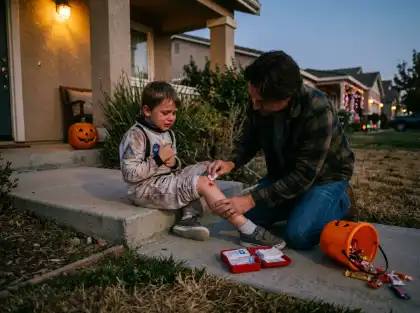
A Trick-or-Treater Tripped on My Porch Steps. Can They Sue Me?
Yes, a trick-or-treater or their legal representative can file a lawsuit if an injury occurred on your property. Whether they can recover damages depends on whether you failed to exercise reasonable care and that failure caused the injury.
A broken stair, a loose railing, or a hidden tripping hazard may support a liability claim. An accident that occurs despite reasonable precautions does not automatically establish negligence.
My Kid Fell on Someone’s Driveway While Trick-or-Treating. Who Is Responsible?
Responsibility depends on what caused the fall and who controlled the dangerous condition.
If an unsafe driveway defect caused the injury and the homeowner knew of it or should reasonably have discovered it, the homeowner may be liable. If there was no unreasonable hazard or negligent conduct, the accident may not support a premises liability claim.
Will My Homeowners Insurance Pay If Someone Falls on My Property on Halloween?
Homeowners insurance may cover Halloween injuries through personal liability coverage or medical payments to others.
Liability coverage generally applies when the insured is legally responsible for covered injuries. Medical payments coverage may pay eligible medical expenses without requiring proof of negligence. The policy’s exclusions, conditions, and limits determine the actual coverage.
Is a Homeowner Responsible If Their Walkway Is Dark and Someone Gets Injured?
A homeowner may be responsible if inadequate lighting creates or contributes to an unreasonable danger and the homeowner fails to take reasonable precautions.
For example, poor lighting that hides a broken stair may be relevant to a negligence claim. However, darkness by itself does not automatically make a homeowner liable.
Will I Have to Sue My Neighbor to Get My Child’s Medical Bills Paid?
No, filing a lawsuit is not always necessary to pursue payment for your child’s medical expenses. A homeowners policy may provide medical payments coverage for eligible injuries without requiring proof of fault. If the homeowner’s negligence caused the injury, a liability insurance claim may also be an option.
If the insurance company offers to settle your child’s injury claim, California generally requires court approval before the settlement becomes binding, even if you never file a lawsuit against your neighbor. If a lawsuit becomes necessary, a parent may seek appointment as the child’s guardian ad litem to pursue the claim.
What If My Child Tripped Over a Halloween Decoration on the Sidewalk?
Liability depends on who created or controlled the hazard and whether that party failed to use reasonable care.
If a homeowner placed an electrical cord or decoration across a pedestrian walkway, that conduct may support a claim. If the condition involves public property, additional rules may determine whether a government entity or another party is responsible.
Can a Homeowner Be Sued If They Did Not Know About the Dangerous Condition?
Yes, a homeowner may still face liability if they reasonably should have discovered the dangerous condition.
California’s premises liability standard considers whether a person exercising reasonable care would have identified the hazard and taken appropriate precautions. Actual knowledge is not always required.
How Much Is a Child’s Halloween Slip-and-Fall Case Worth?
There is no standard settlement amount for a child’s Halloween slip-and-fall injury.
Potential compensation depends on the seriousness of the injury, medical expenses, future treatment needs, available evidence, comparative fault, and applicable insurance coverage. A claim involving temporary bruising will have different considerations from one involving a fracture or lasting impairment.
Get a Free Case Evaluation for a Halloween Injury in California
When a child falls while trick-or-treating, determining whether a homeowner was negligent can involve more than identifying where the accident happened. The condition of the property, available warnings, lighting, and evidence of the child’s injuries all matter.
If your child was injured on someone’s property, Arash Law can review the circumstances and discuss the potential legal options. Our team handles premises liability cases throughout California and can help families understand the insurance claims process.
Call (888) 488-1391 to discuss your child’s accident during a free case evaluation.
Sources
- California Legislative Information. California Civil Code §1714 — Responsibility for Injuries Caused by Lack of Ordinary Care. https://leginfo.legislature.ca.gov/faces/codes_displaySection.xhtml?lawCode=CIV§ionNum=1714.
- California Legislative Information. California Code of Civil Procedure § 372 — Representation of Minors in Civil Actions. https://leginfo.legislature.ca.gov/faces/codes_displaySection.xhtml?lawCode=CCP§ionNum=372.
- California Legislative Information. California Probate Code § 3500 — Compromise of a Minor’s Disputed Claim. https://leginfo.legislature.ca.gov/faces/codes_displaySection.xhtml?lawCode=PROB§ionNum=3500.
- Judicial Council of California. California Civil Jury Instructions, 2026 Edition — Premises Liability and Comparative Fault. https://courts.ca.gov/system/files/file/judicial_council_of_california_civil_jury_instructions_2026.pdf
- Judicial Council of California. California Rules of Court, Rule 7.950 — Petition for Approval of Compromise of Claim or Action or Disposition of Proceeds of Judgment for Minor or Person With a Disability. https://courts.ca.gov/cms/rules/index/seven/rule7_950
- California Department of Insurance. Residential Insurance: Homeowners and Renters — Personal Liability and Medical Payments Coverage. https://www.insurance.ca.gov/01-consumers/105-type/95-guides/03-res/res-ins-guide.cfm
- California Courts. Deadlines to Sue Someone — Statutes of Limitations and Tolling. https://selfhelp.courts.ca.gov/civil-lawsuit/statute-limitations
- California Courts. Ask a Government Agency to Pay You by a Deadline. https://selfhelp.courts.ca.gov/civil-lawsuit/government-claim
Disclaimer
This content is provided for general educational purposes only and does not constitute legal advice. Reading it does not create an attorney-client relationship. The outcome of any premises liability or insurance claim depends on its individual facts, available evidence, insurance coverage, and applicable law. For guidance about your circumstances, consult a licensed California attorney.
Arash Law — (888) 488-1391.