TL;DR: You can sue for a brain injury in California if someone’s negligence caused it. Drivers, property owners, or manufacturers may be responsible. Injuries can appear days later, require long-term care, and lead to medical bills, lost income, and daily life changes, with strict deadlines affecting your case.
Highlights:
- Keep detailed records of medical visits, treatments, and rehabilitation sessions.
- Document any delayed symptoms like memory loss, headaches, or confusion.
- Note lost wages and changes to daily life caused by the injury.
- Consult a brain injury lawyer early to review evidence and evaluate your case.
- Identify all individuals or entities who may share fault in the accident.
- File your case before California’s 2-year personal injury deadline expires.
Tip: Maintain a clear, organized file of medical and incident documentation to support your case effectively.
Table of Contents
Under California law, if another person’s carelessness led to your brain injury, you might be eligible to pursue a lawsuit. With a personal injury claim, you may pursue financial compensation for how this injury has affected your overall quality of life.
Brain damage can be debilitating. Victims often require long-term care, repeated specialist visits, and extended time away from work. All these issues can push medical costs well beyond what most families expect.
When Can You Sue For A Brain Injury In California?
In California, you do not need to have visible injuries to have a valid lawsuit. You can sue for a brain injury if someone fails to act like a reasonable person would and causes your harm. However, you must have evidence that proves the connection between those actions and your losses.
The process usually starts when you pursue compensation through an insurance claim. Negligence is the legal standard behind most brain injury claims. It means that:
- Someone had a duty to keep you safe.
- They failed that duty.
- That failure caused the accident that led to your brain injury.
- You incurred actual, measurable losses.
To illustrate, suppose a speeding driver hits your vehicle. They may be responsible for causing your brain injury and the losses that come with it. You may also be able to sue for a brain injury caused by other types of accidents, such as:
- Slips and falls caused by unsafe property conditions.
- Workplace accidents involving unsafe equipment or conditions.
- Defective products that contribute to head trauma.
- Sports or recreational accidents involving negligence.
- Acts of violence that cause traumatic brain injuries.
After receiving medical care, gathering evidence, identifying potentially at-fault parties, and documenting your losses, you or your lawyer files the claim. The other party’s insurer reviews it, and both sides can negotiate a settlement. Suing becomes an option if these discussions fail.
Who Can Be Held Liable For A California Brain Injury?

Who is legally responsible for your brain injury depends on where and how the harm happened. The liable party can change depending on whether you got hurt in a car crash, a store slip-and-fall, or an injury at work. In California, several parties may also share fault in an accident. It depends on the circumstances of the incident.
The most common liable parties include the following:
- At-Fault Drivers: If another driver caused a crash that hurt you, that driver may be held liable for your losses.
- Property Owners: If you sustained injuries due to hazards on someone else’s property, the owner may be liable for failing to keep the premises reasonably safe.
- Employers: If you’re eligible to seek workers’ compensation benefits, you generally cannot sue your employer directly except in limited situations, such as if they intentionally caused harm. However, you may have a separate personal injury claim against an unaffiliated third party that caused your on-the-job injury, which could escalate into a lawsuit.
- Product Manufacturers or Distributors: If a defective product caused your brain injury, such as a faulty helmet or a defective airbag, the manufacturer may be held liable.
Once you can clearly establish liability, the next critical step is determining the full financial scope of your losses.
What Compensation Can You Recover Through A Brain Injury Lawsuit?
In California, injury victims seek two types of damages: economic and non-economic. How much you can recover depends on the severity of your injury and the facts of your case. Brain injury lawyers often rely on evidence such as medical records to understand the severity of your brain injury. This way, they can identify the losses that you can pursue.
Economic damages pay for the real costs your injury caused, including:
- Medical bills, surgeries, and doctors’ fees.
- Care from providers, such as chiropractors or rehabilitation specialists (if they are necessary for your recovery or pain management).
- Lost wages due to days away from work, as well as reduced future earning capacity if your injury limits your ability to work.
Brain injuries also result in losses that no bill or receipt can capture. You may feel like a different person. Your personality, memory, and closest relationships can all change because of the trauma.
Non-economic damages may cover the following:
- Pain and Suffering: This loss refers to physical pain and discomfort caused by the brain injury and its complications.
- Emotional Distress: Anxiety, depression, mood changes, irritability, or other psychological effects commonly associated with traumatic brain injuries (TBIs).
- Loss of Enjoyment of Life: A reduced ability to participate in daily activities, hobbies, work, or social interactions due to cognitive, physical, or behavioral impairments.
- Loss of Consortium: The injury’s impact on a victim’s relationship with their spouse or registered domestic partner. Examples include a loss of companionship, support, and intimacy when the injury affects family dynamics.
In rare cases, you may also seek punitive damages. These apply when the responsible party acted with extreme recklessness, like driving drunk. Courts may award punitive damages to you to punish the other party’s conduct. However, California Civil Code Section 3294 requires clear and convincing proof of oppression, malice, or fraud.
Why California’s Strict Filing Deadlines Matter In Brain Injury Cases

Missing a filing deadline in California can end your case before it begins. State law generally gives you two years to sue for a brain injury caused by negligence. This time limit can change in specific situations. However, the state’s courts strictly enforce these deadlines. They typically dismiss cases filed late. That could bar you from pursuing compensation altogether.
Here are some important deadlines:
- Personal Injury Lawsuits: California law gives most injury victims two years from the injury date to file suit. However, there can be exceptions:
- Delayed Discovery: In brain injury cases, symptoms may not appear immediately. When you did not discover your injury right away, the filing may begin when you actually or reasonably should have discovered it.
- Victims Who Are Minors: If the injured person is under 18, the statute of limitations is generally on hold until they turn 18. In the meantime, a parent or legal guardian can file a claim on their behalf.
- Victims With Mental Incapacity: The psychological effects of a brain injury can sometimes leave a person unable to make legal or financial decisions on their own. In this case, the deadline to sue may pause until they regain their mental capacity. A guardian, conservator, or other authorized representative may be able to pursue legal action on their behalf before that time.
- Government Claims: These cases have a stricter deadline in California. If a city, county, or state agency caused the injury, Section 911.2 of the state’s Government Code requires you to file an administrative claim within six months. This process is necessary before you can file a lawsuit.
If you find yourself thinking, “I need a personal injury lawyer,” reach out before these deadlines pass. Once the deadline expires, courts often dismiss cases, even strong ones. Speaking with an attorney early on can help you understand your options. They can also help you through the claims process so you can meet the filing deadline that applies in your situation.
Frequently Asked Questions About Brain Injury Lawsuits
If you or someone you love has suffered a brain injury, you likely have many questions. The following answers provide clear, general information to help you decide whether to sue.
What Evidence Do I Need To Prove My Brain Injury?
Medical records, imaging, expert testimony, and documentation of the injury’s impact on daily life are important. In mild to moderate TBIs or concussions, standard CT scans and MRIs may appear completely normal because the damage is functional or microscopic. Opinions of experts such as neurologists, neuropsychologists, and life-care planners may be necessary. Testimonies from family members can also support the profound changes in your memory, mood, and daily functioning.
How Much Do Brain Injury Cases Usually Settle For?
There is no fixed average for a brain injury settlement. Every case is different. The value depends on the severity of your injury, your long-term recovery, and the amount of insurance coverage available from the at-fault party. A brain injury attorney can review available evidence and help you determine how much your case may be worth.
Should I Accept The First Traumatic Brain Injury Settlement Offer From Insurance?
Not necessarily. Before accepting a settlement offer, understand the full extent of your injuries, medical needs, and potential future expenses. Traumatic brain injuries can sometimes require ongoing treatment, rehabilitation, and long-term care. Insurance companies may make an initial offer before you fully understand how your injury will affect you in the long term.
What Are The Long-Term Effects Of A TBI?
Moderate to severe TBIs can cause lasting problems. Effects include memory loss, difficulty concentrating, personality changes, and physical disabilities. Some people need ongoing care for the rest of their lives. Children who suffer TBIs may also face disruptions to their development and ability to learn.
Can I Sue If My Brain Injury Symptoms Developed Months After The Accident?
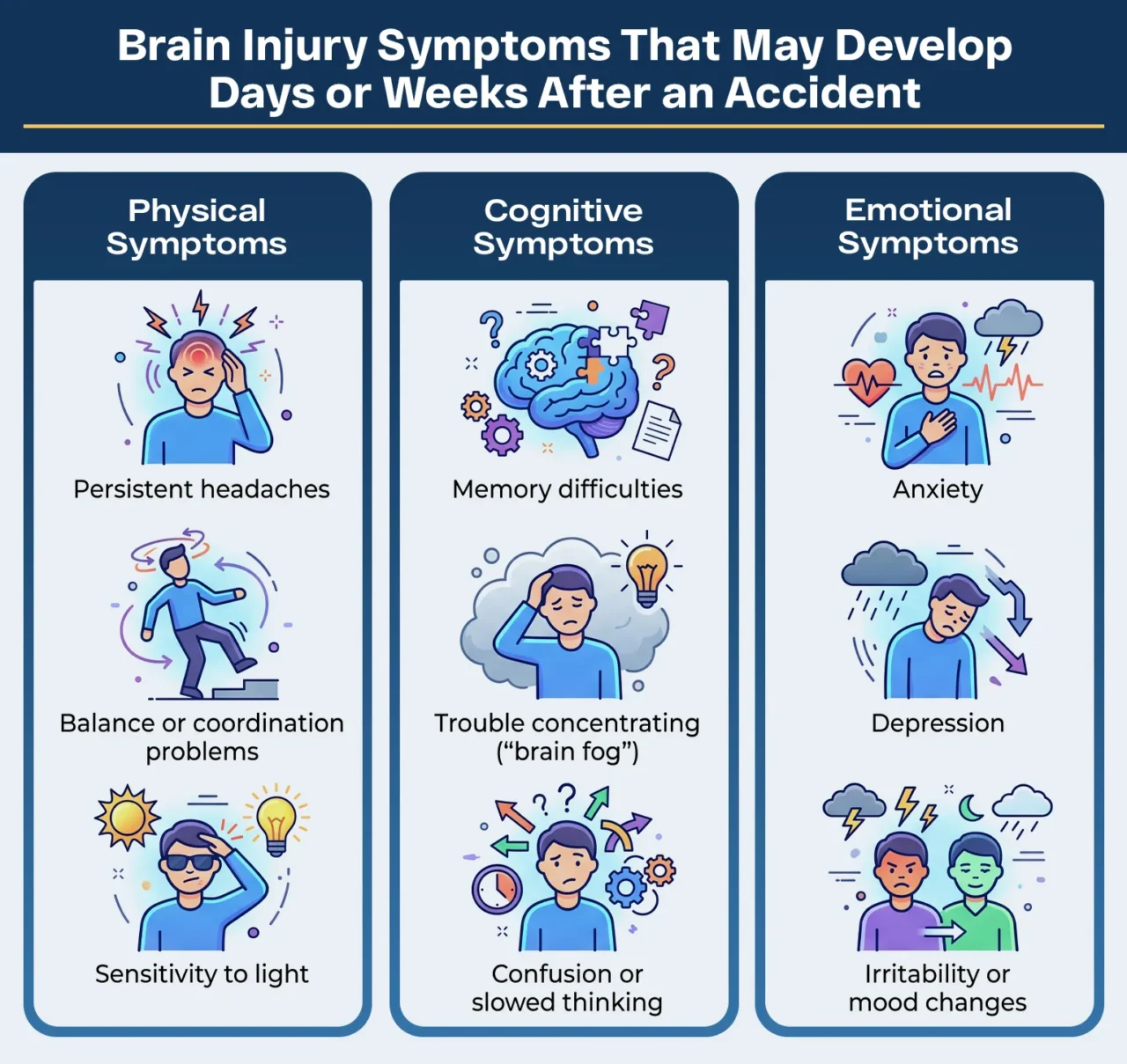
Yes. You may still have a case, even if you only began experiencing headaches, confusion, or memory loss after a few days, weeks, or months. However, you still have to be mindful of California’s filing deadlines and insurer arguments that the accident didn’t cause your harm.
Getting medical care as soon as you’re aware of your symptoms can help a doctor connect your brain injury to an accident. A lawyer can then help you avoid any unnecessary delays during the claims process, which may leave you enough time to file suit if necessary.
How Much Does It Cost To Hire A Brain Injury Attorney?
The price of retaining a brain injury attorney depends on how complex your case is. For example, they will often charge more if you have to sue because court proceedings require more time and resources to handle. However, getting legal representation doesn’t have to add to the financial losses a brain injury caused.
Many personal injury lawyers operate on a contingency fee arrangement. A common question about this payment structure is, “Do lawyers only get paid if they win?” The answer is yes, as you’ll only pay the attorney’s fees if they win your case or secure a settlement.
Get Help From Arash Law For Your Brain Injury Claim
A brain injury does not just hurt you today. It can affect your ability to work, think, and care for yourself for years to come. Ongoing medical care, therapy, and rehabilitation all cost money. That financial pressure starts immediately and can last a lifetime.
Brain injury claims are complex. Documenting long-term losses, calculating future care costs, and negotiating with insurers while you are still recovering can be challenging. While you might find free advice from a brain injury lawyer while searching online, a real evaluation of your case can provide a more tailored answer to your concerns.
Our brain injury lawyers at AK Law are ready to review your case. During our first meeting, we can answer your questions and outline your available legal options. Call us at (888) 488-1391 now to book a free initial consultation.