TL;DR: Crossing guards help prevent accidents by signaling drivers to stop and creating safe gaps in traffic, but they cannot prevent crashes caused by speeding, distracted driving, or drivers who ignore signals. Children injured in school zone accidents can recover compensation for medical bills, pain and suffering, and other losses caused by the crash. Still, families generally must file claims against government agencies within 6 months.
Highlights:
- Document the scene with photos and witness contact information immediately after the accident.
- File a written claim with the city or school district within six months if suing a government agency.
- Know that drivers must obey crossing guard signals under California Vehicle Code 2815, and violating this law may support a presumption of negligence.
- Understand you can recover damages even if partially at fault under California’s pure comparative negligence rule.
- Seek medical care for all injuries, as economic damages include doctor visits, hospital bills, and lost wages.
- Contact a lawyer before giving any recorded statement to insurance companies.
Tip: Preserve all evidence like scene photos, witness statements, and the police report, as these directly support your claim’s strength and credibility.
Table of Contents
Crossing guards can reduce the risk of school-zone pedestrian accidents by creating safe gaps in traffic, making children more visible, and signaling drivers to stop. However, measuring their effect on overall crash rates is difficult because they are often assigned to locations with higher pedestrian risks and work only during school travel times.
In California, drivers must obey an authorized nonstudent school crossing guard’s traffic signal or direction when the guard is wearing official insignia and protecting someone near a school crossing under Vehicle Code § 2815. If a driver ignores a crossing guard and hits a child, pedestrian, or guard, that violation can become key evidence in a pedestrian accident claim.
How Crossing Guards Prevent School Zone Accidents In California
Children may have difficulty judging vehicle speed, distance, and safe crossing opportunities because pedestrian decision-making skills continue developing throughout childhood. That makes crossing guards essential at school crossings. Crossing guards reduce risk by choosing safe gaps in traffic, stepping into the road to show that pedestrians are crossing, and keeping students together until they reach safety. They do not perform the same law-enforcement role as police officers, but California law still requires drivers to obey an authorized school crossing guard’s signal or direction under Vehicle Code § 2815.
California’s 2026 traffic-control manual requires adult crossing guards to wear bright reflective safety clothing and use a STOP paddle to signal drivers. The reflective clothing must meet the American National Standards Institute 107-2020 Class 2, Type R standard.
Why Are Children At Risk In These School Zone Accidents?
Children face a higher risk of school-zone accidents due to a combination of visibility challenges, limited judgment, and unpredictable behavior.
Physically, children are smaller and more easily missed in traffic. Their height makes them less visible to drivers, especially around parked cars, SUVs, or crowded drop-off areas that block drivers’ sightlines.
Behaviorally and developmentally, children often misjudge traffic situations:
- They may think cars can stop instantly.
- They may assume that if they see the car, the driver can also see them.
- They often misjudge speed, distance, and safe crossing gaps.
These misunderstandings can lead them to cross too closely in front of vehicles or step into traffic unexpectedly. Children are also more impulsive and easily distracted in busy school environments. They may:
- Focus on friends or surroundings instead of traffic.
- Run or dart across the street without checking carefully.
- Forget or ignore crossing rules in the moment.
Even in well-marked school zones, risk cannot be fully eliminated. Safety measures, like lower speed limits, crossing guards, and signs, help reduce danger. However, they can’t stop all unsafe driving behaviors, such as speeding, distracted driving, or failing to yield. When those occur, the combination of limited child judgment and driver error increases the likelihood of serious injury.
In California, drivers must yield to pedestrians in marked crosswalks and exercise caution when pedestrians are crossing or entering the roadway. This rule applies regardless of whether or not crossing guards are present. Drivers are expected to slow down, remain alert, and yield to pedestrians who are crossing or preparing to cross the roadway.
When school zone accidents occur, pedestrian accident lawyers often rely on evidence to determine fault, including driver speed, right-of-way violations, signage, crosswalk placement, and compliance with traffic laws in the school zone.
Why Do School Crossing Guard Accidents Still Happen?
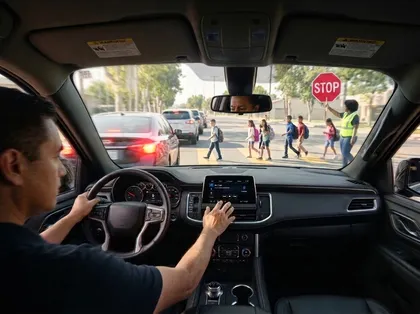
Crossing guards are easy to see. They wear bright vests and carry stop signs. Yet even highly visible crossing guards can be injured when drivers fail to yield, speed, or drive while distracted. A driver going too fast or not paying attention to the road has no time to stop when a guard steps into the street.
Driver errors are usually to blame for these crashes. The most common causes include:
-
Speeding: Drivers who do not slow down may be unable to stop when a guard or child enters the crosswalk. Under current Vehicle Code § 22352, California generally uses a 25 mph prima facie limit near posted school grounds when children are going to or leaving school, during school hours or noon recess, or when unfenced school grounds are in use.
AB 382 also allows local agencies to adopt 20 mph school-zone limits before January 1, 2031, and creates a statewide 20 mph school-zone framework beginning January 1, 2031.
- Distracted Driving: A driver looking at a phone or adjusting a radio may not see a guard giving the stop signal until it is too late.
- Failure to Yield: Some drivers ignore or do not see pedestrians already in the crosswalk.
- Poor Visibility: Sun glare and large SUV blind spots can hide a crossing guard from a driver’s view.
A frontover occurs when a vehicle hits a pedestrian in the blind spot directly in front of it. In a school zone, a driver may roll forward without realizing a child or crossing guard is standing just feet ahead.
Drivers who speed, distract themselves, or fail to yield in school zones are among the top causes of pedestrian accidents near children. Additionally, even the crossing guards themselves can be victims of traffic accidents. When these careless drivers cause harm, California law can hold them accountable.
Legal Liability For Crossing Guard Accidents In California
In many crossing guard accidents, the driver who caused the crash is usually the primary at-fault party. Liability can go further, though. A city, school district, or employer may also share responsibility, depending on how the accident happens. These crashes fall under the broader area of pedestrian accidents, and the same rules about who can be sued apply here.
Key liability rules in crossing guard and school zone accidents:
- Duty to Obey Crossing Guards (CVC § 2815): California law requires drivers to follow crossing guards’ instructions at designated school crossings. A failure to obey a crossing guard’s lawful signal may support negligence per se under Evidence Code § 669 if the violation caused the injury and the law was meant to protect the injured person from that type of harm. This creates a presumption of negligence, but the driver may still try to rebut it.
- Comparative Negligence: California follows a pure comparative negligence system. An injured pedestrian may still recover compensation even if partially at fault, but their recovery is reduced in proportion to their share of responsibility.
- Government Liability (Gov. Code § 835): A city, county, or school district may be liable if a dangerous condition of public property contributed to the accident, such as faded crosswalk markings, inadequate signage, or malfunctioning traffic controls in a school zone.
Claims against government entities require a written claim, typically filed within six months of the injury. Missing this deadline can bar recovery against the public agency entirely.
If a crossing guard is injured while working, they can file a workers’ compensation claim through their employer. They can also file a claim against the driver who hit them. Whether the victim is a student or a crossing guard, they or their family would want to know their rights. Some victims seek free advice from a pedestrian accident lawyer to know what they can do when these incidents happen.
What Compensation Is Available After A School Zone Accident?
A school zone injury can create big bills fast. California law gives you the right to seek money for what you lost and for what you went through. These losses fall into two groups, and knowing both helps you understand what your case may be worth.
Economic damages cover costs you can add up. These are direct financial losses tied to your injury:
- Doctor Visits and Hospital Bills: Emergency care and follow-up treatment after the crash.
- Future Medical Care: Ongoing treatment you may still need, including visits to a therapist or a chiropractor.
- Lost Pay: Money you missed out on because you could not go to work.
Non-economic damages cover the personal toll the injury has taken on your life. These are harder to put a number on, but they are just as real:
- Pain and Suffering: The physical pain the injury caused.
- Emotional Distress: Anxiety, fear, or trauma linked to the crash.
- Loss of Enjoyment of Life: Activities or routines you can no longer do the way you used to.
If a loved one died in a crossing guard crash, your family may be able to file a wrongful death claim. That claim can cover funeral costs and other losses tied to the death.
If you find yourself thinking, “I need a personal injury lawyer,” do not wait. Speaking with an attorney helps you understand your options before key evidence is gone.
Many people in this situation still have questions about how the legal process works. Those questions deserve clear answers.
Frequently Asked Questions
A school zone crash can leave you with serious questions about what the law requires and what your options are. You may be unsure about traffic rules, driver obligations toward crossing guards, or whether you can afford legal help. These short answers address the concerns people most often raise after a crossing guard incident in California.
How Long Do I Have To File A Personal Injury Claim In California?
The deadline to file a personal injury claim in California depends on the type of claim. Insurance claims are subject to the policy’s specific terms, which may require prompt reporting. Meanwhile, lawsuits are governed by strict legal deadlines.
In most personal injury cases, you generally have two years from the date of the accident to file a lawsuit under California’s statute of limitations. There are exceptions, including cases involving minors, where the time limit may pause until the injured person turns 18, at which point the standard two-year period usually begins to run. This exception may not apply if the case involves a government claim.
Do Crossing Guards Have Authority To Direct Traffic?
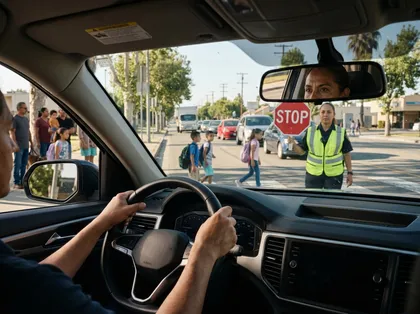
Crossing guards do not have the same enforcement authority as police officers. What they can do is step into the roadway to create a safe gap for pedestrians. When a crossing guard signals you to stop, California law requires you to stop.
Where Are California School Crossing Guards Found?
Crossing guards are placed where students need them most. Schools consider students’ ages, traffic volume, and the location’s past crash history. Uncontrolled crosswalks, meaning crosswalks with no traffic signal or stop sign, typically get the highest priority.
What Should I Do Immediately After A Crossing Guard Accident?
Call 911 right away so paramedics can treat any injuries and police can file a report. Take photos of the scene, get contact information from witnesses, and ask for the crossing guard’s name and school district. Do not give a recorded statement to any insurance company before speaking with a lawyer, since insurers can use your words to reduce what you can recover.
How Do Crossing Guards Handle Bad Weather?
Crossing guards work rain or shine. They wear reflective vests to stay visible in low-light or rainy conditions. In bad weather, they adjust their hand signals to make sure drivers and students can see them clearly, even when visibility drops.
Do Lawyers Only Get Paid If They Win?
Yes. Many personal injury lawyers work on a contingency fee basis, meaning you pay nothing up front and owe no attorney’s fees if your lawyer does not recover compensation for you.
Contact Arash Law For Your Pedestrian Accident Case In California
Recovering after a crossing guard accident is hard, and you do not have to face it alone. We are ready to support you and help you find a way forward.
At Arash Law (frequently referred to as AK Law), we listen to what happened and help you figure out the right path forward. We are ready to review your situation, answer your questions, and guide you through every step. We are committed to being there for you from your first call to the resolution of your case.
Our pedestrian accident lawyers are experienced in handling cases involving minors. In one matter, we represented a 5-year-old child injured in a collision while crossing into the street. Although the child had stepped into traffic, we used expert testimony to show the crash was preventable and resulted from driver negligence. Through this work, we secured a $1.25 million recovery for the client.
Reach out to us at (888) 488-1391 for a free initial consultation. There are no attorney’s fees unless we win or settle your case, and we are here to help you take that first step.