TL;DR: Motorcycle accident recovery takes weeks to years, depending on injury severity. Road rash heals in weeks, fractures in 6 to 12 weeks, and traumatic brain or spinal cord injuries in 6 to 18 months or longer. Reaching Maximum Medical Improvement before settling can be critical, as signing a release ends your right to recover additional medical costs. In California, injured riders generally have 2 years from the date of the crash to file a lawsuit; missing this deadline bars the claim.
Highlights:
- See a doctor immediately after a crash, even if you feel fine; injuries can surface hours or days later.
- Follow your treatment plan consistently throughout your recovery to avoid re-injury and setbacks.
- Document every medical visit, test, and treatment note to build a strong record for your claim.
- When possible, wait until you reach Maximum Medical Improvement (MMI) before settling, so future medical costs are covered.
- File a personal injury lawsuit within two years of the crash date, or lose your right to sue.
- If a government agency caused the crash, file a formal government tort claim first, within six months.
Tip: Keep treatment records complete and continuous, since gaps in care give insurers grounds to argue your injuries were not serious, or later treatment is unrelated to the crash.
Table of Contents
Recovering from motorcycle accident injuries can take weeks, months, or even years. The timeline depends on the severity of your injuries. Minor road rash or soft-tissue injuries may clear up in a few weeks. Broken bones, nerve damage, or traumatic brain injuries can take much longer. Some injuries may never fully heal.
Motorcyclists generally lack the outer protection that car occupants have. There are typically no airbags, no crumple zones, and no protective cabin between you and the road. Even a moderate crash can leave a rider with injuries that disrupt work, sleep, and daily life.
If you are recovering right now, you are likely dealing with more than physical pain. Financial pressure, uncertainty about your future, and the stress of dealing with doctors and insurers can feel just as heavy. In California, you have the right to seek compensation if someone else caused your crash and injuries. Each injury type heals at a different rate, so knowing what you are dealing with is the most direct way to estimate your own recovery.
Motorcycle Accident Recovery Timeline By Injury Type
Minor motorcycle accident injuries like road rash generally heal within a few weeks to a couple of months. Moderate injuries such as bone fractures typically take several weeks to a few months. Severe injuries like traumatic brain injuries (TBIs) and spinal cord injuries (SCIs) often require 6 to 18 months or longer. Some effects may also be permanent.
Here’s an overview of the estimated recovery periods for some common motorcycle accident injuries:
- Road Rash: This can range from mild scrapes to deep wounds that expose muscle or bone. Recovery can take 2 weeks to several months, depending on the severity of the damage. Riding gear, such as armored jackets and gloves, can help limit skin damage in a crash.
- Bone Fractures: Motorcyclists involved in crashes commonly break their femur, shin, or forearm. Many fractures take 6 to 12 weeks to heal. The exact time depends on the bone involved, the severity of the injury, age, health, and the treatment plan.
- TBIs: TBI symptoms can range from mild confusion to serious problems with thinking and movement, and recovery can take months or years. California Vehicle Code Sections 27802 and 27803 require all riders to wear a helmet that complies with state and federal safety standards. Helmets lower the risk of a TBI but cannot eliminate it. In the most severe cases, some effects are permanent.
- Spinal Cord Injuries (SCIs): A hard impact can damage the bones of the spine or the cord itself, causing partial or total paralysis. Partial recovery may happen over months or years, but full recovery is rare when the damage is severe.
Factors that can affect these timelines include:
- The severity and location of the injury.
- Whether surgery is required.
- Your compliance with your doctor’s treatment plan.
- Your ability to access physical therapy and rehabilitation services.
- Whether you have pre-existing health conditions.
- Your age and general fitness level.
- Whether complications develop, such as after surgery.
No matter the injury, your body heals in stages. Knowing those stages helps you plan for what comes next.
The Stages Of Physical Recovery And Healing Factors

Recovery from a motorcycle accident injury moves through distinct phases: Acute, Stabilization, and Rehabilitation. Surviving the initial shock is only the beginning. The hard work of rehabilitation starts once the crisis passes. How well you move through each phase can shape the outcome of your recovery period.
- Acute Phase (First 48 Hours to Two Weeks): The priority is to stabilize the body and manage severe pain. Adrenaline can mask pain in the moments after a crash, so injuries that felt minor at the scene can become sharply painful days later.
- Stabilization Phase (Weeks Two to Six): Wounds close and bones begin to “knit” themselves back together. Stiffness and limited mobility may peak during this stage, even as swelling begins to subside.
- Rehabilitation Phase (Month Two and Beyond): Physical therapy helps restore strength, flexibility, and range of motion after an injury. Depending on the injury, some patients may also benefit from other treatments, such as chiropractic care for certain muscle and joint conditions. During recovery, many injured riders reach Maximum Medical Improvement (MMI), meaning their doctor believes they are unlikely to improve much more with additional treatment. In a personal injury claim, MMI often helps determine future medical needs and damages.
The length of each phase depends on the type and severity of the injury, your age, pre-existing health, and how consistently you follow your treatment plan. These factors can shorten or extend your recovery by months.
Returning to work or riding before your doctor clears you can be a serious mistake. A stressed injury can re-tear or worsen, pushing your timeline back by weeks. Physical healing follows a clear path, but it is only part of your recovery. The psychological weight of what you have been through can last even longer.
The Hidden Timeline: Emotional And Psychological Recovery
Mental scars from a motorcycle crash often last far longer than broken bones. The fear, shock, and loss of confidence that follow are real injuries under California law and are recognized as part of a personal injury claim. Physical wounds heal on a set timeline. However, the mental toll of a motorcycle accident can disrupt daily life for months.
Riders have no external protection around them in a crash. That direct exposure may lead to post-traumatic stress disorder (PTSD), anxiety, sleep problems, and a lasting fear of riding again.
Therapy is a key part of getting better. Seeing a mental health provider also creates a record of your care, which can help support a claim.
California law categorizes damages for pain, suffering, mental anguish, and emotional distress as non-economic damages. Civil Code §1431.2 governs the allocation of non-economic damages among multiple at-fault defendants. If there are several liable parties, each one pays only their specific share of non-economic damages, which is based on their percentage of fault.
However, before allocation even matters, you must be eligible to claim them at all. Under California Civil Code § 3333.4, unless an exception applies, certain uninsured vehicle owners or operators may be barred from recovering non-economic damages. This holds even if the other driver was fully at fault. Only economic losses, such as medical bills and lost wages, remain open to them.
Records of physical and mental care become the evidence your claim depends on, and your attorney can build that case as you heal.
Why Reaching MMI Matters For Your Motorcycle Accident Claim
MMI can support both workers’ compensation and personal injury claims because it serves as the basis for calculating damages. MMI is when your doctor says your condition is stable and that no further improvement is likely. That does not mean full recovery. It only means that further treatment is unlikely to change your condition.
Once you sign a settlement release, you cannot reopen it. If you later need surgery or therapy you did not expect, the insurer owes you nothing more. Settling early may cost you far more than the offer was worth.
As a result, insurance adjusters may push injured riders to settle fast, before the full scope of future costs is clear. If you’ve thought about needing a personal injury lawyer, trust that instinct. Motorcycle accident lawyers represent you, not the insurer. They can help you avoid the traps adjusters rely on.
Two medical realities can work against your claim at the same time:
- Treatment Gaps: A gap in treatment is a period when you stop seeing a doctor for your injuries. Insurers can use these gaps to argue that your injury healed on its own or that later treatment isn’t tied to the crash. These gaps in care could hurt your claim, even when you had a valid reason for stopping care.
- Incomplete Records: Your medical records will be among the most reliable forms of proof of how serious your injuries were, how long they lasted, and what they cost. Every visit, test, and treatment note builds your case. Without this paper trail, an insurer can challenge whether your injuries were real or serious.
Waiting until you reach MMI means any potential settlement is more likely to cover your future medical needs. While you wait, California’s legal deadlines are already running, and missing them could end your case.
California Legal Deadlines After A Motorcycle Crash
In California, injured riders generally have two years from the date of a motorcycle crash to file a personal injury lawsuit. The state’s courts can dismiss your case once this window closes, which means you could lose your right to pursue compensation altogether.
If a government agency played a role in the crash, such as through a dangerous road design or an unrepaired pothole, you must first file a formal government tort claim within six months of the crash date. This claim is a written notice you submit to the public agency before suing it becomes an option.
Notably, the two-year deadline means your initial lawsuit paperwork must be filed with the court by that date. Your case does not need to be fully settled within two years.
Managing a long recovery while watching legal deadlines approach can be hard to do alone. A motorcycle accident attorney can help you track these deadlines and manage the filing process while you focus on your recovery.
Frequently Asked Questions About Motorcycle Accident Injuries And Claims
The legal and medical questions that follow a motorcycle crash are rarely simple. You may wonder whether sharing fault for an accident will affect your claim or whether you can afford a lawyer. These answers explain your rights under California law and what to do next.
Are There Delayed Injuries From Motorcycle Crashes?
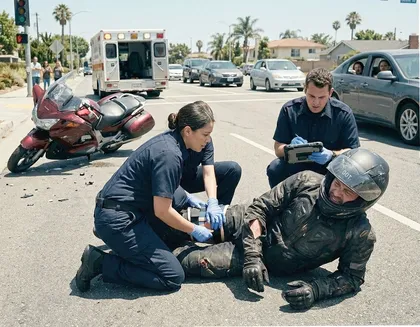
Yes. Delayed injuries are common after a motorcycle crash. Concussions, internal bleeding, or soft tissue damage are some examples of injuries that may only become noticeable after some time.
How Long Does Your Body Stay In Shock After A Motorcycle Accident?
After a motorcycle accident, adrenaline and stress can mask pain, so some symptoms may appear hours or days later. This stress response can mask pain, so symptoms like soreness or dizziness may not appear right away and may develop later the same day or over the next few days. Getting a medical evaluation right away, ideally on the same day as the crash, can help a doctor identify hidden injuries before you develop potentially life-threatening complications.
Can I Still Claim Damages If I Partly Caused The Accident?
Yes. California follows a pure comparative negligence rule. Your share of fault reduces your compensation, but you can still recover damages. To illustrate, if you were 30% at fault and your damages total $100,000, you can still recover $70,000.
What Happens If I Wasn’t Wearing A Helmet?
Not wearing one can reduce your compensation, but only for head or facial injuries. The California Vehicle Code requires all motorcycle riders to wear an approved helmet. If you broke your leg or suffered internal injuries, your helmet status does not affect that part of your claim.
Do Lawyers Only Get Paid If They Win A Motorcycle Injury Case?
Yes. Personal injury attorneys work on a contingency fee basis. That means you pay no attorney’s fees unless your case results in a recovery. There are no upfront costs to get started.
How Much Compensation Can I Expect For My Motorcycle Accident Injuries?
No attorney can promise a specific dollar amount. What you recover depends on your medical bills, lost wages, and pain and suffering. A California motorcycle accident lawyer can help you identify all the damages you may be entitled to under state law.
Let Us Help You With Your Motorcycle Accident Case
If you’re thinking, “I need a personal injury lawyer,” we can help. Arash Law’s motorcycle accident attorneys are ready to step in and take the legal burden off your hands. You can focus on healing while we handle the adjusters, paperwork, and pressure on your behalf.
If you are looking for free advice from a motorcycle accident lawyer online, know that directly consulting an attorney can better help you get personal insights into your situation. For this reason, we offer no-cost, no-obligation initial consultations. If we take your case, our attorneys can also handle insurance calls, gather evidence, and protect your legal rights while you recover. You should not have to negotiate with an insurance company while you are still in treatment.
Here at Arash Law, which is also known as AK Law, we represent motorcycle accident victims across California. We charge no attorney’s fees unless we win. Call (888) 488-1391 to schedule your free initial consultation. The sooner you reach out, the sooner we can evaluate your case and explore what compensation may be available for your injuries.