TL;DR: You can sue if you are injured on a roller coaster ride in California when negligence, dangerous conditions, or defective equipment caused your harm. You generally have 2 years to file a lawsuit to recover medical bills, lost wages, and pain and suffering.
Highlights:
- Get medical care promptly and tell providers when symptoms started.
- Report the injury to management and note the incident report number.
- Give a brief factual statement and avoid guessing about the cause.
- Photograph the ride, warnings, restraints, and visible injuries before leaving.
- Record the ride name, time, car, row, and seat, and get witness contacts.
- Save tickets, receipts, app records, messages, and damaged items unaltered.
- Calendar the generally applicable 2-year lawsuit deadline.
Tip: Send a written request to preserve security video, ride data/logs, and maintenance records, and keep all communications factual.
Table of Contents
You may have grounds for a lawsuit if an unsafe act, defective ride or component, dangerous property condition, inadequate warning, or failure to follow a safety duty caused or contributed to your injury. Filing a lawsuit does not mean the case has already been proven. To recover compensation, an injured rider generally must present evidence establishing a legal basis for liability, causation, and compensable harm.
Under California law, amusement park operators must keep riders safe. When they fail, you have the right to hold them accountable. The park, a ride manufacturer, or a maintenance company could each bear responsibility. Understanding which party is at fault in your specific case is the key to knowing who you can hold liable.
When Can You Sue For A Roller Coaster Injury?
You may have a lawsuit when a preventable safety problem caused or contributed to your injuries and losses. The exact legal lawsuit depends on what went wrong and which person or company controlled that risk.
The legal theory depends on what went wrong. Negligent operation or maintenance may support a negligence case. An unsafe platform or evacuation route may support a premises liability claim. A defective ride or component may support a product liability claim. In some cases, the injured person may pursue more than one theory against different defendants. Here are some common examples:
| Legal Theory | Examples | Who May Be Responsible |
|---|---|---|
| Negligence | The operator started the ride before checking every passenger. |
|
| Employees failed to make sure the restraints were secure. | ||
| The ride was operated against the manufacturer’s instructions. | ||
| Required inspections or maintenance were missed. | ||
| A rider who did not meet height or safety requirements was allowed to board. | ||
| Employees handled a ride stoppage or evacuation carelessly. | ||
| Product Liability | A lap bar, seat belt, door, or restraint was defective. |
|
| A mechanical part failed during the ride. | ||
| The ride or one of its components had an unsafe design. | ||
| A component was manufactured or assembled incorrectly. | ||
| The manufacturer did not give adequate warnings or safety instructions about a known danger. | ||
| Premises Liability | A platform, stairway, walkway, queue, loading area, or exit was unsafe. |
|
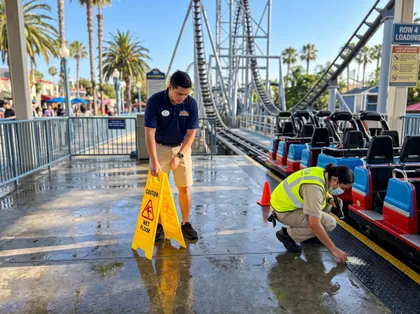
| The floor was wet or slippery. | ||
| Railings or stairs were broken. | ||
| The lighting was poor. | ||
| An evacuation route or emergency exit was unsafe. | ||
| Signs warning about a property hazard were missing or unclear. |
Finding a safety problem is not enough by itself. The injured person must also connect that problem to the harm suffered.
Medical records, expert opinions, witness statements, ride data, and the timing of symptoms help establish that connection. This issue can become more complex when the person has had an earlier injury or medical condition. A pre-existing condition does not automatically prevent you from filing a lawsuit, but medical evidence may be needed to separate the old condition from the new harm.
Roller Coaster Injuries That May Lead To A Lawsuit
Roller coaster injuries can range from temporary pain to long-term health issues. Injuries can vary based on several things. These include the ride’s speed, sudden stops, the restraint system, passenger position, and any mechanical or operating failures.
Common injuries may include:
- Neck and Back Injuries: Sudden acceleration, sharp turns, drops, or abrupt stops may strain the neck and back muscles and ligaments. Riders may experience whiplash, herniated discs, nerve damage, or spinal injuries.
- Head and Brain Injuries: A rider can get a concussion or a brain injury if their head hits the seat, restraint, ride structure, or another passenger. A forceful jolt can also cause the head and brain to move rapidly, even without a direct impact.
- Broken Bones and Joint Injuries: Falls, ejections, unsafe evacuations, or contact with the ride can cause fractures or joint injuries. Shoulders, arms, wrists, knees, and ankles may also get hurt if a passenger is thrown against a restraint or twists while entering or leaving the ride.
- Cuts, Bruises, and Crush Injuries: Restraints, doors, moving parts, and nearby structures can lead to cuts, deep bruises, pinching, or crushing injuries. Such injuries can become serious if they impact blood vessels, nerves, or internal tissue.
- Emotional Trauma: An accident, sudden stop, or unsafe exit can lead to anxiety, nightmares, panic attacks, or post-traumatic stress disorder (PTSD) symptoms.
Some symptoms may appear right away, while others may take hours or days to manifest. Get medical help after the incident. Amusement park accident attorneys often use medical records and collaborate with experts to show how the roller coaster accident caused the injury.
Potentially Liable Parties For Roller Coaster Accidents In California
California law places a very high level of responsibility on roller coaster operators and operators of similar amusement rides. In Gomez v. Superior Court, the California Supreme Court held that these operators can be treated as “carriers of persons for reward” under Civil Code sections 2100 and 2101.
- Section 2100 generally requires them to use the utmost care and diligence to keep riders safe.
- Section 2101 requires the ride vehicle to be safe and fit for its intended purpose. An operator cannot avoid that obligation simply by arguing that it otherwise acted carefully.
These duties apply to the operation of the ride and the safe carriage of its passengers. In other areas of the park, such as walkways, queues, and loading areas, the park generally has a duty to use reasonable care to keep the property safe.
That said, an amusement park is not automatically responsible for every injury. To bring a successful claim, the injured person must show that a safety failure, defective ride, dangerous condition, or another legally recognized problem caused or substantially contributed to the injury.
More than one person or company may share responsibility for the same accident.
- The Amusement Park: May bear responsibility for poor safety policies, inadequate employee training, unsafe premises, or known hazards left unaddressed. Under the doctrine of respondeat superior, the park may also be responsible for negligent acts committed by employees within the scope of their employment.
- The Ride Operator: Could be at fault for improper operation, missed restraint checks, ignored warnings, or failure to follow safety procedures.
- The Ride Manufacturer: May face a product liability claim for a defective design, manufacturing defect, or inadequate warnings.
- A Maintenance or Inspection Company: Could share responsibility for careless inspection, servicing, repair, or approval of an unsafe ride.
- The Property Owner: May be accountable for hazardous platforms, walkways, queues, loading areas, exits, or evacuation routes under its control.
- Other Passengers: May be responsible when their careless or intentional conduct injures another rider.
Investigators may need to review operating procedures, inspection records, maintenance documents, employee training, ride data, and the history of the affected part before deciding who caused or contributed to the injury.
An amusement park may argue that the injury resulted from an ordinary risk inherent in the thrill ride. This principle does not necessarily cover every danger. Normal speed, drops, turns, and forces may be inherent risks, but the operator still has a duty not to increase those risks unreasonably. Hidden defects, careless operation, poor maintenance, or other hazards beyond the ride’s ordinary risks may still support a claim. The result depends on what caused the injury and whether the danger was an expected part of the attraction.
Even when a rider’s own actions contributed to the accident, California’s pure comparative negligence rule may still allow recovery. Any damages awarded may be reduced by the rider’s share of fault, rather than being completely barred.
Damages You Can Pursue In A Roller Coaster Accident Lawsuit
A roller coaster ride injury lawsuit can cover your financial losses and your personal pain. California law lets you seek two kinds of damages. Economic damages cover costs such as medical bills and lost wages. Non-economic damages cover personal harm, such as pain and suffering.
Your lawsuit may include:
- Medical Costs: Past and future care, including emergency visits, surgery, therapy, and medicine.
- Lost Wages: Pay you missed during recovery and any long-term loss in your ability to work.
- Pain and Suffering: Physical pain from the injury and its treatment.
- Emotional Distress: Feelings of anxiety, post-traumatic stress disorder (PTSD), or depression after the accident.
- Loss of Enjoyment of Life: Activities you enjoyed before the injury that you can no longer do.
- Other Accident-Related Losses: A claim may include reasonable transportation costs, help with household tasks, damaged personal property, and other expenses caused by the injury.
If a person died in a theme park accident, eligible survivors or the decedent’s personal representative may be able to bring a wrongful death claim under California law. It can cover funeral costs, lost income, and related expenses.
Steps To Support Your Roller Coaster Accident Claim
The steps you take after a roller coaster accident can affect both your recovery and your ability to support a future claim.
- Get medical care. Tell park employees that you are injured and ask for medical assistance. Seek medical care as soon as possible, even if your symptoms seem minor at first, and explain when and how they began.
- Report the incident. Notify park management before leaving, if your condition allows. Ask for an incident report and request a copy, or record the report number, employee names, and the time it was made.
- Keep your statement factual. Describe what happened without guessing about the cause, accepting blame, or making assumptions before the incident is investigated.
- Document the ride and scene. Record the ride name, time, car number, row, and seat. Photograph the loading area, warning signs, restraints, ride entrance, visible hazards, injuries, and damaged property.
- Collect witness information. Ask other passengers, people in line, and anyone who saw the incident for their names and contact details.
- Preserve records and property. Keep tickets, receipts, app records, medical documents, photographs, messages, and damaged personal items. Do not repair, alter, or discard anything connected to the accident.
- Avoid social media posts. Do not post details, photographs, or opinions about the accident while the claim is being reviewed.
Deadlines To File A Roller Coaster Accident Lawsuit
California generally gives an injured person two years from the date of injury to file a personal injury lawsuit. Different rules or shorter deadlines may apply in some situations, so the deadline should be reviewed as early as possible.
If a government agency owns or operates the property, the injured person may need to submit an administrative claim first. Claims involving personal injury or death generally must be presented within six months after the claim arises.
Submitting an administrative claim is not the same as filing a lawsuit. Additional deadlines may apply after the agency responds or rejects the claim. Do not assume that an amusement park is government-owned simply because it is located on public land. Ownership and operation must be confirmed.
Frequently Asked Questions About Roller Coaster Accident Cases
If you got hurt on a roller coaster, you may have pressing questions about your legal options and medical bills. The answers depend on the details of your situation. The questions below address the concerns that come up most often.
Can I Sue An Amusement Park If I Signed A Liability Waiver?
Possibly. A liability waiver does not automatically end every lawsuit. Its effect may depend on the wording, how clearly it describes the covered risks, how it was presented, and the type of conduct involved.
California law may treat ordinary negligence differently from gross negligence or conduct that violates public policy. Product defects and lawsuits involving minors may also raise separate issues. The waiver must be reviewed together with the facts of the accident.
Who Pays My Medical Bills While My Roller Coaster Ride Case Is Pending?
Health insurance, Medi-Cal, Medicare, or another available benefit may pay some medical expenses while the case is pending. Coverage depends on the person’s plan and eligibility.
Some medical providers may agree to delay payment until the case ends, often through a medical lien or letter of protection. This option is not available in every case, and the patient may remain responsible for the charges. Any repayment rights or liens should be reviewed before a settlement is completed.
What Should I Do If The Amusement Park Tries To Blame Me For The Accident?
Do not argue about fault at the scene or sign a statement you do not understand. Give accurate information about what happened, but avoid guessing about the cause.
Save all letters, emails, photographs, and messages from the park or its insurer. California follows comparative negligence, so being partly responsible does not always prevent recovery. Any compensation may be reduced by the percentage of fault assigned to you.
How Long Does A Roller Coaster Accident Claim Typically Take To Resolve?
A claim may take longer when the injuries are severe, future treatment is uncertain, several companies may be responsible, or technical experts must inspect the ride and its records. Some claims resolve through an insurance settlement. Others require a lawsuit, discovery, expert review, mediation, or trial. It is usually better to understand the full medical impact of the injury before accepting a final settlement.
How Are Claims Handled If My Child Was Injured On A Roller Coaster?
If your child was injured on a roller coaster, you may be able to bring a claim on their behalf. A parent usually asks the court to appoint them as the child’s guardian ad litem to handle the case.
The claim may include compensation for the child’s injuries, while a separate claim may cover medical expenses paid by a parent. California generally pauses the personal injury filing deadline while the child is under 18. However, this rule generally does not apply to claims against public entities or employees, which may require a government claim within six months.
Any settlement for a minor generally requires court approval to make sure it protects the child. The court may also decide how the settlement money must be held or used.
When Do You Need A Personal Injury Lawyer For A Roller Coaster Injury Case?
Consider speaking with a personal injury attorney when the case involves:
- Severe or lasting injuries.
- Significant medical bills or lost income.
- A fatal injury to a loved one.
- A possible ride or restraint defect.
- Disputed fault.
- Multiple responsible parties.
- A child’s injury.
- A government-owned property.
- Pressure to give a statement or accept a quick settlement.
An attorney can investigate the accident, preserve evidence, identify liable parties, and assess the full value of your losses.
Contact A California Attorney After A Roller Coaster Ride Injury
If you were hurt at an amusement park, you do not have to face this alone. Amusement park corporations have legal teams working to limit what they pay. Our amusement park accident attorneys are ready to investigate the park’s safety record and build a strong case on your behalf.
Arash Law, also known as AK Law, handles every personal injury case on a contingency fee basis, so you pay no attorney’s fees unless we recover compensation for you.
Every injury case is different, and past results do not guarantee a similar outcome. However, our case results show how we have helped injured clients pursue compensation after serious accidents.
- $3,500,000 – Premises Liability: Our team obtained compensation for a client who suffered a spinal injury in a fall caused by poor lighting. The result provided support as she continued her recovery.
- $1,000,000 – Personal Injury: After another legal team withdrew from the case, we took over the trial preparation and obtained the maximum policy limits shortly before trial.
- $14,000,000 – Premises Liability: Our client suffered a brain injury involving an industrial machine. Despite multiple defenses raised by the opposing parties, our team secured the full amount available under the insurance policy.
If you are thinking, “I need a personal injury lawyer,” call us today at (888) 488-1391 for a free, no-obligation consultation. We will review your case and explain your options.