TL;DR: In California, the payout process begins when you sign a release form. From here, the insurer issues a check within 30 days, funds go into a client trust account, and deductions for attorney fees, litigation costs, and medical liens are resolved before your net amount is released. The full timeline may range from 4 to 8 weeks, as lien resolution and fund clearing times vary.
Key Facts About California Settlement Payouts
- Under 10 CCR § 2695.7(h), once an insurer accepts a claim and receives a properly executed release (when required), payment must follow promptly and in no event more than 30 calendar days later, subject to the regulation’s conditions and exceptions.
- A written contingency fee agreement must set out the attorney’s fees under California Business and Professions Code § 6147, a protection that benefits you.
- Medi-Cal’s lien is limited to the portion of the settlement that represents payment for medical expenses (Welfare and Institutions Code § 14124.76). It does not apply to the full settlement amount.
- Under California Civil Code § 3045.4, a qualifying hospital lien can reach no more than 50% of the settlement funds remaining after prior-priority liens are satisfied first.
- Under federal law (IRC § 104(a)(2)), physical injury settlements are generally excluded from federal taxable income. State tax treatment may differ. Consult a qualified tax professional for California-specific tax advice.
- In cases involving minors, settlements require court approval under California Rules of Court, Rule 7.955.
Once you agree on a personal injury settlement in California, funds move through a structured payment process. That process begins when you sign a release form. This document ends your injury claim in exchange for payment. Afterward, state law gives insurers 30 days to pay the settlement.
However, the payout process from this point isn’t as simple as waiting for a check to arrive. Knowing the payment timeline helps you plan and understand when any funds may arrive.
Table of Contents

The Step-By-Step Personal Injury Settlement Payout Timeline
After a personal injury case settles, several steps usually occur before you receive your net settlement proceeds. The exact process and timing can vary depending on the settlement terms, liens, attorney fees, banking procedures, and other issues that must be resolved.
- You Complete Any Required Settlement Documents: You may be asked to sign a settlement release that gives up any further claims covered by the agreement. The terms of the release determine what rights are being resolved.
- The Insurer Issues the Check: California’s Fair Claims Settlement Practices Regulations generally require the insurance company to pay the claim within 30 days after you reach a settlement, including receipt of a properly executed release when one is required.
- Your Lawyer Deposits the Settlement Into a Client Trust Account: Your attorney will generally deposit the settlement funds into a client trust account, which may be an Interest on Lawyers’ Trust Account (IOLTA). California’s Rules of Professional Conduct require client funds to be kept in an identifiable trust account separate from the attorney’s personal or operating funds. The funds may remain there while fees, costs, liens, and other outstanding obligations are addressed.
- Liens, Fees, and Costs Are Addressed: While the settlement funds are held in trust, any valid liens or other claims against the proceeds may need to be identified and resolved. These can include claims by medical providers, Medi-Cal, Medicare, or insurers that paid certain accident-related expenses. Attorney fees and litigation costs are also calculated and deducted in accordance with the applicable fee agreement and case expenses.
- You Receive Your Net Payout: Once the check clears and obligations are settled, your attorney releases your net amount to you.
Take note that the 30-day rule mentioned above only covers when the insurer must act. It does not determine when you receive your share. That final step depends on how quickly funds clear and how long lien resolution takes.
In many cases, the full process may run for about four to eight weeks from signing. However, the timeline varies based on the complexity of what must be resolved before distribution.
Where The Money Goes: Deductions And Medical Liens
Your gross settlement is not what you take home. Three categories of deductions are taken before distribution, and California law governs each. What remains after all three is your net recovery.
Attorney’s Fees
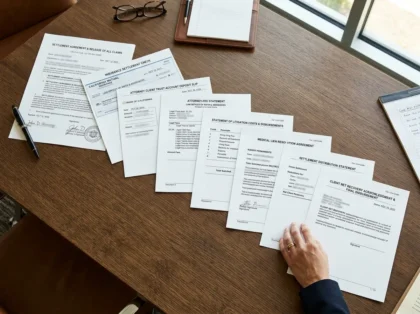
If you hired your lawyer on a contingency fee basis, you only pay them if you obtain compensation. The attorney’s fee is a percentage of your total recovery. California Business and Professions Code § 6147 requires that this agreement be in writing and state the fee rate and how costs are handled.
Litigation Costs
Under a contingency fee arrangement, your attorney may advance the expenses necessary to build your case. Examples of these case costs include court filing fees, expert witness fees, medical record costs, and deposition fees. Then, you reimburse them using a portion of your settlement.
Medical Liens
A medical lien is an arrangement where a medical provider treats you now but agrees to wait for payment until your case settles, with the right to seek payment from your recovery. An insurer or government program that paid for your treatment may also have a separate reimbursement right.
California law limits how much certain entities can collect:
- Medi-Cal Liens: A reimbursement claim made by Medi-Cal is subject to statutory reductions. If you incur attorney fees and case costs when pursuing a claim, the reimbursement amount Medi-Cal can get from a lien is generally reduced by 25% for attorney’s fees, along with a proportional share of litigation expenses.
- Medicare Reimbursements: If Medicare made conditional payments for treatment related to the injury, Medicare may seek reimbursement from the settlement. The parties generally need to identify and resolve the applicable Medicare recovery claim before distributing funds that are subject to that reimbursement obligation.
- Hospital Liens: Civil Code § 3045.4 limits a qualifying hospital lien to up to 50% of the settlement funds after prior liens are paid first. In simple terms, this means a hospital can take only a portion of the settlement, and only after higher-priority liens are paid.
Experienced injury attorneys can help negotiate these liens down, potentially reducing the total amount owed. When Arash Law represents a client, our attorneys work to maximize the net amount that reaches our clients. Instead of accepting initial lien demands at face value, we:
- Send proactive written notices to the California Department of Health Care Services (DHCS) before distribution.
- Prepare itemized IOLTA disbursement statements so clients can see exactly how each dollar is allocated.
- Negotiate Medi-Cal and hospital liens directly with lienholders before any funds are released.
What A Personal Injury Settlement Payout Might Look Like
To illustrate how these deductions work, this example shows how much you could get from a $25,000 settlement. Suppose you agreed to pay your attorney a third of your gross settlement. You also incurred $2,000 in case costs and $3,000 in medical liens:
- Minus the Attorney’s Fee: $16,666.67
- Minus Case Costs: $14,666.67
- Minus Medical Liens: $11,666.67
Of the original $25,000 gross settlement, your take-home pay would be $11,666.67.
This is only an example. Actual attorney fees, case costs, liens, and net settlement amounts vary based on the facts of each case and the applicable fee agreement.
Once all deductions are resolved, the remaining funds are released to you. The next question is the form in which you receive your net amount.
Questions about your net recovery? Call (888) 488-1391 for a free case evaluation with Arash Law.
Lump Sum Vs. Structured Settlements
A lump sum and a structured settlement deliver your compensation in very different ways. With a lump sum, you receive the full net settlement, which is what remains after fees, costs, and liens are deducted, at once. A structured settlement spreads those funds out over time. The choice comes down to immediate access versus long-term security.
| Lump-Sum Settlement | Structured Settlement |
|---|---|
|
Pays your entire net settlement in a single payment |
Places your funds into an annuity (a fixed payment plan) through an insurance company |
|
Offers immediate access to compensation for urgent needs, such as medical bills and lost wages |
You receive payments on a set schedule (e.g., monthly or annually) |
| You manage the funds yourself once you receive them |
Has fixed terms, so it is more suitable for cases involving catastrophic injuries or minors who need long-term financial support |
Tax Rules For California Settlements
Physical injury settlements are generally tax-free under federal law. Under Internal Revenue Code § 104(a)(2), money you receive as compensation for a physical injury or illness is excluded from your taxable income. California generally conforms to this law in many respects. However, tax treatment can vary by situation.
Most injury settlements, whether from a slip-and-fall, a defective product claim, or a car crash, are tax-free. That means both lump-sum and structured settlements generally aren’t taxable. In a properly structured annuity, the earnings that grow inside it are generally not counted as income either. However, if you take a lump sum and invest it yourself, any gains you earn are taxable.
It’s also important to note that not every part of a settlement is tax-free. Any portion set aside for punitive damages is taxable, since those payments punish the defendant rather than repay your loss. Emotional distress damages, or payments for psychological suffering such as anxiety or depression, are also taxable when they are not connected to a physical injury.
If you have questions about how your settlement may affect your tax situation, consult a qualified tax professional. The allocation language in your settlement agreement can affect the tax treatment of each component, and your attorney and tax advisor should coordinate on this before documents are finalized.
Special Rules For Minors’ Settlements In California
When the injured person is under 18, California imposes additional protections that affect both the approval timeline and how funds are held. Any settlement on behalf of a minor requires court approval. Additionally, disbursement cannot proceed without a court order.
The court reviews a formal written petition, known as a Minor’s Compromise petition, to confirm that the settlement terms are fair and the funds are protected. Additionally, under Rule 7.955 of the California Rules of Court, judges must approve the attorney’s fees in cases involving minors to protect the child’s share of the recovery.
Courts may direct that minor settlement funds be held or distributed through one of the following structures:
- Blocked Bank Accounts: Funds are held in a locked, court-controlled account. The child cannot access it without a court order until they turn 18.
- Structured Settlement Annuities: Instead of a lump sum, an annuity pays fixed amounts over a set period, providing long-term financial support appropriate for serious childhood injuries.
- Special Needs Trusts (SNT): For a child with a disability who receives Medi-Cal or Supplemental Security Income (SSI), an SNT shields those benefits from being counted against the child’s eligibility while also covering costs those programs do not pay.
If your child was injured, contact Arash Law to discuss your case. The court-approval process adds time and procedural requirements that may benefit from experienced legal guidance.
Previous Personal Injury Settlements Obtained By Arash Law
Anyone who feels they need a personal injury lawyer to negotiate payout terms is making a sound decision. These choices carry lasting financial consequences that are hard to undo. These past case results from our firm illustrate how legal representation can be helpful when navigating settlements and payouts:
$2,500,000 — Recovery After Delayed Payout: We originally helped our client, who was parked on the side of the road when a speeding vehicle struck them. However, the other party’s insurer failed to pay out their settlement in a timely manner. Our team achieved this recovery after seeking accountability for that mistake.
$1,250,000 — Settlement After Injury Disputes: Though the other party’s insurer accepted liability for the car accident, it initially offered just $150,000 because it disputed the injuries our client sustained. We were able to settle the case for a significantly larger amount before trial.
This outcome reflects the kind of case-specific analysis Arash Law brings to every settlement negotiation. A structured settlement that works for one client may be the wrong choice for another. Your attorney should evaluate your injury profile, your financial needs, and the tax implications before you sign anything.
FAQs About Personal Injury Settlement Payouts In California
When you are recovering from an injury, legal and financial questions can feel just as heavy as the injury itself. You may be dealing with unpaid medical bills, billing disputes, and a slow settlement process. Getting clear answers during this time is both reasonable and necessary.
What Happens If The Defendant Doesn’t Pay The Agreed Settlement?
You may be able to take legal action to enforce the agreement and recover the amount owed. If your case was pending litigation when it settled, your attorney can ask the court to enter judgment according to the settlement terms. However, California Code of Civil Procedure § 664.6 only allows this if your settlement was:
- Set out in a written agreement signed by the parties, their attorneys, or, in qualifying cases, authorized representatives of the insurer.
- Stated orally before the court.
CCP § 664.6 also allows the court to retain jurisdiction to enforce a settlement when the parties or their counsel properly stipulate to retained jurisdiction. However, if § 664.6 does not apply, such as with some pre-litigation settlements, enforcement may require a separate legal action or another available remedy for breach of the settlement agreement.
Will A Dispute Over Medical Bills Delay My Payout?

Yes, it could. When a medical lien is contested, your attorney must hold the disputed funds in the client trust account while the dispute is resolved. Any undisputed portion of your settlement can generally be released to you in the meantime.
Resolving lien disputes promptly can reduce delays in your final distribution. Early lien identification and prompt negotiation, addressed in the Deductions and Medical Liens section above, are the most effective ways to keep the process moving.
What Does The Payout Process Look Like If I Don’t Have A Lawyer?
If you settle a claim without an attorney, the payment process is simpler in some respects. The insurer generally sends the settlement payment directly to the appropriate payee rather than through an attorney’s client trust account, and there is no attorney fee deduction. However, valid medical, Medicare, Medi-Cal, or other reimbursement obligations may still have to be addressed before you can treat the entire payment as available for your own use.
Do I Need A Lawyer To Receive A Structured Settlement?
You are not legally required to hire an attorney. However, doing so is strongly advisable. A structured settlement is paid through an annuity with fixed terms. It generally cannot be changed once signed. The payment schedule, total payout, and tax treatment all depend on how the documents are drafted. An attorney can review the proposed terms and evaluate whether the structure fits your long-term financial needs before you sign anything.
Protect Your Settlement Recovery With Arash Law
A personal injury settlement can be a key part of your financial recovery after a serious injury. However, the process from reaching an agreement to receiving your net payout involves regulated steps, negotiable liens, and decisions with lasting consequences. Whether your case involves a car crash, a slip-and-fall, a dog bite, or a defective product, Arash Law’s team works to protect every dollar of your recovery through lien negotiation, comprehensive accounting, and experienced advocacy.
Arash Law has recovered over $1 billion for injured Californians. Every case is handled on a contingency fee basis: you owe no attorney’s fees unless you recover compensation. Acting early to identify and address liens can reduce delays in receiving your final payout.
Call (888) 488-1391 for a free case evaluation, or reach out online to speak with a member of our team.
Arash Law
Make them pay. Call AK.
Arash Khorsandi, Esq., California State Bar #249405, admitted 2007, last reviewed August 2026.
Sources
California Department of Health Care Services (DHCS). “The Personal Injury Lien Process.” Outlines the Medi-Cal lien notification requirement under Welfare and Institutions Code § 14124.70 et seq. and the process for establishing and resolving a lien case. dhcs.ca.gov
California Legislature. Welfare and Institutions Code § 14124.76: Medi-Cal Lien Limitation. Limits the director’s lien recovery to the portion of a settlement representing medical expenses; no settlement is final without notice to DHCS. leginfo.legislature.ca.gov
California Legislature. Civil Code § 3045.4: Hospital Lien. Establishes the hospital lien right and caps recovery at 50% of settlement funds after prior-priority liens are satisfied. leginfo.legislature.ca.gov
California Legislature. Business and Professions Code § 6147: Contingency Fee Agreement Requirements. Requires written contingency fee agreements stating the rate and cost-handling terms. leginfo.legislature.ca.gov
California Legislature. Code of Civil Procedure § 664.6: Enforcement of Settlement. Governs court-entered judgment pursuant to settlement terms in qualifying cases. leginfo.legislature.ca.gov
California Department of Insurance. “So You’ve Had an Accident, What’s Next?” California Fair Claims Settlement Practices Regulations govern insurer conduct and payment timelines after a release is executed. insurance.ca.gov
Internal Revenue Service. “Tax Implications of Settlements and Judgments.” Explains the IRC § 104 exclusion from taxable income for physical personal injury settlements and the taxable treatment of punitive damages and emotional distress awards. irs.gov
California Courts. Rule 7.955 of the California Rules of Court: Petitions for Minor’s Compromise. Governs court approval of settlements on behalf of minors, including judicial review of the attorney’s fees. courts.ca.gov
Disclaimer
Past results do not guarantee future outcomes. Every case is different. The information on this page is for general educational purposes and does not constitute legal advice. No attorney-client relationship is formed by reading or relying on this content. If you were injured, consult a licensed California personal injury attorney about your specific situation. Arash Law: (888) 488-1391.