TL;DR: After a truck accident in Bakersfield, get to safety and call 911, then photograph the truck’s DOT number and preserve ECM and ELD data before it can be overwritten. Most injured people have 2 years from the date of the crash to file a personal injury lawsuit against a private party; if a government entity may be responsible, you may need to file an administrative claim within 6 months first.
After a truck accident in Bakersfield, your priorities are safety, medical care, and accurate crash reporting. Then document the scene, exchange information with the other parties, notify your insurer, and preserve evidence before consulting a lawyer. Commercial truck cases can involve multiple responsible parties and federal safety regulations that do not apply to ordinary car crashes. This is why preserving evidence and getting legal advice early matters.
Bakersfield sits along SR-99 and SR-58 and is closely connected to I-5, making the surrounding Kern County area an important commercial freight hub. Trucks are hauling agricultural goods out of the San Joaquin Valley, and oil field equipment from Kern County fields.
General freight between Southern California and the Bay Area moves through this city constantly, especially on the Grapevine grade of I-5 and Tehachapi Pass on SR-58. That volume of commercial traffic, combined with tight delivery schedules and long-haul distances, creates real pressure on drivers that can translate into fatigue violations or shortcuts around federal safety rules.
The Federal Motor Carrier Safety Administration (FMCSA) sets mandatory safety standards for commercial carriers operating on these routes, including how long a driver can stay behind the wheel and how cargo must be secured. When a driver or carrier violates those standards on SR-99 near Bakersfield, on I-5 south toward the Grapevine, or on SR-58 through the Tehachapi Pass, those violations can become central evidence in your injury claim.
Call Arash Law at (888) 488-1391 for a free case review. There is no fee unless we win.
Five Things That Matter Most After a Bakersfield Truck Accident
Bakersfield’s position on California’s major freight corridors shapes truck accident claims in ways that a standard car crash case does not. Here are five local facts that can directly affect your case.
- The proper court and venue depend on your specific facts. If a lawsuit becomes necessary, the “Where To File Your Case” section below explains common Kern County filing locations and how venue is determined.
- SR-99, I-5, and SR-58 are major freight corridors through Kern County, making truck traffic a regular presence and a meaningful crash risk for Bakersfield-area drivers. According to the California Office of Traffic Safety (OTS) Crash Rankings, Bakersfield recorded 2,073 victims killed or injured in total fatal and injury crashes in 2023, ranking 8th out of 15 similarly sized California cities. This figure covers all fatal and injury crashes, not truck crashes specifically, so it should not be presented as a city-level total for commercial truck crashes.
- Carriers or onboard systems can overwrite ECM and ELD data before you act. Ask a lawyer to send a preservation letter to the carrier promptly after the crash. Once the system overwrites that data, recovering it can become extremely difficult or impossible.
- Long-haul driver fatigue is a major risk factor on I-5 and SR-99. The Grapevine grade on I-5 and the stretch of SR-99 through Bakersfield are major long-haul freight corridors. Long shifts, pressure to meet delivery windows, and hours-of-service violations are significant concerns on these routes, and federal regulations impose strict driver rest requirements precisely because fatigued truck driving kills people.
- Different deadlines may apply depending on who is responsible. Most personal injury lawsuits against private parties are subject to California’s 2-year statute of limitations. If a government entity may be responsible, a much shorter government-claim deadline may apply before a lawsuit can proceed. See the Filing Deadlines section for specifics.
Table of Contents

What to Do First After a Truck Crash in Bakersfield
The steps you take in the minutes and hours after a truck crash in Bakersfield can directly affect your health and your ability to pursue a claim. Keep actions and legal analysis separate here: act first, then get legal guidance on what the law requires.
- Stop and ensure safety. Stop immediately. If no one is injured and your vehicle is operable, move it to the nearest safe position that does not block traffic. If anyone is injured or killed, stop at the scene, call 911, provide the information required by law, render reasonable assistance, and follow instructions from responding law enforcement. California law requires drivers involved in injury crashes to stop and fulfill these duties.
- Call 911 and request emergency services. On state highways and freeways in Kern County, including major corridors like SR-99, I-5, and SR-58, CHP typically responds to crashes. Within Bakersfield city limits, BPD may respond instead. Confirm which agency took the report so you can request the correct record. Report honestly and accurately; do not speculate about fault.
- Accept on-scene medical evaluation. Let emergency medical technicians (EMTs) evaluate you at the scene. High-impact truck collisions can cause internal injuries, spinal trauma, whiplash, and concussions whose symptoms adrenaline can mask and may not appear for hours or days. Waiting to seek care makes it harder to connect your injuries to the crash.
For follow-up or emergency care in Bakersfield, local facilities include:
- Kern Medical: Kern County’s only Level II trauma center, with emergency services available 24/7. Located at 1700 Mount Vernon Avenue, Bakersfield, CA 93306; phone (661) 326-2000.
- Dignity Health – Memorial Hospital: 420 34th St, Bakersfield, CA 93301, open 24 hours
Getting care at a local facility creates a medical record dated to the crash, which your attorney can use to help connect your injuries to the incident.
- Gather trucking identification and contact information. Before the truck leaves the scene, collect:
- Truck driver’s name, phone number, and commercial driver’s license (CDL) number.
- Trucking company and motor carrier name and contact information.
- USDOT number displayed on the truck, and any MC number or other carrier identification that is displayed or otherwise available.
- Commercial truck insurance provider and policy number.
- Trailer license plate and tractor unit number.
- Document the scene if you can do so safely. Take photos and wide-angle video of all vehicle positions, visible damage, tire skid marks, cargo spills, road conditions, weather, and any nearby traffic controls or signals. Collect names and contact information for independent witnesses before they leave.
- Ask for the report number. Request the police report or collision report number from the CHP or BPD officer at the scene. You will need this to obtain the official report later.
- File required DMV reports. California requires filing a DMV SR-1 form for crashes involving injury, death, or property damage over $1,000. See the Filing Deadlines section below for the exact timing and financial threshold.
- Notify your own insurer promptly. Contact your insurance company. Preserve all paperwork: photographs, towing and storage receipts, repair estimates, medical records, and wage-loss documentation. Do not sign a broad release or accept a final settlement from the trucking company’s insurer before you understand the full extent of your injuries.
How to Protect Your Bakersfield Truck Accident Claim
After you’ve addressed your immediate safety and medical needs, several steps can protect the legal value of your claim. These involve knowing which agency to contact, which federal rules may apply, what evidence to preserve, and what mistakes to avoid with insurance adjusters.
Contact the Correct Responding Agency
The crash’s location determines which agency writes the official report, and that report becomes a foundational piece of your evidence.
| Crash Location | Agency To Contact |
|---|---|
| Freeways and state routes (SR-99, I-5, SR-58) | California Highway Patrol, Bakersfield Area Office: (661) 396-6600 |
| City streets within Bakersfield | Bakersfield Police Department: (661) 327-7111 |
| Unincorporated Kern County communities, including Oildale, Rosedale, Lamont, and Pumpkin Center | CHP handles traffic crash reporting; the Kern County Sheriff’s Office handles other law enforcement matters in those areas |
Legal basis: CHP Bakersfield Area Office (Office 420) is located at 9855 Compagnoni Street, Bakersfield, CA 93313 (confirmed). The Bakersfield Police Department headquarters address is drawn from official city records; confirm current details at bakersfieldcity.us/police.
Always confirm which agency responded so you can request the correct report.
California Accident Reporting Rules
A CHP or police report does not replace California’s DMV reporting requirement; they are separate obligations.
California also requires that an SR-1 form be submitted to the DMV; the exact requirements are in the deadlines table below.
California also imposes a separate 24-hour written report requirement in certain situations; see the deadlines table below for details.
Because more than one reporting requirement may apply to your situation, confirm with the investigating agency whether any additional steps are required of you.
What Federal Trucking Regulations May Apply to Your Case
Federal Motor Carrier Safety Regulations govern interstate commercial trucking operations, and violations of those regulations can be powerful evidence in your claim.
Interstate carriers operating through Bakersfield on SR-99, I-5, and SR-58 must follow FMCSA rules under 49 CFR Parts 390–399. Whether specific FMCSA requirements apply to a given truck or carrier depends on the vehicle type, the carrier’s operation, and any applicable exemptions. When a documented violation contributed to the crash and your injuries, it may support a negligence claim under California law.
The key federal regulations that come up most often in Bakersfield truck crash cases include:
Hours-of-Service Limits
FMCSA hours-of-service rules cap the number of consecutive hours a driver can operate a commercial vehicle before taking mandatory rest. On long-haul routes like the Grapevine grade on I-5, where drivers often push to complete runs from Southern California to the Bay Area, fatigue violations are a documented risk. ELD records show whether a driver exceeded those limits before your crash.
Vehicle Inspection Requirements
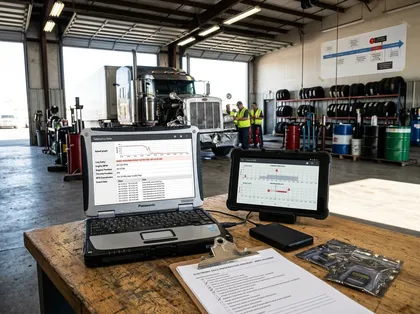
Carriers must conduct regular pre-trip and periodic inspections and maintain inspection records. If a brake failure, tire defect, or equipment problem contributed to your crash, the carrier’s inspection records, or the absence of them, can show whether the company met its maintenance obligations.
Driver Qualification Records
Carriers must verify that drivers hold the required CDL, are medically certified, and have no disqualifying history. A driver who lacks proper qualifications may expose the carrier to additional liability.
Drug and Alcohol Testing
Federal regulations require pre-employment, random, and reasonable-suspicion testing for covered drivers, and require post-accident drug and alcohol testing when the crash meets the circumstances specified in 49 CFR § 382.303. Post-accident testing records may be relevant when impairment may have contributed to the collision.
Cargo Securement
FMCSA rules require carriers and loaders to secure cargo properly before a truck moves. Shifting or unsecured loads from the agricultural and oil field freight that moves through Kern County on SR-99 and I-5 can cause crashes and expand liability to cargo loaders or shippers.
A documented FMCSA violation does not automatically mean you win your claim, but it can significantly strengthen your evidence of negligence, particularly when the violation directly contributed to the crash.
Gather Evidence Before It Disappears
Physical scene evidence and the trucking company’s electronic records are two separate layers of proof. A strong truck accident claim needs both, and both can disappear quickly.
Scene evidence disappears within hours. Once responders move the vehicles, skid marks fade, debris is cleared, and the moment is gone. If you can do so safely, photograph and video everything before the scene clears:
- The truck’s DOT number, cab and trailer license plates, and company logos
- All vehicle positions, visible damage, and cargo spills
- Skid marks, road markings, and debris fields
- Traffic controls, road conditions, and weather
Electronic data can be overwritten. Commercial trucks carry two critical digital systems:
- Electronic Control Module (ECM) and Other Onboard Electronic Systems: Depending on the truck and its equipment, electronically stored data may include vehicle speed, engine operation, throttle input, braking-related data, and other parameters recorded before or around a collision.
- Electronic Logging Device (ELD): Records driver duty status and hours-of-service information and can provide important evidence of possible hours-of-service violations and the driver’s recent work and rest schedule.
Preservation timelines vary by carrier and device. An attorney can send a spoliation letter, a formal written notice identifying evidence the trucking company must retain, promptly after the crash. That letter identifies the specific electronic data and carrier records described in this section. It puts the company on notice and may help prevent routine data deletion. A preservation obligation may also arise independently when the parties can reasonably foresee litigation.
The CHP Bakersfield Area Office and the Bakersfield Police Department also hold crash reports. If the responding agency took photographs at the scene, you may be able to request copies through a California Public Records Act request if you were unable to document the scene yourself. Public-records exemptions may restrict access to some records, and not all crashes result in agency-taken photographs. Truck accident lawyers at Arash Law can handle that request on your behalf.
Filing Deadlines You Need to Know
Several deadlines can affect your truck accident claim — and missing any one of them can limit your options. Do not confuse reporting deadlines with lawsuit deadlines; they are different obligations with different consequences.
| Deadline Type | Time Limit | What It Means |
|---|---|---|
| Written accident report (CVC § 20008(a)) | 24 hours | Required for drivers of non-common-carrier vehicles involved in a crash causing injury or death. File with CHP or, for a city crash, with CHP or the local police department. |
| DMV SR-1 report (CVC § 16000(a)) | 10 days | Required if the crash caused injury, death, or property damage over $1,000. Filed separately from police and insurance reports. |
| Government administrative claim | Generally 6 months | Required before suing a public entity, such as Caltrans or Kern County, if a government entity owned or operated the truck. Applies only when a government defendant is involved. |
| Personal injury lawsuit | 2 years | Most injured people have 2 years from the crash date to file a personal injury lawsuit against a private party. |
| Property damage lawsuit | 3 years | Generally allows 3 years for property damage claims against private parties. |
Legal basis: California Government Code § 911.2(a) for the government claim deadline; CCP § 335.1 for personal injury claims; CCP § 338(c) for property damage claims; CVC § 16000(a) for the SR-1 filing requirement; and CVC § 20008(a) for the 24-hour written report.
Exceptions can extend or shorten these periods. When a public entity is the defendant, government claims carry additional deadlines after the agency acts on the claim; the timing depends on how and whether the agency responds. Consult an attorney promptly after filing a government claim to understand the next deadlines that apply to your situation. Minor claimants and other special circumstances can also affect these timelines. Do not rely on general deadlines without confirming how they apply to your specific facts.
Where To File Your Case
A truck accident lawsuit involving Kern County may be filed in Kern County Superior Court when Kern County is a proper venue.
Plaintiffs file unlimited civil complaints seeking more than $35,000 are filed at the Metropolitan Division Justice Building, 1215 Truxtun Ave, Bakersfield, CA 93301.
The proper court and venue depend on the circumstances of the case, so current filing requirements should be confirmed with the Kern County Superior Court. Most personal injury claims settle before trial, but court filing deadlines still apply even if your case resolves before a trial date is set.
Mistakes That Can Hurt Your Claim When Dealing with Insurers
Trucking company insurers typically begin their own investigation shortly after a crash. Certain common mistakes can significantly affect the compensation you may recover.
- Accepting a quick settlement offer. An adjuster may call within days of the crash with an offer. Those early offers typically come before you have a complete picture of your medical needs, recovery timeline, or future costs. Accepting one before you understand your full damages can leave significant compensation on the table.
- Giving a recorded statement before consulting an attorney. Adjusters are trained to ask questions that may yield answers used to assign a greater share of fault to you. Under California’s pure comparative negligence rule, your share of fault reduces your compensation proportionally, and even a small shift in perceived fault can meaningfully reduce what you recover.
- Admitting fault or speculating about what happened. Stick to the facts you know. What feels like your mistake in the immediate aftermath may look very different once investigators review ECM data, ELD logs, and the full crash scene. Speculation about fault made in the hours after a crash can be used against you later.
What a Bakersfield Truck Accident Lawyer Does That You Cannot Do Alone
Seeking legal help from Bakersfield truck accident lawyers after a commercial vehicle collision gives you access to resources and capabilities that are difficult to replicate on your own.
- Immediate evidence preservation. Arash Law can send a formal spoliation letter promptly after the crash to preserve the critical electronic data and carrier records detailed in the evidence section above.
- Thorough crash investigation. Arash Law attorneys can examine CHP and BPD crash reports, interview witnesses, and work with accident reconstruction specialists who understand the physics of commercial truck collisions on high-speed corridors like I-5 and SR-99.
- Identifying all responsible parties. A truck crash may involve the driver, the motor carrier, a cargo loader, an equipment manufacturer, a freight broker, or a trailer owner, all of whom may share liability. Identifying every responsible party can substantially affect the compensation you pursue.
- Managing insurer communications. Arash Law can handle calls, correspondence, and settlement discussions with the trucking company’s insurer, and can advise you on what to say and what to avoid so your statements do not inadvertently reduce your claim.
- Filing in Kern County Superior Court if needed. If the trucking company’s insurer will not offer fair compensation, Arash Law can take your case to Kern County Superior Court in Bakersfield.
If you or someone you care about has been injured in a commercial vehicle collision in Bakersfield, getting legal advice early can help preserve critical evidence and can help you understand the options available to you under California law.
Representative Results in Truck Accident Cases
Arash Law has recovered over $1 billion for injury clients across California. The truck accident results below reflect our commitment to holding negligent trucking companies accountable and pursuing the maximum compensation available for injured clients.
$5,000,000 — Truck v. Pedestrian: Our client was crossing the street within a marked crosswalk when a large truck hit him. The trucking company attempted to shift responsibility by claiming he had been looking down at his phone while walking. We challenged that argument and ultimately secured a favorable result for our client, who sustained a mild traumatic brain injury in the collision.
$1,150,000 — Truck v. Auto Accident: A delivery truck rear-ended our client on the freeway, causing neck and back injuries. The defense blamed her weight and pre-existing conditions, but we resolved the case at mediation before trial.
Past results do not guarantee a similar outcome. Each case is unique and must be evaluated on its own facts. Results depend on the specific circumstances of each matter; different facts produce different results.
Who May Be Responsible for a Bakersfield Truck Accident
In a commercial truck crash, legal responsibility rarely rests with only the driver. Multiple parties operating across Kern County’s freight network may share fault, and identifying each one can substantially affect your recovery.
Under California’s pure comparative negligence rule, your share of fault reduces your compensation proportionally, but does not bar your claim entirely. If you are found to be 20% at fault, your total recovery is reduced by 20%. You can still pursue the remaining 80%.
Parties Who May Share Responsibility
Commercial trucking operations through Kern County often involve several distinct businesses. Responsibility may rest with one or more of the following:
- The Truck Driver: Direct negligence, fatigue, distraction, impairment, or hours-of-service violations.
- The Motor Carrier, or Trucking Company: Negligent hiring, inadequate supervision, maintenance failures, or pressure on drivers to violate safety rules.
- Cargo Loaders And Shippers: Improperly secured or overloaded cargo, a particular risk on SR-99 with agricultural freight and on I-5 with oil field equipment, can shift during transport and cause a crash.
- Freight Brokers: A broker who negligently selects an unsafe motor carrier may bear liability if that negligence contributed to the crash.
- Trailer Owners: A third party who owns the trailer may be held responsible if maintenance failures on their equipment contributed to the collision.
- Intermodal Equipment Providers (IEPs): Companies that provide container chassis and other intermodal equipment may face liability if negligent inspection or maintenance, or unsafe equipment, contributed to the crash.
- Third-Party Maintenance Contractors: If the carrier outsourced maintenance and the contractor’s negligence caused an equipment failure, that contractor may share responsibility.
Other liable parties may exist depending on the facts of your case. This list is not exhaustive; a thorough investigation often reveals additional responsible parties not apparent at the scene.
Workers’ Compensation And Third-Party Claims
If you were working at the time of the crash, such as a delivery driver, a construction worker traveling to a job site, or in any other employment capacity, you may qualify for workers’ compensation benefits for an injury arising out of and in the course of your employment, generally without regard to fault. Workers’ compensation is ordinarily the exclusive remedy against your employer, subject to statutory exceptions. It does not, however, generally prevent you from pursuing a separate personal injury claim against a responsible third party.
Commercial Trucking Insurance vs. Personal Vehicle Minimums
Commercial truck crashes involve substantially higher insurance requirements than ordinary car crashes. Under 49 CFR § 387.9, certain for-hire interstate motor carriers transporting nonhazardous property in vehicles weighing 10,001 pounds or more must carry at least $750,000 in financial responsibility. Carriers transporting specified hazardous materials may be subject to minimum coverage requirements of $1 million or $5 million.
By comparison, California’s basic motor vehicle liability minimums are:
- $30,000 for injury or death to one person
- $60,000 for injury or death to multiple people
- $15,000 for property damage
The actual coverage available depends on the carrier, vehicle, cargo, operation, and applicable state and federal requirements. Higher minimum coverage in commercial truck cases can mean more meaningful compensation is available, but recovering it requires identifying all responsible parties and all applicable policies.
Frequently Asked Questions About Bakersfield Truck Accidents
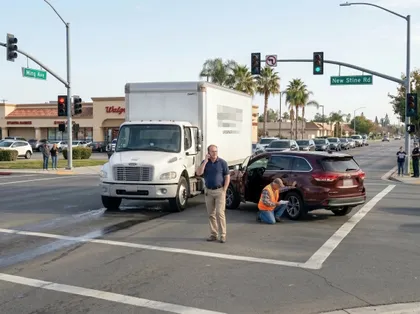
A serious truck accident leaves you dealing with medical care, vehicle damage, insurance calls, and urgent decisions, often at the same time. The questions below address the most common questions Bakersfield drivers and passengers ask after a commercial vehicle collision on SR-99, I-5, or city streets. Each answer stands on its own, so you can read only what applies to your situation.
Should I Post About My Truck Crash On Social Media?
Avoid posting about the crash, your injuries, or your recovery on any social media platform while your claim is pending. Trucking company insurers routinely review public social media profiles after a crash. A photo from a family gathering, a comment about feeling better, or a check-in at a location can be taken out of context and used to argue that your injuries are less serious than you claim. Even a casual post made with no intention of discussing the crash can be misread as evidence that you are doing well. The safest approach is to say nothing publicly until your case is resolved.
Can I Use My Own Health Insurance For Truck Accident Injuries?
Yes. Your personal health insurance can cover your care while the liability claim against the trucking company is still pending; you do not have to delay treatment while waiting for the other side’s insurer to respond. Your health insurer may later seek reimbursement from any personal injury settlement you receive, a right called subrogation, but that is sorted out at resolution, not upfront. Getting care immediately also creates a medical record that connects your injuries to the crash date.
What If A Delivery Truck Hit Me Instead Of A Semi-Truck?
A collision with a delivery truck, whether a commercial cargo van, a parcel delivery vehicle, or a box truck, can still support a personal injury claim. The applicable insurance coverage, the responsible parties, and whether FMCSA regulations apply will differ depending on the vehicle’s weight, the carrier’s operation, and the employment relationship between the driver and the company. Whether the driver’s employer shares liability depends on whether the driver was acting within the scope of their employment at the time of the crash. The analysis differs from a tractor-trailer case, but the underlying negligence principles are the same.
Do Lawyers Only Get Paid If They Win A Truck Accident Case?
Truck accident attorneys typically work on a contingency fee basis, which means you pay no attorney fees unless they win or settle your case. If there is no recovery, you owe no attorney’s fee. Other case-related costs, such as expert fees, filing fees, or investigation expenses, may vary by agreement, so ask about those terms before signing a representation agreement.
Talk to Arash Law About Your Bakersfield Truck Accident Claim
Trucking companies begin investigating crashes almost immediately after they occur, sometimes sending their own accident reconstruction team to the scene before the day is out. Every hour that passes without an evidence preservation demand is an hour during which the trucking company’s data retention policies go unchallenged. If you have been injured in a truck collision on SR-99, I-5, SR-58, or any Bakersfield-area road, early legal advice can help preserve critical evidence and clarify the options available to you under California law. If you choose to retain Arash Law, the firm can act quickly to help protect your rights.
Arash Law represents clients on a contingency fee basis; you pay nothing upfront, and you owe no attorney fees unless we recover compensation for you. Call Arash Law at (888) 488-1391 to schedule your free case review. Arash Law: Make them pay, call AK.
About This Guide
This guide was prepared using verified information from official California and federal government sources, court records, and agency directories. The CHP Bakersfield Area Office (Office 420) address at 9855 Compagnoni Street and phone number were confirmed directly from the CHP official website. The Bakersfield Police Department headquarters’ phone number and address may change; verify the current information at bakersfieldcity.us/police. Kern County Superior Court Metropolitan Division details were drawn from the court’s location page; confirm current hours and address at kern.courts.ca.gov/location/metropolitan-division. Dignity Health – Memorial Hospital details were confirmed through the CommonSpirit Health facility locator. Kern Medical is located at 1700 Mount Vernon Avenue, Bakersfield, CA 93306; phone (661) 326-2000. Filing deadlines are grounded in California Code of Civil Procedure §§ 335.1 and 338(c), California Vehicle Code §§ 16000(a) and 20008(a), and California Government Code § 911.2(a). Federal trucking insurance minimums are outlined in 49 CFR § 387.9.
No verified city-level truck crash figure for Bakersfield is cited on this page. The OTS Crash Rankings tool, available at ots.ca.gov/media-and-research/crash-rankings-results, and TIMS/SWITRS both allow interactive lookup for readers who wish to query Kern County data directly.
This guide focuses on Bakersfield and Kern County, covering the specific reporting agencies, courts, freight corridors, and local facilities that apply when a truck crash happens here, so readers can take the right steps for their location. It covers conditions along SR-99, I-5, and SR-58 as they run through Kern County, where the Grapevine grade on I-5 and Tehachapi Pass on SR-58 create a real long-haul driver fatigue risk, a concern reflected in FMCSA hours-of-service regulations generally.
Sources
- Kern County Superior Court – Metropolitan Division location page
- Kern County Superior Court – Civil and Small Claims Division
- CHP Bakersfield Area Office (420)
- Bakersfield Police Department
- Dignity Health – Memorial Hospital, Bakersfield
- Kern Medical (Kern County hospital)
- California Office of Traffic Safety (OTS) Crash Rankings
- FMCSA – How to determine if FMCSA safety regulations apply
- FMCSA Regulations (49 CFR Parts 390–399)
- California Code of Civil Procedure § 335.1 (2-year personal injury SOL)
- California Government Code § 911.2 (6-month government claim deadline)
- Arash Law – Case Results
Disclaimer
This page is for general informational purposes only and does not constitute legal advice. Reading this page does not create an attorney-client relationship between you and Arash Law or any of its attorneys. The information here reflects California law as of the date of last review and may not apply to your specific situation. Laws change, and individual circumstances vary. For advice about your particular case, consult a licensed California personal injury attorney. Past results described on this page are representative and do not guarantee a similar outcome in your matter.