TL;DR: Fault in an accident is determined by evidence showing who acted carelessly and caused harm, not by apologies or who felt worse. In California, you often must prove negligence, or that the other party owed you a duty of care, breached it, and directly caused your injury and damages. Acting fast to preserve photos, witness statements, and surveillance footage is critical, as evidence can disappear within days, and you generally have only 2 years to file a lawsuit.
Highlights:
- Photograph the scene, hazards, and vehicle damage immediately.
- Collect witness names and contact information before they leave.
- Request surveillance or dashcam footage before it’s erased.
- Obtain a copy of the police report and check it for errors.
- Decline requests for recorded statements from the other party’s insurer.
- Dispute unfair fault findings in writing with photos and diagrams.
Tip: Send a written evidence-preservation request early, and stick to the facts when speaking with insurance adjusters.
Table of Contents
Determining fault in an accident usually comes down to figuring out who violated a duty of care. That means assessing who acted unreasonably or broke a rule that caused the accident.
An accident can leave you in pain, scared, and unsure of what to do next. Whether it happened on the road, at a store, at someone else’s home, or through a defective product, you may be wondering how to know whose fault it is in an accident.
Fault is not decided by who felt worse or who apologized first. It is decided by evidence. A photo of a wet floor with no warning sign, a police report showing a driver ran a red light, or a witness who saw a dog owner lose control of a dog’s leash all point to fault.
The evidence must show who failed to act safely and caused the harm. Under California law, more than one party can share responsibility. The strength of that evidence affects how much you may be able to recover.
How Is Fault Determined In California?
In California, fault is typically based on negligence. You must show that another party failed to act with reasonable care and that their failure caused your injury.
The four elements of negligence are:
- Duty of Care: The other party owed you a duty to act safely. Drivers, property owners, and employers all have this duty.
- Breach of Duty: They did not meet that duty. Examples include speeding, running a red light, or failing to fix a known hazard on their property.
- Causation: The injury must have directly resulted from their failure to act safely.
- Damages: You suffered real losses, such as medical bills, lost wages, or pain and suffering.
Sometimes, a statutory violation creates a rebuttable presumption of negligence, or negligence per se. Under California Evidence Code § 669, negligence is presumed if a defendant violated a statute, ordinance, or regulation. Negligence per se applies if the violation caused the injury, the harm is of the type the law was designed to prevent, and the injured person belongs to the class the law was designed to protect. Here are some common examples:
- A driver causes an accident by running a red light or driving under the influence.
- Someone slips and falls on a staircase because the property owner failed to maintain it in line with local safety codes.
- A dog owner violates a city leash law, and their dog bites someone in a public place because it wasn’t properly restrained.
- A general contractor on a construction site violates Cal/OSHA workplace safety standards, causing a scaffold collapse that injures workers and passersby.
After some accidents, police officers may write reports that record their view of what happened. Those reports can influence an insurance claim. However, in California, police reports are generally considered hearsay under Evidence Code § 1200. That means they are not automatically admissible in a civil jury trial to prove fault (though officers can testify using them).
Insurance adjusters conduct their own review and draw their own conclusions. If the parties disagree, a judge or jury makes the final legal ruling based on all the evidence.
How Fault Rules Apply To Different Accident Types
The setting of your injury shapes what you must prove. Different rules govern a fall in a grocery store than a car crash or a dog bite.
Here is how the legal standard shifts by accident type:
- Traffic Accidents: These usually fall under ordinary negligence laws and the California Vehicle Code. Negligence means failing to act with reasonable care, such as speeding or running a red light.
- Premises Liability (Slip-and-Falls): Property owners must keep their space safe. You must show they knew about the hazard, or should have known about it, and failed to address it. That makes them legally responsible, or liable, for your injury.
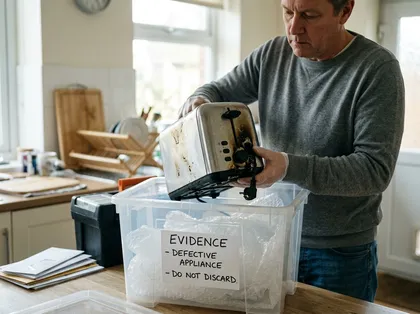
- Defective Products: You usually do not have to prove the manufacturer or seller was careless. You must show that the product was defective, the defect existed before it was sold, and the defect caused your injury. This is called strict liability, meaning fault does not depend on carelessness.
- Dog Bites: California Civil Code § 3342 makes dog owners strictly liable when their dog bites someone in a public place or on property the victim had a right to be on. This rule applies even if the dog had never bitten anyone before.
Evidence: What It Takes To Prove Your Case
The strength of your evidence often determines how fault is decided. Records and digital data can disappear within days if no one steps in to save them. The side that acts first to secure this material has a real advantage when insurance adjusters and courts assess who is at fault.
Evidence in personal injury cases varies by accident type:
- Motor vehicle accidents (cars, motorcycles, trucks, bicycles, pedestrians):
- Photos of the crash scene, road conditions, and hazards.
- Photos of vehicle damage.
- Police reports.
- Witness statements.
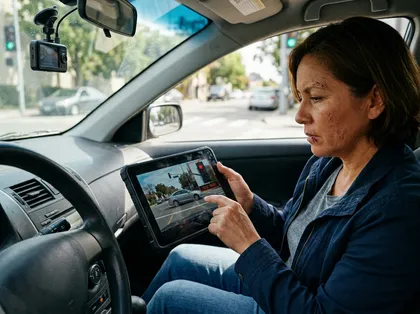
- Dashcam, traffic camera, or nearby surveillance (CCTV) footage.
- Black box or event data recorder (EDR) data, when available.
- Electronic logging device (ELD) data for commercial trucks, including hours-of-service and duty status records.
- Slip-and-fall and other premises liability accidents:
- Photos of the hazard, such as a wet floor, broken stairs, uneven pavement, or poor lighting.
- Surveillance (CCTV) footage.
- Incident reports from the property owner or business.
- Witness statements.
- Maintenance, inspection, and cleaning records (obtained during the claim or lawsuit).
- Dog bites and animal attacks:
- Photos of the injuries and the location.
- Animal control or police reports.
- Witness statements.
- Surveillance or doorbell camera footage.
- Veterinary or vaccination records, when relevant.
- Defective product cases:
- The product itself and all damaged parts.
- Photos of the product, packaging, labels, and warnings.
- Purchase receipts or proof of ownership.
- User manuals or instructions.
- Recall notices or manufacturing records, if available.
- Workplace and construction accidents:
- Photos of the accident scene and equipment.
- Incident reports.
- OSHA or Cal/OSHA investigation records, when applicable.
- Construction contracts, work orders, inspection records, and maintenance records.
- Witness statements.
- Medical evidence (applies to all personal injury cases):
- Medical records linking your injuries to the accident.
- Diagnostic imaging, such as X-rays.
- Treatment records from doctors, hospitals, physical therapists, or chiropractors.
- Medical bills and records showing your recovery and any lasting limitations.
A preservation letter (sometimes called a spoliation notice) is a notice that asks the other side to stop deleting records and save specific evidence. Without a written preservation demand, that data can still be lost or disputed, so accident lawyers often send these letters promptly after taking a case to help preserve footage and driver data before it is gone.
Can More Than One Party Be At Fault For An Accident?
California follows a pure comparative negligence rule. It comes from the 1975 California Supreme Court decision Li v. Yellow Cab Co. It affects fault assessments by allowing courts to assign fault to multiple parties. Examples can include:
- An employer for an employee acting within the scope of employment.
- A vehicle owner in legally applicable circumstances.
- A property owner or property manager.
- A contractor or subcontractor.
- A manufacturer, distributor, or retailer.
- A public entity (when a specific statute permits liability).
Depending on the facts, liable parties could include you, the injured victim. Though you may still pursue compensation if the accident was partially your fault, your share of the blame can reduce your potential award. Say a court finds you 20% at fault for a car crash. You could still recover 80% of your total losses, which includes the financial value of your injuries and expenses.
However, the other party’s insurer may use pure comparative negligence to argue that you share more fault than you actually do. That is why it’s important to gather as much evidence as possible after an accident. Equally vital is watching what you say to the other party’s insurer. Statements such as “I’m sorry” may be taken out of context later, so stick to the facts when communicating with claims adjusters.
Disputing An Insurance Company’s Fault Decision
You have the right to push back when an adjuster places unfair blame on you. Their decision is a negotiating position, not a court ruling, and these steps show how to challenge it:
- Dispute in Writing: A written response that disputes the decision, backed by photos, witness names, or diagrams, puts the disagreement on record.
- Decline Recorded Statements: You generally do not have to give a recorded statement to the other party’s insurer. Early recorded statements can hurt a claimant’s case. Adjusters may use them to shift more blame onto the victim.
- Build Your Own Case: Independent evidence, such as new witness accounts, dashcam footage, or expert crash analysis, can counter the insurer’s version of events.
- Get Legal Support: Accident victims can seek free advice from an accident lawyer to understand their options while the case is still open.
How Long Do You Have To Prove Fault In California?
You generally have two years to file a personal injury lawsuit in California. This deadline begins running on the date of the accident and does not pause during the claims process, meaning you must gather evidence of fault and take legal action before time runs out. Though this filing window can change in limited circumstances, following it is vital, as missing a deadline generally ends your ability to pursue compensation, no matter how serious your injuries are.
Here are some key timelines to keep in mind:
- Most Personal Injury Cases: In California, you usually have two years from your injury date to file a personal injury lawsuit. This deadline covers most accident types, including car crashes, slip-and-falls, dog bites, and injuries caused by defective products. However, certain exceptions may apply:
- Minors: The statute of limitations is often paused until the injured person turns 18, although exceptions may apply.
- Delayed Discovery of an Injury: If an injury could not reasonably have been discovered right away, the filing deadline may begin when the injury is discovered or should have been discovered.
- Claims Against Government Entities: Under the Government Claims Act (Gov. Code § 911.2), you generally must file a written claim with the appropriate government agency within six months of the injury before you can file a lawsuit. This rule may apply to accidents involving public entities, such as crashes with city buses or county vehicles, or injuries caused by dangerous conditions on public property.
Building a case takes time. An injury attorney needs to gather records, identify the legally responsible parties, and review the facts before filing. Contact a lawyer well before the deadline, not as it approaches.
Frequently Asked Questions About Proving Fault After An Accident
Proving fault after an accident is rarely straightforward, especially when complex circumstances or legal exceptions arise. Below are direct answers to common scenarios governed by California statutes and insurance regulations. Knowing how these laws apply to your situation can help you make informed decisions about your claim.
How Much Evidence Do You Need To Prove Fault After An Accident?
In most personal injury cases, you must prove fault by a preponderance of the evidence. That means showing that your version of what happened is more likely to be true than not. You do not have to prove fault beyond a reasonable doubt, which is the higher standard used in criminal cases.
Does Fault Matter In A Workplace Accident?
If you’re injured on the job, you can generally seek compensation from your employer’s workers’ compensation insurance without having to prove fault. However, proving fault matters if someone other than the employer, such as an equipment manufacturer, property owner, or driver, helped cause the accident. That may support a separate third-party personal injury claim. Understanding whether you’re eligible to file it matters if you sustained serious injuries, as personal injury claims typically cover more losses than workers’ compensation benefits.
Can Passengers Ever Be Held Liable For An Accident?
In rare cases, yes. A passenger who grabs the steering wheel, blocks the driver’s view, or causes a serious distraction can be held partly responsible under California law. These scenarios are uncommon, but they can come up when evidence clearly shows the passenger’s actions played a role.
What If There Was A “Caution: Wet Floor” Sign Posted When I Fell?
A warning sign helps the property owner’s defense, but it does not automatically end your claim. California courts look at the full picture. Was the sign easy to see, or was it placed where you couldn’t notice it in time?
Did the warning give you a real way to avoid the hazard, or was the dangerous area too large or too sudden to navigate safely? If the condition was severe and the warning was inadequate or poorly placed, the property owner can still be found partially or fully at fault. A sign is evidence, not a shield.
How Do I Prove Fault If There Were No Witnesses?
Proving fault when it’s just your word against theirs is incredibly common, and it’s precisely where physical and digital evidence becomes more important. A lack of witnesses does not mean a lack of evidence.
Evidence from the scene can reveal what happened and who was responsible. For example, skid marks, vehicle damage, and dashcam footage are helpful in car crashes. Maintenance records, incident reports, and surveillance footage are relevant to slip-and-fall accidents.
In serious cases, accident reconstruction experts can be brought in. They study speeds, impact angles, and braking distances to show how the accident happened.
Get Help Proving Fault After An Accident In California
A serious injury disrupts your income, your daily routine, and your sense of normalcy all at once. When someone else’s carelessness caused that harm, you should not be the one left paying for it. The attorneys at Arash Law (also known as AK Law) can challenge disputes over who is responsible and use verified evidence to help you pursue the available compensation under California law. Though these case results don’t promise specific outcomes for your own claim, they show how we’ve pushed back against unfair fault assessments in the past:
-
$5,000,000 — Motorcycle Accident: Fault Reassigned Despite an Unfavorable Police Report.
The initial police report placed our client at fault. He was alleged to have been intoxicated and speeding. Our attorneys proved that the other driver, a truck operator, had made an unsafe turn in violation of his training and company policy, and that a safe turn would have prevented the collision. In doing so, we secured a recovery for the client.
-
$3,000,000 — Auto vs. Auto: Black Box Data Overturns an Inaccurate Police Report.
A police report incorrectly blamed the client for running a stop sign. By retrieving black box data from the other vehicle, our lawyers demonstrated that the other driver was speeding and that this action was the true cause of the crash. We ultimately recovered the full policy limits for the victim and their family.
-
$2,300,000 — Dog Bite: Strict Liability Recovery After an Unleashed Dog Attack.
A visitor from Canada was attacked by an unleashed dog while on a walk, causing him to fall and strike his head on the asphalt, resulting in a traumatic brain injury. The firm secured a maximum policy limit recovery from the dog owner’s homeowners insurance policy.
Getting started costs you nothing. We work on a contingency fee basis, meaning our lawyers only get paid if they win or settle your case.
Call (888) 488-1391 today to schedule a free case assessment. Your initial consultation costs you nothing.