TL;DR: Freeway driving for beginners is safest when you get close to traffic speed before merging, stay in the right lane, and leave at least 3 seconds of space between cars. These habits lower crash risk, and if a collision happens, early medical care and preserved evidence can affect any later claim.
Highlights:
- Do a quick pre-drive check: fuel, tires, brakes, lights, mirrors.
- Adjust the seat and mirrors, enter the route, and put the phone away before moving.
- Scan far ahead for brake lights, debris, and merging traffic.
- Change lanes one at a time; signal, mirror-check, and shoulder-check.
- Give trucks extra room; avoid lingering beside them and cutting in.
- If stopped or broken down, move to the shoulder, hazards on, call for help.
- After injury/death or $1,000+ damage, file DMV SR-1 within 10 days.
Tip: If a crash occurs, stick to the facts and preserve evidence with photos of positions, damage, skid marks, signs, and witness contact information.
Table of Contents
Driving on the freeway safely as a beginner starts with preparation, steady speed, and simple decisions. That is why a beginner needs a simple plan, not vague advice. California recorded 4,061 traffic fatalities in 2023, underscoring the importance of safe driving habits on every road, including freeways.
Here are the main points to remember before you get on the freeway:
- Pick a simple route and a lighter traffic time.
- Use the on-ramp to get close to the speed of traffic.
- Signal early and check mirrors and blind spots.
- Stay in the right lane if you are driving slower than the rest of the traffic.
- Leave at least three seconds of space in front of you in normal conditions.
The tips below focus on what to do before you enter the freeway, while you are driving, and what to do if something goes wrong.
Beginner’s Guide To Driving On The Freeway In California
Freeway driving feels easier when you focus on a few repeatable habits. This guide explains how to prepare for freeway driving, merge safely, maintain a safe distance from other cars, and stay calm if traffic changes quickly.
Beginner Tip 1: Pick The Right Time For Your First Freeway Drive
Driving on the freeway should feel as manageable as possible. Choose a time when traffic is lighter so you can focus on the road without added pressure. The DMV says drivers must adjust speed to traffic and road conditions, not just the posted limit. These conditions give you more time to read traffic and make smoother decisions. Plan your first time driving on the freeway for:
- Daytime
- Clear weather
- Light traffic
- Good visibility
Beginner Tip 2: Check Your Car Before You Leave
Before you enter the freeway, make sure your car is ready for the drive. Small-vehicle issues can become much more dangerous at freeway speeds than on local streets. California DMV safety guidance also reminds drivers to check whether the vehicle is safe to drive before starting a trip.
Before you leave, check your:
- Fuel level
- Tires
- Brakes
- Lights
- Mirrors
You should also feel ready to drive. Freeway driving requires steady focus from start to finish, so it is better to wait if something is distracting you.
Before getting on the freeway, make sure you are not:
- Too tired
- Upset
- Distracted
- Sick
If your car is ready and you feel alert, you will be better able to handle the faster pace of freeway traffic.
Beginner Tip 3: Set Up Before The Car Starts Moving
Before you start driving, take a moment to set up everything you need. That can help you stay focused once the car is moving. Drivers must stay alert and keep their attention on the road, so it is best to make basic adjustments before driving.
Before you leave, make sure you:
- Adjust your seat.
- Set the mirrors.
- Put your phone away.
- Enter your route on the GPS.
- Set music or audio in advance.
This tip matters because beginners can feel overwhelmed when they try to adjust things while driving. Once your setup is complete, you can focus on traffic rather than dividing your attention between the road and distractions.
Beginner Tip 4: Build Speed On The On-Ramp
The on-ramp is where you get ready to join freeway traffic. Use this space to increase your speed so you are closer to the speed of the cars already on the freeway. That way, you can merge more smoothly and reduce the risk of a sudden brake or an unsafe lane-change reaction around you.
As you drive up the on-ramp, focus on:
- Staying in the correct lane.
- Building speed gradually.
- Watching traffic ahead.
- Looking for a safe gap to merge into.
Many beginners make one of two mistakes here. They either stay too slow or speed up too aggressively. Do not race other cars. Focus on getting near the speed of traffic so you can merge smoothly when a safe gap opens.
Beginner Tip 5: Merge Calmly And Do Not Force It
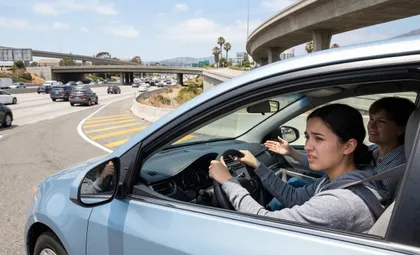
Once you are near the end of the ramp, look for a safe opening in traffic. Merge only when you have enough room to do it safely. A calm, steady merge is safer than a rushed move.
Before you merge, make sure to:
- Signal early.
- Check your mirrors.
- Check your blind spot.
- Look ahead for a safe gap.
- Move into the lane smoothly.
Do not assume other drivers will slow down to let you in. Find a safe opening, keep moving when it is safe, and merge smoothly instead of stopping at the end of the ramp unless you truly have to. A rushed merge or last-second stop can cause a crash.
Beginner Tip 6: Stay In The Right Lane Until You Settle In
After you merge, stay in the right lane until you feel more comfortable. This lane is often easier for beginners because traffic usually moves at a more manageable pace. It gives you more time to focus on speed, spacing, and staying aware of the cars around you.
As you get settled, focus on:
- Keeping a steady speed.
- Maintaining a safe following distance.
- Watching traffic around you.
- Getting comfortable with the flow of the freeway.
That does not mean you always have to stay in the right lane. It simply means you do not need to start in the faster lanes while you are still getting used to freeway driving. Once you feel more confident, you can change lanes when it is safe and necessary.
Beginner Tip 7: Leave More Space Than You Think You Need
Following distance matters even more on the freeway because cars are moving faster and stopping takes longer. Leaving more space gives you more time to react if traffic slows down, a car cuts in front of you, or something appears in the road. California DMV guidance recommends using the three-second rule in normal conditions and increasing the following distance when conditions are worse.
While driving, focus on:
- Leaving at least three seconds of space.
- Increasing that space in bad weather.
- Backing off if another car cuts in front of you.
- Avoiding tailgating.
A larger gap can make freeway driving feel less stressful. It also gives you more time to brake smoothly, rather than reacting at the last second.
Beginner Tip 8: Change Lanes One Move At A Time
Lane changes should be calm and predictable. Quick or sudden moves can confuse other drivers and raise the risk of a crash. It is safer to change lanes one at a time and ensure each move is clear before starting the next.
Before changing lanes, make sure to:
- Check traffic several cars ahead.
- Make sure there is enough space in the next lane.
- Signal early, at least 100 feet before moving to the other lane.
- Move into only one lane at a time.
- Cancel your signal and settle before changing lanes again.
Try not to cut across several lanes just because your exit is getting close. A simple, early lane change is much safer than a rushed move across traffic.
Beginner Tip 9: Watch Far Ahead, Not Just The Car In Front Of You
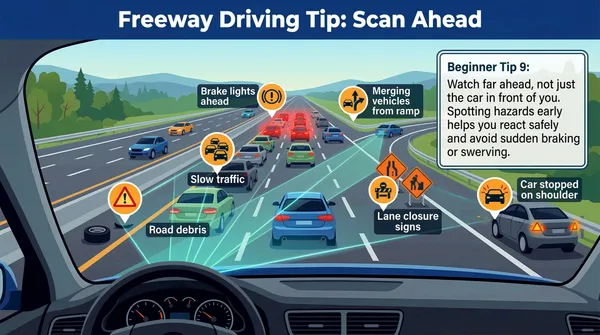
Freeway driving gets easier when you look beyond the car directly ahead of you. Watching farther down the road helps you spot problems earlier and gives you more time to react. That can make your driving feel smoother and more controlled.
As you scan ahead, watch for:
- Brake lights
- Merging vehicles
- Slow traffic
- Road debris
- Lane closures or hazards on the shoulder
This habit helps you avoid late reactions. Instead of suddenly braking or swerving, you can prepare earlier and respond more calmly.
Beginner Tip 10: Keep Your Speed Under Control
You do not need to be one of the fastest cars on the freeway. What matters most is keeping a steady speed that is safe for traffic and road conditions. California DMV guidance reminds drivers to adjust speed based on traffic, visibility, weather, and road conditions, not just the posted limit.
Try to avoid these common speed mistakes:
- Merging too slowly.
- Speeding up too much to change lanes.
- Driving too fast for traffic conditions.
- Braking hard because you followed too closely.
A steady pace helps you stay in control. It also makes your driving more predictable for the people around you.
Beginner Tip 11: Stay Off Your Phone And Limit Distractions
Distractions are dangerous on any road, but they are even more dangerous on the freeway because traffic changes quickly. You need your full attention on the road, especially as a beginner. Even a short distraction can cause you to miss brake lights, a lane change, or an approaching exit.
Before you start driving, make sure to:
- Put your phone away.
- Set your route in advance.
- Choose your music or audio before moving.
- Keep conversations from becoming distracting.
If you miss an exit, keep going and take the next one. That is much safer than making a sudden move when you get distracted or panic.
Beginner Tip 12: Give Large Trucks Extra Space
Large trucks need more room to stop and have bigger blind spots than smaller vehicles. That means you should be extra careful when driving near them. Giving trucks more space can help you avoid dangerous situations, especially when traffic is moving fast.
When driving near a truck, remember to:
- Avoid staying beside it too long.
- Do not cut in front of it.
- Pass only when you have enough room.
- Make sure you are well ahead before moving back over.
If you cannot see the truck driver in the mirror, the driver may not be able to see you either. A little extra space can make a big difference.
Beginner Tip 13: Get Ready For Your Exit Early
Exits become much easier when you prepare in advance. Waiting until the last second can lead to rushed lane changes, sudden braking, and unnecessary stress. It is better to move toward the correct lane early and give yourself time to exit safely.
To prepare for a safe freeway exit, make sure to:
- Check your route ahead of time.
- Move into the correct lane early.
- Signal before changing lanes.
- Keep your speed steady.
Planning early helps you stay calm. It also makes your driving more predictable and safer for everyone around you.
Beginner Tip 14: Know What To Do If Something Goes Wrong
Even careful drivers can run into problems on the freeway. Your car could break down, traffic could stop suddenly, or a crash could happen. Knowing what to do can help you stay safer and make the situation less overwhelming.
If something goes wrong, try to:
- Stay calm.
- Move to the shoulder if it is safe to do so.
- Turn on your hazard lights.
- Call for help if needed.
- Get medical care after a crash.
If you are in an accident, it also helps to gather basic information when you can do so safely. Photos, witness names, and medical records may matter later if you need to report the crash, file a claim, or speak with freeway accident attorneys about your legal options.
What If Another Driver Hits You On The Freeway?
Even if you’re new to freeway driving and take all possible precautions, you can get hurt when another driver speeds, tailgates, merges unsafely, or changes lanes without enough space. If another driver caused the crash, you may have a personal injury claim for losses tied to the collision. California Courts lists medical bills, lost wages, emotional harm, ongoing treatment, and future problems from the injury as common damage categories.
After a serious crash, many people start thinking, “I need a personal injury lawyer.” That’s especially true when missed work and insurance issues pile up alongside significant healthcare costs, such as those for surgery and chiropractic care.
Freeway cases often turn on clear driving mistakes. Unsafe merging, following too closely, distraction, and unsafe lane changes can all become key liability issues. The California Vehicle Code is especially important in lane-change disputes because it requires a lane change to be made with reasonable safety and with an appropriate signal. Arash Law can help explain how these rules may apply after a freeway crash.
How Partial Fault Affects A Freeway Accident Case
California follows a pure comparative negligence system. Under this rule, more than one driver can be held responsible for a crash. If both drivers contributed to the collision, each party’s share of fault affects the amount of compensation they can pursue.
What Deadlines Apply After A California Freeway Crash?
In most California injury cases, you have two years from the date of the injury to file a lawsuit.
If a public entity may be involved, such as a government vehicle or a dangerous road condition, the deadline is usually much shorter. In many of these cases, you must file a claim within six months.
There is also a separate DMV rule. You must file an SR-1 within 10 days if anyone was hurt or killed, or if the crash caused more than $1,000 in property damage.
How Can A Lawyer Help After A Freeway Accident?
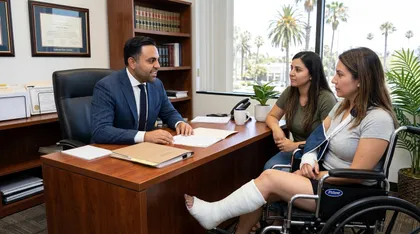
A lawyer can help gather evidence, identify who may be at fault, deal with the insurance company, and track the deadlines that apply to your case. That matters in freeway crashes because these cases often involve rapidly unfolding events and disputes over merging, lane changes, speed, and following distance.
Freeway crashes can also involve multiple parties. Rideshare passengers, truck drivers, and other road users may also sustain injuries in pileup collisions. In these situations, several insurance policies and drivers may need to be investigated, complicating the claims process. A lawyer can handle thorough documentation of the parties involved.
Many California personal injury lawyers work on a contingency-fee basis. The Business and Professions Code requires a contingency-fee contract to be in writing and to explain the fee rate and how costs and disbursements may affect the client’s recovery.
FAQs On Driving Safely On The Freeway
If you still have questions about freeway driving or what happens after a crash, these answers cover some of the most common concerns. Below, you will find quick guidance on safe driving habits, California filing deadlines, and how injury cases usually work.
How Do I Practice Freeway Driving As A Beginner?
Start small. Choose a short route, go during daylight hours, and avoid heavy traffic. Repeat the same route a few times to build confidence without having to learn a new road each time.
What Is The Safest Lane For A Beginner On The Freeway?
The right lane is usually the easiest place to begin because the pace is often more manageable. California law also says slower traffic should stay in the right-hand lane in most situations.
How Fast Should I Go When I Merge?
Try to match the speed of freeway traffic before you merge. The DMV says to be at or near the speed of traffic and to merge when it is safe to do so.
How Much Space Should I Leave Between Cars?
Use at least the three-second rule in normal conditions. Leave more space when traffic is heavy, the weather is bad, or visibility is poor.
How Long Do I Have To File A California Injury Claim After A Freeway Crash?
In most cases, you have two years to file a personal injury lawsuit. If a public entity may be involved, a shorter claim deadline usually applies, often six months.
How Do Attorney Fees Usually Work In A California Injury Case?
Many personal injury cases use a contingency-fee agreement. Some injured people ask, “Do lawyers only get paid if they win?” In many California personal injury matters, the lawyer’s fee depends on whether they recover compensation for you. California law requires the agreement to be in writing and to explain the fee rate and how costs may affect the client’s recovery.
Understanding Your Legal Options After A Freeway Crash
The sections above explain safe freeway habits and the basic legal issues that may arise after a crash. If you were injured and need help applying those rules to your own situation, the next section explains how Arash Law handles freeway accident cases.
Speak With Arash Law About Your California Freeway Accident
Freeway driving can feel overwhelming, and a crash can leave you dealing with injuries, medical care, missed work, and questions about what to do next. If another driver caused the collision, Arash Law can explain your legal options, the deadlines that may apply, and the types of records that may help support your claim. California personal injury claims may involve compensation for medical bills, lost wages, emotional harm, and other injury-related losses.
If you are looking for free advice from a freeway accident attorney, AK Law offers a free case review to help you better understand your options. Call (888) 488-1391 for a free initial consultation.