TL;DR: A lawyer should review your work duties, injuries, vehicle ownership, potentially applicable insurance, and who represents each party. Workers’ compensation may apply to your work injury, while a separate civil claim depends on another party’s responsibility. The client may have an independent injury claim, so a lawyer should assess potential conflicts and representation needs separately.
A lawyer should look into three things: your employment role at the moment of impact, every insurance policy that may apply, and whether any party already has legal representation. Their legal review should include separating your injury claim from any claim the customer may have.
As the driver, you may qualify for workers’ compensation if you were on the job when you were injured. You may also have a civil injury claim against another driver or third party whose negligence caused your injuries. If injured, the client may have a separate claim against a negligent driver and, depending on the facts, a dealership or a vehicle owner.
The available information establishes that an employee was driving a dealership vehicle with a customer on board. It does not establish vehicle ownership, fault, insurance coverage, or whether the customer’s interests align with yours.
Key Facts About Company Car Accidents in California
- Work activity matters. A lawyer should confirm your employment status and what you were doing when the crash occurred.
- Claims require separate review. Workers’ compensation eligibility, third-party liability, and the customer’s potential claims depend on different findings.
- Coverage requires policy review. Vehicle ownership, permission, insured status, exclusions, and endorsements help determine which coverage may apply.
- Representation must be confirmed. A lawyer should identify each attorney’s clients and assess whether interests conflict.
- Evidence and deadlines require early attention. Preserve trip records, crash footage, policy documents, and claim correspondence. The filing deadlines may be shorter if a government entity is involved.
Table of Contents

I Was Driving a Company Vehicle With a Customer When I Was Injured. What Should a Lawyer Review Regarding My Role, the Insurance Policies, and Who Represents Each Person?
A lawyer should review why the dealership asked you to drive the customer, who owned the vehicle, and whether you had permission to use it. They should also examine the dealership’s insurance policy, your coverage under that policy, and whether another driver’s insurance could cover your injuries.
The lawyer should then check whether the dealership’s attorney represents you or only the company. They should also find out whether the customer has a separate injury claim and their own lawyer. These findings help determine which claims you can pursue and whether your interests need separate legal representation.
The people involved in a company car crash may have different claims, insurance coverage, and attorneys. The table below shows what a lawyer should review for each person or party, including the records needed to clarify their rights and representation.
| Person or Party | Role and Potential Claims | Documents to Review | Questions for the Lawyer |
|---|---|---|---|
| You, the Employee-Driver | Injured worker who may have workers’ compensation and third-party injury claims. | Work instructions, medical records, insurance documents. | Was the trip work-related? Which claims apply? Who represents you? |
| Customer-Passenger | Passenger who may have a separate injury claim. | Passenger account, claim notices, available injury records. | Was the customer injured? Do they have their own lawyer? |
| Dealership/Employer | Employer with possible workers’ compensation obligations and commercial insurance. | Trip records, incident reports, insurance policies. | Did the dealership authorize the trip? Who represents the company? |
| Vehicle Owner, if Different | Owner whose insurance and legal responsibilities require review. | Registration, lease records, insurance documents. | Who owned the vehicle? Does the owner have separate counsel? |
| Other Driver or Responsible Party | Potential third party whose actions may support an injury claim. | Collision report, witness statements, insurance details. | What evidence supports their responsibility? Who handles their claim or defense? |
Use this table to prepare for your first conversation with a work injury lawyer. Start with the row that describes your role, then check the other parties involved in the crash. Mark any questions you cannot answer, especially those about insurance coverage or existing attorneys.
You do not need to know every answer before seeking legal advice. The records you already have can help your lawyer investigate the missing details.
Bring available work instructions, vehicle records, policy documents, claim correspondence, and attorney agreements for review. These records can help identify possible claims and representation needs without assuming coverage or joint representation.
The Insurance Policies That May Apply
A lawyer should review four potential coverage sources and determine which may apply to you, the customer, or both. Coverage depends on the policies, insured status, vehicle use, and crash circumstances. The review should include policy limits, exclusions, endorsements, and any coverage or denial letters.
- Employer’s Commercial Auto Policy: May cover liability claims arising from an insured driver’s use of a covered vehicle, including a customer’s injury claim. lawyer should confirm whether the vehicle and its use were covered, who qualifies as an insured, and which claims the policy covers. Liability coverage does not automatically pay for your own injuries.
- Uninsured and Underinsured Motorist Coverage (UM/UIM): May provide injury compensation if a responsible driver is uninsured or underinsured and you qualify for coverage. A lawyer should review potentially applicable dealership and personal policies, including exclusions and limits. Multiple policies do not automatically provide additional layers of compensation.
- Workers’ Compensation: May pay for medical treatment and part of your lost wages if you were injured while performing your job duties. Your employer’s workers’ compensation insurer or claims administrator reviews and handles the claim.
- At-Fault Third-Party Driver’s Liability Policy: If another driver caused the crash, their liability insurance may cover your injuries and the customer’s injuries, subject to coverage and policy limits. As of January 1, 2025, the minimum personal auto limits under Senate Bill 1107 are $30,000 per person / $60,000 per occurrence / $15,000 property damage, though many drivers carry only the minimum.
If you receive workers’ compensation benefits and pursue a claim against another party, your employer’s insurer may seek repayment from your injury settlement. A lawyer should review how the two claims affect each other, including whether a settlement could change your future workers’ compensation benefits.
Does the Company’s Lawyer Represent You or the Customer?
The company’s lawyer does not automatically represent you or the customer. An attorney should check existing attorney-client relationships and determine whether you need separate counsel for your injury claim.
The review should answer these questions:
- Who represents the dealership? The dealership may have its own attorney or one appointed by its insurer. That attorney’s involvement does not automatically establish representation of employees or customers.
- Who represents you? A lawyer should check whether anyone already handles your workers’ compensation or personal injury claim. The dealership’s attorney does not automatically handle either claim for you.
- Who represents the customer? The customer may have a separate attorney for their injuries. Their representation does not extend to you simply because you shared the vehicle.
- Are there conflicts of interest? A lawyer should check whether existing or proposed representation creates a conflict of interest. These conflicts can affect whether one attorney may represent multiple people.
Before sharing sensitive claim information, confirm whom each attorney represents. Separate legal representation may be appropriate when your interests differ from those of the dealership or customer.
What Should a Lawyer Investigate About Fault and Your Injury Claim?
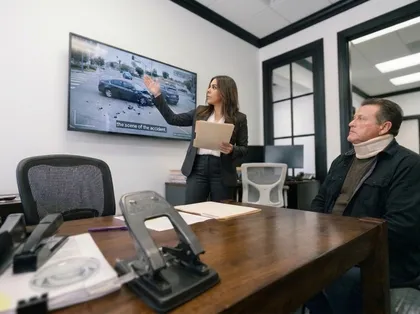
A lawyer should investigate what caused the crash, which parties contributed, and what claims may be available for your injuries.
What Caused the Company Car Accident?
A lawyer should examine the available evidence to determine how the crash occurred and whether another party’s negligence contributed to your injuries.
The investigation may cover:
- The Other Driver’s Actions: Did another driver fail to yield, disregard a traffic signal, or violate another road rule?
- Road and Traffic Conditions: Did poor visibility, unsafe road conditions, or a malfunctioning traffic signal contribute to the crash?
- Vehicle Condition: Did a brake failure, tire defect, or another mechanical problem play a role in the collision?
- Crash Evidence: What do photographs, witness statements, collision reports, and available vehicle data show about the incident?
These findings can help a lawyer identify potentially responsible parties and assess whether a civil injury claim is available.
Can You Seek Compensation Outside Workers’ Compensation?
You may have a separate personal injury claim if another driver’s negligence or a third party’s actions caused your injuries. A lawyer should review that possibility alongside any available workers’ compensation benefits.
California Labor Code § 3602 generally makes workers’ compensation the exclusive remedy for covered work injuries against an employer. However, that rule generally does not prevent a claim against a responsible third party.
A lawyer should examine the evidence, applicable insurance, and any workers’ compensation reimbursement rights before evaluating a separate injury claim.
How Can Your Work Duties Affect Your Workers’ Compensation Claim?
Your work duties, the purpose of the trip, and your employment status can affect whether you qualify for workers’ compensation. A lawyer should investigate these details to determine whether your injuries arose from your employment.
What If I Made a Personal Stop?
A personal stop during a work-related trip does not automatically disqualify you from workers’ compensation benefits. A lawyer should investigate the stop’s purpose, duration, and connection to your job to assess whether your injuries arose from employment.
The review should address:
- Purpose of the Trip: Were you transporting a customer, completing an assigned task, or traveling between work locations?
- Nature of the Stop: Was it a brief personal errand or a substantial departure from your work duties?
- Employer’s Instructions: Did the dealership authorize the trip, set the destination, or require you to use the vehicle?
- Timing of the Crash: Did the collision occur during the assigned trip, while completing the personal errand, or after returning to work duties?
California’s going-and-coming rule generally excludes injuries during an ordinary commute between home and work. However, work-related travel may qualify for coverage, and a personal detour requires a separate review.
A lawyer should examine whether the stop interrupted your work duties and whether you had resumed those duties when the crash occurred. A brief personal stop does not necessarily remove an otherwise work-related trip from workers’ compensation coverage.
What If the Company Calls You an Independent Contractor?
Even if the dealership calls you an independent contractor, California law may still treat you as an employee. A lawyer should examine your actual work duties and relationship with the dealership to determine which laws apply to your claim.
For workers’ compensation, California Labor Code § 2775 generally applies the ABC test, subject to statutory exceptions. Where it applies, the company must establish all three requirements:
- You are free from its control and direction, both under the contract and in practice.
- Your work falls outside its usual course of business.
- You customarily operate an independently established trade, occupation, or business of the same nature as the work performed.
Different legal rules may apply when determining your eligibility for workers’ compensation and a separate injury claim. A lawyer should examine your work arrangement and the applicable rules before identifying which claims you can pursue.
A lawyer can review contracts, work instructions, payroll records, and W-2 or 1099 forms to assess classification. No single label or document necessarily decides the issue.
Not sure which policies, claims, or lawyers apply to you and the customer who was in your vehicle? Call Arash Law at (888) 488-1391 for a free case evaluation. Our commercial vehicle accident attorneys can review your duties, the occupants’ roles, and relevant documents to assess potential claims, coverage questions, and representation needs.
The Client’s Rights as an Injured Passenger
An injured customer may have a separate personal injury claim arising from the same crash. A lawyer should investigate what caused the collision, which parties may be responsible for the customer’s injuries, and what insurance may apply. The customer’s claim requires its own review, even when you were both injured in the same accident.
The customer’s potential claims depend on what caused the crash:
- If Another Driver Caused the Crash: The customer may pursue compensation from the responsible driver and their insurer.
- If a Vehicle Defect Contributed: The customer may have a claim involving a defective vehicle or component, depending on the evidence.
- If Multiple Parties Contributed: The customer may have claims against more than one responsible party.
A lawyer should assess the customer’s injuries, available insurance, and supporting evidence separately from your claim.
Being a passenger does not establish fault or coverage. California’s comparative-fault rule generally reduces the customer’s damages by their own share of fault, if any. Another driver’s fault is not automatically attributed to the customer.
The customer’s interests may differ from yours or the dealership’s. Does their account conflict with yours? Do they already have an attorney? A lawyer should assess these questions before determining whether separate representation is needed. The customer should not assume the dealership’s insurer or defense attorney represents their interests.
If separate counsel is needed, choosing a California personal injury lawyer involves reviewing relevant experience, State Bar standing, and communication practices. Ask how the attorney would handle your claim and check for conflicts involving the other occupants.
What Company Records Should a Lawyer Investigate After the Crash?
A lawyer should investigate dealership records, trip instructions, and vehicle data to determine why you were driving and what caused the crash. These records may also help clarify insurance coverage and the customer’s potential claim.
The review may cover:
- Trip Authorization and Work Assignments: Did the dealership authorize the drive, and was transporting the customer part of your job?
- Vehicle Ownership and Use Records: Who owned the vehicle, and did the dealership permit its use for this trip?
- GPS, Telematics, and Dashcam Records: What evidence exists about the route, vehicle movements, and events leading to the crash?
- Dealership Incident Reports and Communications: What did the dealership document about the collision, and who received those reports?
- Insurance and Attorney Correspondence: Which insurers received notice, and which parties have attorneys handling their claims or defense?
A lawyer should also check who controls these records and whether any footage or electronic data needs prompt preservation. Some systems overwrite older information, so early evidence requests can help prevent its loss.
Frequently Asked Questions About Company Vehicle Accidents in California
What Evidence Does a Lawyer Look for in a Company Car Crash?
A lawyer should review crash reports, witness statements, available vehicle data, and dealership records. This evidence can help establish how the accident occurred, why you were driving the customer, and whether another party contributed to your injuries.
The lawyer should also check who controls the records and whether any footage or electronic data needs prompt preservation.
What If the Dealership or Insurer Asks Me to Sign Documents After the Crash?
Ask what each document does and send a copy to your lawyer before signing. A statement, medical authorization, and settlement release serve different purposes. Your lawyer can explain whether the document could affect your injury claim, insurance benefits, or legal rights. Give accurate information and ask about any applicable response deadline.
What If the Customer and I Give Different Accounts of the Crash?
Tell your lawyer where the accounts differ and identify any records that could clarify what happened. Dashcam footage, trip instructions, witness statements, and collision reports may help. Different accounts can affect fault and representation, so a lawyer should assess whether they create a conflict requiring separate counsel.
Talk to Arash Law About Your Company Car Accident Claim
Arash Law can review your duties during the trip, who occupied the vehicle, and the documents relevant to potential claims. Bring any available collision report, work instructions, vehicle records, insurance information, claim letters, and attorney correspondence.
Call (888) 488-1391 for a free case evaluation. The review can help identify possible claim pathways, coverage questions, and representation needs.
Our personal injury lawyers handle cases on a contingency fee basis, so you owe no attorney’s fees unless we recover compensation for you.
Sources
- California Legislative Information: Labor Code § 3600, workers’ compensation eligibility.
https://leginfo.legislature.ca.gov/faces/codes_displaySection.xhtml?lawCode=LAB§ionNum=3600.- California Legislative Information: Senate Bill 1107, increased minimum auto liability limits.
https://leginfo.legislature.ca.gov/faces/billNavClient.xhtml?bill_id=202120220SB1107- California Department of Industrial Relations: Workers’ compensation employee FAQs, reporting requirements, claim forms, and benefits.
https://www.dir.ca.gov/dwc/WCFaqIW.html- California Department of Industrial Relations: Independent contractor versus employee, the ABC test and statutory exceptions.
https://www.dir.ca.gov/dlse/faq_independentcontractor.htm- California Department of Insurance: Automobile Insurance Guide, liability coverage, exclusions, limits, and UM/UIM coverage.
https://www.insurance.ca.gov/01-consumers/105-type/95-guides/01-auto/auto101.cfm- Judicial Council of California: Civil Jury Instructions, employer liability, employment classification, and scope of employment.
https://courts.ca.gov/partners/california-jury-instructions/civil-jury-instructions-resource-center/civil-jury-instructions- State Bar of California: Rule 1.7, conflicts of interest involving current clients.
https://www.calbar.ca.gov/legal-professionals/rules/rules-professional-conduct/current-rules-professional-conduct/chapter-1-lawyer-client-relationship- California Courts: Personal injury lawsuit deadlines.
https://selfhelp.courts.ca.gov/civil-lawsuit/statute-limitations- California Legislative Information: Labor Code § 3602, workers’ compensation exclusive remedy.
https://leginfo.legislature.ca.gov/faces/codes_displaySection.xhtml?lawCode=LAB§ionNum=3602.- California Legislative Information: Labor Code § 2775, employee classification and the ABC test.
https://leginfo.legislature.ca.gov/faces/codes_displaySection.xhtml?lawCode=LAB§ionNum=2775.- State Bar of California: Rule 1.13, representation of an organization and its employees.
https://www.calbar.ca.gov/legal-professionals/rules/rules-professional-conduct/current-rules-professional-conduct/chapter-1-lawyer-client-relationship- California Legislative Information: Labor Code § 3852, third-party injury claims involving workers’ compensation.
https://leginfo.legislature.ca.gov/faces/codes_displaySection.xhtml?lawCode=LAB§ionNum=3852.- California Workers’ Compensation Appeals Board: Gloria Montes v. Family Ranch, Inc. (2024), going-and-coming rule and exceptions involving required vehicle use and special employment-related risks.
https://www.dir.ca.gov/wcab/Panel-Decisions-2024/Gloria-MONTES-ADJ12479931.pdfDisclaimer
The information on this page is for general educational purposes and does not constitute legal advice. No attorney-client relationship is formed by reading or relying on this content. If you were injured, consult a licensed California personal injury attorney about your specific situation. Arash Law: (888) 488-1391.