TL;DR: A motorcycle lawyer can review gift and title records, photos, service history, and other evidence of upgrades. Missing receipts do not prevent you from showing what the motorcycle was worth before the crash. An appraiser may help assess its value, while insurance terms affect what is covered. If the crash caused your injuries, confirm whether your lawyer will handle both the injury and property damage claim.
If you were injured while riding a custom motorcycle you received as a gift, a lawyer can review ownership, upgrades, pre-crash value, and available insurance. Even without the original purchase receipt and modification invoices, your attorney can use other evidence to support your motorcycle damage claim. The lawyer can review the transfer history and help identify shops, builders, or other record sources.
If the crash injured you, confirm whether your lawyer will handle the property damage claim along with your injuries. An agreement to represent you for bodily injuries does not automatically include property damage.
Key Facts About Gifted Custom Motorcycle Claims in California
- Gift transfers require documentation. California DMV procedures require the recipient to report the motorcycle’s estimated value on the Statement of Facts (Form REG 256).
- Sales of similar custom motorcycles can help establish pre-crash value. A qualified appraiser can assess how much the installed upgrades contributed to the motorcycle’s market value before the crash.
- Motorcycle policies may limit coverage for aftermarket parts. An optional custom equipment endorsement can help cover upgrades such as custom wheels, paint, or handlebars, subject to the policy terms.
- A lawyer may agree to handle only the bodily injury claim. Under California Rule of Professional Conduct 1.2(b), a lawyer may exclude the motorcycle damage claim if the limitation is reasonable, lawful, and the client gives informed consent.
- Different filing deadlines apply. California generally allows two years for personal injury lawsuits and three years for property damage lawsuits. Government claims involving these losses generally have a six-month presentation deadline.
Table of Contents

My Custom Motorcycle Was A Gift, and I Don’t Have Receipts For The Upgrades. What Should A Motorcycle Lawyer Review?
A motorcycle lawyer should review who owned the bike, which upgrades were on it before the crash, the bike’s true market value, and what insurance may cover. A signed title and gift transfer records can help show when the motorcycle became yours. Dated photos, part numbers, and shop records can help identify upgrades that were already on the bike when you received it.
If the insurer has made an offer, the lawyer can check whether its valuation reflects the bike’s pre-crash condition and modifications. Sales of similar custom motorcycles or an appraisal may help assess what the upgrades added to its value.
| What a Lawyer Reviews | Records to Gather | What the Lawyer Checks | How It Affects Compensation |
|---|---|---|---|
| Ownership |
|
Who owned the bike when it crashed, and what the title and gift records show. | If ownership isn’t clear, the insurer may delay or refuse to pay until it’s sorted out. |
| Modifications |
|
Which parts are custom and which came from the factory. | Parts that aren’t listed or shown often get left out of the payout. |
| Proof of Upgrades |
|
That the upgrades were really on the bike before the crash, theft, or damage. | Strong proof makes it harder for the insurer to ignore your custom work and pay only for a stock bike. |
| The Bike’s Value |
|
How the insurer arrived at its number and what it left out. | A prior or current appraisal can help document the build. A qualified appraiser can use comparable parts as a reference when estimating the value added by the upgrades. |
| Insurance Policy |
|
How much the policy pays for added parts and whether it pays the bike’s market value or an agreed value. | A low limit on custom parts can cap what you get, even if your upgrades cost much more. |
| Damage and Loss |
|
What can be fixed, what needs replacing, and who was at fault. | These records help document the loss and assess fault. Payment also depends on the available coverage. |
A lawyer should also check whether any modification may not comply with California equipment rules, such as those regarding exhaust, lighting, or handlebar height. If you didn’t install the upgrades yourself, you may not know which parts were changed.
Your own insurer may exclude undeclared custom parts under your policy terms, while an at-fault driver’s insurer may argue that an illegal modification contributed to the crash.
Under California’s comparative fault rules, any share of fault assigned to you can reduce your compensation. Still, the other side must show that you were negligent and that your negligence was a substantial factor in causing your injury or property damage.
Steps to Protect Your Motorcycle Claim After a Crash
Get medical attention for your injuries and, when possible, preserve the motorcycle’s condition before repairs or salvage. The damaged bike may contain evidence about both the crash and its value.
Once you can safely manage the paperwork:
- Photograph the motorcycle from several angles, including visible custom parts and damage.
- Save your helmet, riding gear, and any removed motorcycle components.
- Record the towing company’s name, storage location, and daily fees.
- Request the collision report and collect available witness information.
- Follow your policy’s rules for reporting the crash.
If you’re not sure what to do after a motorcycle accident, an inspection is a helpful early step. It can document your custom parts before a shop repairs the bike or sends it to a salvage yard. Ask who will do the inspection and how much storage costs each day.
Report the Crash to the California DMV
California generally requires drivers to submit an SR 1 within 10 days if anyone was injured or killed or if damage to any one person’s property exceeded $1,000.
You must submit an SR 1 accident report to the California DMV separately from any police or insurance report. You or your representative can submit it online or mail the completed form to the DMV.
Failing to report a qualifying crash can lead to a driver’s license suspension.
Injury Claim vs. Bike Damage Claim: What Representation Covers
Your motorcycle injury lawyer can handle your bike damage claim if you both agree to include it in the representation. Check your agreement to see which tasks the lawyer will handle, especially if you want help disputing a repair or a total loss estimate.
Your injury claim may cover medical bills, lost income, pain and suffering, and future care. Your property damage claim addresses the cost to repair the bike or its value if it’s a total loss. It may also include other property losses from the crash.
When consulting a motorcycle accident lawyer, ask whether they will:
- Review the motorcycle’s repair or total loss estimate.
- Communicate with the property damage adjuster.
- Help obtain a motorcycle appraisal.
- Negotiate the property damage settlement.
- Review a proposed release before you sign.
Ask about any fees and who will pay for an appraisal. If you handle the bike claim yourself, tell your injury lawyer about any proposed settlement.
Proving Ownership of a Gifted Motorcycle
Start with the signed title, registration, and any transfer papers you filed. You do not need to have paid for the motorcycle for it to have market value.
California DMV’s vehicle gift transfer requirements call for the recipient to report the bike’s estimated value on a Statement of Facts (REG 256).
That estimate serves a transfer purpose. It does not necessarily establish the motorcycle’s market value on the date of the crash.
If the giver’s name remains on the title, gather any signed transfer papers and messages showing when the gift occurred. The giver may also provide a statement identifying the bike’s vehicle identification number (VIN) and transfer date.
A lawyer can compare those records with DMV information and check whether a lender or another owner has an interest in the motorcycle.
When the title, insurance policy, and loan records name different people, who receives the total loss payment may depend on their separate ownership and payment rights.
A Custom Motorcycle’s Value Depends on Its Condition and Upgrades
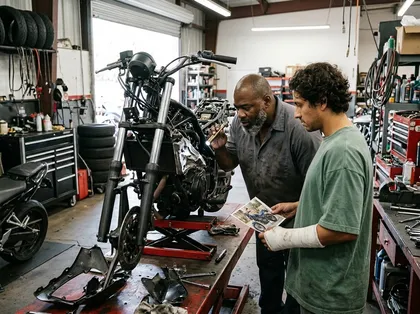
Repairable motorcycles and total losses require different valuation methods. Repair costs, market value, and the effect of custom upgrades can help determine the amount of a property damage claim.
Repair Costs Help Establish the Value of a Damaged Motorcycle
A repair shop familiar with custom motorcycles can estimate repair costs. The estimate should list replacement parts, labor, and any custom components that need special work.
If the shop discovers more damage during repairs, keep updated estimates and photos.
Under California’s rules for calculating personal property damage, you may generally recover the lesser of reasonable repair costs or the loss in market value. If repairs leave the bike worth less than before, you may also recover the remaining loss in value, subject to legal limits.
Total Loss Offers Should Account for Custom Upgrades
An insurer may declare a motorcycle a total loss when repairs are not possible or would cost too much. Ask the insurer for its valuation report. Check whether it considered the motorcycle’s mileage, condition, custom parts, and similar motorcycle sales.
An insurer may use standard motorcycle prices that do not fully reflect your upgrades. A qualified appraiser can review the available records and explain whether the offer reflects your bike’s value before the crash.
You can challenge an insurance company’s damage estimate by providing repair records, photos of upgrades, and comparable motorcycle sales that support a different value.
The amount spent on upgrades does not always equal the value they add to a used motorcycle. You may not recover the full purchase price of every modification.
Other Crash-Related Property Costs May Be Recoverable
Your property damage claim may also include reasonable towing, storage, and loss-of-use costs.
Loss of use generally concerns the reasonable rental value of a similar vehicle during the time needed for repairs or replacement. Keep your towing bills, storage invoices, and transportation records.
Insurance Coverage for Custom Motorcycle Damage
Your motorcycle policy may have separate limits or exclusions for custom equipment. The coverage available also depends on whether you file a claim with your insurer or seek payment through another driver’s insurance.
Coverage Under Your Motorcycle Policy
Check whether your policy included collision coverage when the crash happened. Review the declarations page and full policy for:
- Custom parts and equipment limits.
- Required declarations of modifications.
- Exclusions and deductibles.
- Agreed value or actual cash value terms.
- Available appraisal procedures.
An agreed value policy may provide a stated amount for a covered total loss. Actual cash value coverage generally depends on the motorcycle’s market value and the policy’s terms.
Your policy determines what collision insurance covers after an accident. If the other driver was uninsured, check whether your policy includes uninsured motorist property damage coverage or a collision deductible waiver.
Uninsured motorist property damage coverage is capped at the bike’s actual cash value or $3,500, whichever is less. It requires direct contact and identification of the uninsured vehicle by plate, or identification of its owner or driver. Report the crash to your insurer or its agent within 10 business days.
Coverage Through Another Driver’s Insurance
When another driver causes the crash, you may seek payment through their property damage liability insurance. A lawyer can review the collision report, witness accounts, photos, and other evidence of fault.
The at-fault driver’s limits may not cover a custom motorcycle’s full value. California’s minimum property damage liability coverage is $15,000 per accident, and that amount may be shared with other people whose property was damaged. If the limits fall short, a lawyer can evaluate whether to pursue the at-fault driver directly for the remaining amount.
If the at-fault driver’s insurer leaves an upgrade out of its offer, ask whether the issue is missing proof, its value, or a coverage limit. Request a written explanation and a list of the records the adjuster needs.
Injured in a crash that damaged your custom motorcycle? Call Arash Law at (888) 488-1391 for a free initial consultation about your injuries. If the bike was a gift and you’re missing upgrade receipts, we can also check what other evidence can support your motorcycle damage claim.
Frequently Asked Questions About Gifted Custom Motorcycle Claims
Do I Need a Motorcycle Appraisal Before Consulting a Lawyer?
No. You can consult a motorcycle lawyer without first getting an appraisal. Bring any photos, repair estimates, or insurance offers you have. The lawyer can help determine whether a professional appraisal is needed and who would pay for it.
Can a Lawyer Use Records With the Giver’s Name on Them?
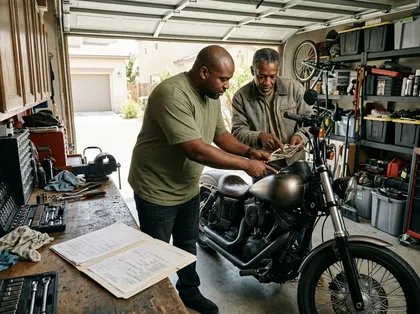
Yes. Shop records or receipts in the giver’s name can help identify upgrades made before the motorcycle became yours. Match them with photos, installation dates, or part numbers. These records can help establish which modifications were still on the bike before the crash.
Can an Appraiser Help If the Insurer Already Took the Motorcycle?
A qualified appraiser may be able to work from dated photos, shop records, the adjuster’s report, and any photos the salvage yard took. Ask whether the bike is still available for inspection. The appraiser should explain which details the records support and which remain unknown.
Can I Be Compensated for the Sentimental Value of a Gifted Motorcycle?
Generally, no. A motorcycle you received as a gift may mean more to you than its price. However, a property damage claim is generally based on the motorcycle’s repair cost or market value, not its sentimental value. The personal significance of the gift usually does not increase the amount an insurer or court will award for the bike itself.
What If I Want to Keep the Bike After a Total Loss?
You may be able to keep the motorcycle, depending on the settlement terms and California’s salvage requirements. Ask the insurer for offers with and without keeping the bike. The insurer may deduct its salvage value from the payment, and you may need to complete additional title paperwork.
Can I Settle the Motorcycle Damage Before My Injury Claim Ends?
Yes. You can settle your motorcycle damage claim first if the agreement covers only property damage. Bike damage claims often resolve sooner because you may know the repair cost or the bike’s value while you’re still receiving medical care. Settling the bike claim first can help you pay for repairs or a replacement while your injury claim is still open.
Before signing a release or accepting payment, ask your injury lawyer to review the written terms. A release that covers “all claims arising from the crash” could also close your injury claim, even if the insurer based its offer on the motorcycle damage alone.
Talk With Arash Law About Your Motorcycle Crash
If you were injured in a California motorcycle crash, Arash Law can review your injury claim and discuss whether we can also help with the bike damage claim. If the motorcycle was a gift and you’re missing receipts for the upgrades, bring whatever you have. Title or transfer papers, pre-crash photos, and shop records can help document the bike and its upgrades.
Call (888) 488-1391 for a free initial consultation. Tell us where the motorcycle is, what the insurer has said, and whether anyone has asked you to sign a release.
Sources
- California DMV — Vehicle gift transfers, ownership requirements, and Form REG 256.
https://www.dmv.ca.gov/portal/handbook/vehicle-industry-registration-procedures-manual-2/transfers/basic-transfer-requirements/- Judicial Council of California — CACI No. 3903J on personal property damage and CACI No. 3903M on loss-of-use damages.
https://courts.ca.gov/system/files/file/judicial_council_of_california_civil_jury_instructions_2026.pdf- California Department of Insurance — Automobile Insurance Guide covering collision, uninsured motorist property damage, and custom equipment coverage.
https://www.insurance.ca.gov/01-consumers/105-type/95-guides/01-auto/auto101.cfm- California Department of Insurance — Fair Claims Settlement Practices Regulations, 10 CCR §§ 2695.7 and 2695.8, covering claim settlement, total loss valuation, and repair estimates.
https://www.insurance.ca.gov/01-consumers/130-laws-regs-hearings/05-CCR/fair-claims-regs.cfm- California Department of Insurance — Current standard minimum auto liability limits, including $15,000 for property damage per accident.
https://www.insurance.ca.gov/0400-news/0102-alerts/2025/New-Year-Means-New-Changes-for-Insurance.cfm- California DMV — SR 1 accident reporting requirements and the 10-day deadline.
https://www.dmv.ca.gov/portal/dmv-virtual-office/accident-reporting/- California Courts — Filing deadlines for personal injury and property damage lawsuits.
https://selfhelp.courts.ca.gov/civil-lawsuit/statute-limitations- California Courts — Government claim requirements and filing deadlines.
https://selfhelp.courts.ca.gov/civil-lawsuit/government-claim- State Bar of California — Rule of Professional Conduct 1.2 on the scope of legal representation.
https://www.calbar.ca.gov/legal-professionals/rules/rules-professional-conduct/current-rules-professional-conduct/chapter-1-lawyer-client-relationshipDisclaimer
This article provides general information about California law. Reading it does not create an attorney-client relationship or replace legal advice about your situation.