TL;DR: Photos, witness accounts, venue incident reports, first-aid logs, and medical records can help connect a stairway fall to your injuries. Document the wet carpet and stair conditions separately. Preserve physical evidence, seek prompt medical care, and compare records by date and source to understand why the accounts may differ.
Photos, witness accounts, venue incident reports, first-aid records, and medical notes can help connect a stairway fall to your injuries. Start by identifying where you first lost your balance and where you landed. If you noticed wet carpet nearby, record where you saw it and whether you remember stepping on it.
Venue staff may record only what they observe after a fall. Your medical records may document injuries or symptoms that were not apparent immediately after the accident.
You do not need to remember every movement or explain every difference before gathering evidence. Keep the original records and identify any details you cannot confirm.
Key Facts About Venue Stairway Falls in California
- Different parties may be responsible for the carpet and stairs. Maintenance agreements and other property records can help identify who controlled each area. (California Civil Jury Instructions, or CACI, Nos. 1000 and 1002.)
- Earlier reports and inspection records can help establish notice. These records may show whether the responsible party knew or should have known about the unsafe condition in time to correct it, protect visitors, or provide an adequate warning. (CACI Nos. 1003 and 1011.)
- Negligence must be a substantial factor in causing the injury. In California, that means its contribution to the harm must be more than remote or trivial. It does not have to be the only cause of the injury. (CACI Nos. 430 and 1000.)
- You can generally request your own medical records. California Health and Safety Code § 123110 gives adult patients and certain minor patients the right to inspect or request copies of their medical records, subject to exceptions.
Table of Contents

What Evidence Connects the Venue Incident, Its Initial Response, and Later Medical Assessment When the Two Accounts May Differ?
A lawyer can compare photos, witness accounts, venue reports, and medical records to establish what happened before, during, and after your fall. These records may help explain how you fell, what assistance you received, and when your injuries became apparent. Identify what each person observed and what they learned from someone else. Preserve the original descriptions to determine whether the accounts cover different stages of the fall.
For example, a security report may say “slipped near stairs,” while an emergency department note says “fell down several steps.” One may describe where the fall began, while the other describes what happened next. These accounts do not necessarily contradict each other.
A lawyer can also look for supporting evidence to clarify differences that neither record explains on its own.
Document the Carpet and Stair Surfaces Separately
Wet carpet near a stairway does not necessarily mean the stairs were wet. The condition of each surface may help explain where and why you lost your balance.
- Fall Location: Note the entrance, floor, section number, and stairway or landing. Mark where the carpet ended, where you lost your balance, and where you landed.
- Carpet Condition: Record where and when you noticed moisture and whether you remember stepping on the wet area.
- Stair Condition: Document visible moisture, the type of flooring, the condition of the steps and handrails, lighting, and nearby warning signs.
- Photos and Video: Use wide-angle photos or venue maps to show the route you took. Look for footage or witness accounts that may show the condition of the stairs before the fall.
- Footwear and Clothing: Photograph any moisture, stains, or damage to the items you wore. Avoid washing, repairing, or discarding them. Allow wet items to air-dry before storing them to prevent further damage.
Take photos only from a safe position. If you cannot safely access the area, ask the venue or witnesses for images. If you suspect a stairway defect contributed to your fall, California stairway accident lawyers can help determine whether a professional inspection is necessary.
Record What You Remember About the Fall
Write down what you remember about the fall, including whether you were going up or down the stairs. Note where you last placed your foot, how you lost your balance, and whether you hit the steps, a handrail, or another surface. If you cannot remember part of the fall, mark that detail as unknown rather than guessing.
Ask each witness where they stood and what they personally saw or heard. Someone may have seen your foot slip, heard the impact, or arrived after you were already on the landing. Keep their contact information and record their accounts in their own words.
An event ticket, seat location, or timestamped photo can help California slip-and-fall lawyers confirm details about your visit, including where you may have been and when.
Document the Venue’s Response to Your Fall
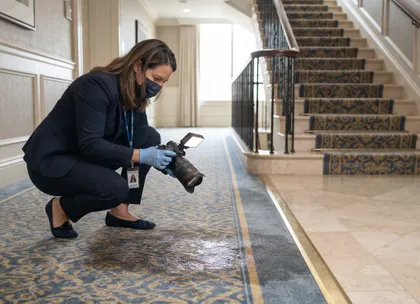
Venue incident reports and first-aid logs can show what staff observed and what assistance you received. Document the following:
- Staff Response: Note who called for help, when staff arrived, what they observed, and what you told them.
- Assistance Offered and Received: Record what staff offered, what you accepted or declined, and how you left the venue.
- Incident Records: Ask for copies of incident reports, security logs, and first-aid notes. If you got hurt at a movie theater, ask the manager whether security filed a separate report.
- Disputed Information: Keep the original records and make a separate, dated note explaining which details you believe are incorrect and what you remember instead.
Ask the venue in writing to preserve these records, along with cleaning logs, inspection records, and earlier complaints about the area. Keep copies of your requests and any responses. If the venue does not provide the records, your lawyer may obtain them through formal discovery during a lawsuit.
If you need help comparing venue reports with your medical records, call Arash Law at (888) 488-1391 for a free initial consultation.
Organize Your Medical Records in Chronological Order
Seek medical care promptly if you have symptoms after the fall, even if you declined assistance at the venue. Some injuries may cause symptoms hours or days later. Seek immediate emergency care for danger signs after a head injury, such as a headache that worsens and does not go away, repeated vomiting, increasing confusion, or weakness.
Gather ambulance reports, intake notes, exam findings, discharge instructions, imaging reports, referrals, and follow-up notes. Under California Health and Safety Code § 123110, adult patients generally have the right to inspect or request copies of their medical records.
Organize your records by date. For each visit, document:
- When you received care and what you reported about the fall.
- When your symptoms began or changed.
- What the provider observed, diagnosed, or recommended.
- Any relevant prior injuries or other incidents that may have affected your symptoms between visits.
Follow-up exams may identify injuries or symptoms that were not apparent during your first medical visit. Ask your healthcare provider whether your injuries are consistent with the way you fell and whether further evaluation is necessary.
Create a Timeline of Your Fall and Medical Treatment
Create a timeline of your fall and medical treatment to help organize your evidence. Include dates, times, symptoms, and the sources of each detail. Mark any missing information as unknown or pending rather than making assumptions. The table below outlines what to document and where to find supporting records.
Fall and Medical Treatment Timeline
| When | What to Document | Supporting Records |
|---|---|---|
| Before the Fall | Your route, direction of travel, and carpet and stair conditions. | Venue maps, tickets, photos, and videos. |
| During the Fall | Where you lost your balance, how you landed, and what witnesses saw. | Photos, witness statements, and surveillance footage. |
| Staff Response | Who helped you, what you reported, and what assistance you received or declined. | Incident reports, security logs, and first-aid records. |
| Leaving the Venue | When you left, how you traveled, and where you went. | Ambulance records, transportation receipts, and witness accounts. |
| First Medical Visit | How you described the fall, when symptoms began, and what treatment you received. | Ambulance reports, hospital records, and clinic notes. |
| Follow-Up Care | Changes in symptoms, diagnoses, treatment, and activity restrictions. | Imaging reports, medical records, and treatment plans. |
Download our free Fall and Medical Treatment Timeline to organize your records and identify details that need further clarification. If two records describe the same event differently, keep both and note the differences. For example, a venue incident report may state that you declined assistance, while an ambulance report may show that you accepted a medical evaluation but declined transportation. These records do not necessarily contradict each other. Your completed timeline and supporting records can help a lawyer assess your potential injury claim, even if some documents are still missing.
How Your Records Can Help Establish Liability and the Cause of Your Injuries

California premises liability attorneys can compare your records to evaluate the following:
- Property Control and Unsafe Conditions: Maintenance records, photos, and witness accounts can help identify who controlled the area and what contributed to your fall.
- Notice of the Hazard: Inspection logs, cleaning records, and earlier complaints may help determine how long an unsafe condition existed, whether moisture reached the stairs, and whether staff took reasonable precautions. These records can also help establish whether those responsible knew or should have known about the unsafe condition in time to address it. (CACI Nos. 1000–1003 and 1011; Ortega v. Kmart Corp.)
- Connection Between the Fall and Your Injuries: Medical opinions, exam findings, imaging, and earlier medical records can help establish whether the fall caused or worsened your injuries. (CACI Nos. 430 and 1000.)
Evidence that the stairs were unsafe does not, by itself, establish that the condition caused your fall. Likewise, medical records documenting your injuries do not necessarily establish who was responsible for the accident. Reviewing these records together can help a lawyer determine whether the evidence supports your claim.
Differences between initial and later medical findings may reflect changes in your symptoms or information revealed by further testing.
Frequently Asked Questions About Records After a Venue Stairway Fall
What If the Camera Missed the Steps?
Nearby cameras may still show your approach to the stairs or the staff response. Ask the venue in writing to preserve footage from before and after the fall. If footage is unavailable, witness accounts and guest-services records may help establish your location and movements.
How Do I Ask for My First Exam Notes?
Contact your provider’s medical records office and specify the date of the visit. Ask for the complete visit notes rather than just the discharge summary. If paramedics evaluated or transported you, request the patient-care report directly from the emergency medical services provider.
What If My Medical Records Describe the Fall Incorrectly?
After reviewing your medical records, you can submit a written statement explaining which information you believe is incorrect or incomplete. California Health and Safety Code § 123111 allows up to 250 words per disputed item.
Your statement must clearly request that the provider include it in your medical records. The provider must attach a statement that meets these requirements to your records and include it when disclosing the disputed information to another party.
This process adds your explanation to the record rather than requiring the provider to delete or replace the original entry. Keep a copy for yourself.
Should I Wait for the Venue Report Before Checking My Filing Deadline?
Check your filing deadline immediately, even if you have not received the venue report. California generally gives you two years from the injury to file a personal injury lawsuit against a private party.
For injury claims against public entities, you generally have six months to present a government claim. (Code Civ. Proc. § 335.1 and Gov. Code § 911.2.)
Get Help Reviewing Your Venue and Medical Records
Bring the records you have, along with any differences you want to clarify. You can request a consultation even if you are still waiting for documents. Call Arash Law at (888) 488-1391 for a free initial consultation.
Sources
- Judicial Council of California — California Civil Jury Instructions, 2026 edition. CACI Nos. 430, 1000–1003, and 1011 address causation, premises liability, property control, and notice. https://courts.ca.gov/system/files/file/judicial_council_of_california_civil_jury_instructions_2026.pdf
- California Supreme Court — Ortega v. Kmart Corp. (2001) 26 Cal.4th 1200. Inspection evidence and constructive notice of dangerous property conditions. https://www.courtlistener.com/opinion/5607973/ortega-v-kmart-corp/
- California Health and Safety Code § 123110 — Patient rights to inspect and obtain copies of medical records. https://leginfo.legislature.ca.gov/faces/codes_displaySection.xhtml?lawCode=HSC§ionNum=123110.
- California Health and Safety Code § 123111 — Patient rights to add written statements addressing incorrect or incomplete medical records. https://leginfo.legislature.ca.gov/faces/codes_displaySection.xhtml?lawCode=HSC§ionNum=123111.
- California Code of Civil Procedure § 335.1 — Filing deadline for personal injury lawsuits. https://leginfo.legislature.ca.gov/faces/codes_displaySection.xhtml?lawCode=CCP§ionNum=335.1.
- California Government Code § 911.2 — Deadline to present injury claims against public entities. https://leginfo.legislature.ca.gov/faces/codes_displaySection.xhtml?lawCode=GOV§ionNum=911.2.
- California Courts — Civil discovery procedures for obtaining documents and other evidence during a lawsuit. https://selfhelp.courts.ca.gov/discovery-civil
- Centers for Disease Control and Prevention — Concussion symptoms, delayed symptoms, and emergency warning signs. https://www.cdc.gov/traumatic-brain-injury/signs-symptoms/
Disclaimer
This article provides general information, not legal advice. Each injury claim depends on its facts. Past results do not guarantee future outcomes. Reading this page does not create an attorney-client relationship with Arash Law. Consult a licensed California attorney about your situation. Arash Law — (888) 488-1391.