TL;DR: You are not legally required to hire a lawyer after a motorcycle accident in California, but an attorney can help address insurer disputes, seek preservation of time-sensitive evidence, and evaluate the value of your injuries and losses. Under CCP § 335.1, you usually have two years to file a California injury lawsuit. If you miss this deadline, the court may bar your case.
Highlights:
- Report your crash promptly to your insurer, but avoid detailed statements until you speak with a lawyer.
- Contact a motorcycle accident attorney as soon as possible to preserve evidence like skid marks, footage, and witness details.
- Know California’s two-year statute of limitations for filing a lawsuit, or six months to file an administrative claim if a government vehicle or road condition caused the crash.
- A lawyer handles evidence gathering, medical coordination through liens, and claim valuation to counter insurer bias against riders.
- Understand how California’s comparative negligence rule and lane-splitting laws work. Insurers may use them to argue you share fault.
- Hire an attorney on contingency. You pay nothing up front, and they collect a percentage only if you win.
Tip: Stick to factual statements when speaking with insurance adjusters, since innocent phrases like ‘I’m okay’ can be twisted to minimize your injuries.
Table of Contents
Get a motorcycle accident lawyer if you were seriously injured, the other driver blames you, or the insurer pressures you to settle. A motorcycle crash can leave you with pain, medical bills, lost income, and questions about what to do next. Insurers often add to that pressure. Your claim may also involve strict California deadlines, fault rules, helmet laws, and lane-splitting issues.
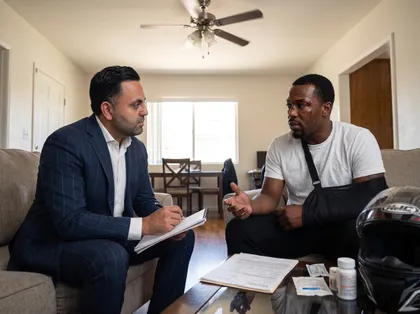
Many riders find that an attorney helps them understand their options and move through the claims process. A lawyer can explain your rights, gather evidence, deal with the insurer, and help you seek payment for your losses.
Why You Need A Lawyer After A California Motorcycle Accident
Some riders face blame after a crash, even before anyone reviews all the facts. Insurance companies may argue that a rider shares fault, especially when speed, lane position, or lane splitting is in dispute. A lawyer can advise you on what not to say to insurance adjusters and help counter that bias before it affects your claim.
Insurance adjusters may ask broad questions, and your answers can affect how they review your claim. A phrase like “I’m okay” may be used to question how serious your injuries were. “I didn’t see them” can be twisted into an admission that you share fault. Insurers collect these statements early, often before you know the full extent of your injuries. Many people do not realize their rights when speaking with adjusters, which is why early legal guidance matters.
When you hire a motorcycle accident lawyer, the lawyer can handle the legal work covered by the representation agreement. They may gather evidence, help coordinate access to medical providers, and evaluate the value of your claimed losses.
A motorcycle accident lawyer typically handles:
- Evidence Gathering: Your lawyer can seek the police report and, when available, the event data recorder or other vehicle data. If needed, they may bring in a crash reconstruction expert to explain how the crash happened and who may be at fault.
- Medical Coordination: Your lawyer may help you find doctors, specialists, or a chiropractor when you need care after the crash. Some providers may work under a medical lien, which allows them to seek payment from any money you may recover later.
- Claim Valuation: Your lawyer adds up all your losses, including future medical bills and lost wages, not just what you have paid so far.
Once the evidence is ready, your lawyer sends a demand letter to the at-fault driver and their insurer. The demand covers all your losses, including future costs. If the insurer refuses a fair offer, your lawyer can file a lawsuit. Most cases settle before trial. If settlement talks fail, a lawyer can file a lawsuit and move the case through the court.
When To Contact A Motorcycle Accident Attorney
The sooner you act, the better your chances of preserving evidence. Reaching out to motorcycle accident lawyers as soon as possible protects your case from the start.
Evidence can disappear, and missed deadlines can hurt your case or bar your claim. Skid marks can be washed away, surveillance footage can disappear or be overwritten, and witnesses may forget key details over time. An attorney who gets involved early can send preservation requests, organize records, contact witnesses, and help document your injuries while the facts are still fresh.
California sets strict deadlines for filing a personal injury lawsuit. Under California Code of Civil Procedure § 335.1, you usually have two years from the date of the injury to file a lawsuit. If you miss that deadline, you may lose your right to sue, even if your case is strong.
One key deadline applies when a public entity may be responsible. California law generally requires a claim relating to personal injury or death against a public entity to be presented within six months after the cause of action accrues. An administrative claim is a formal written claim presented to the government agency before filing a lawsuit, subject to statutory procedures and exceptions. Some injured people do not learn about this deadline until it is too late. That’s why getting a lawyer early on can make or break your case.
How Much Does A California Motorcycle Accident Lawyer Cost?
Many motorcycle accident lawyers work on a contingency fee basis. Under a contingency fee agreement, the attorney receives an agreed percentage of a settlement or court award if there is a recovery. The attorney does not receive a contingency fee if there is no recovery. However, the client may still be responsible for all or part of the court costs and other expenses, depending on the written fee agreement.
Attorneys can review your situation, explain your rights, and outline the claims process, which lets you understand your options before you decide. If you are asking, “What is the average settlement for a motorcycle accident in California?”, attorneys can help.
Who May Be Responsible For A Motorcycle Accident?
The other driver is not always the only potentially responsible party. Depending on how the crash happened, a motorcycle accident claim may involve:
- A driver who turned, merged, changed lanes, opened a door, or failed to yield.
- The driver’s employer if the driver was performing work duties.
- A vehicle owner who may be legally responsible for another person’s use of the vehicle.
- A trucking, delivery, rideshare, or transportation company.
- A construction contractor that created or failed to warn about a road hazard.
- A public entity responsible for a dangerous roadway condition.
- A repair shop, parts manufacturer, or motorcycle manufacturer, if defective work or equipment contributed to the crash.
Identifying every responsible party matters when one insurance policy is not enough to cover the rider’s injuries and losses.
What If The Driver Is Uninsured Or Does Not Have Enough Coverage?
Check whether your motorcycle policy includes uninsured or underinsured motorist coverage. This coverage may apply when the responsible driver has no insurance, has insufficient limits, denies involvement, or leaves the scene, depending on the policy and the circumstances.
California imposes special requirements for some hit-and-run uninsured motorist claims involving an unidentified driver. The claim generally requires physical contact, a report to law enforcement within 24 hours, and a sworn statement to the insurer within 30 days. Do not settle with or release an at-fault party before reviewing your policy and any uninsured or underinsured motorist consent requirements.
What If The Injured Rider Did Not Have Motorcycle Insurance?
An uninsured rider may still pursue certain losses from an at-fault party. However, California’s Proposition 213 can prevent an uninsured owner or operator from recovering non-economic damages such as pain, suffering, inconvenience, impairment, and disfigurement.
The rider may still seek economic damages, including medical expenses, lost income, and property damage, if supported by the evidence. An exception to the non-economic damages restriction may apply when the at-fault driver was convicted of driving under the influence.
Arash Law’s Motorcycle Accident Case Results
Our motorcycle accident lawyers have handled serious crash cases across California. Each case depends on its own facts, evidence, injuries, and insurance coverage. These past results do not promise the same result in a future case, but they show the types of claims our team has handled.
- $5,000,000 — Auto vs. Motorcycle: Our client faced several challenges after the crash. The police report placed him at fault, and the other side claimed he was speeding and under the influence. He also lacked motorcycle insurance, which raised Prop 213 issues. Our team showed that the truck driver made an unsafe turn and violated company rules. That evidence helped prove the truck driver contributed to the crash.
- $1,550,000 — Motorcycle vs. Rideshare Company: Our client suffered spinal and wrist injuries in a motorcycle crash involving a rideshare company. The case settled in July 2021 for $1.55 million. Arash Law’s case results page describes it as the largest motorcycle settlement in Tulare County in 2021.
- $1,450,000 — Motorcycle vs. Construction Contractor: Our client crashed after hitting uneven pavement in a construction zone. She suffered broken ribs and head trauma. The contractors and city denied fault for much of the case. After the trial began, the defense agreed to settle.
How California Laws Impact Your Motorcycle Accident Claim
California’s rules on fault, lane splitting, and helmets can affect your motorcycle accident claim. These rules may shape how insurers review fault, injuries, and damages. Knowing how they work can help you protect your rights and avoid mistakes that may hurt your case. Here are two important California motorcycle laws that may affect your claim after a crash:
- Lane Splitting: California Vehicle Code § 21658.1 defines lane splitting as driving a two-wheeled motorcycle between rows of stopped or moving vehicles in the same lane, including on divided and undivided streets, roads, or highways. The law also states that the CHP may develop educational guidelines on lane splitting. Even so, insurers may point to lane splitting to blame the rider for a crash. They may argue it caused the collision, even when other evidence tells a different story. An attorney can document the scene, review the rider’s actions, and challenge weak fault arguments with facts.
- Safety Helmet: California law requires riders and passengers to wear a properly fitted, fastened helmet that meets federal safety standards. Not wearing a helmet usually does not prove who caused the crash, but it may affect arguments about injuries and damages. Insurers may claim your injuries would have been less severe with a helmet and use that to reduce your payout. An attorney can help separate injury arguments from fault arguments.
California follows a system called “pure comparative negligence.” Pure comparative negligence means you can still recover money even if you were partly at fault for the crash. Your share of the blame reduces your payout. If a court finds you 20% at fault, you can still recover 80% of your damages. These damages may include medical bills, lost wages, and other crash-related losses.
These rules can affect how much money you may recover. Your case may involve questions about fault, lane splitting, and helmet use. Insurers may use these rules to argue that you share fault or that your injuries are worth less. Getting legal help early may help preserve evidence and respond to these arguments. Consider seeking free advice from motorcycle accident lawyers for more information.
What Should You Do Immediately After A Motorcycle Accident?
Get medical attention first, especially if you hit your head, have lost consciousness, have severe pain, or experience weakness, numbness, confusion, chest pain, or trouble breathing. Motorcycle injuries may involve head trauma, fractures, road rash, internal injuries, or spinal damage, and the full extent of an injury may not be clear at the scene.
If you can safely do so:
- Call 911 and request police and medical assistance.
- Photograph the vehicles, road, debris, skid marks, traffic controls, and visible injuries.
- Get the other driver’s license, insurance, and vehicle information.
- Ask witnesses for their names and contact information.
- Preserve your helmet, clothing, riding gear, cameras, and damaged motorcycle.
- Save photographs, videos, GPS data, text messages, and insurance communications.
- Notify your insurer within the time required by your policy.
Do not repair, sell, dismantle, or dispose of the motorcycle or riding gear until they have been photographed and inspected. Damage patterns on the motorcycle, helmet, and clothing may help show how the collision occurred and how the rider was injured.
What Can A Family Do After A Fatal Motorcycle Accident?
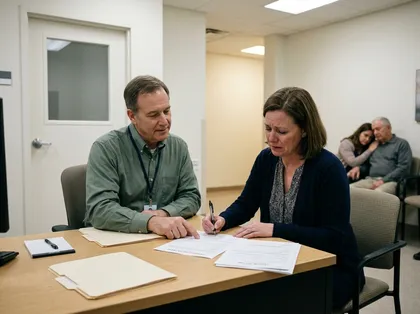
Losing a loved one in a motorcycle accident is an overwhelming and deeply painful experience. Families are often left trying to cope with grief while also handling funeral arrangements, insurance matters, financial concerns, and pressing legal questions all at once. During such a difficult time, it is important to focus on immediate needs and emotional support, while also taking steps to preserve important evidence and be mindful of legal deadlines.
In California, certain family members may have the right to bring a wrongful death claim if another person, business, contractor, or public entity caused the rider’s death through negligence or another wrongful act. Those who may be eligible can include a surviving spouse or registered domestic partner, children, descendants of a deceased child, and, in some cases, other heirs or dependents, depending on the family’s unique circumstances.
A wrongful death claim addresses losses suffered by the surviving family. Recoverable losses may include:
- Funeral and burial expenses.
- Financial support that the rider would likely have provided.
- The value of household services the rider would have performed.
- Expected gifts or benefits.
- Loss of love, companionship, comfort, care, assistance, protection, society, and moral support.
- Loss of training and guidance when applicable.
A separate survival action may also apply. A survival action continues a claim that belonged to the rider before death and may be brought by the estate’s personal representative or, if there is none, the rider’s successor in interest. It may seek losses incurred before death, such as medical expenses, lost earnings, and motorcycle property damage, along with punitive damages when legally supported. Survival-action damages are subject to the limits in California Code of Civil Procedure § 377.34.
Families should preserve the motorcycle, helmet, riding gear, camera footage, phone data, photographs, and witness information. They should also obtain or retain copies of:
- The police or CHP collision report.
- The death certificate.
- Coroner or medical examiner records.
- Medical and ambulance bills.
- Funeral and burial receipts.
- Employment, income, and tax records.
- Documents showing the rider’s household and caregiving responsibilities.
- Insurance policies belonging to the rider and the involved drivers.
A California wrongful death lawsuit is generally subject to a two-year deadline. A claim against a public entity may need to be presented within 6 months of its accrual. A survival action can have a different filing period, so families should not assume that every claim follows the same deadline.
Frequently Asked Questions
After a motorcycle crash, it is normal to feel lost and unsure of what to do next. The legal process has many steps, and knowing where to start can be hard. Learning how claims work can ease that stress and help you protect your rights.
Should I File A Claim Or Get A Lawyer First?
You should report the crash to your insurer first if your policy requires prompt notice, but you should speak with a lawyer before giving a recorded statement to the other driver’s insurer. If you were the driver, California Vehicle Code § 16000 generally requires you, or your insurance agent, broker, or legal representative, to submit an SR-1 report to the DMV within 10 days if anyone was injured or killed or if property damage to any one person exceeded $1,000. Complete that form fully and accurately. Keep any insurance statement short and factual. An adjuster may ask about fault, injuries, and treatment, and your answers can affect your claim.
What Costs Come Out Of A Motorcycle Accident Settlement?
If your motorcycle accident case settles, the money may pay legal fees, case costs, medical bills, and valid liens before you receive your share. These deductions depend on your fee agreement, your treatment, and any repayment claims. Your lawyer can review these amounts and help resolve liens or medical bills.
How Long Does A Motorcycle Accident Settlement Take?
A motorcycle accident settlement can take a few months or longer, depending on the case. Some cases resolve in months, while serious or disputed cases can take longer. An attorney may wait until your medical condition is clearer before settlement talks end.
Do Lawyers Only Get Paid If They Win?
Yes, if the lawyer agrees to handle the case on a contingency fee basis. Under that arrangement, the lawyer receives an attorney’s fee only if the case results in a settlement or a court award. Case costs are separate and may be owed whether you win or lose, depending on the written fee agreement.
Hurt In A Motorcycle Accident? We’re Here To Help.
A motorcycle crash can leave you with serious injuries, mounting bills, and insurance questions while you recover. You need someone who will protect your rights and advocate for the full recovery California law allows.
Contact Arash Law to schedule a consultation. Skilled attorneys are ready to review your case, answer your questions, and help you move forward. AK Law handles personal injury cases on a contingency fee basis, which means no attorney’s fees unless we win your case.
Call us at (888) 488-1391. The sooner you reach out, the sooner we can evaluate your case and discuss how we can help.