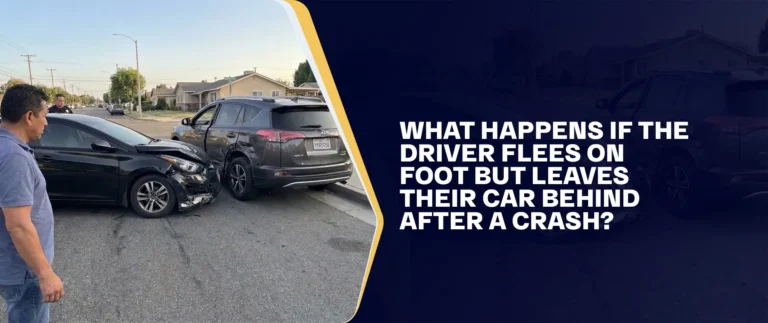
TL;DR: If someone crashes into your parked car while you’re sleeping, you can seek compensation from the responsible driver for vehicle repairs, medical bills, lost wages, and pain and suffering under California law. If the crash caused injury, death, or more than $1,000 in property damage, California law generally requires you to file an SR-1 with the DMV within 10 days.
Highlights:
- Move to safety, call 911, and get checked if you feel pain.
- Photograph damage, debris, skid marks, and surroundings before repairs or towing.
- Collect the other driver’s info, witness contacts, and nearby camera locations.
- Report a hit-and-run to police within 24 hours to protect UM options.
- Give your insurer a sworn hit-and-run statement within 30 days if required.
- File DMV Form SR-1 within 10 days if injury/death or damage over $1,000.
- Save receipts for towing, storage, transportation, repairs, and necessary lodging.
Tip: Write down a timeline while it’s fresh and, when speaking with insurers, stick to what you saw, heard, and documented rather than guessing.
Table of Contents
If another driver crashes into your car while you are sleeping inside, you may have claims for both your injuries and the damage to your vehicle. Being asleep does not automatically make you responsible for the collision.
Fault usually depends on why the driver of the moving vehicle hit your vehicle and whether the place where you parked contributed to the crash. If your car was legally and safely parked, the driver who struck it will typically be held responsible. If your car was stopped in a traffic lane, difficult to see, or parked in a dangerous location, the other side may argue that you share some fault.
You may be able to pursue compensation for medical care, lost income, pain, vehicle damage, and damaged personal belongings. You may also claim towing, storage, transportation, and other reasonable crash-related costs.
What Are Your Legal Rights If Someone Crashes Into Your Car While You Are Sleeping?
A driver must use reasonable care to avoid hitting people, vehicles, and other objects. A driver who crashes into a stationary vehicle because of speeding, distraction, impairment, fatigue, or another careless act may be responsible for the resulting harm.
The driver’s bodily injury liability insurance may cover your injury-related losses. Their property damage liability coverage may pay for damage to your car and other property, up to the available policy limits.
Under California Vehicle Code § 16056, policies issued or renewed on or after January 1, 2025, must carry at least:
- $30,000 for injury or death to one person.
- $60,000 for injury or death to multiple people.
- $15,000 for property damage.
These are minimum limits, not guaranteed payment amounts. Coverage, fault, exclusions, and the claim value still need to be established.
When your vehicle is also your primary place to sleep, a crash may affect both your means of transportation and your shelter. Depending on the evidence, you can claim reasonable costs connected to that disruption. These may include expenses related to temporary transportation, storage of personal belongings, loss of use, and temporary lodging while the vehicle is being repaired or replaced.
Keep receipts and records showing that these expenses were necessary and directly related to the crash.
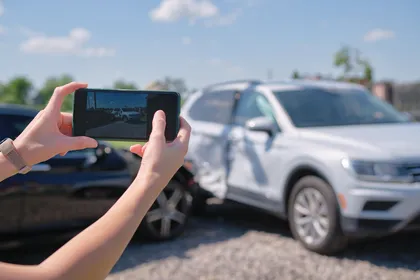
Key Steps To Take Immediately After A Parked Car Crash
Acting fast after someone hits your parked car can protect your claim. Every step you take at the scene builds the evidence your claim depends on. These steps apply whether you were asleep in your car or had stepped away from it.
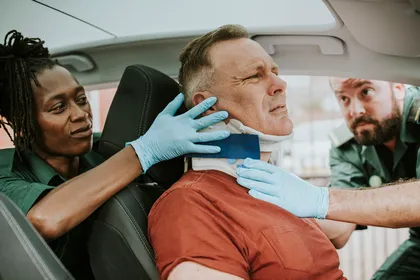
- Call 911 if anyone is hurt. Paramedics can treat injuries and document your condition.
- Move to safety. Take photos before moving the vehicles, if you can do so safely. Capture the damage, vehicle positions, debris, tire marks, signs, and road conditions.
- Exchange information. Get the other driver’s name, contact details, license number, plate number, insurance information, and vehicle details.
- Find witnesses and cameras. Collect witness contact information and look for security cameras, dashcams, traffic cameras, or video doorbells.
- Report the crash. Contact the police or CHP, especially if someone was hurt, the driver fled, or impairment may have played a role.
- Get follow-up medical care. Some injuries may not cause symptoms right away. Follow your treatment plan and save all medical records and bills.
- Notify your insurer. Report the crash promptly and ask about available coverage, including collision, medical payments, rental, and uninsured motorist coverage.
- Preserve evidence. Photograph the vehicle before repairs. Save damaged belongings, estimates, receipts, videos, and crash-related messages.
- Track your losses. Keep records of medical bills, lost income, towing, storage, transportation, repairs, and damaged property.
For an unidentified hit-and-run driver, California Insurance Code § 11580.2(b)(2) generally requires:
- Physical contact with the unidentified vehicle.
- A police report within 24 hours.
- A sworn statement to the insurer within 30 days.
A driver involved in the crash must also file Form SR-1 with the California DMV within 10 days if anyone was injured or killed or if property damage exceeded $1,000. This filing remains separate from the police report and insurance claim.
How Insurance May Apply After Someone Hits Your Parked Car
The available coverage depends on whether the driver stayed, carried insurance, and caused injuries, property damage, or both.
If the driver stayed and had insurance, the driver’s liability coverage may pay for your medical expenses, lost income, vehicle damage, and other covered losses. You must show that the driver caused the crash.
If the driver had no insurance, your uninsured motorist bodily injury coverage may cover injury-related losses. Underinsured motorist coverage may apply if the driver’s insurance does not fully cover those losses.
Your policy may also provide:
- Collision coverage to repair or replace your car, subject to a deductible.
- Medical payments coverage to help pay medical bills, regardless of fault.
- Rental reimbursement coverage to help pay for temporary transportation.
These coverages apply only if your policy includes them.
California Vehicle Code section 20002 applies to property-damage-only crashes. The driver must stop and exchange the required information, or, if the damaged vehicle is unattended, leave the required written notice and notify law enforcement without unnecessary delay.
When a driver leaves the scene without doing these things, it is a hit-and-run. If only property is damaged, the offense is a misdemeanor. If the crash caused injury or death, prosecutors may charge it as either a misdemeanor or a felony, depending on the circumstances.
The insurance coverage that applies depends on whether you suffered property damage, injuries, or both:
- Collision Coverage: Pays to repair or replace your vehicle when the at-fault driver is unknown.
- Uninsured Motorist Property Damage (UMPD): May cover up to $3,500 in vehicle damage when the at-fault uninsured driver is identified, subject to the policy terms.
- Uninsured Motorist (UM) Bodily Injury Coverage: May cover injury-related losses caused by an identified uninsured driver or a qualifying unidentified hit-and-run driver. This is subject to California’s reporting and physical-contact requirements.
A police report creates the official record that many insurers rely on when evaluating a hit-and-run claim. It can help support both your property damage and injury claims.
Whether the driver fled or stayed, you still need to prove the other driver’s negligence caused your injuries, property damage, or both. That burden does not change.
How Do You Prove Fault When You Were Asleep During The Accident?
You do not need to have watched the crash happen to prove your claim. Liability may be established through physical evidence, witness statements, video, electronic data, and the other driver’s admissions.
People may also wonder how often other vehicles hit people sitting in parked cars. Regardless of frequency, strong evidence can help prove fault.
Useful evidence may include:
- Photos of the vehicle positions and parking area.
- Surveillance or dashboard-camera footage.
- Witness statements.
- Tire marks and debris.
- Paint transfer.
- Vehicle damage patterns.
- Event data recorder information.
- Legally obtained phone records.
- Police observations.
- Evidence of impairment or fatigue.
- Repair inspections and accident reconstruction.
To establish negligence, the evidence generally must show:
- Duty: The driver had a duty to use reasonable care.
- Breach: The driver failed to use reasonable care, such as by speeding, driving while distracted, falling asleep, or failing to keep a proper lookout.
- Causation: That conduct caused the collision and your injuries or losses.
- Damages: You suffered measurable harm, such as medical expenses, lost income, pain, vehicle damage, or damaged personal belongings.
California follows a comparative negligence rule. Under this rule, more than one person may share responsibility for an accident. For example, an insurer may argue that your vehicle was parked illegally, stopped in a travel lane, or difficult to see because its lights were off. However, being asleep doesn’t automatically make you responsible. Fault depends on whether your actions contributed to the collision.
If the court assigns you part of the fault, it may reduce your compensation by that percentage. For example, if you suffered $100,000 in damages and the court assigns you 20% of the fault, you could recover $80,000.
A police report may help locate witnesses and preserve the officer’s observations. However, the report is not the final decision on civil liability. Insurers, attorneys, and courts may consider other evidence and reach a different conclusion.
What Compensation Can You Recover For Your Losses?
You may be able to pursue compensation for both financial losses and personal harm caused by the crash. The amount available may depend on your losses, the evidence, and the at-fault driver’s insurance coverage.
Here are some of the damages you can pursue:
- Medical Expenses: You may seek the reasonable value of past and future treatment, including:
- Emergency care.
- Hospital treatment.
- Diagnostic testing.
- Medication.
- Physical therapy.
- Chiropractic treatment.
- Mental health care.
- Future medical procedures.
- Lost Income: You may claim income lost while recovering. A serious or lasting injury may also support a claim for reduced future earning capacity.
- Vehicle Damage: Property damages may include the reasonable cost of repairs or, if the vehicle is a total loss, its covered pre-crash value under the applicable claim.
- Loss of Use & Transportation: You can claim reasonable rental-car costs or other transportation expenses for the time reasonably needed to repair or replace the vehicle.
- Damaged Personal Property: Document clothing, electronics, bedding, work equipment, mobility aids, and other belongings damaged inside the car. Keep photographs, receipts, replacement estimates, and proof of ownership.
- Temporary Lodging: You may seek reasonable temporary lodging expenses if you can show that the vehicle was your primary shelter and that the costs were necessary, foreseeable, documented, and caused by the crash.
- Pain & Suffering: Non-economic damages may compensate for physical pain, emotional distress, anxiety, inconvenience, disability, and loss of enjoyment of life.
Payment is not automatic. The insurer may examine whether the expense was necessary, reasonable, caused by the crash, and supported by records.
How Long Do I Have To Take Action After Someone Hits Me While I Am Sleeping In My Car?
An insurance claim and a lawsuit involve different deadlines. You should report the crash and file an insurance claim promptly. Insurance policies may require timely notice, and special deadlines may apply to uninsured motorist or hit-and-run claims.
A lawsuit has a separate filing deadline. In California, you generally have two years from the crash date to file a personal injury lawsuit. You typically have three years to file a lawsuit for damage to your vehicle or personal belongings.
If a government vehicle, public employee, or dangerous road condition contributed to the crash, you must first submit a government claim within six months. Filing that claim does not start a lawsuit. You can only sue the public entity if it rejects your claim or fails to respond to it within 45 days.
Because insurance and court deadlines differ and exceptions may apply, report the crash promptly and track each deadline separately.
How Can A Lawyer Help After Someone Hits Your Parked Car?
A personal injury lawyer can help, especially if the driver fled, someone disputes fault, or your injuries are serious. They can protect your rights and pursue the compensation available under California law.
A parked car injury accident lawyer can assist you by:
- Investigating the crash and gathering evidence to prove fault.
- Identifying all available insurance coverage.
- Calculating your medical expenses, lost income, property damage, and other losses.
- Handling communication and negotiations with the insurance companies.
- Filing a lawsuit if the insurer refuses to offer fair compensation.
- Making sure you meet California’s legal deadlines.
If legal costs are your main concern, many California personal injury lawyers work on a contingency fee basis. Under this agreement, you generally pay no legal fees unless your lawyer recovers compensation for you.
Frequently Asked Questions
If you have been dealing with the aftermath of someone hitting your parked car, you probably have questions that go beyond the basics. The answers below cover the most common concerns, from how fault works to what happens to your insurance rates.
Can More Than One Party Be Responsible For The Crash?
Yes. More than one person or company may share fault for a parked-car crash. For example, one driver may push another vehicle into your car during a chain-reaction collision. A commercial driver and the driver’s employer may also share responsibility in some cases. A vehicle manufacturer, repair shop, or parts maker may be liable if a defect or faulty repair contributed to the crash.
California’s comparative fault rule allows a court to assign a percentage of responsibility to each party. Identifying every responsible party may help determine which insurance policies and sources of compensation apply.
Can You Recover If You Were Sleeping Without A Seat Belt?
Possibly. A person sleeping in a lawfully parked vehicle is not automatically required to anticipate that another driver will crash into it.
However, the defense may argue that your position or failure to use an available restraint made particular injuries worse. That argument concerns the amount of injury damages and does not necessarily establish that you caused the collision.
Medical and biomechanical evidence may be needed to determine whether the use of restraint would have prevented or reduced the specific injury.
Will Insurance Pay Out If The Driver Who Hit My Parked Car Fell Asleep At The Wheel?
Yes. California law may treat falling asleep behind the wheel as negligence. If the driver’s actions caused the crash, their liability insurance may be responsible for your injuries and property damage. A lawyer can help prove negligence and pursue the compensation available under the driver’s policy.
Does My Auto Insurance Go Up If Someone Hits My Parked Car?
It depends on how you file the claim. California insurers generally may not treat you as principally at fault or apply an at-fault accident surcharge when another driver caused the crash. However, your total premium may still change due to other approved rating factors.
How Long Do I Have To Report A Parked Car Accident In California?
California Vehicle Code § 16000 requires drivers to report certain accidents to the DMV within 10 days by filing an SR-1. This step applies if the crash caused injury, death, or more than $1,000 in property damage. The SR-1 is separate from a police report.
Discuss Your Parked Car Accident With Lawyers At Arash Law
Acting quickly after a parked car accident helps protect your claim. The longer you wait, the harder it may become to preserve evidence and locate witnesses.
You do not have to handle the claims process alone. A lawyer can evaluate your case, identify every liable party, calculate your losses, and negotiate with the insurance company for fair compensation. Arash Law is available to answer your questions and explain your legal options.
Also referred to as AK Law, our firm has previously recovered:
- $2,500,000 for a client who was injured by a speeding driver while they were parked on the side of the road.
- $1,000,000 for a client who was sitting in his truck on the side of the road. He was hit by another driver who fell asleep at the wheel, drifted into traffic, and collided with his truck.
These cases do not involve victims who were injured while sleeping in their car. Additionally, they do not guarantee any specific outcomes for your case. However, they reflect the firm’s experience handling similar traffic accident claims in California.
Call us at (888) 488-1391 for a free case review. You pay no legal fees unless we recover compensation for you.