TL;DR: A lawyer should check who drove, who rented the car, who had permission, and what coverage was in effect on the date of the crash. The rental agreement and written insurance decisions can help answer those questions. Your lawyer should also investigate who caused the crash, document your injuries and losses, review your own UM/UIM coverage, and determine whether the rental company’s conduct contributed to the collision.
An injury lawyer should investigate who drove the rental car, whether the driver had permission, which insurance policies may cover the crash, and whether the rental company contributed to the collision. The lawyer should also establish fault, document injuries and losses, review your uninsured or underinsured motorist coverage, and identify applicable deadlines.
After a crash involving a reportedly uninsured driver in a rental car, an injured person may not know whether another policy covers the collision. A lawyer can investigate the rental records and available insurance to identify potential sources of compensation.
Your own uninsured or underinsured motorist (UM/UIM) coverage may help pay for injuries if you qualify. A lawyer can review that coverage, check the rental records, and track the separate deadlines for your claims.
Key Facts About Uninsured Drivers in Rental Cars
- The rental paperwork helps identify who had permission to drive. California Civil Code § 1939.01(e) recognizes certain drivers even when the contract omits their names.
- Rental companies may provide standard liability protection or self-insurance. Renters may also purchase optional liability insurance through a rental-car agent under California Insurance Code § 1758.85(b). These are separate coverage questions.
- Federal law limits ownership-based liability. The Graves Amendment, 49 U.S.C. § 30106, generally protects qualifying rental companies from liability based solely on owning the vehicle, but not from liability for their own negligence or criminal wrongdoing.
- Your policy may cover injuries caused by an uninsured driver. California Insurance Code § 11580.2 defines which vehicles qualify as uninsured and permits a written waiver of coverage.
- California generally requires that certain steps be taken within two years to preserve a UM claim. Under California Insurance Code § 11580.2(i), a routine report to your insurer alone does not meet that requirement. The same statutory preservation requirement does not apply to UIM claims.
- The rental company’s own negligence may support a separate claim. A lawyer can investigate negligent entrustment or unsafe vehicle conditions, but the company’s ownership of the car or failure to check a renter’s insurance does not automatically establish liability.
Table of Contents

The Driver Who Hit Me Was Reportedly Uninsured and Driving A Rental Car. What Should an Injury Lawyer Investigate?
An injury lawyer should determine who drove and who rented the car, whether the driver had permission, and which insurance coverage applied at the time of the crash. A driver with no personal auto insurance may still have coverage through the rental company or another policy. The investigation should also consider who caused the crash, whether the rental company’s own conduct contributed to it, and your available uninsured or underinsured motorist (UM/UIM) coverage.
The following checklist shows the key records rental car accident lawyers may review and the questions each can help answer.
| What to Check | Records to Review | What the Lawyer Needs to Find Out |
|---|---|---|
| Who was driving | Crash report, witness statements, and information exchanged at the scene | Who was driving the rental car when the crash happened? |
| Who rented the car | Rental agreement, reservation, and pickup receipt | Who rented the car, and were they also driving? |
| Permission to drive | Additional driver forms, driver’s license information, and proof of permission | Was the driver authorized under California law or the rental agreement? |
| Rental terms | Rental agreement, rental dates, extensions, and vehicle changes | Which rental terms applied when the crash happened? |
| Rental company coverage | Rental agreement, liability policy, self-insurance records, and coverage decisions | Did the rental company provide liability protection, and did it cover this driver? |
| Optional rental insurance | Insurance selections and policy documents | Did the renter purchase additional liability insurance that might cover the crash? |
| Other available insurance | Personal auto policies and relevant employer insurance records | Could another insurance policy cover the driver or the trip? |
| Your UM/UIM coverage | Your auto insurance policy, coverage limits, and any signed waiver | Could your own insurance help pay for your injuries? |
| Who caused the crash | Crash report, photographs, witness statements, vehicle damage, and available footage | What caused the collision, and who may be legally responsible? |
| Your injuries and losses | Medical records, treatment bills, wage records, and information about ongoing limitations | What injuries, expenses, and other losses resulted from the crash? |
How to use this checklist:
- Identify what you already have. You may have the crash report, the other driver’s information, or a letter from an insurer.
- See what information is missing. You may not know who rented the car, whether the driver had permission, or whether the rental company provided liability protection.
- Discuss how to obtain the missing records. Give your lawyer the information you have. The lawyer can identify which records to request from the rental company, insurers, or other parties.
You do not need to collect every document or answer every question yourself. The checklist helps organize the investigation and identify details that still need confirmation. A statement that the driver was uninsured does not necessarily establish whether other coverage applies.
Why Check Who Rented the Car and Who Had Permission?
The named renter may be different from the person who drove. A lawyer can compare the police report with the signed contract, additional-driver forms, and pickup records. A change in vehicles or a rental extension can affect which terms apply at the time of the crash.
California Civil Code § 1939.01(e) defines authorized drivers for passenger-vehicle rental transactions covered by Chapter 1.5, generally involving rentals for less than 30 days. These drivers include:
- The renter.
- The renter’s licensed spouse, if the spouse meets the rental company’s minimum age requirement.
- The renter’s employer or coworker, if that person participates in business activities with the renter, holds a valid license, and meets the minimum age requirement.
- Anyone the rental company expressly lists as an authorized driver on the contract.
Being an authorized driver under California law does not automatically establish insurance coverage. The lawyer must also check the applicable policy’s terms and determine whether it covers that person’s use of the vehicle.
Permission under the rental agreement is another important question. An insurance policy may have its own rules for drivers and how they use the car. If an insurer cites a driver restriction, ask for the exact policy language and the facts behind its decision.
What Insurance Could Cover the Rental Driver?
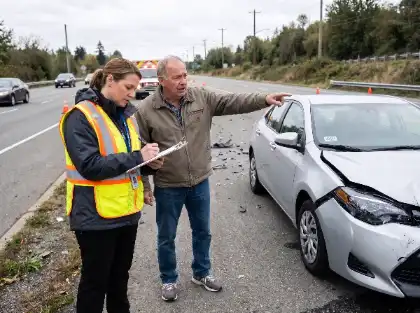 Start with the rental paperwork and any policy in effect on the crash date. The records can show which coverage the renter selected and whether an insurer covered that driver’s use of the car.
Rental Company Liability Protection
Rental agreements may include standard liability protection for certain drivers and uses. A rental company may also meet California’s financial-responsibility requirements through self-insurance. A self-insurance certificate shows how the company meets those requirements. Whether the rental driver has liability protection depends on the rental agreement and any applicable coverage terms.
Optional Rental Liability Insurance
Under California Insurance Code § 1758.85(b), licensed rental-car agents may offer optional liability insurance for renters and other authorized drivers. If purchased, this insurance may cover injuries or property damage the driver negligently causes during the rental period. The policy sets out which drivers and uses qualify and what limits apply.
Personal or Work Insurance
A personal auto policy held by the driver or renter may extend liability coverage to the rental car. The policy determines whether it covers the driver and how the car was used. If the trip was for work, an employer’s commercial auto policy may also apply, depending on whether it covers the employee’s use of a rented vehicle for business.
How Written Coverage Decisions Affect the Claim
A written coverage decision can indicate whether an insurer accepted coverage, denied it, or reserved the right to deny it pending investigation. A denial under one policy can leave coverage available under another. If more than one liability policy applies, California’s insurance-priority rules and the applicable policy terms can determine which insurer pays first.
A California rental car accident lawyer can compare those records and determine which policy may apply first if more than one provides coverage. Any available self-insurance documentation can also help the lawyer assess the rental company’s financial responsibility arrangements.
When Can the Rental Company Be Liable?
The Graves Amendment generally protects rental companies from liability based solely on owning a vehicle involved in a crash. Under 49 U.S.C. § 30106, this protection applies when the owner or its affiliate rents or leases vehicles for business purposes and has not committed any negligence or criminal wrongdoing.
This federal law does not give rental companies blanket immunity. A company may still face a claim if its own negligence contributed to the crash. The law also preserves certain state financial responsibility and insurance requirements.
Car accident lawyers can investigate whether the rental company contributed to the collision through its own actions or failures. Two possible issues include:
- Unsafe Vehicle Conditions: The company may have contributed to the crash if it knew about a dangerous vehicle defect, failed to address it, and rented out the car. For example, records might show that the company knew the brakes were defective. The evidence must connect the defect to the collision.
- Negligent Entrustment: The company may face a separate claim if it rented the vehicle to someone it knew or should have known was unfit to drive. Relevant evidence may include the driver’s license information, rental counter records, and documented warning signs regarding the person’s ability to drive safely. The evidence must also connect the driver’s unfitness to the crash.
A driver’s lack of personal auto insurance does not, by itself, establish that the person was unfit to drive. A rental company’s failure to check the renter’s insurance also does not automatically create liability.
In California, Vehicle Code § 17150 generally makes a vehicle owner responsible for injuries or property damage caused by someone driving the vehicle with the owner’s permission. This is a form of vicarious liability, meaning the owner may be responsible even without personally causing the crash.
However, the federal Graves Amendment limits this rule for qualifying rental companies. In O’Brien v. Midway Rent-A-Car, Inc. (Oct. 29, 2026, No. B342575) (Cal. Ct. App., 2d Dist., Div. 1), the California Court of Appeal held that the Graves Amendment preempted § 17150 when used to hold a rental company responsible solely because it owned the vehicle.
The court also rejected a negligent entrustment claim based solely on the rental company’s failure to verify the renter’s personal automobile insurance. That ruling does not eliminate claims supported by evidence of the rental company’s own negligence, such as renting a vehicle to a driver known to be unfit.
Get Help Reviewing the Rental Records
Call Arash Law at (888) 488-1391 for a free initial consultation about your rental car crash. If you have a crash report number or a letter from an insurer, keep those details handy for the call.
How Could Your Own UM/UIM Coverage Help?
Uninsured motorist coverage may pay for injuries if the driver at fault used a car that qualifies as uninsured under California law. Ask your lawyer to review the full policy, its limits, and any signed waiver or agreement that may reduce those limits. California generally excludes certain self-insured vehicles from its definition of an uninsured motor vehicle, making the rental company’s insurance arrangements important.
Underinsured motorist coverage may apply if the other vehicle’s liability limits are lower than your applicable UM/UIM limits. Before UIM coverage applies, the applicable bodily injury liability limits must be paid through settlements or judgments, and you must submit proof of payment to your UIM insurer. The statutory written-consent rule applies to UM claims. California’s Supreme Court held that it does not apply to UIM claims.
What Deadlines Should You Track While Insurers Review Coverage?
In California, you generally have two years from the date of injury to sue a private party for personal injury under Code of Civil Procedure § 335.1.
If you also seek compensation for damage to your vehicle or other personal property, California generally allows three years to file a property damage lawsuit under Code of Civil Procedure § 338.
A UM claim has a separate deadline. Under California Insurance Code § 11580.2(i), you generally must take one of these steps within two years of the accident:
- File a bodily injury lawsuit against the uninsured motorist.
- Agree with your insurer on the amount payable under the UM policy.
- Start arbitration by sending written notice to your insurer or its designated agent by certified mail, return receipt requested.
Simply reporting the crash to your insurer does not preserve your UM claim. If you have made a UM claim and it is still pending, your insurer generally must give you written notice of the deadline at least 30 days before it expires, unless it has already received notice that you have an attorney (Insurance Code § 11580.2(k)).
Limited exceptions may apply if a court finds estoppel, waiver, impossibility, impracticality, or futility. UIM claims do not have the same statutory two-year UM preservation deadline, but policy requirements and other limitation periods still apply.
If a government entity may be responsible, you generally must present a claim within six months under Government Code § 911.2. A written rejection generally gives you six months from the date of delivery or mailing to file a lawsuit under § 945.6(a)(1).
Missing an applicable lawsuit or government claim deadline may bar that claim entirely. Evidence-preservation concerns are different: delaying the collection of rental records, photographs, witness information, or surveillance footage may weaken the proof available to support your case. These records should be requested promptly, even when the legal filing deadline is months or years away.
FAQs About Uninsured Drivers in California Rental Cars
Can Someone Drive with Permission if the Contract Leaves Their Name Off?
Yes. California Civil Code § 1939.01(e) recognizes certain drivers even when the rental agreement does not list them individually. These include the renter’s licensed spouse who meets the rental company’s minimum age requirement and a qualifying employer or coworker who is engaged in business with the renter. The lawyer should still check whether the applicable insurance policy covered that person’s use of the vehicle.
Can I Sue the Rental Company for Skipping an Insurance Check?
Skipping an insurance check alone does not make the rental company liable for handing over the keys. In O’Brien v. Midway Rent-A-Car, Inc. (2026), the California Court of Appeal found no general duty to verify whether the renter had personal automobile insurance.
A different claim may turn on whether the company knew or should have known the driver was unfit to drive, or whether its own negligence contributed to the collision.
Does a Rental Damage Waiver Cover My Injuries?
No. A rental damage waiver generally addresses damage to or loss of the rented vehicle. It does not automatically provide bodily injury liability coverage for people injured in a collision. For your injury claim, the relevant records are any liability policy or protection that covers harm to other people.
What if the Rental Insurer Denies Coverage?
Get the denial in writing so your lawyer can review the insurer’s reasoning and determine whether your UM coverage may apply. Under California Insurance Code § 11580.2, a vehicle may qualify as uninsured when the applicable liability insurer denies coverage or refuses to admit coverage except conditionally or with a reservation of rights. Other available insurance and applicable statutory exclusions must also be considered.
Talk with Arash Law About a Rental Car Crash
You may hear that the other driver had no insurance before anyone has reviewed the rental paperwork. Our rental car accident lawyers can review who drove the car, who rented it, and what the agreement says about permission and liability protection. We can also review any written coverage decisions and check whether your own auto policy may help cover your injuries.
Have the crash report number, rental company name, and any letters from insurers handy if you have them. If you’re still waiting on records, share what you know. We can discuss which documents could answer your coverage questions and which deadlines to check while the insurance review is pending.
Call (888) 488-1391 for a free initial consultation with Arash Law. Tell us what happened, how the crash has affected you, and what you’ve heard about the other driver’s insurance. We can talk through your options and the next steps for your situation.
Sources
- Graves Amendment, 49 U.S.C. § 30106, on rental-company liability and the preservation of state financial-responsibility laws. https://uscode.house.gov/us/usc/t49/s30106/
- California Civil Code § 1939.01(e) defines authorized drivers of rental vehicles. https://leginfo.legislature.ca.gov/faces/codes_displaySection.xhtml?sectionNum=1939.01.&lawCode=CIV
- California Insurance Code § 1758.85(b), on optional rental-car liability insurance and uninsured motorist coverage. https://leginfo.legislature.ca.gov/faces/codes_displaySection.xhtml?sectionNum=1758.85.&lawCode=INS
- California Vehicle Code § 17150, on vehicle-owner liability for negligent or wrongful acts committed by permitted drivers. https://leginfo.legislature.ca.gov/faces/codes_displaySection.xhtml?sectionNum=17150.&lawCode=VEH
- California Vehicle Code § 16020, on vehicle-owner and driver financial-responsibility requirements. https://leginfo.legislature.ca.gov/faces/codes_displaySection.xhtml?sectionNum=16020.&lawCode=VEH
- California Vehicle Code § 16021, on acceptable methods of establishing financial responsibility. https://leginfo.legislature.ca.gov/faces/codes_displaySection.xhtml?sectionNum=16021.&lawCode=VEH
- California Vehicle Code § 16052, on self-insurance certificates. https://leginfo.legislature.ca.gov/faces/codes_displaySection.xhtml?sectionNum=16052.&lawCode=VEH
- California Insurance Code § 11580.2, on uninsured and underinsured motorist coverage, coverage requirements, and UM claim-preservation deadlines. https://leginfo.legislature.ca.gov/faces/codes_displaySection.xhtml?sectionNum=11580.2.&lawCode=INS
- California Code of Civil Procedure § 335.1, on the two-year personal injury lawsuit limitation period. https://leginfo.legislature.ca.gov/faces/codes_displaySection.xhtml?sectionNum=335.1.&lawCode=CCP
- Judicial Council of California, Civil Jury Instructions (CACI) Nos. 400 and 724 (2026), on negligence and negligent entrustment of a motor vehicle. https://courts.ca.gov/system/files/file/judicial_council_of_california_civil_jury_instructions_2026.pdf
- O’Brien v. Midway Rent-A-Car, Inc. (Oct. 29, 2026, B342575) (published opinion), California Court of Appeal, Second Appellate District, Division One, on Graves Amendment preemption and rental-company negligent entrustment. https://courts.ca.gov/opinion/published/2026-10-29/b342575
- California Courts, Statutes of Limitations, on personal injury and property damage lawsuit deadlines. https://selfhelp.courts.ca.gov/civil-lawsuit/statute-limitations
Disclaimer
This article provides general information for educational purposes. Reading it does not create an attorney-client relationship. Consult a licensed California attorney about your situation. Past results do not guarantee a similar outcome. Arash Law — (888) 488-1391