TL;DR: A lawyer can still get involved after your counteroffer and take over an unresolved claim. They can handle negotiations, collect evidence, address disputes, and file a lawsuit when appropriate. Your earlier communications remain part of the claim. Any binding settlement may limit further action. Bring your negotiation timeline and confirm when representation begins.
Yes, a lawyer can still get involved after you’ve made a counteroffer. Negotiating on your own doesn’t mean you can’t get legal help. A lawyer can review the insurer’s offer, your counteroffer, and everything that came after it to figure out where your claim stands.
However, making a counteroffer and signing a settlement agreement are not the same step. Whether your exchange created a binding settlement depends on what both sides communicated and agreed to, not only on whether anyone signed a document.
Get in touch with a lawyer, ideally before insurers reply. Bring the complete exchange, including attachments and any payment or release documents. That way, they can give you a more accurate review of your case.
Key Facts About Lawyer Involvement After a Counteroffer
- A counteroffer is generally a new proposal, not a completed settlement. California Civil Code § 1585 treats a qualified acceptance as a new proposal that requires acceptance.
- An insurer’s acceptance may create a binding settlement. The agreed terms, communications, and the parties’ intent help determine whether an agreement exists.
- An unsigned agreement can still be binding. CACI No. 306 recognizes agreements made before the parties sign a final writing, as long as they agreed to the terms and intended to be bound.
- You retain authority over your settlement decision. California Rule of Professional Conduct 1.2(a) requires your lawyer to follow your decision about whether to settle.
- Hiring a lawyer does not pause lawsuit deadlines. California generally allows two years to file a personal injury lawsuit under Code of Civil Procedure § 335.1. Claims against government entities have additional deadlines.
Table of Contents

I Rejected an Insurance Offer and Asked for a Different Amount, But I’m Not Sure If That Binds Me. Can a Lawyer Review What I’ve Already Negotiated?
Yes. A lawyer can review the insurer’s offer, your counteroffer, and any replies to see whether you reached a binding settlement. Making a counteroffer alone doesn’t settle your claim. If the insurer accepted your terms, you may have reached a binding agreement even without signing a release. Your lawyer can check whether both sides agreed on the key terms and whether a signature was required to finalize the deal.
What Your Counteroffer Did
Under California Civil Code § 1585, a qualified acceptance is a new proposal rather than an acceptance of the original offer. So a true counteroffer generally rejects the insurer’s original offer, and the insurer need not keep that offer open.
Your counteroffer may expire at its stated deadline or after a reasonable time if it has no deadline. You can generally withdraw it by notifying the insurer before it communicates its acceptance. If the insurer accepts all the terms while the counteroffer is still open, you may have reached a settlement. Tell your lawyer if you’re still waiting for a response.
A request for clarification does not necessarily carry the same meaning as a counteroffer. Give your lawyer the complete exchange so they can identify what each response actually did.
How Offer, Counteroffer, Acceptance, Payment, and Release Differ
A lawyer looks at each negotiation event separately to determine what happened and whether the parties reached an agreement. The table below shows the information your lawyer needs to review.
| Event | Meaning | Information to Give Your Lawyer |
|---|---|---|
| Offer | One side proposes settlement terms. | Amount offered, covered claims, conditions, and response deadline. |
| Counteroffer | The recipient proposes different terms. | Exact changes, complete message, and whether a reply remains pending. |
| Acceptance | A party agrees to the proposed terms as stated. A response that changes the terms may constitute a new proposal. | Exact wording, timing, method, and any stated conditions. |
| Payment | The insurer sends money toward a claimed loss or settlement. | Payment notice, check language, losses covered, and what you did with the funds. |
| Release | A document that identifies the claims and parties the claimant agrees to release. | Every version, signature record, and accompanying message. |
Why a Missing Signature Doesn’t Settle the Question
An unsigned document does not automatically rule out an agreement. California Civil Jury Instruction (CACI) No. 306 recognizes that an agreement can become binding before the parties sign a final writing. The parties must have understood and agreed to its terms and intended to be bound before completing the written agreement.
A lawyer must examine the communications, agreed terms, and surrounding circumstances. The absence of a signed release does not automatically mean negotiations remain open.
Electronic communications can also raise questions about whether the parties agreed to conduct the transaction electronically. California Civil Code §§ 1633.5 and 1633.7 address electronic transactions and signatures. Counsel can review the signing process, communications, and intent rather than assume that an email, text, or electronic signature settles the question.
How Payments and Releases Affect Your Claim
A payment does not necessarily settle every part of an injury claim. For example, car accident lawyers often see insurers pay vehicle repair costs separately from a bodily injury claim. A vehicle repair payment does not automatically establish that the parties settled the injury claim.
However, accepting and depositing a check offered to satisfy a disputed claim can raise accord-and-satisfaction issues under California Commercial Code § 3311. Have counsel review the check’s language and accompanying communications before accepting or depositing it.
Release language also matters. Some releases include a waiver under California Civil Code § 1542, which concerns claims the claimant does not know or suspect to exist at the time of signing. Your lawyer can explain which claims the release covers and how its terms affect your remaining rights.
Bring every payment notice, check, release, and related message. Let your lawyer know whether you signed a document, deposited a check, or took another action involving the proposed settlement.
What If the Insurance Company Says You Already Settled?
A lawyer can still review your options if the insurer claims that you already settled. Counsel can examine the communications, agreed terms, payment records, and release documents to assess whether a binding agreement exists.
An existing agreement may limit further negotiations or other action involving the claims it covers. Hiring a lawyer does not automatically cancel a settlement, and counsel should explain any restrictions before proposing additional work.
Provide any recordings, voicemails, call notes, and follow-up messages so your lawyer can evaluate what both sides actually communicated.
What Can a Lawyer Do After Your Counteroffer?
A lawyer can take over an unresolved claim and handle the work that remains after your counteroffer. That work can include insurer communications, evidence gathering, settlement negotiations, and appropriate court proceedings.
- Taking Over Communications With the Adjuster: Your lawyer can notify the insurer of the representation and handle further settlement communications. Counsel can respond to pending requests, seek clarification on an offer, and discuss the insurer’s response to your counteroffer. The existing claim file provides a starting point. Handling the claim yourself early on doesn’t mean you’ll have to keep fielding every call or message once your lawyer takes over.
- Supporting Further Negotiations With Evidence: A lawyer can gather evidence supporting your injuries, losses, and the other party’s responsibility. Medical records, wage information, accident reports, photographs, and witness statements may help address questions that arose during your negotiations. Counsel can use that evidence to evaluate whether the insurer’s earlier offer adequately accounts for your injuries and losses. Additional documentation may support a revised demand or help address the insurer’s objections.
- Advising You About Offers and Settlement Terms: Your lawyer can explain what a new offer covers and how its terms would affect your claim. Counsel can also discuss attorney fees, case costs, and other deductions that could affect the amount you receive. That advice helps you evaluate the proposal before deciding whether to accept it. Representation does not guarantee a larger offer, but it provides legal assistance in making the decision.
- Pursuing a Lawsuit When Appropriate: A lawyer can continue settlement negotiations without immediately filing a lawsuit. If negotiations do not resolve the claim, counsel can evaluate litigation, applicable deadlines, and whether filing a lawsuit is appropriate. Confirm whether your representation agreement includes court proceedings.
Hiring a lawyer after negotiating on your own does not necessarily mean you have waited too long to get legal help. However, applicable filing deadlines, previous settlement communications, and any existing agreement can affect your options. When it may be too late to hire a car accident lawyer depends on these circumstances and the status of your claim.
How Do You Switch From Negotiating Yourself to Having a Lawyer?
You switch by hiring a lawyer, transferring the claim records, and confirming who will handle future communications. Do not assume a consultation alone means the firm has accepted responsibility for your claim.
- Explain the claim’s current status. Identify the insurer, claim number, most recent offer, your counteroffer, and any pending response deadline.
- Confirm the representation. Clarify which claims the lawyer will handle, when the work begins, and how fees and case costs will work.
- Transfer the negotiation file. Provide complete communications, attachments, supporting evidence, and any payment or release documents.
- Arrange the communication handoff. Confirm that counsel will notify the insurer and identify who will answer pending requests.
- Forward later contacts to counsel. Send new messages and documents to your legal team and ask how to handle any direct contact with the insurer.
Who Decides Whether to Accept an Offer After a Lawyer Gets Involved?
You keep the authority to decide whether to accept a settlement during representation. Your lawyer explains proposals, communicates offers, and advises you on your options.
California’s lawyer-client relationship rules address settlement authority and communication duties. That means you can get help with negotiations and still keep control over the settlement decision.
What Helps a Lawyer Take Over Existing Negotiations?
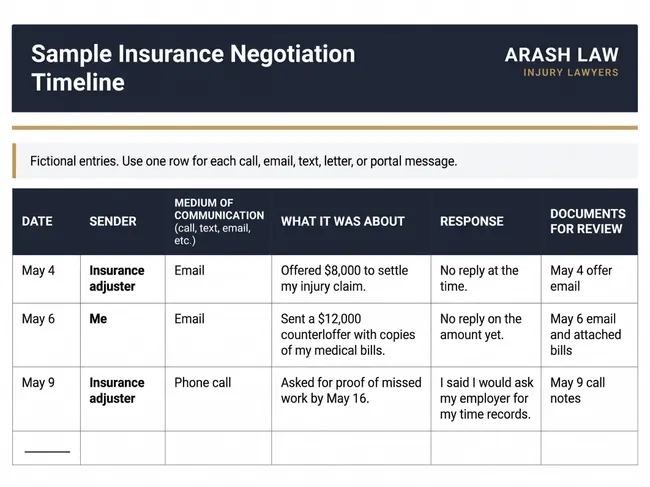
A timeline helps your lawyer see what you and the insurer have offered, how each side replied, and what still needs a response. Record each communication in chronological order and save the accompanying message or document.
Use the attached PDF to create an insurance negotiation timeline for your lawyer. Use one row for each call, email, text, letter, or portal message. If you receive a payment, record it and save the check or payment notice. Include the amounts discussed, any deadline, and what the sender asked you to do.
If you’re unsure of a date or the exact words someone used, say so. If a document is missing, indicate who may have a copy.
See sample entries on how to fill it out.
Which Supporting Records Should Accompany the Timeline?
Bring the complete negotiation file, along with records explaining the injury claim and the amount you requested. These materials help counsel assess both the communications and the support for your proposal.
Include full message threads, attachments, claim numbers, adjuster contact information, policy documents, and any electronic signature confirmation. Add medical bills, treatment records, wage information, and the calculation behind your counteroffer.
Keep the original files, and when you save screenshots, include the surrounding messages. Share sensitive records through the firm’s designated intake process rather than posting them publicly.
Have Arash Law Help With the Next Stage of Your Claim
If you have already negotiated with the insurance company, our personal injury lawyers can review your communications, assess the status of your claim, and discuss how they will handle it once representation starts. Call (888) 488-1391 to request a free initial consultation.
Tell our team what the insurer last communicated and whether a response is pending. Our attorneys can explain the work they could handle and what records they need to begin.
How Can a Lawyer Handle Deadlines While Negotiations Continue?
A lawyer can identify applicable deadlines, take responsibility for agreed-upon filings, and handle ongoing negotiations. Confirm that responsibility when representation begins, especially if a response or filing date is approaching.
The California Courts’ personal injury guidance identifies a standard two-year lawsuit deadline, but claims against public entities have additional requirements. You generally must present an injury claim to the public entity within six months from when the claim arises, before you can sue. A legally sufficient written rejection generally starts a separate six-month deadline to file suit. If the public entity does not provide the required written notice, a different deadline may apply.
Ordinary settlement negotiations do not automatically extend the lawsuit deadline. Give counsel every notice so the lawyer can distinguish an insurer’s requested response date from a legal filing deadline.
Frequently Asked Questions About Lawyer Involvement After a Counteroffer
Can I Hire a Lawyer While Waiting for the Insurer’s Response?
Yes, you can hire a lawyer while your counteroffer remains pending. Once the firm accepts the representation, counsel can handle the insurer’s response within the agreed scope.
Give the lawyer the date you sent the counteroffer and any stated response deadline. Forward later messages so the firm can work from the current exchange.
Do I Have to Start My Insurance Claim Over?
No, hiring a lawyer does not ordinarily require restarting an existing insurance claim. Your lawyer can use the claim number and available records to pick up the unresolved matter where it left off.
Your prior statements, documents, and negotiations remain part of the claim’s history. The lawyer may request additional records or present a new supported demand as the claim requires.
Does Hiring a Lawyer Mean I Must File a Lawsuit?
No, hiring a lawyer does not require you to file a lawsuit. Counsel can represent you in settlement negotiations and explain whether court proceedings make sense.
Confirm whether the proposed representation includes litigation if negotiations fail. Discuss potential case costs and deadlines before deciding how to proceed.
Can a Lawyer Undo a Settlement I Accepted Over the Phone?
Possibly, but only if the facts and applicable law provide grounds to challenge the agreement. Hiring a lawyer does not automatically cancel an oral settlement.
Provide existing recordings, voicemails, notes, and follow-up messages. Counsel must determine whether the parties formed a binding agreement before advising you about further action.
Does an Electronic Signature Count?
Yes, an electronic signature can satisfy a signature requirement when California’s electronic transaction rules apply. However, an electronic signature alone does not establish that every settlement term was agreed upon. A lawyer can review the signed document, related communications, and the parties’ intent.
Will Hiring a Lawyer Increase the Insurer’s Offer?
Not necessarily. Hiring a lawyer does not guarantee a higher offer or additional compensation. The outcome depends on the evidence, available coverage, legal issues, and any existing agreement.
Ask how attorney fees and case costs would affect your potential net recovery. That discussion can help you decide whether the proposed representation fits the remaining claim.
Get Help From Arash Law After Your Insurance Counteroffer
Arash Law’s attorneys can still get involved after you make a counteroffer to the insurance company. We can discuss taking over communications, gathering supporting evidence, and continuing negotiations on your unresolved injury claim. Call (888) 488-1391 to request a free initial consultation.
Tell our team what you and the insurer communicated and what response, if any, remains pending. Bring your offer, counteroffer, complete messages, and any payment or release documents. Your negotiation timeline can help our attorneys identify what has happened and what work remains to be done.
Our attorneys can explain the proposed representation, who would handle future insurer contact, and how fees and case costs would work.
Sources
- Judicial Council of California, CACI 306 — Agreements before formal signing. https://courts.ca.gov/system/files/file/judicial_council_of_california_civil_jury_instructions_2026.pdf
- Civil Code § 1585 — Qualified acceptance and new proposals. https://leginfo.legislature.ca.gov/faces/codes_displaySection.xhtml?sectionNum=1585.&lawCode=CIV
- Civil Code § 1633.5 — Consent to electronic transactions. https://leginfo.legislature.ca.gov/faces/codes_displaySection.xhtml?sectionNum=1633.5.&lawCode=CIV
- Civil Code § 1633.7 — Electronic records and signatures. https://leginfo.legislature.ca.gov/faces/codes_displaySection.xhtml?sectionNum=1633.7.&lawCode=CIV
- Civil Code § 1542 — Releases and unknown claims. https://leginfo.legislature.ca.gov/faces/codes_displaySection.xhtml?sectionNum=1542.&lawCode=CIV
- State Bar of California, Rules 1.2, 1.4, and 1.4.1 — Settlement authority and communication duties. https://www.calbar.ca.gov/legal-professionals/rules/rules-professional-conduct/current-rules-professional-conduct
- California Courts, Personal Injury Cases — Lawsuit deadlines and claim basics. https://www.selfhelp.courts.ca.gov/civil-lawsuit/personal-injury
- California Commercial Code § 3311 — Accord and satisfaction by use of an instrument. https://leginfo.legislature.ca.gov/faces/codes_displaySection.xhtml?sectionNum=3311.&lawCode=COM
- California Government Code § 911.2 — Presentation deadline for claims against public entities. https://leginfo.legislature.ca.gov/faces/codes_displaySection.xhtml?sectionNum=911.2.&lawCode=GOV
- California Government Code § 945.6 — Time limits for filing lawsuits after government claim procedures. https://leginfo.legislature.ca.gov/faces/codes_displaySection.xhtml?sectionNum=945.6.&lawCode=GOV
- California Code of Civil Procedure § 335.1 — Two-year personal injury statute of limitations. https://leginfo.legislature.ca.gov/faces/codes_displaySection.xhtml?sectionNum=335.1.&lawCode=CCP
- Civil Code § 1586 — Revocation before acceptance: https://leginfo.legislature.ca.gov/faces/codes_displaySection.xhtml?sectionNum=1586.&lawCode=CIV
- Civil Code § 1587 — Circumstances terminating a proposal: https://leginfo.legislature.ca.gov/faces/codes_displaySection.xhtml?sectionNum=1587.&lawCode=CIV
Disclaimer
This article provides general educational information, not legal advice about a particular negotiation or settlement. Contacting Arash Law does not by itself create an attorney-client relationship. Consult a licensed California attorney about your communications, documents, and deadlines. Past results do not guarantee future outcomes. Any contingency fee agreement should explain legal fees and responsibility for case costs. Arash Law — (888) 488-1391.