TL;DR: Start with a California workers’ comp lawyer to review your benefits. Ask a personal injury lawyer to check for a separate claim if the driver negligently caused your injury with the owner’s permission, or if another business may be legally responsible. California generally limits suits for covered injuries against a coworker who shares an employer and acts within the scope of their job duties.
A California workers’ compensation lawyer should review your injury first. If the vehicle owner or another business may be legally responsible, ask a personal injury lawyer who handles vehicle claims to review that part.
Your workers’ comp lawyer can check whether the injury qualifies for medical care and disability payments. Bring any pay records or work messages you have, especially if another business paid you or you received cash.
Your personal injury lawyer can investigate who owned the car, who authorized the move, and whether an auto or business policy covers the incident. That review can start while your workers’ comp claim is open.
Table of Contents

A Coworker Moved a Customer’s Car and Injured Me at Work. Which Lawyer Should Review Workers’ Comp and Possible Third-Party Issues?
Start with finding a California workers’ compensation lawyer. If someone outside your employer may be legally responsible, a personal injury lawyer with workplace vehicle accident experience can review a possible third-party claim.
For the consultation, gather any records you have about your job and how the car was moved.
- For the workers’ compensation lawyer: Bring your pay records, job description, and any incident report or workers’ comp paperwork. Note who hired you, who supervised you, and what you were doing when you were injured.
- For the personal injury lawyer: Bring any work order, key log, or messages about moving the car. Note who owned it, who authorized the move, and whether moving cars was part of your coworker’s job.
A coworker is not automatically a third party simply because they caused the injury. California generally restricts civil claims against a coworker who shares an employer and acts within the scope of their employment when the injury is covered by workers’ compensation, subject to statutory exceptions.
Key Facts About Workers’ Comp and Third-Party Claims After a Coworker Moves a Customer’s Car
- Workers’ compensation may cover injuries involving a customer’s car. California Labor Code § 3600 generally requires that an injury arise out of and occur in the course of employment and meet other eligibility conditions.
- Your actual employment relationship helps determine workers’ compensation eligibility. Labor Code § 3351 recognizes oral and implied hiring agreements. Unusual payroll arrangements do not automatically eliminate benefits.
- California generally protects a coworker from civil suits for covered work injuries. Labor Code § 3601 generally applies when both workers share an employer, and the coworker acts within the scope of employment, subject to statutory exceptions.
- An outside vehicle owner may face a separate civil claim. California Vehicle Code (CVC) § 17150 may impose liability when a driver’s negligent operation causes injury, and the owner gave express or implied permission.
- Auto insurance policies may exclude certain drivers or claims. Insurance Code § 11580.1 permits certain coverage exclusions involving injuries to fellow employees and vehicles used in automobile-related businesses. Coverage depends on the policy and circumstances.
Who Was Involved When Your Coworker Moved the Customer’s Car?
Use this table to organize what you know about the people, car, and insurance involved in the incident. If you’re unsure who gave permission or which policy applies, flag what’s not yet confirmed so a lawyer can follow up.
| Person or Business | Job or Role | Connection to the Car | Insurance Question | What to Gather |
|---|---|---|---|---|
| You |
What were you doing when you were injured? Who hired, paid, and supervised you? |
Where were you when the car moved? | Who handles your workers’ comp claim? | Pay records, incident report, and any workers’ comp paperwork. |
| Coworker Who Moved the Car |
Did you work for the same employer? Was moving cars part of their job? |
Who asked them to move the car?
Who gave them the keys? |
Does any auto or business policy cover the coworker for this incident? | Witness names, work orders, and messages about moving the car. |
| Employer or Worksite Business |
Which business assigned the work? Did another company provide or supervise either worker? |
Why was the car there? Who was in charge of moving it? |
Which business carries workers’ comp insurance? Is there a business policy that covers incidents involving customers’ cars? |
Employer names, staffing paperwork, and any insurance letters. |
| Customer or Vehicle Owner | Who dropped off the car, and who owned it? | Did the owner give anyone permission to move it?
Were there any limits? |
Which insurer covered the car? Has it accepted or denied coverage for the incident? |
Vehicle details, drop-off paperwork, and any insurer’s letters. |
Bring the table to your consultation. Ask the workers’ compensation lawyer to review who employed you and who handles your benefits. Ask the personal injury lawyer to review vehicle ownership, permission to move the car, and any insurance that could apply to a separate claim.
Does Unusual Payroll Change Workers’ Comp Eligibility?
Unusual payroll arrangements do not automatically disqualify you from workers’ compensation benefits. You may still qualify if you received cash, a check from another business, or a Form 1099. California recognizes oral and implied hiring agreements under Labor Code § 3351. Your actual employment relationship, not just how you were paid, helps determine eligibility.
A work injury lawyer can review bank records, pay messages, shift schedules, and instructions from supervisors to identify who employed and supervised you. If a staffing agency placed you, assignment paperwork may also help clarify your employment relationship.
If your employer classified you as an independent contractor, a lawyer can examine whether that classification matches your actual working relationship. Knowing what happens if you get hurt as an independent contractor can also help you identify questions about workers’ compensation eligibility.
The California Labor Commissioner’s guidance on worker classification explains how the facts of the working relationship affect which legal test applies.
When Can You Bring a Separate Third-Party Civil Claim?
 If someone outside your employment relationship is legally responsible for your workplace injury, you may be able to pursue a separate civil claim against them. For a covered job injury, workers’ comp is generally your exclusive remedy against your employer (Labor Code § 3602). However, California preserves your right to seek compensation from other legally responsible parties (Labor Code § 3852).
Can You Sue the Coworker Who Moved the Car?
If you and the coworker share an employer and the coworker was acting within the scope of their job, California law generally prevents you from suing them for a covered workplace injury, subject to statutory exceptions (Labor Code § 3601). A lawyer can check whether you and the driver had different employers or the driver acted outside the scope of their employment. Either circumstance could open the door to a civil claim.
You may have a civil claim against the coworker if their intoxication, or a willful and unprovoked physical act of aggression, proximately caused your injury (Labor Code § 3601). Ordinary carelessness while moving a vehicle does not, by itself, meet either exception.
Can You Hold the Customer or Vehicle Owner Responsible?
The vehicle owner may be responsible if they gave your coworker express or implied permission to move the car and your coworker’s careless driving injured you. A service order and a key handoff can help show who gave permission and what it covered.
You may still have a claim against the owner even if workers’ comp rules bar you from suing your coworker. A lawyer can check whether the customer owned the car, had authority to let someone move it, or did something careless that contributed to your injury.
If you’re unsure whether moving the car was part of your coworker’s job, an injury lawyer can investigate when a driver may have been working.
California Vehicle Code § 17151 generally caps the owner’s liability at $15,000 per injured person per accident when it rests solely on giving the driver permission. The cap does not apply to liability for the owner’s own negligence.
Can You Pursue a Claim Against a Separate Business at the Worksite?
If an outside valet, service company, or other business contributed to your injury through its negligence, you may be able to bring a civil claim against it, as long as workers’ compensation exclusivity does not bar the claim (Labor Code §§ 3602 and 3852). For example, a business may be responsible for your injuries if its employee negligently operated a customer’s vehicle while performing company duties.
A work injury lawyer can review service contracts, shift assignments, and supervision records to determine who employed the driver and who controlled the work. That helps identify every business that may owe you compensation.
Unsure whether your injury claim involves workers’ comp or an injury claim against another party? Call Arash Law at (888) 488-1391 for a free case review.
We can help you identify which claims you may pursue and which records to gather.
Which Insurance Policies Should a Work Injury Lawyer Review?
A work injury lawyer should be able to review the workers’ compensation policy, the vehicle owner’s auto policy, and any applicable business auto or garage liability coverage. These policies may provide different benefits or liability coverage after a coworker moves a customer’s car and causes an injury.
Counsel may examine the following:
- Workers’ Compensation Coverage: They verify the employer’s legal name, coverage on the injury date, and any letters accepting or denying the claim.
- The Owner’s Auto Policy: They review the policy’s permission requirements and any limits or exclusions that affect the driver, owner, or business.
- Business Auto or Garage Liability Coverage: They determine whether a workplace or outside company had coverage for moving customer vehicles.
A vehicle’s auto policy may exclude coverage for certain permissive users. For example, California law permits certain exclusions involving fellow-employee injuries and people using vehicles in connection with automobile-related businesses (California Insurance Code § 11580.1).
If the coworker was not listed on the customer’s auto policy, a lawyer can examine whether the policy still covers injuries when the driver wasn’t listed on the insurance. Coverage depends on the policy terms, applicable exclusions, and circumstances of the vehicle’s use.
These exclusions do not automatically eliminate coverage under every applicable policy. Counsel can review the complete policies, endorsements, and insurer correspondence to assess which coverage may apply to the incident.
What Should You Document and Which Deadlines Apply?
Save records that show who authorized the move, who employed you, how you were hurt, and how insurers responded. Report the injury promptly, usually within 30 days, and track workers’ comp and any third-party lawsuit deadlines separately.
Counsel may review the following:
- Workplace Incident Records: Incident reports, work orders, key logs, security footage, and witness accounts can help establish how the car moved and who was involved.
- Employment Records: Pay records, shift schedules, and work messages can help identify who employed and supervised you.
- Medical Records: Treatment records, medical bills, and work restrictions can help document your injuries, related expenses, and time away from work.
- Insurance Documents: Workers’ compensation claim forms, claim numbers, and insurer correspondence can help establish your claim status and any coverage disputes.
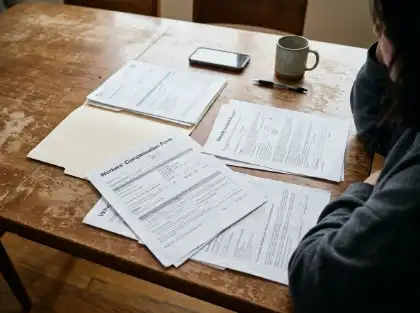
After gathering these records, pay attention to the separate deadlines for workers’ compensation and civil claims. Report your injury promptly and request a workers’ compensation claim form (DWC 1).
Under Labor Code § 5401, your employer must generally provide or mail the form within one working day after learning of an injury that causes lost work time beyond your shift or requires medical care beyond first aid. Complete and return your part, and keep a dated copy.
The following deadlines may apply:
- Notice to Your Employer: Generally, provide written notice within 30 days of the injury. Your employer’s knowledge of the injury may affect this requirement (California Labor Code §§ 5400 and 5402).
- Workers’ Compensation Proceedings: Generally, you have one year from specified statutory events, including the injury date, expiration of a period covered by qualifying disability payments, or the last furnishing of qualifying medical or other benefits (California Labor Code § 5405).
- Civil Lawsuit Against a Private Third Party: Generally, you have two years from the injury to file a lawsuit, subject to applicable exceptions. This deadline should be tracked separately while your workers’ compensation claim is open (California Code of Civil Procedure § 335.1).
Frequently Asked Questions About California Workplace Injuries Involving Customer Vehicles
What if I Already Filed for Workers’ Comp?
Filing for workers’ compensation does not prevent you from pursuing a separate claim against a legally responsible third party. If a coworker injured you while moving a customer’s car, a lawyer can review whether the vehicle owner or another business may be liable. Workers’ compensation generally remains the exclusive remedy against your employer for a covered injury, subject to statutory exceptions.
Can a Customer’s Insurer Deny Coverage Even if the Owner Gave Permission?
Yes, a customer’s auto insurer may deny coverage even if the vehicle owner permitted the coworker to move the car. Certain policy exclusions may apply based on the driver’s employment relationship, the vehicle’s business use, or the circumstances of the injury.
A lawyer can review the denial letter, complete auto policy, and any applicable business auto or garage liability coverage to assess whether the denial is supported.
What if My Employer Had No Workers’ Comp Insurance?
If your employer did not carry legally required workers’ compensation insurance, you may still have options to seek benefits or pursue a civil lawsuit against the employer.
A lawyer can assess your eligibility for benefits through the Uninsured Employers Benefits Trust Fund and determine whether a personal injury claim is available. They can also confirm your employer’s legal identity and whether it had state-approved self-insurance at the time of the injury.
Can a Third-Party Settlement Affect My Workers’ Comp Benefits?
Yes, a third-party settlement may affect your workers’ compensation benefits, including future payments. In many cases, the employer or its workers’ comp insurer may seek reimbursement for benefits already paid or a credit against future benefits. California law provides different rules for certain public safety employees. A lawyer can review the settlement, proposed release, and benefit payments to determine which rules apply.
Can I Recover for Pain and Suffering?
You may recover pain and suffering damages if you have a valid third-party civil claim against someone legally responsible for your workplace injury. Workers’ compensation generally covers benefits such as medical treatment and disability payments, but not separate pain-and-suffering damages.
A lawyer can assess whether a vehicle owner or another outside party may be liable and review evidence of how the injury affected your daily life.
Talk With Arash Law About Your Workplace Vehicle Injury
If a coworker injured you while moving a customer’s car, Arash Law can help you assess your workers’ compensation options and whether a separate personal injury claim may be available. Our work injury lawyers can review employment relationships, vehicle ownership, and insurance coverage to identify potential sources of compensation. We can also explain how the two types of claims may affect each other.
Call (888) 488-1391 to discuss your workplace injury in a free case review. Bring any pay records, workplace messages, incident reports, and insurance notices you have. Our team can help identify missing information, explain applicable deadlines, and discuss your legal options without requiring you to hire the firm.
Sources
- California Labor Code § 3351 — Employee status and oral or implied hiring agreements.
https://leginfo.legislature.ca.gov/faces/codes_displaySection.xhtml?lawCode=LAB§ionNum=3351.- California Labor Code § 3600 — Workers’ compensation eligibility for employment-related injuries.
https://leginfo.legislature.ca.gov/faces/codes_displaySection.xhtml?lawCode=LAB§ionNum=3600.- California Labor Code § 3601 — Coworker immunity and exceptions.
https://leginfo.legislature.ca.gov/faces/codes_displaySection.xhtml?lawCode=LAB§ionNum=3601.- California Labor Code § 3602 — Workers’ compensation as the exclusive remedy against an employer, subject to exceptions.
https://leginfo.legislature.ca.gov/faces/codes_displaySection.xhtml?lawCode=LAB§ionNum=3602.- California Labor Code § 3706 — Civil actions against employers that unlawfully fail to secure workers’ compensation coverage.
https://leginfo.legislature.ca.gov/faces/codes_displaySection.xhtml?lawCode=LAB§ionNum=3706.- California Labor Code § 3852 — Civil claims against legally responsible third parties.
https://leginfo.legislature.ca.gov/faces/codes_displaySection.xhtml?lawCode=LAB§ionNum=3852.- California Labor Code § 3860 — Third-party settlements and reimbursement.
https://leginfo.legislature.ca.gov/faces/codes_displaySection.xhtml?lawCode=LAB§ionNum=3860.- California Labor Code § 3861 — Credits against future workers’ compensation benefits.
https://leginfo.legislature.ca.gov/faces/codes_displaySection.xhtml?lawCode=LAB§ionNum=3861.- California Vehicle Code § 17150 — Vehicle owner liability for negligent operation with permission.
https://leginfo.legislature.ca.gov/faces/codes_displaySection.xhtml?lawCode=VEH§ionNum=17150.- California Vehicle Code § 17151 — Statutory limits on certain vehicle owner liability.
https://leginfo.legislature.ca.gov/faces/codes_displaySection.xhtml?lawCode=VEH§ionNum=17151.- Galvis v. Petito (1993) 13 Cal.App.4th 551 — Permissive vehicle owner liability despite the driver’s coworker immunity.
https://hallapproved.com/ca/cases/appeals/1993/2289372/- California Insurance Code § 11580.1 — Automobile liability insurance and certain permitted coverage exclusions.
https://leginfo.legislature.ca.gov/faces/codes_displaySection.xhtml?lawCode=INS§ionNum=11580.1.- California Labor Code § 5400 — Written notice of a workplace injury.
https://leginfo.legislature.ca.gov/faces/codes_displaySection.xhtml?lawCode=LAB§ionNum=5400.- California Labor Code § 5402 — Employer knowledge, claim forms, and claim procedures.
https://leginfo.legislature.ca.gov/faces/codes_displaySection.xhtml?lawCode=LAB§ionNum=5402.- California Labor Code § 5401 — Employer obligation to provide workers’ compensation claim forms and procedures for submitting claims.
- https://leginfo.legislature.ca.gov/faces/codes_displaySection.xhtml?lawCode=LAB§ionNum=5401.
- California Labor Code § 5405 — Time limitations for beginning workers’ compensation proceedings.
https://leginfo.legislature.ca.gov/faces/codes_displaySection.xhtml?lawCode=LAB§ionNum=5405.- California Code of Civil Procedure § 335.1 — General two-year limitation period for personal injury lawsuits.
https://leginfo.legislature.ca.gov/faces/codes_displaySection.xhtml?lawCode=CCP§ionNum=335.1.- California Labor Commissioner, Independent Contractor Versus Employee — Worker classification and employment relationships.
https://www.dir.ca.gov/dlse/faq_independentcontractor.htm- California Division of Workers’ Compensation, How to File a Claim — Reporting work injuries and filing the DWC 1 form.
https://www.dir.ca.gov/dwc/fileaclaim.htm- California Division of Workers’ Compensation, Claims Information — Information about workers’ compensation claims and uninsured employers.
https://www.dir.ca.gov/dwc/claims.htmlDisclaimer
This article is for educational purposes only and does not create an attorney-client relationship. Workers’ compensation eligibility and third-party liability after a coworker moves a customer’s car depend on the circumstances. Consult a licensed California attorney about your legal options. To discuss your workplace injury, call Arash Law at (888) 488-1391.