TL;DR: A coma or prolonged unconsciousness after a traffic accident can lead to extended hospitalization, long-term rehabilitation, and ongoing medical or personal care. A claim may need to account for future treatment, functional limitations, lost earning capacity, caregiver needs, and other long-term damages. Because these losses can exceed available insurance limits, identifying coverage and preserving evidence early can be important.
A serious crash that causes a coma can lead to intensive hospital care followed by months or years of rehabilitation. Treatment may include surgery, neurological monitoring, inpatient rehabilitation, physical and occupational therapy, speech therapy, and other long-term care.
These cases often involve significant future losses, including ongoing medical treatment, assistive equipment, home modifications, personal care, and reduced earning capacity. Family members may also take on caregiving responsibilities, and a spouse may have a separate loss-of-consortium claim.
Because catastrophic losses can exceed available auto liability limits, the claim may require identifying additional insurance coverage and other potentially responsible parties.
Evidence is especially important when the injured person cannot describe the crash or their symptoms. Medical records, functional assessments, witness accounts, vehicle data, video, and other physical evidence can help establish fault, document recovery, and support future damages.
Key Facts About Coma and Long-Term Rehabilitation Claims in California
- Court representation may be needed. If the injured person lacks legal capacity, the court may need to appoint a conservator of the estate or a guardian ad litem for the lawsuit.
- The standard deadline is 2 years. California Code of Civil Procedure (CCP) § 335.1 generally gives an injured person 2 years to file a personal injury lawsuit. Tolling may apply in some incapacity cases.
- Government claims have shorter deadlines. Government Code § 911.2 generally requires claimants to file a claim within six months. Limited late-claim relief may apply under §§ 911.4 and 911.6.
- Minimum insurance may not be enough. Severe brain injuries can involve medical care, rehabilitation, lost earning capacity, and other losses that exceed minimum liability limits.
- Evidence can be lost. Vehicles, businesses, and phone carriers may keep data, footage, and electronic records only for limited periods.
- UM/UIM claims have a separate two-year deadline. California law generally requires specific action within two years of the accident to preserve a claim against your own insurer.
Table of Contents

A Serious Traffic Collision Caused a Coma, Hospitalization, and Long-Term Rehabilitation. What Makes This Type of Catastrophic Injury Claim Different?
A catastrophic injury claim involving a coma and long-term rehabilitation can be more complex than a typical traffic accident claim because it may involve incapacity, an uncertain prognosis, changing rehabilitation needs, and potentially lifelong losses.
The injured person may be unable to explain how the collision happened or make legal decisions. At the same time, doctors may need months of treatment and rehabilitation to understand how much physical, cognitive, and functional ability may return. Family members may also need to preserve evidence, identify available insurance, document care needs, and determine who has authority to act on the injured person’s behalf.
These claims often involve:
- Long-Term Damages: Future medical care, rehabilitation, personal assistance, and reduced earning capacity may constitute a large portion of the claim.
- Uncertain Recovery: The person’s long-term limitations may not be clear early in treatment.
- Legal Decision-Making: A representative may need authority to act if the injured person lacks capacity.
- Insurance and Liability Issues: Multiple policies or responsible parties may need to be evaluated.
- Detailed Medical and Functional Evidence: Medical records and functional assessments may help show whether the person can communicate, walk, perform self-care, return home safely, work, or live independently.
- Crash and Expert Evidence: Witness statements, vehicle data, video, physical evidence, and expert analysis may help establish fault and evaluate future care and financial losses.
- Settlement Planning: Any resolution may also need to address liens, management of settlement proceeds, and ongoing care needs.
Calculating the Lifetime Cost of Care and Lost Earning Capacity
Catastrophic brain injuries can create medical, rehabilitation, and income losses that continue for years. The type and intensity of care may also change as the person’s condition and abilities improve, stabilize, or decline. These long-term losses may be included in the available compensation for catastrophic injuries, depending on the facts and evidence.
A Life Care Plan is one tool experts may use to document expected future medical and support needs. A qualified life care planner may work with physicians and other specialists to estimate the treatment, equipment, assistance, and services the injured person is reasonably expected to need. Vocational experts and economists may separately evaluate the person’s ability to work and the financial effect of reduced earning capacity.
California law allows recovery for the reasonable cost of medical care the injured person is reasonably certain to need in the future. Medical records, rehabilitation notes, functional assessments, and expert opinions may help support those projections.
A Life Care Plan may address needs such as:
| Category | What It May Include |
|---|---|
| Acute and Hospital Care | ICU or neurological care, surgery, monitoring, respiratory support, and treatment of other serious injuries. |
| Inpatient Rehabilitation | Coordinated physical, occupational, speech, cognitive, and other therapies after the person becomes medically stable and able to participate. |
| Post-Acute or Residential Care | Neurological rehabilitation, supervised residential care, or other support for continuing cognitive, behavioral, mobility, or self-care limitations. |
| Outpatient and Home-Based Rehabilitation | Outpatient therapy, home health services, cognitive rehabilitation, and other community-based treatment. |
| Long-Term Assistance | Help with bathing, dressing, mobility, medication management, transportation, communication, household tasks, or ongoing supervision. Some people may require skilled or residential care. |
| Adaptive Needs | Wheelchairs, communication devices, home modifications, and other specialized equipment. |
| Future Medical Care | Neurology, rehabilitation medicine, primary care, medications, and other follow-up treatment based on the person’s needs. |
Separate from the Life Care Plan, a vocational expert may evaluate whether the injured person can return to their prior job, work in a modified role, or work at all. An economist may then calculate the present value of lost future income, benefits, and household services. California law allows recovery for loss of earning capacity even if the person was not working at the time of the crash, because the claim is based on their ability to earn, not only on past wages.
Future needs are not necessarily fixed. Care may increase, decrease, or change as recovery progresses, so updated medical and functional evaluations can be important when estimating long-term damages.
Other Related Losses After a Catastrophic Injury
A claim may also include applicable non-economic damages, including pain and suffering, loss of enjoyment of life, and the effects of permanent physical or cognitive limitations. The available damages depend on the facts and applicable law.
Family members may also have claims of their own. A spouse or registered domestic partner may bring a separate loss-of-consortium claim for the loss of companionship, affection, care, and support caused by the injury. In California, children generally cannot bring a consortium claim for a parent’s non-fatal injury, although they may have wrongful death rights if the parent dies.
Future damages are difficult to assess when a person’s prognosis remains unclear. Early in recovery, doctors may not know if the person will regain mobility, communication, self-care skills, or the ability to work. Settling a claim too early can leave future costs for rehabilitation, caregiving, equipment, housing, or medical needs unaddressed.
How Family Members Can Take Legal Action During a Coma
California provides more than one way for someone to act on behalf of an injured person who lacks legal capacity.
The first question is what type of decision needs to be made. Medical treatment, financial management, and representation in a personal injury lawsuit do not necessarily require the same legal authority.
An Advance Health Care Directive can authorize an agent to make health care decisions when specific conditions are met. A durable power of attorney may allow an agent to manage specific financial or property matters, depending on the document’s terms. However, these documents do not automatically allow someone to represent the injured person in court.
- Conservatorship: Under California Probate Code §§ 1800 et seq., a court may appoint a conservator over the person’s care, estate, or both. The conservator’s authority depends on the court order and may include financial, litigation, or medical decisions.
- Guardian Ad Litem: A court may appoint a guardian ad litem for the civil case. This role is limited to the lawsuit and is narrower than a general conservatorship.
The filing deadline still matters. Under CCP § 335.1, a personal injury lawsuit generally must be filed within two years after the claim accrues. CCP § 352 may toll the deadline if the injured person lacked legal capacity when the claim accrued, but families should not assume tolling automatically.
Different rules apply when a public entity may be responsible. Government Code § 911.2 generally requires a personal injury claim to be presented within 6 months after accrual.
- State claims are generally presented through the California Department of General Services.
- Local claims against cities, counties, transit districts, and other public entities are generally presented directly to the appropriate entity under Government Code § 915.
Government Code §§ 911.4 and 911.6 also provide limited procedures for late claims. Section 911.4 includes special rules for periods of mental incapacity, including circumstances in which some time may not count toward the one-year late-claim period.
Filing a Lawsuit After the Claim is Decided
Presenting a government claim is only the first step. A public entity generally has 45 days to act on a claim, and if it does not respond, the claim is treated as rejected (Government Code § 912.4). The deadline to file a lawsuit depends on whether the entity sends a proper written rejection notice:
- If a written rejection notice that complies with Government Code § 913 is personally delivered or mailed, the lawsuit generally must be filed within six months of that date (Government Code § 945.6).
- If no compliant notice is given, the lawsuit generally must be filed within two years after the claim accrued.
If a late-claim application is denied, a separate procedure applies: a petition seeking relief from the claim requirement generally must be filed within six months of the denial (Government Code § 946.6). The incapacity tolling rule in CCP § 352 does not extend these government-claim deadlines, so families should not assume that time stops while the injured person remains unconscious.
Because these claims can involve prolonged hospitalization, long-term rehabilitation, future medical care, lost earning capacity, and procedural deadlines, catastrophic injury lawyers can help evaluate the evidence, available insurance, filing requirements, and whether court-appointed representation is needed.
What Happens If a Settlement Is Reached While the Injured Person Still Lacks Capacity?
Authority to pursue a lawsuit does not necessarily allow a representative to finalize a settlement or distribute the injured person’s share without court approval. California law provides procedures for approving settlements involving a person with a disability, as well as rules governing such approvals.
If the injured person is expected to require long-term care, settlement planning may also need to consider how the funds will be managed and whether receiving settlement proceeds could affect eligibility for needs-based benefits such as SSI or Medi-Cal. Depending on the circumstances, California Courts provides information on options to help someone with an impairment or disability, including trusts and other arrangements that may help manage funds. These issues should be reviewed before settlement proceeds are distributed.
Navigating Insurance Limits in Catastrophic Injury Cases
Severe injuries requiring intensive hospital care can generate expenses that exceed California’s minimum auto liability limits. For that reason, a catastrophic injury claim may require a careful review of all potentially available insurance coverage and responsible parties.
Effective January 1, 2025, California’s standard minimum auto liability limits are:
- $30,000 per person.
- $60,000 per accident for bodily injury or death.
- $15,000 for property damage.
Potential sources of recovery may include:
- Employer and commercial coverage. If the at-fault driver was acting within the scope of employment, the employer may be vicariously liable, and additional commercial insurance may be available. Policy limits vary by business, vehicle, and applicable regulations.
- Umbrella coverage. The at-fault driver may have an umbrella policy that provides additional liability coverage above the underlying auto policy.
- Underinsured motorist (UIM) coverage. If the injured person’s UIM limits exceed the at-fault driver’s liability limits, UIM may pay the difference once that driver’s coverage is exhausted. UIM claims are subject to strict deadlines under Insurance Code § 11580.2(i). Within two years of the accident, the insured generally must sue the at-fault driver, reach an agreement with the insurer, or formally demand arbitration by certified mail. Any arbitration that is instituted generally must be concluded within five years after the arbitration proceeding begins, subject to statutory exceptions and extensions. Courts have held that even a claimant’s minority does not excuse a missed deadline, so families should not assume the clock stops during a coma.
- Uninsured motorist (UM) coverage. UM coverage may apply when an uninsured or unidentified driver causes the crash. For an unknown hit-and-run driver, California generally requires physical contact, a law-enforcement report within 24 hours, and a sworn statement to the insurer within 30 days. Someone may make the police report on the injured person’s behalf.
- Other responsible parties. A vehicle manufacturer, commercial motor carrier, employer, or public entity may also share responsibility depending on the facts. Claims against public entities are subject to separate procedures and deadlines under California’s Government Claims Act.
Insurance limits are crucial in coma cases. Losses can extend well beyond the initial hospital stay. Rehabilitation, attendant care, lost earning capacity, adaptive equipment, and future medical treatment can all add to the total costs. These expenses can far exceed the first round of hospital bills.
Because catastrophic injuries can involve multiple policies and potentially responsible parties, traffic accident lawyers can review available coverage and identify possible sources of compensation.
Even when substantial insurance is available, fault, causation, and future damages may still be disputed. A person in a coma can’t give a first-hand account. So, medical records, witnesses, physical and electronic evidence, and expert analysis become very important.
Preserving Critical Evidence When the Victim Cannot Testify
When a person in a coma cannot describe the crash, other evidence can become especially important. Fault may still be disputed, and California’s pure comparative fault rule allows damages to be reduced according to the injured person’s percentage of fault.
| Evidence | What It May Show |
|---|---|
| Vehicle Event Data Recorder (EDR) Data | May record speed, braking, or other driver inputs, crash dynamics, and restraint use. Available data varies by vehicle and system, and some data may be overwritten or become unavailable. |
| Mobile Phone Records | Call logs, text metadata, and other records may help in investigating possible driver distraction. Retention periods vary, so relevant records should be identified and preserved promptly. |
| Surveillance and Traffic-Camera Footage | Dashcams, business cameras, and some public camera systems may capture the collision. Retention periods vary, and some traffic cameras do not record footage. |
| California Highway Patrol (CHP) Collision Report | CHP uses the CHP 555 Traffic Crash Report to document collisions. A proper party of interest may request a report through CHP’s Crash Portal or with a CHP 190 request. CHP states that reports are typically available within eight business days. |
| Medical Records | Hospital records, imaging, Glasgow Coma Scale scores, treatment notes, and rehabilitation records can document the injury, treatment course, functional limitations, and future care needs. |
Crash reconstruction experts may also analyze EDR data, roadway evidence, vehicle damage, photographs, video, and other available information to evaluate how the collision occurred. This analysis can be particularly useful when the injured person cannot provide their own account.
Arash Law Can Handle Catastrophic Injury Cases
Arash Law’s case results include a $3.12 million recovery in which the client, a truck driver, was asleep in the cab when his co-driver was involved in an accident, and he was thrown from the cab. He suffered a traumatic brain injury along with multiple orthopedic and internal injuries. After several years of limited treatment, he substituted Arash Law into the case. The firm secured his admission to a neurorehabilitation facility and a $3.12 million judgment.
If your family member is in a coma after a traffic accident, contact Arash Law at (888) 488-1391 for a free case evaluation. Evidence may disappear if no one promptly preserves it, and filing deadlines may still apply even while the injured person remains incapacitated. Whether tolling or another exception applies depends on the facts and applicable law.
Past results do not guarantee future outcomes. Every case is different, and results depend on the specific facts and evidence involved.
Frequently Asked Questions About Coma and Long-Term Rehabilitation Claims in California
Can a Family Member Recover Compensation for Their Own Emotional Distress?
Yes, in some cases. A close family member may have a bystander negligent infliction of emotional distress (NIED) claim if they contemporaneously perceive the injury-producing event and suffer serious emotional distress. California generally requires that:
- They are closely related to the injured person.
- They are present at the injury-producing event when it occurs.
- They are aware at the time that the event is causing injury to the victim.
- They suffer serious emotional distress as a result.
The family member need not understand exactly how the defendant caused the injury at that moment. However, learning about the crash only afterward generally does not satisfy California’s requirements for a bystander NIED claim.
A spouse may also have a separate loss-of-consortium claim for harm to the marital relationship, such as loss of companionship, care, or support caused by the injury.
What Is the Rancho Levels of Cognitive Functioning Scale?
The Rancho Levels of Cognitive Functioning is a clinical tool developed at Rancho Los Amigos Medical Center in Downey, California. It helps describe changes in thinking and behavior during recovery from a brain injury.
The original scale has eight levels. A revised version adds Levels IX and X, for a total of ten levels. Level I means the person shows no response to stimulation. At Level X, a person can usually manage a daily routine but may need extra time or strategies for certain tasks.
Rehabilitation professionals may use the Rancho Levels to track changes in thinking and behavior and to guide treatment goals. In a personal injury case, these scores and related records may also help show how the person’s abilities change over time and what care or support may still be needed.
Who Pays the Medical Bills While the Victim Remains Unconscious?
The at-fault driver’s liability insurer generally does not pay the injured person’s medical bills as treatment occurs. While the liability claim is pending, the victim’s own health insurance, MedPay, or workers’ compensation may pay those bills if the crash happened on the job.
MedPay is optional auto insurance coverage that can help pay medical expenses regardless of who caused the crash. If health insurance or MedPay is not available, some medical providers may agree to treat the patient on a lien basis. This means the provider delays payment and seeks reimbursement from a future settlement or judgment. Whether lien-based treatment is available depends on the provider, the case, and the expected recovery.
An attorney can also help review available payment options and explain how California hospital liens may affect a settlement.
What Is a Vegetative State Compared to a Minimally Conscious State?
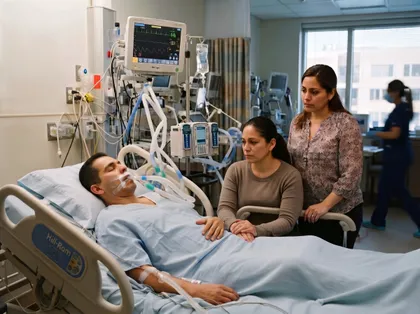
A vegetative state, also called unresponsive wakefulness syndrome, and a minimally conscious state involve different levels of awareness.
A person in a vegetative state may open their eyes and have sleep-wake cycles, but shows no clear signs of awareness of themselves or their surroundings. Meanwhile, a person in a minimally conscious state shows some signs of awareness, although those responses may be limited or inconsistent.
The difference can affect prognosis and care planning. Adults in a minimally conscious state generally have a more favorable prognosis than those in a vegetative state or unresponsive wakefulness syndrome. However, recovery and long-term care needs vary from person to person.
These differences may also affect future care needs and damages in a personal injury claim. Medical records, functional assessments, and a Life Care Plan may help document the person’s expected treatment, support, and long-term care needs.
Will Health Insurance Take Part in the Personal Injury Settlement?
Possibly. A health insurer, health plan, Medi-Cal, Medicare, or another payer may have a right to seek repayment for injury-related medical costs. Whether repayment is required and how much must be repaid depend on the type of coverage, the plan terms, and state or federal law.
Some reimbursement claims may be reduced, disputed, or adjusted. The rules can differ for private health plans, Medi-Cal, Medicare, and plans governed by the Employee Retirement Income Security Act (ERISA). Because these rules can affect how much of a settlement the injured person keeps, any reimbursement claims or liens should be reviewed before settlement funds are distributed.
What Happens if the Coma Victim Regains Consciousness During the Lawsuit?
Waking from a coma does not automatically mean the person has regained legal capacity. It also does not mean rehabilitation is no longer needed. Recovery from a serious brain injury can happen slowly, and the person’s ability to understand and make decisions may return over time.
A conservatorship or guardian ad litem appointment also does not automatically end when the person improves. A court may need to change or end that authority, depending on the type of arrangement.
If the person regains enough capacity to make legal decisions, they may be able to take control of their claim again. The next steps depend on whether a conservatorship, guardian ad litem, or another form of legal authority was already in place.
What Happens if the Coma Victim Dies From Their Injuries?
Two separate claims may be available.
Wrongful death (CCP § 377.60). Eligible family members may recover for their own losses, such as loss of love, companionship, support, and household services (CCP § 377.61). The claim must generally be filed within 2 years of the death (CCP § 335.1).
Survival action (CCP § 377.30). The decedent’s personal representative or successor in interest may continue the claims the injured person could have brought while alive. Under CCP § 377.34, survival actions filed on or after January 1, 2026, generally cannot recover pre-death pain, suffering, or disfigurement. Recoverable damages generally include pre-death medical expenses, lost earnings, other economic losses, and, in some cases, punitive damages. If the person dies before their own deadline expires, the representative generally may file the survival action by the later of (CCP § 366.1).
Get Help From Arash Law’s California Catastrophic Injury Team
Coma cases can involve additional procedural and evidentiary issues, including representation for a person who lacks legal capacity, long-term care projections, expert evidence, and liens or reimbursement claims. The professionals and court procedures needed depend on the facts of the particular case. When experts or other professionals are needed, their services may involve case-related costs.
Arash Law may advance expert costs, litigation expenses, and investigation fees, depending on the case and the terms of the fee agreement. This can reduce the need to pay certain case-related costs upfront. There are no attorney fees unless you recover compensation.
If your loved one suffered a catastrophic brain injury in a California traffic accident, call Arash Law now at (888) 488-1391 for a free case evaluation. An attorney at Arash Law can evaluate your situation and explain what steps may help protect the claim.
Sources
- California Legislative Information: California Code of Civil Procedure (CCP) § 335.1 — Personal injury and wrongful death limitations period
https://leginfo.legislature.ca.gov/faces/codes_displaySection.xhtml?lawCode=CCP§ionNum=335.1- CCP § 352 — Tolling for lack of legal capacity
https://leginfo.legislature.ca.gov/faces/codes_displaySection.xhtml?lawCode=CCP§ionNum=352- CCP § 372 — Representation of minors and persons lacking legal capacity
https://leginfo.legislature.ca.gov/faces/codes_displaySection.xhtml?lawCode=CCP§ionNum=372- CCP § 377.30 — Survival actions by personal representative or successor in interest
https://leginfo.legislature.ca.gov/faces/codes_displaySection.xhtml?lawCode=CCP§ionNum=377.30- CCP § 377.34 — Damages in survival actions
https://leginfo.legislature.ca.gov/faces/codes_displaySection.xhtml?lawCode=CCP§ionNum=377.34- CCP § 377.60 — Persons authorized to bring a wrongful death action
https://leginfo.legislature.ca.gov/faces/codes_displaySection.xhtml?lawCode=CCP§ionNum=377.60- CCP § 377.61 — Wrongful death damages
https://leginfo.legislature.ca.gov/faces/codes_displaySection.xhtml?lawCode=CCP§ionNum=377.61- California Legislative Information: Government Code § 911.2 — Six-month claim-presentation period for personal injury claims
https://leginfo.legislature.ca.gov/faces/codes_displaySection.xhtml?lawCode=GOV§ionNum=911.2- Government Code § 911.4 — Application to present a late claim
https://leginfo.legislature.ca.gov/faces/codes_displaySection.xhtml?lawCode=GOV§ionNum=911.4- Government Code § 911.6 — Public entity’s decision on a late-claim application
https://leginfo.legislature.ca.gov/faces/codes_displaySection.xhtml?lawCode=GOV§ionNum=911.6- Government Code § 915 — Where and how government claims are presented
https://leginfo.legislature.ca.gov/faces/codes_displaySection.xhtml?lawCode=GOV§ionNum=915- California Legislative Information: Probate Code § 1800 — Beginning of California’s conservatorship provisions
https://leginfo.legislature.ca.gov/faces/codes_displaySection.xhtml?lawCode=PROB§ionNum=1800- Probate Code § 1801 — Grounds and standards for appointment of a conservator
https://leginfo.legislature.ca.gov/faces/codes_displaySection.xhtml?lawCode=PROB§ionNum=1801- Probate Code § 3600 — Court authority concerning settlement or judgment proceeds for a person with a disability
https://leginfo.legislature.ca.gov/faces/codes_displaySection.xhtml?lawCode=PROB§ionNum=3600- California Courts: Judicial Council of California Civil Jury Instructions (CACI), 2026 Edition.
https://courts.ca.gov/partners/california-jury-instructions/civil-jury-instructions-resource-center/civil-jury-instructions- California Courts: Rule 7.950 — Petition for approval of compromise or settlement involving a minor or person with a disability.
https://courts.ca.gov/cms/rules/index/seven/rule7_950- California Courts: Options to Help Someone With an Impairment or Disability.
https://www.selfhelp.courts.ca.gov/options-help-someone-impairment-or-disability- California Legislative Information: Government Code § 912.4 — Time for public entity to act on a claim
https://leginfo.legislature.ca.gov/faces/codes_displaySection.xhtml?lawCode=GOV§ionNum=912.4- Government Code § 913 — Written notice of rejection of a government claim
https://leginfo.legislature.ca.gov/faces/codes_displaySection.xhtml?lawCode=GOV§ionNum=913- Government Code § 945.6 — Deadline to file suit after rejection of a government claim
https://leginfo.legislature.ca.gov/faces/codes_displaySection.xhtml?lawCode=GOV§ionNum=945.6- Government Code § 946.6 — Petition for relief from government claim requirements
https://leginfo.legislature.ca.gov/faces/codes_displaySection.xhtml?lawCode=GOV§ionNum=946.6- California Legislative Information: Insurance Code § 11580.2 — Uninsured and underinsured motorist coverage requirements and deadlines
https://leginfo.legislature.ca.gov/faces/codes_displaySection.xhtml?lawCode=INS§ionNum=11580.2- California Legislative Information: CCP § 366.1 — Limitations period for survival actions after death
https://leginfo.legislature.ca.gov/faces/codes_displaySection.xhtml?lawCode=CCP§ionNum=366.1- California Department of Motor Vehicles: Auto Insurance Requirements.
https://www.dmv.ca.gov/portal/vehicle-registration/insurance-requirements/- California Highway Patrol: Request a Crash Report.
https://www.chp.ca.gov/traffic/request-a-crash-report/- California Department of General Services, Office of Risk and Insurance Management: File a Government Claim.
https://www.dgs.ca.gov/ORIM/File-A-Claim- California Department of Health Care Services: Special Needs Trusts.
https://www.dhcs.ca.gov/services/special-needs-trust/- Social Security Administration: Spotlight on Trusts.
https://www.ssa.gov/ssi/spotlights/spot-trusts.htm- National Highway Traffic Safety Administration: Event Data Recorder.
https://www.nhtsa.gov/research-data/event-data-recorder- Rancho Los Amigos National Rehabilitation Center: Rancho Levels of Cognitive Functioning.
https://dhs.lacounty.gov/rancho/education/graduate-medical-and-professional-education/educational-materials/rancho-levels-of-cognitive-functioning/- National Library of Medicine, NCBI Bookshelf: Rancho Los Amigos Scale.
https://www.ncbi.nlm.nih.gov/books/NBK448151/- National Library of Medicine, NCBI Bookshelf: Glasgow Coma Scale.
https://www.ncbi.nlm.nih.gov/books/NBK513298/- MSD Manual Professional Edition: Vegetative State and Minimally Conscious State.
https://www.msdmanuals.com/professional/neurologic-disorders/coma-and-impaired-consciousness/vegetative-state-and-minimally-conscious-state- Centers for Medicare & Medicaid Services: Medicare’s Recovery Process.
https://www.cms.gov/medicare/coordination-benefits-recovery/beneficiary-services/recovery-process- California Supreme Court: Downey v. City of Riverside, S280322.
https://supreme.courts.ca.gov/case/s280322-downey-v-city-riverside- Arash Law: Case Results.
https://arashlaw.com/case-results/Disclaimer
Past results do not guarantee future outcomes. Every case is different. The information on this page is for general educational purposes and does not constitute legal advice. No attorney-client relationship is formed by reading or relying on this content. If you were injured, consult a licensed California personal injury attorney about your specific situation.