TL;DR: The most common accidents in a restaurant are slips, trips, and falls caused by wet floors, spills, or uneven surfaces that injure customers or employees. Restaurants can be liable under premises liability law, and victims generally have a 2-year filing deadline. Employees may have other legal options.
Highlights:
- Get medical care quickly and keep all visit notes, work restrictions, and receipts.
- Report the incident to a manager before leaving and request a copy of the incident report.
- Photograph the hazard, nearby walkways, and any warning signs from multiple angles.
- Collect witness names and contact information, and note what each person observed.
- Ask the restaurant to preserve surveillance footage and cleaning or inspection records.
- Save the shoes and clothing you wore – do not wash them.
Tip: When talking to staff or insurance, stick to facts and avoid guessing about what caused the hazard.
Table of Contents
Slips, trips, and falls are among the most common hazards in restaurants. These accidents can harm both customers and employees. Wet floors, spilled food, uneven surfaces, and crowded walkways can lead to falls.
However, the most common accident can vary depending on whether the injured person is a customer or an employee. No single study ranks all restaurant accidents for both groups. Also, workplace stats shouldn’t be confused with customer injury stats.
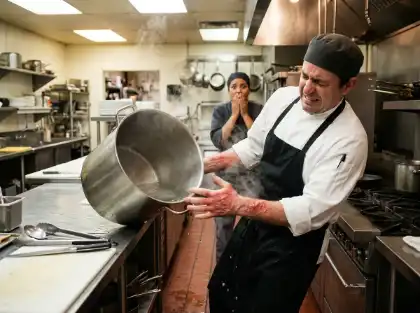
For restaurant employees specifically, Cal/OSHA’s Restaurant Employees Workplace Safety & Health Guide, published in 2024, identifies burns as the most common serious accident. Among the five categories of serious restaurant accidents that the study investigated:
- Burns accounted for 18% of serious accidents, making them the most common type among restaurant workers.
- Falls accounted for 13% of serious accidents.
- Falls caused most of the fatalities among the investigated accidents.
- Slip and trip hazards are also identified as common causes of sprains and strains.
While burns are more prominent in worker-specific data, slips, trips, and falls apply more broadly to both employees and customers. They are the main focus of this article. Customers may encounter spills, recently cleaned floors, uneven flooring, or obstructed walkways. Meanwhile, employees face many of the same hazards as they move around the restaurant.
Data Transparency Note: This article uses data from Cal/OSHA’s “Occupational Safety and Health Guide for Restaurant Employees,” published in 2024. We review these figures periodically as new, final data are released.
A Common Restaurant Accident: Slips, Trips, And Falls
Official data doesn’t provide a universal ranking of accidents for all restaurant customers and employees. However, slips, trips, and falls are common hazards. They happen in dining rooms, kitchens, restrooms, entryways, and service spaces.
These accidents are typically caused by:
- Spilled Drinks and Food: Beverages, ice, and dropped food can make dining areas and walking surfaces slick.
- Freshly Mopped Floors: Cleaned floors can be slippery. This is a risk, especially if customers aren’t warned.
- Tracked-In Rain: Water carried into an entrance can create a slippery walking surface.
- Uneven Flooring: Worn carpet, loose tiles, and raised surfaces can lead to trips.
Restaurants face many risks due to the constant flow of both customers and employees. Busy aisles, crowded dining areas, and obstructed walkways can increase the risk of slips, trips, and falls. These incidents can result in injuries such as:
- Broken Bones
- Hip fractures, particularly in older adults
- Head injuries and concussions
- Sprains and strains
- Back injuries
- Neck injuries
- Chronic pain
Workers face many of the same physical hazards, but employees’ legal claims are usually treated differently from customers’ claims.
Other Frequent Accidents For Restaurant Customers And Staff
 Slips and falls get the most attention, but burns, cuts, and strains cause serious harm too. These injuries affect customers dining in the restaurant and kitchen staff on the job. Both groups can suffer lasting damage from burns near hot equipment, cuts from glass or blades, and strains from heavy lifting.
Here is how these injuries may happen to customers and workers:
- Burns and Scalds: A spilled hot drink or a bowl of soup can cause severe burns to a customer. Meanwhile, kitchen staff face burn hazards near fryers, ovens, and open flames every shift.
- Cuts and Lacerations: Broken glass on the dining floor or in serving areas can cause deep cuts. Sharp kitchen tools, such as knives and slicers, are common sources of workers’ injuries.
- Muscle Strains: Workers who carry heavy trays or lift bulk inventory are at risk of back and shoulder injuries.
The distinction between customers and employees determines the legal path for a personal injury claim. A customer may pursue a premises liability claim if negligent property management caused the injury.
When the injured person is an employee, they may seek workers’ compensation benefits, which can include necessary medical treatment and a partial replacement of wages lost due to the injury. An employee may also have a personal injury claim against a negligent third party, such as a property owner, maintenance contractor, equipment manufacturer, or delivery company. This claim may proceed alongside workers’ compensation and may provide damages that workers’ compensation does not cover.
Liability In A California Restaurant Accident
Liability depends on who owned, occupied, controlled, or operated the property and what conduct led to the injury. California Civil Code Section 1714(a) establishes a general duty to use ordinary care in the management of one’s property or person.
For a restaurant customer to succeed in a typical negligence-based premises liability claim, the case generally must establish:
- Duty of Care: The restaurant owed the customer a duty to use reasonable care to keep the premises safe.
- Breach of Duty: The restaurant failed to address or warn about a dangerous condition.
- Causation: The unsafe condition caused or contributed to the customer’s injury.
- Damages: The customer suffered actual harm, such as medical expenses, lost income, or pain and suffering.
Notice is also important in determining whether the restaurant acted reasonably:
- Actual Notice: The restaurant knew about the dangerous condition. For example, an employee may have seen a spilled beverage but failed to clean it up or warn customers.
- Constructive Notice: The condition existed long enough that a reasonable inspection should have discovered it, even if no employee actually saw it.
Restaurant liability is not limited to wet floors. Injuries may also result from dangerously hot food or drinks, defective chairs or equipment, contaminated food, undeclared allergens, overcrowding, poor security, or dropped items. Depending on the circumstances, the claim may involve negligent conduct, unsafe property conditions, or a defective product.
Evidence That Can Support Your Claim
Evidence can show how the hazard developed, how long it lasted, and whether the restaurant had a chance to fix it. Restaurant slip-and-fall lawyers often rely on these pieces of evidence to file a legal claim:
- Surveillance footage.
- Cleaning or inspection records.
- Photographs of the hazard.
- Photographs of the visible injuries as they develop.
- Receipts or card records showing you were at the restaurant.
- Witness statements.
- Incident reports.
- Employee testimony.
- Names of managers and employees who were present.
- Damaged clothing, shoes, and personal property.
Restaurant surveillance footage may be erased or overwritten quickly. Send a written preservation request identifying the incident’s date, approximate time, location, and relevant period before and after it. Also request cleaning logs, repair records, prior complaints, employee schedules, and incident reports.
Compensation Available After A Restaurant Injury
The compensation available after a restaurant injury depends in part on whether the injured person is a customer or an employee. Customers can seek personal injury damages if negligence led to the accident. Employees injured at work typically use California’s workers’ compensation system for benefits.
A personal injury claim may include both economic and non-economic damages. Economic damages may cover measurable financial losses, such as:
- Medical Expenses: Emergency care, doctor visits, rehabilitation, medication, and other necessary treatment.
- Future Medical Care: Reasonably necessary treatment or rehabilitation that the injured person may need later, such as chiropractic care.
- Lost Wages: Income lost while recovering from the injury.
- Loss of Earning Capacity: Reduced ability to earn a living in the future because of lasting injuries.
Non-economic damages may compensate for the personal effects of the injury, including:
- Physical Pain: Ongoing discomfort or physical limitations caused by the injury.
- Mental Suffering and Emotional Distress: Psychological effects resulting from the accident and recovery.
- Loss of Enjoyment of Life: Reduced ability to participate in activities or routines the injured person previously enjoyed.
Restaurant employees injured on the job usually go through the workers’ compensation process. This is different from the damages listed for general personal injury claims. These benefits may include:
- Medical Care: Treatment reasonably required for a work-related injury.
- Temporary Disability Benefits: Replacement of part of your wages when you can’t work while recovering.
- Permanent Disability Benefits: Provides compensation when a work-related injury causes lasting impairment.
- Supplemental Job Displacement Benefits: Help with retraining for employees who can’t return to their regular jobs.
Workers’ compensation generally does not provide the same pain-and-suffering damages available in a personal injury lawsuit. This compensation may be available through a claim against a third party.
Important Deadlines After An Accident In A Restaurant
In California, individuals generally have two years from the date of injury to file a personal injury lawsuit. Failing to meet this deadline may prevent you from pursuing compensation in court.
There are important exceptions:
- Minors: If the injured person is under 18, California generally tolls the statute of limitations until they reach adulthood.
- Delayed Discovery Rule: In some cases, the statute of limitations may begin when the injured person discovers, or reasonably should have discovered, the injury and its negligent cause, rather than on the date of the incident.
Regardless, California workers should act quickly after a workplace injury. Waiting too long may affect their right to workers’ compensation benefits.
Important deadlines include:
- 30 Days to Report the Injury: Workers should generally report a work injury to their employer within 30 days. Typically, they will then receive a DWC-1 claim form within one working day. After they complete the employee section and promptly return it to their employer, their employer completes another section of the form and forwards it to the claims administrator for processing.
- One Year to File a Workers’ Compensation Case: Generally, a worker has one year to file a claim with the Workers’ Compensation Appeals Board (WCAB). This claim may be needed when there is a dispute about workers’ compensation benefits.
The one-year period may run from different dates depending on the case, such as the date of injury or certain benefit-related dates. Exceptions and other deadlines may apply.
The amount and type of compensation available depend on the facts of the case. Whether you are a customer or a staff member, it’s important to know what to do when you slip and fall in a restaurant.
Steps To Take After A Restaurant Accident
Taking quick action after a restaurant injury protects your claim. The steps you take in the hours and days after the accident can impact your case. Acting fast keeps crucial evidence from disappearing.
- See a Doctor as Soon as Possible: Go to your primary care doctor, an urgent care clinic, or a hospital for evaluation. A medical record links your injury to the accident, even if your pain feels minor.
- Report the Incident to Management: Tell a manager or supervisor what happened before you leave the restaurant. Ask for a copy of the incident report. This creates an official record of the hazard and your injury. If you left the restaurant without filing an incident report, you may still have a valid claim. Report the accident to management in writing right away. Include the date, time, location, hazard, and any injuries. Keep a copy.
- Take Photos of the Hazard: Photograph the wet floor, uneven surface, or other condition that caused your injury. Capture the area from multiple angles. Note whether warning signs were posted, and photograph that too.
- Save your Physical Evidence: Keep the shoes and clothing you were wearing. Do not wash them. These items can show the conditions you encountered and support your account of what happened.
While you can seek free advice from a restaurant slip-and-fall lawyer online, it is best to consult a legal team personally. Consulting an attorney directly allows them to assess the specific facts of your accident. They can explain your legal options and determine how California law applies to your case.
Slip-and-Fall Accident Cases We Have Won
Our team at Arash Law has handled several premises liability claims, including slip-and-fall cases similar to those that arise at restaurants. They have secured compensation for our clients thanks to their years of experience with the legal process.
Some notable cases include the following:
- $3,500,000: Poor lighting led to our client’s fall and resulting spinal injury. We secured compensation to help the victim through their recovery.
- $3,000,000: Our client suffered a spinal injury after a slip-and-fall accident. Surveillance footage helped our team establish what happened and pursue compensation on their behalf.
Disclaimer: These are real case results, but past outcomes do not guarantee future results. Every case is different. The value and outcome of a claim depend on the facts, available evidence, applicable California law, and other case-specific factors.
Frequently Asked Questions About Restaurant Accidents
Being hurt in a restaurant raises many questions. You may not know who is responsible, what your rights are, or how long you have to act. These FAQs address the questions that injury victims most often ask after a California restaurant accident.
What If I Am Partially At Fault For The Restaurant Accident?
You still have legal options. California’s pure comparative fault rule allows you to get compensation even if you share some blame. However, your portion of fault reduces your compensation. If you think, “I need a personal injury lawyer,” after an accident with shared fault, getting legal help can be useful. These cases can be complex. An attorney can help evaluate liability, gather evidence, and explain how comparative fault may affect your claim.
Can You Sue A Restaurant For An Injury?
Yes, you may be able to sue a restaurant if its negligence caused your injury. For example, the restaurant may be responsible if it failed to clean up a spill, fix a dangerous condition, or warn customers about a known hazard. However, you generally need evidence showing that the restaurant failed to use reasonable care and that this failure caused your injury.
You can submit an insurance claim and try to negotiate a settlement. However, California law usually does not require an insurance claim before you file a personal injury lawsuit against a private restaurant.
Who Pays My Medical Bills After A Restaurant Accident?
The restaurant usually does not pay medical bills as they arise. You may need to use your health insurance while your claim is pending. If you receive compensation later, your health insurer, Medicare, Medi-Cal, or medical providers may seek repayment from the settlement.
Can I Recover Compensation If There Was No Wet Floor Sign?
Yes. A missing wet floor sign does not end your claim. What matters is if the restaurant caused the hazard, knew about it, or could have found it. Also, did it respond with reasonable care? The absence of a warning sign may support a negligence claim, but it does not establish liability on its own.
Do OSHA Regulations Apply To California Restaurants?
Yes. Cal/OSHA, the Division of Occupational Safety and Health, enforces California workplace safety laws that apply to restaurant employers. These rules cover every worker, no matter their immigration status. Restaurants must keep the workplace free of known hazards. If a restaurant violates a Cal/OSHA rule and someone is injured, that violation can show negligence. This depends on California law and the specifics of the case.
Arash Law Can Help With Your Restaurant Accident Claim
Arash Law handles every personal injury case on a contingency fee basis. You pay no attorney’s fees unless we win. Our restaurant slip-and-fall lawyers can review your case and answer your questions.
We can help you determine what legal options you may have. Also, we can handle all communication with insurers and filing deadlines so that you can focus on healing.
Call AK Law (888) 488-1391 to schedule a free case review. Our attorneys will listen to your story.