TL;DR: Leg trauma is especially common in serious motorcycle crashes and may lead to surgery, long-term rehabilitation, or permanent mobility problems. Injured riders may seek compensation, but Proposition 213 can limit pain and suffering damages when the motorcycle was uninsured, subject to certain exceptions.
Highlights:
- Get prompt care for leg pain, head trauma, or internal injury symptoms.
- Attend every follow-up visit and complete prescribed physical therapy.
- Photograph the crash scene, motorcycle, protective gear, and visible injuries.
- Preserve the motorcycle and damaged gear until all evidence is documented.
- Collect witness contacts and request nearby surveillance footage.
- If you were driving, file the SR-1 within 10 days when required.
- Speak with a motorcycle lawyer before giving insurers a recorded statement.
Tip: Keep a daily log of pain levels, mobility limits, and symptoms, and when talking to insurers, stick to observable facts and avoid guessing about fault or medical outcomes.
Table of Contents
A National Highway Traffic Safety Administration (NHTSA) analysis of 2003–2005 trauma-center data found that lower-extremity injuries were the most common body-region injuries among motorcyclists age 15 and older who sustained moderate or more serious injuries. Leg injuries were the most frequent, followed by injuries to the pelvis and knees.
Lower-extremity trauma can range from bruising and ligament damage to open fractures, crushed tissue, nerve injuries, and amputation. Severe cases may require surgery, months of rehabilitation, and extended time away from work.
A California personal injury lawyer can review how the crash happened, identify potentially responsible parties, and explain what compensation may be available.
Why Lower-Extremity Injuries Are Common In Motorcycle Crashes
Motorcyclists do not have a vehicle frame, doors, or other structures surrounding their legs. Their lower bodies may be struck directly by another vehicle, pinned beneath the motorcycle, trapped between objects, or dragged across the roadway.
The rider may also instinctively extend a leg to stabilize the motorcycle or brace for impact. Depending on the crash, this can expose the leg, knee, ankle, or foot to twisting, crushing, and direct impact forces.
The type and severity of the injury often depend on:
- The direction of the collision.
- The speed of the motorcycle and other vehicles.
- Whether the motorcycle fell onto the rider.
- Whether the rider was thrown or dragged.
- The size and weight of the vehicles involved.
- The condition of the road.
- The protective gear the rider was wearing.
Common Lower Extremity Injuries In Motorcycle Crashes
“Lower-extremity injury” refers to a group of injuries affecting the pelvis, hips, legs, knees, ankles, and feet. In the NHTSA analysis, leg injuries were the most frequent lower-extremity injuries. Long-bone fractures involving the tibia, fibula, and femur were among the most common specific diagnoses.
Leg Fractures
A motorcycle crash can fracture the femur in the thigh or the tibia and fibula in the lower leg. These fractures may occur when another vehicle strikes the rider, the motorcycle lands on the leg, or the rider hits the roadway or another object.
Some fractures are displaced, open, or broken into several pieces. Severe fractures may damage nearby muscles, nerves, arteries, and veins.
Treatment may involve:
- Casting or bracing.
- Surgical realignment.
- Metal rods, plates, screws, or pins.
- Medication for pain or infection.
- Physical therapy.
- Additional surgery, if the bone does not heal properly.
Open fractures carry a heightened risk of infection because the broken bone or wound is exposed to outside contaminants.
Knee And Ligament Injuries
The knee may twist, bend unnaturally, or strike the motorcycle, pavement, or another vehicle. This can damage the anterior cruciate ligament, posterior cruciate ligament, collateral ligaments, meniscus, tendons, or cartilage.
Common symptoms include:
- Swelling.
- Instability.
- Reduced range of motion.
- Pain when standing or walking.
- A popping sensation at the time of injury.
- Difficulty bearing weight.
Some ligament injuries improve with bracing and physical therapy. Complete tears or injuries involving several structures may require surgery.
Ankle And Foot Injuries
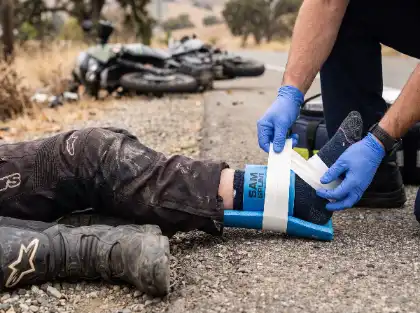
A rider’s ankle or foot can become trapped beneath the motorcycle or crushed between the bike and another vehicle. The rider may also suffer fractures after striking the pavement or attempting to brace during a fall.
These injuries may affect the:
- Ankle joint.
- Heel.
- Toes.
- Metatarsal bones.
- Tendons and ligaments.
- Nerves and blood vessels.
Even relatively small fractures can make walking difficult and interfere with work, driving, and daily activities.
Pelvic And Hip Injuries
A direct impact can fracture the pelvis or damage the hip joint. Pelvic injuries can be especially serious because the pelvis protects major blood vessels, nerves, and organs.
Severe pelvic trauma may cause internal bleeding, difficulty walking, chronic pain, or complications involving the bladder and other nearby organs. Treatment may require emergency stabilization, surgery, assistive devices, and extensive rehabilitation.
Crush Injuries And Limb Entrapment
A motorcycle may pin the rider’s leg against the roadway, another vehicle, a barrier, or another object. Prolonged pressure can damage muscles, nerves, blood vessels, and other tissues.
Crush injuries can interfere with circulation and increase the risk of:
- Severe swelling.
- Tissue death.
- Nerve damage.
- Infection.
- Compartment syndrome.
- Permanent loss of function.
- Amputation.
Compartment syndrome occurs when pressure builds within muscle tissue and restricts blood flow. It is a medical emergency that may require immediate surgery.
Warning Signs Of A Serious Leg Injury
Some lower-extremity injuries are obvious at the scene, while others become more noticeable after swelling and inflammation develop.
Seek prompt medical attention for symptoms such as:
- Severe or increasing pain.
- Inability to stand or walk.
- Visible deformity.
- Rapid swelling.
- Numbness or tingling.
- Weakness in the leg or foot.
- Pale, cold, or bluish skin.
- Heavy bleeding.
- An open wound near a suspected fracture.
- Loss of movement.
- Pain that does not improve.
Do not attempt to straighten a visibly deformed limb. Call 911 if an injury appears severe or the rider cannot move safely.
Treatment And Recovery
Treatment depends on the location and severity of the injury. A rider may need emergency care followed by surgery, medication, rehabilitation, and ongoing medical monitoring.
Common forms of treatment include:
- Imaging tests such as X-rays, CT scans, or MRIs.
- Wound cleaning and infection prevention.
- Casting, splinting, or bracing.
- Surgical repair of broken bones or torn ligaments.
- Pain medication.
- Physical and occupational therapy.
- Mobility aids such as crutches, walkers, or wheelchairs.
- Follow-up procedures to remove or adjust surgical hardware.
- Prosthetic care after an amputation.
Recovery may take weeks, months, or longer. Complex fractures, damaged nerves, severe infections, and crush injuries may lead to permanent limitations even after extensive treatment.
Possible Long-Term Effects
A serious lower-extremity injury can affect much more than the rider’s ability to walk. It may interfere with employment, sleep, household responsibilities, recreational activities, and personal independence.
Long-term effects may include:
- Chronic pain.
- Reduced strength.
- Limited range of motion.
- Joint instability.
- Nerve damage.
- Scarring or disfigurement.
- Arthritis.
- An altered gait.
- The need for future surgery.
- Permanent mobility restrictions.
- Amputation.
- Emotional distress.
- Reduced earning capacity.
Future medical and rehabilitation needs should be considered before an injury claim is resolved.
Common Crash Scenarios That Cause Leg Injuries
Lower-extremity injuries may occur in many types of motorcycle accidents. These injuries can result from direct impacts, being thrown from the motorcycle, or the bike landing on the rider’s legs. They are especially common in collisions involving other vehicles, road hazards, or sudden loss of control.
- Left-Turn Collisions: A driver may turn across an approaching motorcycle’s path. The motorcycle can strike the side of the vehicle, exposing the rider’s legs to direct impact.
- Unsafe Lane Changes: California law defines lane splitting as riding a two-wheeled motorcycle between rows of stopped or moving vehicles in the same lane. A driver who changes position without checking mirrors or blind spots may strike or crowd the rider.
- Rear-End Crashes: A vehicle striking a motorcycle from behind can knock the rider off the bike or force the motorcycle into another vehicle or object.
- Dooring Accidents: A vehicle occupant may open a door into the path of an approaching motorcyclist. The impact can injure the rider’s knees, legs, ankles, or feet and throw the rider onto the road.
- Hazardous Road Conditions: Potholes, loose gravel, uneven pavement, debris, and poorly maintained construction areas can cause a rider to lose control. A public entity, contractor, property owner, or another party may be responsible, depending on the circumstances.
- Motorcycle Defects: Defective brakes, tires, steering systems, or other components may cause or contribute to a loss of control. Potentially responsible parties may include a manufacturer, distributor, repair shop, or seller.
Compensation For A Serious Lower-Extremity Injury
A rider injured because of another party’s negligence may seek compensation for the physical, emotional, and financial consequences of the crash.
The amount available may depend on:
- The severity and permanence of the injury.
- The cost of past and future medical care.
- The rider’s ability to work.
- The effect on mobility and daily life.
- Available insurance coverage.
- Each party’s share of fault.
Economic Damages
Economic damages cover measurable financial losses. These may include:
- Ambulance transportation
- Emergency treatment
- Hospitalization
- Surgery
- Medication
- Rehabilitation
- Future medical care
- Lost wages
- Reduced earning capacity
- Motorcycle repairs
- Replacement transportation
- Other reasonable expenses caused by the collision
Non-Economic Damages
Non-economic damages compensate for losses that do not have a fixed dollar value. They may include:
- Physical pain
- Emotional distress
- Inconvenience
- Disfigurement
- Physical impairment
- Loss of enjoyment of life
- Long-term effects of injuries on daily activities and relationships
How Shared Fault Affects Compensation
California follows a pure comparative negligence rule. An injured rider may still recover compensation when partly responsible for the crash, but the recovery is reduced according to the rider’s percentage of fault.
For example, a rider with $100,000 in damages who is found 20% at fault may recover $80,000.
Evidence used to determine fault may include:
- Traffic-camera footage.
- Witness statements.
- Police reports.
- Vehicle damage.
- Photographs and video.
- Electronic vehicle data.
- Roadway measurements.
- Expert analysis.
How Shared Fault Affects Compensation
California follows a pure comparative negligence rule. This means an injured rider may recover compensation even when partly responsible for the crash, but the award is reduced according to the rider’s percentage of fault.
For example, if a rider has $100,000 in damages but is found 20% at fault, the rider’s recovery may be reduced to $80,000.
To help prove the at-fault party’s responsibility, it’s important to gather evidence, including:
- Traffic-camera footage
- Witness statements
- Police reports
- Vehicle damage
How Proposition 213 May Limit Recovery
California Civil Code § 3333.4 may prevent an injured owner of an uninsured motorcycle, or an operator who cannot establish financial responsibility, from recovering non-economic damages.
The rider may still pursue economic damages such as medical expenses, lost wages, and reduced earning capacity.
The statute contains an exception when an uninsured vehicle owner is injured by a driver who is later convicted of driving under the influence. Whether Proposition 213 applies depends on the rider’s status, the vehicle involved, and the specific facts of the crash.
A motorcycle accident lawyer can evaluate your case, calculate your damages, and negotiate with insurers on your behalf, so you can focus on healing.
Steps To Protect Your Health And Legal Claim
After a motorcycle crash, the steps you take in the hours and days that follow can significantly affect both your recovery and your ability to pursue compensation. Prioritizing medical care is essential, even if your injuries initially seem minor, because some conditions worsen over time or are not immediately apparent. It is also important to preserve evidence, document your injuries and expenses, and follow all treatment recommendations from your healthcare providers. Taking these actions early can help protect your health while also strengthening any potential injury claim.
- Continue Medical Care: Attend follow-up appointments and complete prescribed physical therapy. Report new symptoms, increased pain, numbness, weakness, or mobility problems to your medical provider.
- Preserve Evidence: Photograph the motorcycle, protective gear, visible injuries, roadway, and surrounding area. Do not repair or dispose of damaged property until it has been documented.
- Track Your Recovery: Keep records of medical appointments, expenses, missed work, pain levels, mobility limitations, and activities you cannot perform.
- File the California SR-1 When Required: If you were driving the motorcycle, you or an authorized representative must file an SR-1 with the DMV within 10 days if the crash caused an injury or death, or more than $1,000 in damage to any one person’s property.
- Be Careful With Insurance Statements: Avoid guessing about fault, speed, injuries, or recovery. Consider speaking with a motorcycle accident lawyer before giving a recorded statement to an insurance adjuster.
Other Injuries Motorcycle Riders May Sustain
Although lower-extremity injuries are the most frequently reported body-region injuries among seriously injured riders in the NHTSA analysis, motorcycle crashes can also cause life-threatening trauma elsewhere in the body.
-
Head and Brain Injuries: A rider may suffer a concussion, skull fracture, or other traumatic brain injury. Symptoms may include headaches, confusion, vomiting, memory problems, mood changes, dizziness, or unusual drowsiness.
A DOT-compliant helmet can reduce the risk of serious head injury, but it cannot prevent every TBI.
- Road Rash: Sliding across pavement can remove layers of skin and damage nerves or underlying tissue. Deep road rash may cause infection, scarring, and the need for skin-graft surgery.
- Upper-Body Fractures: A rider may fracture the hands, wrists, arms, shoulders, ribs, or collarbone while bracing for impact or striking another object.
- Internal Injuries: Blunt trauma to the chest or abdomen can damage the lungs, liver, spleen, blood vessels, or other organs. Internal bleeding may not produce obvious symptoms immediately and can become life-threatening.
Frequently Asked Questions About Lower-Extremity Motorcycle Injuries

Motorcycle accidents raise a lot of hard questions, and you deserve straight answers. The questions below cover what riders commonly ask after a crash.
Are Lower-Extremity Injuries Permanent?
Some riders recover fully, while others experience chronic pain, nerve damage, reduced mobility, arthritis, or permanent disability. The outcome depends on the location and severity of the injury, the treatment received, and whether complications develop.
What Is The Most Common Specific Leg Injury?
The NHTSA trauma-center analysis found that long-bone fractures involving the tibia, fibula, and femur were among the most common specific lower-extremity injuries.
Can I Seek Compensation If I Was Not Wearing A Helmet?
Yes. Not wearing a helmet does not automatically prevent a rider from pursuing a claim. Because helmets primarily protect the head, helmet use may have little relevance to an isolated leg injury. It may affect compensation when evidence shows that the lack of a helmet contributed to the severity of a head injury.
Does Lane Splitting Make Me Automatically At Fault For The Crash?
No. California allows lane splitting. Fault depends on what actually happened during the crash, not just where you were riding.
How Long Do I Have To File A Motorcycle Accident Lawsuit?
In California, you generally have two years from the date of the motorcycle accident to file a personal injury lawsuit. A wrongful death lawsuit arising from a fatal motorcycle crash is also generally subject to a two-year deadline. Missing the applicable statute of limitations can prevent you from pursuing compensation, regardless of the strength of your case.
A much shorter deadline may apply when a government agency or public employee is responsible, for example, when dangerous road conditions contributed to the crash. In most cases involving personal injury, death, or property damage, you must first submit a government claim within six months. After a proper written rejection, you generally have six months to file a lawsuit.
Certain situations may extend or otherwise affect the deadline, including when the injured rider was a minor or lacked legal capacity at the time the claim arose.
A motorcycle injury attorney can assess your situation and determine which deadline applies to your case.
Motorcycle Accident Recoveries
Our lawyers at Arash Law are experienced in handling motorcycle and other personal injury cases. Here are examples of motorcycle accident cases we have won for our clients:
- $5,000,000 — Despite initial evidence suggesting our client was at fault, we proved the truck driver’s dangerous turn contributed to the crash. This crucial evidence led to a substantial settlement for our injured client.
- $1,450,000 — Our client suffered serious injuries after hitting uneven pavement during construction work. The case settled on the trial’s first day, resulting in significant compensation from the contractors and the city.
- $1,000,000 — Initially deemed at fault, our team demonstrated that the truck driver was responsible for the accident. This evidence allowed us to secure maximum policy limits for our client.
Disclaimer: These results do not guarantee a similar outcome. Every case depends on its own facts, injuries, evidence, insurance coverage, and applicable law.
Ready To Talk About Your Motorcycle Case In California?
A serious leg injury can affect your mobility, ability to work, independence, and quality of life. A lawyer can investigate how the crash happened, preserve evidence, identify responsible parties, and evaluate both current and future losses. At Arash Law, we handle the legal process efficiently so you can focus on your recovery.
Call (888) 488-1391 to speak with a California motorcycle accident lawyer at no cost to you. Our team is ready to review what happened, identify the compensation you may be able to seek, and advocate for your rights. Our firm, also known as AK Law, is committed to representing injured riders and their families across the state.