TL;DR: If a gas truck crashes, fires, explosions, and toxic fumes can erupt within seconds, injuring drivers, passengers, and nearby residents. Fault may rest with the driver, the trucking company, or the cargo loader. In many California personal injury cases, victims have 2 years to file a lawsuit. However, shorter deadlines and other exceptions may apply.
Highlights:
- Get to a safe distance, and avoid smoke, fumes, and spilled fuel.
- Follow evacuation or shelter-in-place orders from firefighters and HazMat teams.
- Call 911 from a safe location and report any suspected fuel leak.
- Tell doctors about any smoke or fume exposure, even if symptoms seem mild.
- Take photos of vehicles, the roadway, and visible injuries only when safe.
- Save medical bills, prescriptions, and proof of missed work and out-of-pocket costs.
- If a public agency may be involved, file required claims within 6 months.
Tip: Keep a dated folder with photos, witness names, and the CHP report number to preserve key evidence.
Table of Contents
What happens after a gas truck crash in California depends on what the truck is carrying, how badly the tank is damaged, and whether fuel leaks out. A minor crash may be handled like another serious truck accident. But if the tanker leaks or catches fire, the response can be much larger.
Local fire departments, HazMat teams, the California Highway Patrol (CHP), and Caltrans may respond. State agencies may also help if the spill creates an environmental danger.
These are some of the things that typically happen after a gas truck crash:
- Crash and Tank Damage: The gas truck may collide with another vehicle, roll over, or damage its tank, valves, or other components. Emergency crews first check for fuel leaks, fire risks, explosions, and harmful fumes.
- CHP and Emergency Response: CHP may respond to crashes on California highways and investigate what happened. Firefighters and HazMat teams may check the cargo and decide how dangerous the scene is.
- Evacuation or Shelter Orders: If fuel, smoke, fire, or fumes threaten nearby people, officials may establish a safety zone. Drivers and residents may be told to leave the area or stay inside.
- Fuel Leak and Fire Control: Firefighters and HazMat crews may work to contain a fuel leak or control a fire.
- Emergency Medical Care: Paramedics may treat people injured in crashes, fires, explosions, or subsequent collisions. They may also help people who feel sick after breathing smoke or fuel vapors.
- Road Closures: CHP and Caltrans may close lanes, ramps, or entire sections of a highway while crews address the hazard. These closures help protect drivers and emergency workers.
- HazMat Reporting and Environmental Response: If there are significant or threatened releases of hazardous materials in California, you may need to report them to the California Governor’s Office of Emergency Services (Cal OES) and local authorities. Cal OES may coordinate the spill response based on its type and size. The Department of Toxic Substances Control (DTSC) or other environmental agencies can also help when needed.
- Fuel Transfer and Cleanup: Crews may transfer fuel from a damaged tanker. They will also clean spilled material from the road, remove contaminated debris, and tow the truck away. The road may stay closed until officials decide it is safe.
- Crash Investigation: Investigators may examine the cause of the crash, the condition of the truck, how the cargo was loaded, and other records. They may also check whether safety rules were followed.
A gas tanker crash in California may take much longer to clear than a normal car crash. Emergency crews may have to deal with the wreck, traffic, fire risks, fuel leaks, cleanup, and the investigation into the crash’s cause.
What Are The Immediate Dangers After A Gas Truck Crash?
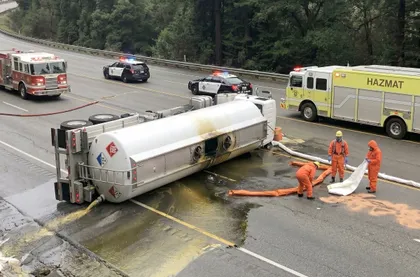
A gas truck crash does not always cause a fire or explosion. Still, leaking fuel or vapor can quickly turn a crash scene very dangerous.
Move away from the truck, smoke, and spilled liquid. Do not walk or drive through the spill. Call 911 from a safe place. Follow evacuation or shelter-in-place orders from emergency crews.
The main dangers at a gas truck crash scene may include:
- Fires: Spilled fuel or vapor can ignite upon contact with heat, flame, or a spark.
- Explosions: Fuel vapor may ignite in a confined area. Pressurized gas tankers, such as propane trucks, can create different explosion risks.
- Fuel Vapor Exposure: Gasoline vapor can irritate the eyes, skin, and airways. Heavy exposure may also cause headaches, dizziness, or confusion.
- Secondary Collisions: Fuel can spill into multiple lanes. This may cause drivers to lose control, brake suddenly, or crash into other vehicles. People injured in these secondary crashes may still have claims if the tanker crash or fuel spill contributed to the collision.
Call 911 right away. Seek medical care if you were hit, burned, or exposed to smoke or fuel vapor. Some pain and other symptoms may appear later. Tell the medical provider that a fuel tanker was involved and describe any exposure you experienced. It may also help if you know how to document the scene of a truck accident.
Gasoline exposure can affect the respiratory system and central nervous system. Severe exposure can cause significant respiratory complications. The exact effects depend on factors such as the substance involved, concentration, duration, and route of exposure.
Steps To Take After Leaving The Scene Of A Gas Truck Crash
Once you are away from the immediate danger, the steps you take can affect both your health and your ability to document an injury claim.
Consider the following:
- Get a proper medical evaluation. See a medical provider and tell them if you were exposed to smoke, fumes, fuel, fire, or other harmful substances.
- Stick to the treatment plan. Follow your doctor’s instructions, complete the treatment, and attend all follow-up appointments.
- Keep medical records. These include copies of medical bills, treatment records, prescriptions, and other accident-related expenses.
- Document your losses. Maintain records of missed work, lost income, and how your injuries affect your daily activities.
- Avoid guessing about the cause of the collision. Stick to the facts when speaking with insurers or other parties, and do not speculate about what caused the crash.
- Preserve important evidence. Take steps to keep trucking, cargo, maintenance, electronic, and HazMat records safe. Accident lawyers can help you send preservation letters to the appropriate parties.
These steps may apply to anyone injured in a tanker crash. Victims may include other drivers, passengers, pedestrians, nearby residents, and even the gas truck driver. Relevant evidence may be held by the trucking company, fuel supplier, cargo loader, maintenance provider, government agencies, or other parties involved in the crash.
Tanker truck accident lawyers rely on available evidence to identify who may be liable for the accident. These pieces of evidence can include police reports, dashcam footage, and witness statements, among others.
How Do Police And Emergency Responders Investigate Tanker Accidents?
After a tanker crash, the agencies at the scene depend on the road, the fuel, and the size of the spill. Police investigate the collision, while fire and HazMat teams manage immediate safety risks.
Each agency may have a different role:
- California Highway Patrol (CHP): CHP usually investigates crashes on state highways. For serious or complex collisions, it may use a Multidisciplinary Accident Investigation Team (MAIT). This team conducts detailed crash investigations and reconstructions.
- Local Fire and HazMat Teams: These teams identify the fuel source, control immediate hazards, and establish evacuation or shelter zones.
- Caltrans and Other Agencies: Caltrans may assist in managing a state highway closure. Local agencies, Cal OES, or DTSC may assist when needed.
Because gasoline and many other tanker cargoes are hazardous materials, investigators may also check for violations of federal safety rules. The Pipeline and Hazardous Materials Safety Administration (PHMSA), part of the U.S. Department of Transportation, regulates how hazardous materials are handled, transported, and maintained. Many of these rules appear in 49 CFR Parts 171 through 180.
Investigators may review:
- Driver logs or electronic logging device (ELD).
- Event data recorder or black box.
- Maintenance files, tank inspections, or shipping papers.
- Photos from the scene and witness statements.
Certain trucks are exempt from ELD requirements, and records may be collected after the scene is cleared. A tanker investigation might gather records from several sources. This includes the carrier, loader, repair shop, police, fire department, and other agencies.
Possible Liable Parties In A Gas Truck Accident
Determining who may be responsible for a gas truck accident depends on the circumstances of the crash. Several factors may affect liability, including driver conduct, truck maintenance, cargo loading and securement, road conditions, and compliance with applicable safety regulations.
Fuel tanker crashes may involve several responsible parties:
- Truck Driver: Distracted driving, fatigue, speeding, or hours-of-service violations.
- Trucking Company: Poor hiring, unsafe training, weak supervision, or failure to maintain the truck.
- Cargo Loading Company: Improper filling, excess weight, or unsafe loading procedures that caused or worsened the crash.
- Maintenance Company: Missed defects, poor repairs, or incomplete tank and vehicle inspections.
- Tanker Manufacturer: A defective tank, valve, brake part, or other component that contributed to the harm.
- Another Driver or Public Entity: Unsafe driving or a dangerous road condition that contributed to the crash.
A trucking company may be responsible when an employee causes a crash while doing work for the company. Other claims may depend on hiring, control, contracts, and the driver’s work status.
Federal HazMat safety rules may also affect who is responsible. These records can provide insights into the circumstances surrounding the incident:
- Cargo-tank inspections
- Placards
- Shipping papers
- Driver endorsements
- Training and loading procedures
When a safety rule is violated and the violation contributes to the crash or injuries, it may become important evidence of negligence under California law.
If a victim shares fault, they still have legal options. California follows a pure comparative negligence rule under Li v. Yellow Cab Co. (1975). An injured person may recover damages even when partly at fault. However, their share of fault reduces the available recovery.
Insurance And Available Compensation In A Gas Truck Crash Case
Under 49 CFR § 387.9, many carriers hauling gasoline must maintain at least $1 million in financial responsibility. The rule requires $5 million for certain higher-risk hazardous materials, including Division 2.1 or 2.2 gases transported in bulk.
These are minimum financial responsibility levels, not promised payouts. Available payment depends on fault, injuries, policy terms, other coverage, and the number of claims.
A California injury claim may include economic and non-economic damages. The available damages depend on the injuries, proof, and facts of the case. An injured person in a gas truck crash may be able to seek compensation for:
- Medical Expenses: Emergency treatment, hospital care, surgery, burn treatment, therapy, medication, and future medical needs.
- Lost Income: Wages lost during recovery and, in serious cases, reduced future earning ability.
- Property Damage: Repair or replacement of a damaged vehicle or other property.
- Pain and Suffering: Physical pain, emotional distress, scarring, loss of enjoyment of life, and other non-economic harm.
If a person dies, certain relatives may bring a wrongful death claim for losses allowed under California law.
Case Results: Holding Trucking Companies Accountable
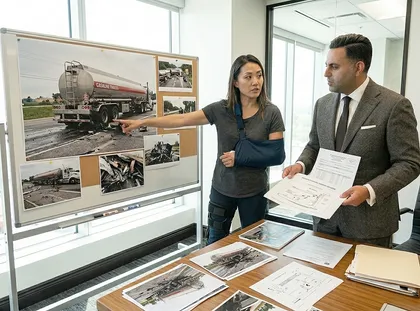
These results involve other types of truck crashes rather than gas tanker accidents. However, they show our firm’s experience handling serious trucking cases, investigating driver and company negligence, and pursuing compensation for injured clients.
- $5,500,000: Our client suffered a spinal cord injury and a mild traumatic brain injury in a rollover truck crash while working. We secured a $5.5 million settlement for his injuries and related losses.
- $1,150,000: A large delivery truck rear-ended our client on the freeway, leaving her with neck and back injuries. Although the defense pointed to her weight and pre-existing conditions, we successfully resolved the case through mediation.
- $1,000,000: A reckless truck driver struck our clients’ vehicle, causing severe injuries. We pursued the claim and recovered the maximum insurance limits available to help the family with their losses.
Case Results Disclaimer: Past results do not guarantee a similar outcome. Each result depends on the facts, evidence, injuries, insurance, law, and other circumstances.
Frequently Asked Questions About Gas Truck Accidents
A gas truck crash leaves you dealing with fire risks, road closures, and serious injuries all at once. Sorting out who is responsible and what your rights are can feel impossible in those first hours and days. The questions below address your legal rights under California law, so you know exactly where you stand.
Does A Gas Truck Always Explode After A Crash?
No. A crash may damage the tank without causing an explosion. The risk depends on the fuel, the leak, ventilation, heat, and ignition sources.
How Long Do I Have To File A Claim In California?
In many California injury cases, you have 2 years to file a lawsuit under CCP § 335.1. Filing an insurance claim does not replace that deadline.
A claim against a California public agency may need to be presented within 6 months. Different rules and exceptions may apply.
Who Pays For My Medical Bills?
Health insurance, Medi-Cal, MedPay, or another source may cover care while the injury claim is pending. The liable party’s insurer may not pay each bill as it arrives.
If Medi-Cal paid for related care, DHCS may seek repayment from a settlement, judgment, or award. The amount depends on the covered care and recovery.
Can I Sue The Trucking Company Directly?
In many cases, yes. When a driver causes a crash while working, the trucking company may be held liable, too. Depending on the evidence, claims may also involve companies responsible for loading, maintaining, inspecting, or manufacturing the tanker or its components.
Can Someone Have A Claim Without Hitting The Gas Truck?
Potentially. A person does not necessarily have to collide directly with the tanker to suffer an injury connected to the crash. For example, a fuel spill could contribute to a secondary collision. Meanwhile, fire, smoke, or hazardous substances released during the accident could injure people nearby.
Whether someone has a valid personal injury claim depends on whether another party’s wrongful conduct caused or contributed to the person’s injuries and losses.
What If The Gas Truck Driver Blames Me?
The driver’s accusation does not decide fault. Evidence such as police reports, witness statements, photos, video, electronic truck data, and maintenance or cargo records may help show what actually caused the crash.
Under California’s comparative negligence rule, you may still recover compensation even if you were partly at fault. Your percentage of responsibility generally reduces your recovery.
Injured In A Gas Truck Collision? Let’s Talk About What Happened.
Tanker crashes may involve several insurers, companies, and sets of records. Those parties may start investigating before an injured person leaves the hospital. Arash Law can evaluate your case and help you understand your possible legal options. Our tanker truck accident lawyers handle cases on a contingency fee basis. You pay no attorney’s fees unless we recover on your behalf.
If you were hurt in a tanker truck accident, do not wait. The sooner you act, the better your chances of preserving the evidence that proves what happened. Call now and protect your rights. Call AK Law at (888) 488-1391 for a free case review.