TL;DR: Logging workers have the highest fatal injury rate among selected U.S. occupations, based on 2024 BLS data. BLS reported a fatal injury rate of 110.4 deaths per 100,000 full-time equivalent workers for logging workers. Fishing and hunting, construction, and roofing workers also ranked among the highest-risk jobs.
Highlights:
- Logging workers have the highest fatal injury rate among selected U.S. occupations.
- Transportation and material-moving jobs have the most serious nonfatal injury cases nationwide.
- Common accidents include overexertion, slips, trips, falls, and being struck by objects.
- Typical injuries involve strains, sprains, fractures, and lower back, knee, or shoulder damage.
- Workers may file a workers’ compensation claim within one year of the injury.
- You must file third-party lawsuits within two years of your injury and provide proof of negligence.
Tip: Document the accident scene, equipment involved, and witness information promptly to preserve evidence.
Table of Contents
Logging workers have the highest fatal injury rate among selected U.S. occupations. This article focuses on the fatal injury rate because it shows deaths relative to workforce size, making it easier to compare risk across jobs. In 2024, the Bureau of Labor Statistics (BLS) reported a fatal injury rate of 110.4 deaths per 100,000 full-time equivalent workers for logging workers. Transportation and material-moving occupations have the most serious nonfatal injuries, but those are total counts, not rates per worker.
Jobs With The Highest Fatal Injury Rates Nationwide
The U.S. workforce spans many jobs, but injury risk depends on how the data is measured. Fatal injury rates show which jobs are most dangerous, relative to their workforce size. Case counts show which jobs have the most total injuries.
According to 2024 BLS fatal injury rate data, logging workers had the highest fatal injury rate among selected U.S. occupations, at 110.4 deaths per 100,000 full-time equivalent workers. Fishing and hunting workers followed at 88.8, and roofers followed at 48.7. These rates answer the question of which jobs are deadliest compared with the workforce size.
Jobs With The Highest Fatal Injury Rates
Logging workers have the highest fatal injury rate among selected U.S. occupations. This article uses the fatal injury rate because reliable job-level data is more readily available for fatal workplace injuries than for overall injury rates by specific job. General nonfatal injury data often group workers into broad categories or report total case counts, which does not clearly answer which specific job has the highest per-worker risk. For that reason, the fatal injury rate is used here as the clearest available job-level measure.
According to 2024 BLS data, logging workers had a fatal injury rate of 110.4 deaths per 100,000 full-time equivalent workers. Fishing and hunting workers ranked second at 88.8. Roofers ranked third at 48.7.
| Job | Fatal Injury Rate Per 100,000 Full-Time Equivalent Workers | Number of Fatal Work Injuries |
|---|---|---|
| Logging workers | 110.4 | 51 |
| Fishing and hunting workers | 88.8 | 24 |
| Roofers | 48.7 | 104 |
| Structural iron and steel workers | 37.8 | 14 |
| Refuse and recyclable material collectors | 37.4 | 36 |
| Aircraft pilots and flight engineers | 36.7 | 73 |
| Helpers, construction trades | 35.8 | 18 |
| Underground mining machine operators | 35.6 | 12 |
These jobs rank high because workers often face dangerous environments, heavy equipment, heights, moving vehicles, severe weather, or remote job sites. Logging workers, for example, work around falling trees, cutting equipment, uneven terrain, and heavy machinery. Roofers face fall hazards, while fishing and hunting workers often work in unpredictable outdoor conditions.
High Risk Industries In California
The table above compares job-level fatal injury rates on the national level. Industry data is different. It groups many jobs, showing where risks are concentrated, but not the single most dangerous job.
California data shows which occupation groups had the most fatal injuries from 2015 to 2024. Transportation and material-moving had 1,064 deaths, construction and extraction had 756, and farming, fishing, and forestry had 325.
Industry rates tell a separate story. Agriculture and natural resources had the highest rate at 12.3 deaths per 100,000 workers. Trade, transportation, and utilities had 6.7, and construction had 6.3.
| California Data Point | What It Measures | Figure |
|---|---|---|
| Transportation/material-moving occupations | Fatal injury count by occupation group | 1,064 deaths |
| Construction/extraction occupations | Fatal injury count by occupation group | 756 deaths |
| Farming/fishing/forestry occupations | Fatal injury count by occupation group | 325 deaths |
| Agriculture/natural resources | Industry fatality rate | 12.3 per 100,000 workers |
| Trade, transportation, and utilities | Industry fatality rate | 6.7 per 100,000 workers |
| Construction | Industry fatality rate | 6.3 per 100,000 workers |
In short, job data answers which specific occupations have the highest fatal injury rates. Industry data shows which broader work sectors have high fatality risks.
Jobs With The Most Nonfatal Injury Cases
For nonfatal injuries, the picture changes. According to the National Safety Council (NSC), the following occupations had the highest number of Days Away From Work (DAFW) and Days Away from Work, Job Restriction, or Transfer (DART) cases from 2023 to 2024:
- Transportation and Material Moving: Jobs involving freight and warehouse operations. Examples include driving, delivering goods, and handling materials. Workers are particularly prone to forklift and other equipment-related collisions and injuries.
- DAFW Cases: 468,830 (26% of total).
- DART Cases: 805,900 (27% of total).
- Production: Manufacturing and factory jobs that include operating machinery and assembling products. Common accidents include crush injuries, repetitive stress injuries, and exposure to hazardous substances.
- DAFW Cases: 184,660 (10% of total).
- DART Cases: 357,390 (12% of total).
- Installation, Maintenance, and Repair: Jobs related to fixing, servicing, and maintaining equipment, vehicles, and systems. Workers frequently face risks from falls, electrical accidents, equipment malfunctions, and tool-related injuries.
- DAFW Cases: 158,260 (9% of total).
- DART Cases: 244,270 (8% of total).
- Food Preparation and Serving: Jobs in restaurants and food service involve cooking, handling food, and serving customers. Common accidents include slips and falls, burns, cuts from sharp tools, and lifting-related injuries.
- DAFW Cases: 149,300 (8% of total)
- DART Cases: 228,170 (8% of total)
Common Causes Of Workplace Accidents And Injuries
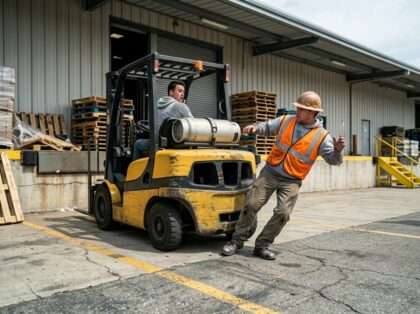
High-risk jobs often involve the same types of accidents. These incidents usually occur when workers perform physically demanding tasks or navigate hazardous environments. Accidents can also happen when they work around moving equipment and materials. If you work in one of these industries, your injury may fit one of these common patterns.
Here are the most common causes of accidents in high-risk jobs:
- Overexertion: Workers in construction or agricultural industries are more prone to these injuries. Overexertion happens when workers lift, carry, push, or pull heavy items.
- Slips, Trips, and Falls: These incidents are common on farm fields, construction sites, and loading docks where surfaces may be uneven, wet, or cluttered. They can also occur in kitchens and manufacturing facilities.
- Being Struck by Objects: This hazard is common among workers in warehouses and transportation settings. They face this risk when working near moving equipment or falling materials.
Work-related accidents often cause the following injuries:
- Strains and Sprains: Commonly result from overexertion and repetitive physical tasks.
- Fractures: Frequently occur after falls or other workplace accidents involving significant impact.
- Lower Back, Knee, and Shoulder Injuries: Often happen after falls, heavy lifting, or overexertion. They are common in physically demanding jobs.
Thinking, “I need a personal injury lawyer,” after a workplace incident is understandable. You may not immediately know your options and what damages you can pursue.
Your Legal Options After A California Workplace Injury
Some high-risk jobs expose workers to heavy equipment, traffic, falls, and other serious hazards. Even when workers know a job has risks, California employers must still provide a safe and healthful workplace. Employees injured on the job may file workers’ compensation claims. In some cases, they may also have a third-party personal injury claim:
- Workers’ Compensation: California Labor Code § 3700 requires employers to secure payment of workers’ compensation benefits, usually through insurance or approved self-insurance. You don’t need to prove whose fault the injury was to seek benefits. In exchange, you generally cannot directly sue your employer for the harm you sustained. Benefits typically cover:
- Necessary medical care.
- Part of your lost wages.
- Temporary or permanent disability benefits.
- Job displacement benefits.
- Death benefits for dependents in fatal cases.
- Third-Party Claim:
This option may apply when someone other than your employer caused your injury. Examples include a driver who hit you on the job, a subcontractor who created a job site hazard, a property owner who allowed a dangerous condition, or a manufacturer of faulty equipment.
Unlike workers’ compensation claims, third-party claims can account for full wage loss and personal losses, such as pain and suffering. However, you must prove that negligence caused your injury. Workplace accident lawyers use the available evidence to identify parties who may share responsibility in these incidents.
Though you could pursue both types of claims at the same time, keep these points in mind:
- Double Recovery Bar: Both claims cannot pay for the same loss.
- Subrogation and Liens: Your employer’s workers’ compensation carrier can seek reimbursement for the benefits it provided. This repayment is usually made from the settlement or judgment after certain fees and costs are addressed.
Additionally, strict deadlines apply. You generally have:
- One year to file a workers’ compensation claim, although the deadline can depend on the injury date, the last payment of disability benefits, or the last furnishing of medical benefits.
- Two years to file a personal injury lawsuit.
Some exceptions can change these filing windows. Missing the one that applies to your case can compromise your ability to pursue compensation in California. Knowing what to do after a workplace accident can help you build a claim before that window closes.
Frequently Asked Questions About Work Injury Claims In California

If you got hurt on the job in California, you likely have questions beyond the basics. These answers address the questions injured workers ask most often.
Can I Sue My Employer For A Workplace Injury In California?
Not always. In California, workers’ compensation is usually the exclusive remedy for workplace injuries. That means you generally cannot file a personal injury lawsuit against your employer. There are, however, limited exceptions:
- The employer intentionally caused harm.
- The employer had a dual role, creating liability outside the traditional employer-employee relationship. For example, they also manufactured, designed, or sold a defective piece of equipment that injured you.
Whether you can directly sue your employer in these situations depends on the specific facts of the case.
Does Workers’ Compensation Cover My Sessions With A Chiropractor?
Workers’ compensation can cover chiropractic care if the insurer or your treating doctor approves the visits. The care must be authorized through the workers’ compensation system before you go.
What Should I Do If My Workers’ Compensation Claim Gets Denied?
You can file an appeal through the California Workers’ Compensation Appeals Board. Some victims consider seeking free advice from a work injury lawyer to determine how to appeal a denied claim.
How Long Do I Have To Report A Work Injury In California?
California law requires you to report a work injury to your employer as soon as possible. You generally have 30 days to report the injury before you risk losing your workers’ compensation benefits.
Do Lawyers Only Get Paid If They Win A Workplace Accident Case?
In many cases, yes. Personal injury attorneys who handle third-party workplace claims typically work on a contingency fee basis. Under this arrangement, you pay no attorney’s fees unless they win or settle your case.
Consult Arash Law For Your Work Injury Case
Even if your job is known for having a high injury rate, your employer is still responsible for maintaining a safe work environment. If you get injured in an otherwise preventable accident, our work injury attorneys are ready to review your situation at no charge.
AK Law can help guide you through the process of seeking benefits from your employer’s workers’ compensation insurance. In some cases, someone other than your employer may be at fault for what happened. If so, our work injury lawyers can help you explore a personal injury claim. Our attorneys work on a contingency basis, meaning you don’t have to pay us up front.
Call (888) 488-1391 to schedule your free initial consultation.