TL;DR: The rear driver is usually at fault in California, unless the front driver’s U-turn is illegal or unsafe. You can recover damages for medical bills, lost wages, and pain and suffering based on comparative fault, but missing the 2-year deadline for filing suit can bar your case. Government claims usually have a 6-month deadline.
Highlights:
- Check if the U-turn was legal or prohibited at the intersection.
- Look for evidence showing unsafe or unexpected turning movement.
- Note whether you had enough time and space to stop safely.
- Collect photos showing impact angle and lane positions.
- Obtain the police report and carefully verify the cited violations.
- Preserve dashcam or vehicle data showing pre-crash actions.
Tip: Stick to factual observations at the scene and avoid guessing fault details with insurers.
Table of Contents
Determining who is at fault if you rear-end someone making a U-turn starts with a default rule: the rear driver is usually presumed at fault. Police reports and insurance adjusters may examine whether the rear driver was following too closely. However, if the driver ahead made an unsafe or illegal U-turn, different rules apply.
Fault in these crashes is not automatic. The U-turning driver had a legal duty to complete that maneuver safely and yield to traffic already on the road. If they failed to do that, the responsibility for the crash could fall on them, at least in part.
The General Rule: Why The Rear Driver Is Usually Presumed At Fault
California law starts with a clear rule in rear-end crashes: the driver who hits the car ahead is presumed at fault. This presumption comes from a state traffic law. It shapes how police reports, insurance adjusters, and courts initially view the crash. If you need a personal injury lawyer, understanding this presumption is the first step toward building your case.
The California Vehicle Code (CVC) requires drivers to maintain a safe distance from the vehicle ahead. Drivers must leave enough room to stop if the car in front slows or stops. The law takes into account speed, traffic, and road conditions when deciding what is “reasonable and prudent.”
This rule creates a rebuttable presumption. The law assumes the rear driver was at fault from the start. However, “rebuttable” means the assumption is not permanent. You can challenge it by presenting evidence that another driver’s actions caused the crash.
Tailgating or distracted driving usually makes it difficult to argue against liability in an accident. However, you can challenge this if the driver in front violated a traffic law before the crash. A police report can provide initial information, but it doesn’t determine who is at fault. If the front driver’s violation directly caused the accident, the focus shifts to their actions rather than to how closely the rear driver was following.
When The U-turning Driver Is Liable Under California Law
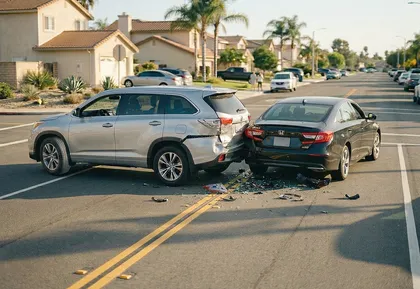
While the rear driver often gets blamed after a crash, the law can shift liability to the U-turning driver. This can happen if the driver in front turns illegally or fails to yield. In those cases, the turning driver, not the rear driver, may be responsible for the collision. That shift depends on which traffic law violations caused the crash.
Under the CVC’s right-of-way rules for left turns and U-turns, a driver making a U-turn must yield to all oncoming vehicles close enough to pose a hazard. That duty lasts until they can turn safely.
California law makes U-turns illegal in several specific situations:
- Intersection With a “No U-Turn” Sign: Drivers may not make a U-turn at intersections with a posted “No U-Turn” sign, regardless of the traffic signal.
- Mid-Block in a Business District: Drivers can only make U-turns at intersections or at marked openings for that purpose. Business areas include streets with shops, restaurants, or offices.
- Residential Street With An Approaching Vehicle Within 200 Feet: Drivers may not make a U-turn on a residential street if another vehicle is approaching from either direction within 200 feet, regardless of how far they can actually see.
- Highway With Less Than 200 Feet of Visibility: Drivers may only make a U-turn when they have at least 200 feet of clear sight. Higher speeds on highways reduce reaction time, so turns are only allowed when safe.
California’s negligence law establishes a general duty of ordinary care for all drivers. That means they must act reasonably to prevent harming others on the road. If a victim can prove that a driver caused a crash due to carelessness, that driver may be negligent.
When a driver breaks a traffic rule and causes an accident that the rule was meant to prevent, it may support a claim of negligence per se. That means a victim doesn’t have to prove ordinary negligence. The violation itself can serve as evidence of a breach of duty. However, liability still depends on whether the statute applies to the type of harm and the facts of the case. An attorney can help show how the traffic violation led to your injuries and damages.
In many real crashes, both drivers share some blame. The front driver may have turned illegally while the rear driver was following too closely or speeding. Fault in these crashes is rarely all-or-nothing, which is where questions of shared liability come in. Our rear-end accident lawyers can help assess where fault lies in your case.
Shared Fault: How California’s Pure Comparative Negligence Applies
When both drivers make mistakes, California law allows each party to seek compensation. You can still recover money for your injuries, even if you’re up to 99% at fault for the crash. However, your share of the blame reduces the total amount you may receive.
To illustrate, suppose a court finds you 30% at fault because you were tailgating. However, the driver you rear-ended is still the primary liable party because they made an illegal U-turn. In this scenario, you could still recover 70% of your total damages. The specific facts of the crash determine fault percentages.
However, insurance companies may use comparative negligence to argue that you contributed more to the accident than you actually did to reduce the amount they have to pay. If you have enough evidence, you can better push for a fairer assessment of fault.
How Evidence Determines Fault In A U-turn Crash
Physical evidence can be the deciding factor in a U-turn crash. When both drivers tell different stories, objective proof can determine each party’s share of fault. Each piece of documentation can help show that the U-turning driver caused the crash, not you:
- Police Report: This is the first official record of the crash. Police reports may face limitations on admissibility as evidence in court. However, many insurers refer to it when assigning fault and negotiating settlements. If the officer cited the front driver for a violation, that finding carries real weight.
- Photos: These can show the location and extent of damage on your vehicle. Experts, such as accident reconstructionists, can use it to determine the angle of impact. A side-angle strike, rather than a direct rear hit, may show that the U-turning driver cut into your lane.
- Dashcam Footage: This can capture where each car was just before impact.
- Event Data Recorders (EDRs): Also called black boxes, EDRs record speed, brake pressure, and steering inputs before a crash. This data comes directly from the vehicle itself, so it is hard to dispute.
When an attorney collects this evidence early, it can support a negligence claim against the driver who made the illegal U-turn. The quality of your evidence record shapes what your attorney can seek for you. Our guide on what to do after a rear-end collision can help you understand the kind of proof you can gather at the scene and which ones you may have to obtain with legal support.
What Compensation Can You Recover After A Rear-End Crash?
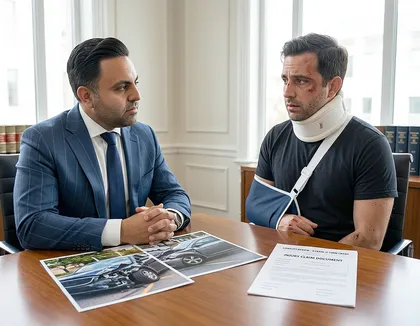
After a rear-end crash, California law lets you seek two types of damages:
- Economic damages cover losses with a monetary value. They can include medical bills, car repair costs, and lost wages. These are the out-of-pocket losses you suffered because of the crash. Rear-end injuries like whiplash often need weeks or months of care. Costs for a chiropractor or physical therapy may be covered if the care was medically necessary.
- Non-economic damages cover harm that has no fixed price. They can compensate for the pain and suffering, as well as any scarring or disfigurement, that your injuries cause. You can also recover money for the impact your injuries have on spousal relationships or your ability to enjoy the activities you used to participate in. Some rules dictate whether and how you seek these damages:
- Proposition 51 limits how non-economic damages, such as pain and suffering, are allocated among multiple defendants based on their percentage of fault.
- Proposition 213 generally bars uninsured drivers from recovering non-economic damages in most cases, even if the other driver was at fault, with limited exceptions. You can still seek medical costs and lost wages, but pain and suffering are not available.
Knowing which damages apply to your case is the first step toward protecting the full value of your claim.
Frequently Asked Questions About Rear-End Claims Involving Illegal U-Turns
U-turn crashes and rear-end collisions raise a lot of questions about fault and what you can do next. California law does not always give a simple answer, and the details of how and where the turn happened can matter. Fault in these crashes often comes down to which driver broke a specific traffic law.
Who Has The Right-Of-Way If Both Drivers Had A Green Light?
A green light does not eliminate a driver’s duty to yield. A driver making a U-turn must still give the right of way to oncoming traffic that presents a hazard and complete the turn only when it is safe to do so.
How Does An Illegal U-Turn Impact A Personal Injury Lawsuit?
An illegal U-turn can support a negligence claim. In some cases, negligence per se may apply if you can prove the U-turn was illegal and that the traffic violation directly caused your injuries and losses. Fault still depends on the full circumstances of the crash.
Are U-Turns Legal At Intersections In California?
U-turns are generally allowed at intersections unless a sign prohibits them or other traffic rules prohibit them. Drivers must make the turn safely, from the far-left lane when required, and yield to oncoming traffic and pedestrians when necessary.
How Long Do I Have To File A Rear-End Accident Claim In California?
You generally have two years from the date of the crash to file a personal injury lawsuit. If a government entity is involved, you typically must file an administrative claim within six months. Exceptions may apply in your situation, so it’s generally safer to ask a lawyer how much time you have to take legal action rather than assuming the deadline.
Ask Our Lawyers About Your Rights After You Rear-End Someone Making A U-Turn
Insurance adjusters move fast after a rear-end crash. Many will contact you within days and may try to blame you as the rear driver, before you have had a chance to gather evidence or see a doctor. If you are thinking, “I need a personal injury lawyer,” our team can evaluate your situation and explain your options.
Arash Law can review the facts, identify all potentially at-fault parties, and take over all contact with the insurance company. If negotiations fail to produce a settlement that reflects your losses, we can prepare to represent you in court.
If you’re wondering about the cost of these services, you may be wondering, “Do lawyers only get paid if they win?” The answer is yes at our firm. We work on a contingency-fee basis, so you don’t pay attorney’s fees unless we win or settle your case.
If you’re only finding general insights after searching for free advice from a rear-end accident lawyer online, consider booking a face-to-face meeting to get tailored guidance on your situation. Our team is ready to evaluate your rear-end collision. Call AK Law (888) 488-1391 for a no-cost initial consultation.