TL;DR: When 2 cars merge into the same lane and collide, the driver who made an unsafe lane change is usually at fault. Fault depends on who failed to signal, check blind spots, or yield under California law, and both drivers can share liability. That can reduce your payout for medical bills, lost wages, and vehicle repairs.
Highlights:
- Get checked by a doctor and follow the treatment plan.
- Photograph vehicle damage, lane markings, debris, and the point of impact.
- Collect witness names, numbers, and quick statements before they leave.
- Look for nearby cameras and request video before it’s overwritten.
- Save every record: police report, bills, letters, estimates, and photos.
- Report the crash to insurance, but stick to facts and avoid guessing.
- Track key deadlines: 2 years for injury, 3 years for property damage, and 6 months for government claims.
Tip: If a business may have footage, email a dated request to preserve the video and keep a copy.
Table of Contents
When two cars merge into the same lane and collide, the driver who merges carelessly or recklessly is usually at fault. Sometimes, both drivers might share the blame, which can affect how much compensation you receive for medical bills, lost wages, and car repairs.
Crashes frequently rely on evidence rather than assumptions. Elements such as photos, vehicle damage, lane markings, dashcam footage, witness statements, and police reports can clarify who acted first, who had sufficient space, and whether either driver overlooked a blind spot or merged at an unsafe speed.
Who Is Usually Responsible When Two Cars Merge Into The Same Lane?
The driver who fails to signal or ensure that the lane is clear is typically held responsible for a collision that occurs during a same-lane merge. However, both drivers can share liability if they each contributed to the accident. Lawyers, insurance companies, and courts evaluate fault by examining the available evidence and determining if any traffic laws were broken.
Fault typically depends on whether one or both drivers:
- Moved before the lane was clear.
- Failed to signal and warn surrounding traffic.
- Did not check their blind spots before merging.
- Abruptly sped up or slowed down while merging, despite that action being unsafe for the conditions.
- Entered the same open lane at nearly the same time.
How Merge Accidents Usually Happen
Same-lane merge scenarios often happen on freeway on-ramps, near construction zones, and on roads with two or more lanes. They can also occur during mistimed zipper merges. The specific facts of the case, such as existing road conditions and each driver’s actions, can determine who is liable for a crash:
| Traffic Situation | What Matters Most | Who Is Likely At Fault? |
|---|---|---|
| Two Cars Moving Into The Same Lane | Each driver must check traffic, the signal, and move only when it is safe. | One or both drivers may be at fault if they moved into the lane without making sure there was enough space. |
| Freeway On-Ramp Merge | The merging driver must enter traffic safely. Drivers already in the lane must still avoid careless or aggressive driving. | The merging driver may be at fault for forcing their way into the lane. The other driver may share fault if they sped up, blocked the merge, or acted aggressively. |
| Lane-Ending Construction Zone | Drivers must follow signs, merge safely, and adjust to lane closures. | A driver may be at fault for waiting too long, cutting in, blocking another vehicle, or failing to leave enough space. |
| Double-Turn Lane Merge | Drivers must stay in their assigned turn lane unless it is safe to move over. | A driver who drifts out of their lane, cuts across another vehicle’s path, or moves over too soon may be at fault. |
| Zipper Merge Disputes | Drivers should use both lanes until the merge point and take turns entering the open lane. | A driver may be at fault for blocking the merge, speeding up to prevent entry, or forcing into the lane without enough room. |
What To Do After A Merge Accident
After a merge accident, focus on protecting your health, records, and injury claim. These crashes often involve disputes about who entered the lane first, who signaled, and whether either driver forced the merge. The steps you take after the crash can help show what happened and connect your injuries to the collision.
Take these steps as your case develops:
- Get Medical Care: See a doctor, chiropractor, or physical therapist if you feel pain or notice new symptoms. Follow your treatment plan. Gaps in care can give the insurer an opening to argue that the crash did not cause your injuries.
- Keep All Crash Records: Save the police report, insurance letters, repair estimates, medical bills, treatment notes, and any photos or videos from the scene.
- Write Down What Happened: Record what you remember while the details are fresh. Include the lane you were in, where the other vehicle came from, whether anyone signaled, traffic speed, road conditions, and the point of impact.
- Preserve Evidence: Keep photos of vehicle damage, lane markings, debris, skid marks, nearby cameras, and visible injuries. If businesses, homes, or traffic cameras were nearby, video may need to be requested quickly before it is deleted.
- Notify Your Insurance Company: Report the crash, but avoid guessing about fault or giving a recorded statement before you understand your injuries and rights.
- Track How the Injury Affects You: Keep notes about missed work, pain levels, medical appointments, driving anxiety, sleep problems, and limits on daily activities.
- Speak with a Lawyer if Fault Is Disputed: Merge accidents often turn into “he said, she said” claims. A lawyer can review the crash details, gather evidence, deal with the insurer, and determine whether one or both drivers share fault.
When Should You Talk To A Lawyer After A Merging Collision?
You should consider legal help if you were injured in a collision, causing you to miss work and receive ongoing medical care. An attorney can assist if an insurer pressures you into accepting an early settlement offer. They can also help when there are disputes over fault, as both drivers merged at the same time.
If you are thinking, “I need a personal injury lawyer,” it’s likely because issues related to fault, your injuries, insurance, or deadlines are already becoming difficult to manage on your own. In merging accident cases, car accident lawyers often consider lane position, speed, turn signals, vehicle damage, police reports, and witness statements to understand how the crash occurred.
Do You Have A Case After A Merging Accident?
After a merge accident, you may have a claim if another driver’s negligence caused or contributed to the crash. Under California law, negligence occurs when someone fails to take reasonable care to prevent harm. On the road, that means drivers must act safely to prevent accidents. If someone acts carelessly and causes a merging accident, they could be liable for your injuries and losses.
In other words, these four key elements of negligence must be present for you to have a valid claim:
- Duty: All drivers have a legal obligation to drive safely and follow traffic laws. They must merge carefully and yield to other vehicles when necessary.
- Breach of Duty: A driver merges without checking blind spots, signaling, or yielding when required.
- Causation: The breach directly caused the same-lane merging accident.
- Damages: You sustained actual losses, such as property damage to your car and injuries resulting in medical expenses.
What Does California Law Say About Merging Into The Same Lane?
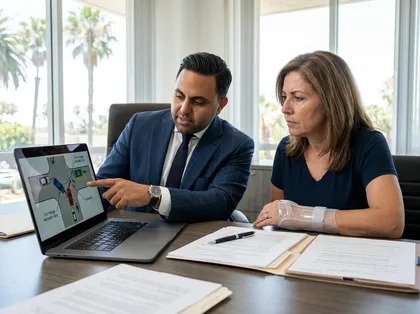
California law defines when it is safe to merge into a lane. Reviewing these traffic rules can be critical. If the at-fault driver broke one of them, negligence per se may apply to your claim. Under this legal theory, you don’t need to prove that they acted carelessly. Instead, their traffic law violation will serve as evidence of their negligence.
These are a couple of the most relevant state rules that apply to merging:
- California Vehicle Code (CVC) Section 22107: Drivers cannot change lanes unless it’s reasonably safe to do so and they signal other drivers in advance. That means it isn’t legal to merge carelessly just because you signaled other drivers first.
- CVC Section 22108: Drivers must signal their intention to change lanes or make a turn at least 100 feet before doing so.
The California Department of Motor Vehicles gives similar practical guidance. In particular, they recommend that drivers do the following when merging onto highways:
- Match the speed of traffic.
- Use your mirrors to check your blind spots and over your shoulder.
- Do not cross over solid lines. If you need to change lanes several times, signal and cross over them individually.
Does The Driver Already In The Lane Always Have The Right Of Way?
Usually, but not always. A driver who is already in the lane often has the stronger position, especially if another driver is still trying to merge. For example, the California Department of Motor Vehicles says traffic already on the highway has the right of way over vehicles entering the highway.
Still, having the right of way does not give a driver permission to act carelessly. A driver already in the lane can still share fault if they speed up to block another car, drift out of their lane, follow too closely, or make a sudden, unsafe move.
Fault becomes less clear when both drivers move into the same lane at nearly the same time. In that situation, the question is not just who had the right of way. The insurer, lawyer, or court will consider each driver’s actions before the crash, including speed, signals, lane position, traffic conditions, and whether either driver had enough time to avoid the collision.
How Does Comparative Fault Work In California Merge Accidents?
Comparative fault means multiple parties can be liable for a merging accident, including injured victims. California follows pure comparative negligence, which means you can still pursue compensation if you’re up to 99% at fault. However, that percentage of responsibility will reduce your potential payout.
Here is a simple example: if your damages are $100,000 and you are 30% at fault, a court may only award you $70,000.
In a same-lane merge crash, comparative fault can occur if:
- Driver A failed to check the blind spot.
- Driver B sped up during the merge.
- Both drivers failed to give each other enough space to merge.
- One driver signaled, but the lane change itself was unsafe.
However, comparative fault arguments are more likely when accidents occur near closed lanes and lane drops near construction zones and on highways. Here, zipper merges are often necessary, and many vehicles must change lanes repeatedly. As a result, the actions of multiple drivers can contribute to a crash.
That is why having clear evidence matters. A small fault percentage can make a major difference in the final claim value. This is one reason why at-fault parties and insurers use comparative fault as a defense: to lower their legal and financial liability.
What Evidence Helps Prove Fault In A Merging Collision?
Evidence matters because merging accidents can turn into “he said, she said” disputes. The strongest proof shows where each vehicle was and when each driver moved. It should also demonstrate whether either driver had enough time and space to avoid the crash.
Useful evidence includes:
- Photos of vehicle damage, road markings, traffic signs, and final resting positions.
- Dashcam footage or surveillance video from a nearby business.
- Witness names, phone numbers, and short statements.
- Police report details, including diagrams, citations, and officer observations.
- Phone metadata if distracted driving becomes an issue.
- Medical records that connect your symptoms to the crash.
Insurers often use this evidence, along with auto insurance policy information, to determine fault after a merge accident. You can also leverage proof to support your claim.
However, many crash records can be time-sensitive or hard to collect. For example, nearby businesses may have surveillance footage, but security systems often overwrite video after a short period. In these situations, a lawyer can send preservation letters and, when needed, use a subpoena to obtain relevant footage.
What Injuries Can Happen In A Merging Accident?
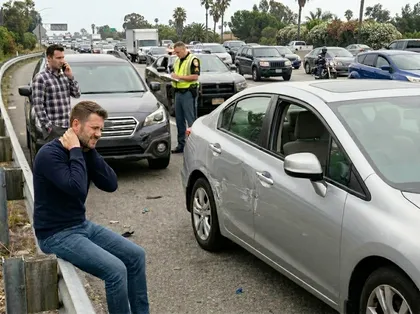
Merging accidents often involve sideswipe impacts. A sideswipe can force a vehicle into another lane, off the road, or into a guardrail. The risk increases when a truck, rideshare vehicle, motorcycle, or high-speed freeway merge is involved in the crash.
Injuries can include:
- Neck and back injuries.
- Shoulder, wrist, and knee injuries.
- Concussions and other traumatic brain injuries.
- Nerve pain, numbness, or radiating pain.
- Broken bones, cuts, and bruising.
- Anxiety, sleep problems, or fear of driving after the crash.
What Compensation Can An Injured Person Claim After A Merge Crash?
If another driver caused or contributed to the merging accident, injured victims can seek compensation for crash-related losses through personal injury claims. The damages you can seek depend on injury severity and the available evidence for how the crash impacted your life.
A claim can include compensation for costs related to:
- Medical Expenses: Emergency care, follow-up visits, imaging, therapy, medication, and future care.
- Lost Income: Missed work, reduced hours, or lost job opportunities tied to the injury.
- Reduced Earning Capacity: Typically applies if injuries result in disability.
- Pain and Suffering: Physical pain, emotional distress, and loss of normal daily activities.
- Property Damage: Vehicle repairs, total-loss value, towing, rental costs, and related expenses.
- Wrongful Death Damages: Sought by eligible surviving family members after a fatal merging accident.
How Long Do You Have To File A Merge Accident Claim In California?
Under the Code of Civil Procedure, you must file personal injury lawsuits within two years from the date of injury. This deadline usually applies to car accident cases, including merge accidents.
Some deadlines are different:
- Wrongful death claims: Surviving family members usually have two years from the date of death to file.
- Property damage claims: You usually have 3 years if the case involves only vehicle or property damage.
- Government-related claims: You may have only six months to file an administrative claim if a government agency, public employee, public vehicle, or unsafe public road condition contributed to the crash.
For government claims, you usually must file the administrative claim first. You can file a lawsuit only after the agency rejects the claim or does not respond within the required time.
Some deadlines can also be paused or start later. For example:
- If the injured person is a minor, the deadline may not start until they turn 18.
- If the injury was not obvious right away, the deadline may start when the person discovered it or reasonably should have discovered it.
Do not wait until the deadline is close. Evidence from merge accidents can disappear much sooner than the filing deadline. Video footage, witness memories, vehicle damage, and road-condition evidence may become harder to prove over time.
FAQs About Fault In Same-Lane Merge Accidents
Same-lane merge accidents can create legal confusion because it’s not always immediately apparent how the crash occurred. That uncertainty can affect your rights and options for pursuing compensation for your losses. After an accident, you may feel lost and search online for free advice from car accident lawyers. The answers in this section aim to provide some clarity.
Does Signaling Mean I Am Not At Fault?
No. Signaling helps show your intent, but it does not make an unsafe merge legal. California law still requires the movement to be reasonably safe. A driver can signal and still be at fault if they don’t leave enough space for other vehicles or check their blind spots.
Can Both Drivers Be At Fault For The Same Merge Accident?
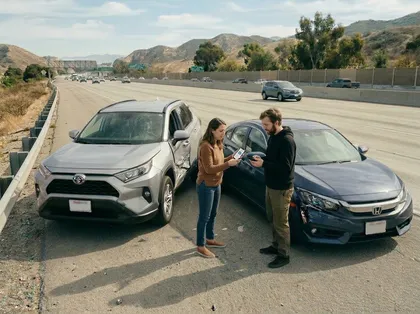
Yes. Both drivers can share fault if each failed to use reasonable care. For example, one driver may have failed to check a blind spot while the other sped up or drifted out of their lane. California’s comparative fault rule allows courts to assign fault across several parties. Your percentage of liability can reduce what you’re able to recover.
What If The Other Driver Says I Merged First?
Do not rely only on what the other driver says. Look for objective proof, such as dashcam footage, traffic camera footage, vehicle damage, lane markings, debris, witness statements, and the police report.
The point of impact can also matter. Damage to the front corner, rear quarter panel, or side of each vehicle can help show who moved, who had the lane, and whether both drivers changed lanes at the same time.
Do Lawyers Only Get Paid If They Win?
The answer is yes for the many personal injury lawyers who offer contingency fees. That means they only get paid if they win or settle a case. Ask an attorney to explain their firm’s contingency fee arrangement and any costs when considering legal representation for your merging accident claim.
Should I See A Doctor After A Minor Merging Accident?
Yes, even if you don’t look or feel hurt after a merging crash. See a doctor if you experience pain, stiffness, dizziness, numbness, headaches, or any unusual symptoms. Some injuries appear hours or days after a crash. These include potentially fatal traumatic brain injuries and internal bleeding. Medical records also help connect your injuries to the accident.
Talk To Arash Law About Your California Merging Accident
A same-lane merge crash can lead to disputes over fault, especially when both drivers claim the other driver moved first. AK Law can review the evidence, explain how comparative fault may affect your claim, and help you understand your next steps.
Call (888) 488-1391 for a free initial consultation. No attorney fees unless we win.