TL;DR: Construction vehicles frequently cause traffic accidents in work zones, often leading to severe injuries due to their size and limited visibility. Drivers, workers, and pedestrians face risk, and liability may involve companies, contractors, or drivers, while evidence can disappear quickly as conditions change.
Highlights:
- Commercial motor vehicles are involved in approximately 30% of fatal work-zone crashes each year.
- Large trucks in work zones can cause severe injuries due to their size and weight.
- Common causes include speeding, distracted driving, and improper work zone setup.
- Key liability may fall on construction companies, contractors, or other drivers.
- Evidence preservation is critical due to rapidly changing work zones and conditions.
- California follows a pure comparative negligence rule for accident claims.
Tip: Gather evidence quickly, including footage and witness statements, to strengthen your case.
Table of Contents
Construction vehicles are frequently involved in traffic accidents in work zones. Data from the Federal Highway Administration (FHWA) shows that from 2013 to 2022, about 27% to 34% of fatal work zone crashes involved commercial motor vehicles (CMVs). The yearly average is around 30%. CMVs include large trucks commonly used in construction areas, which helps explain their frequent involvement in these crashes.
This data shows how common such accidents are. Work zones bring large trucks and regular cars into proximity. Lanes may narrow or shift with little warning. Heavy equipment can block views or move unexpectedly. Due to their size and weight, construction vehicles can cause more severe injuries in a crash.
If you suffered an injury in a collision with a construction vehicle, it is important to understand why these incidents are so common. Safety issues often cause these accidents. A driver, company, or another party may have failed to exercise proper care. You may have the right to file a personal injury claim, depending on the cause of the crash.
How Frequently Construction Vehicles Cause Traffic Accidents
Construction vehicles are involved in roughly 3 out of 10 fatal work-zone crashes each year from 2013 to 2022. These statistics come from the FHWA’s data on commercial motor vehicles.
The FHWA tracks CMVs, not all construction equipment. That means the numbers mainly reflect crashes involving large trucks operating in work zones. It does not address accidents involving stationary equipment, such as cranes or loaders, that do not travel on public roads. Since construction activity relies heavily on these trucks, CMV data provides a reliable measure of how often construction-related vehicles are involved in serious crashes.
Common construction vehicles include:
- Articulated haulers
- Asphalt pavers
- Backhoe loaders
- Boom lifts
- Bulldozers
- Cranes
- Cold planers
- Combine harvesters
- Feller bunchers
- Double drum rollers
- Dump trucks
- Excavators
Construction zones place heavy trucks and regular traffic in the same space. Drivers face narrow lanes, sudden stops, and shifting patterns. These conditions increase crash risk. Large vehicles also cause more severe damage due to their size and weight, which explains why these accidents often lead to serious outcomes.
Construction Vehicle Crash Statistics In Work Zones
Data from the FHWA shows a consistent pattern over time. Many fatal work zone crashes involve CMVs. This trend shows that these aren’t rare incidents. They occur regularly in active construction areas.
The table below shows yearly CMV involvement in fatal work zone crashes:
| Year | Fatal Work Zone Crashes Involving CMVs | % CMV Involvement |
|---|---|---|
| 2013 | 153 | 28.5% |
| 2014 | 195 | 32.1% |
| 2015 | 179 | 27.2% |
| 2016 | 197 | 28.6% |
| 2017 | 227 | 31.5% |
| 2018 | 215 | 31.9% |
| 2019 | 252 | 32.9% |
| 2020 | 211 | 27.1% |
| 2021 | 295 | 33.5% |
| 2022 | 248 | 30.2% |
These numbers show a steady pattern. Construction vehicles and other heavy trucks often play a role in fatal work zone crashes. If you drive through these areas, you share the road with large vehicles, which increases the risk of serious accidents.
Work Zone Rules And Safety Standards That Affect Construction Vehicle Accidents
Federal and state rules set clear safety standards for work zones and large trucks. These rules explain why construction vehicle accidents happen when people fail to follow safety steps.
Key work zone traffic control standards include:
- Manual on Uniform Traffic Control Devices (MUTCD): Federal guidance that sets rules for signs, cones, barriers, and lane closures.
- California MUTCD (CA MUTCD): State version that applies these rules to California roads.
- Traffic Control Plans: Require clear lane shifts, proper spacing, and visible warnings.
- Flaggers and Signals: Guide drivers safely through work zones.
When crews fail to follow these standards, drivers may not be warned about accident hazards in time to avoid a collision. This situation can lead to sudden stops, confusion, and crashes.
Key safety rules for CMVs, including construction vehicles, include:
- Federal Motor Carrier Safety Administration (FMCSA) Regulations: Set rules for driver training, licensing, and safety compliance.
- Hours-of-Service Limits: Prevent driver fatigue by limiting driving time.
- Vehicle Inspections: Require regular checks to ensure trucks are safe.
- Cargo Securement Rules: Prevent loads from shifting or falling.
When drivers or companies ignore these rules, the risk of accidents increases. Many construction vehicle crashes involve failures in traffic control or trucking safety. It is imperative to know these standards to understand why accidents occur so frequently in work zones.
Common Causes Of Traffic Accidents Involving Construction Vehicles
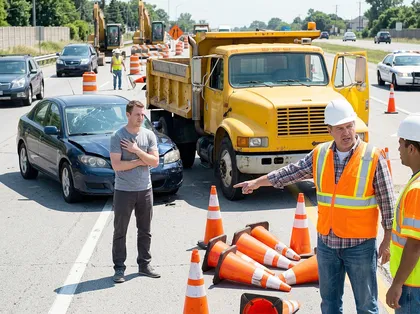
Every National Work Zone Awareness Week, the American Traffic Safety Services Association reminds drivers that construction vehicle accidents are dangerous because they drastically change traffic patterns. Collisions usually occur due to a mix of driver behavior, unsafe work-zone conditions, and environmental factors. For example, someone may fail to adjust to changing road conditions or follow safety rules.
Among the common causes of construction vehicle traffic accidents are:
- Driver Behavior
- Speeding through work zones.
- Distracted driving, such as using a phone.
- Ignoring warning signs or flaggers.
- Failing to yield to construction vehicles or workers.
- Work Zone Setup and Safety Issues
- Missing, unclear, or hard-to-read signs.
- Poor traffic control or lane guidance.
- Lack of cones, barriers, or warning devices.
- Confusing lane shifts or sudden detours.
- Road Conditions and Hazards
- Uneven pavement or potholes.
- Loose gravel or debris on the road.
- Narrow lanes with little space to react.
- Poor lighting in active work areas.
- Construction Worker Actions
- Workers who are too close to moving traffic.
- Failure to follow safety procedures.
- Lack of communication between the crew and drivers.
- Improper use of equipment near active lanes.
- Weather and Visibility Issues
- Rain or wet roads that reduce traction.
- Fog that limits visibility.
- Glare or low light during early morning or evening.
- Conditions that make hazards harder to see.
Each of these factors can increase the risk of a crash. In many cases, more than one cause is involved. If you suffer an injury in a construction zone accident, identifying the cause of the incident can help you understand your legal options and next steps.
Who May Be Liable For Causes Of Construction Vehicle Accidents?
Liability in construction vehicle accidents usually falls on one or more parties whose actions caused or contributed to the crash. In many cases, fault does not rest on just one person. Several parties may share responsibility based on what they did or failed to do.
Depending on the cause of the accident, the following parties may be held liable:
- Construction Companies and Contractors
- Failed to manage the work zone safely.
- Did not follow safety rules or proper procedures.
- Subcontractors
- Performed unsafe work or created hazards.
- Failed to follow project safety requirements.
- Employers
- Did not provide proper training or a safe work environment.
- Allowed unsafe practices on the job site.
- Architects and Engineers
- Created unsafe or incorrect plans.
- Failed to design safe traffic flow or work zones.
- Equipment Manufacturers
- Produced defective machinery or parts.
- Failed to provide proper warnings or instructions.
- Property Owners
- Failed to ensure the site was safe.
- Hired contractors with poor safety records.
- Other Drivers
- Speeding, distracted driving, or ignoring work zone rules.
- Failing to adjust to changing traffic conditions.
When A Public Entity May Be Liable In A Construction Vehicle Accident
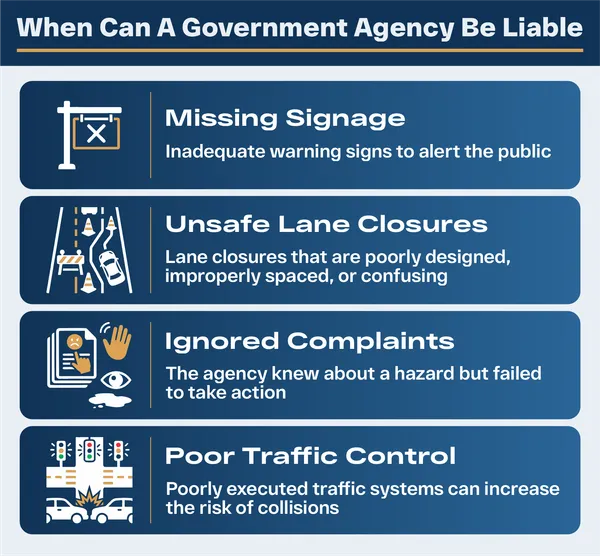
A public entity can be a defendant when a state or local agency controlled the work zone and failed to keep it reasonably safe. This situation often involves roads managed by agencies such as Caltrans, a city, or a county. You may have a claim if unsafe conditions in the work zone contributed to the crash.
Facts that matter in these cases include:
- Signage & Warnings: Missing, unclear, or poorly placed signs.
- Lane Closures: Failure to follow approved traffic control plans.
- Prior Complaints: Reports of hazards that went unaddressed.
- Incident Reports: Records showing similar crashes or safety issues.
- Contractor Duties: Whether contractors followed safety rules and project plans.
Public entities may also claim immunity in some situations. Immunity can apply when the condition follows an approved design plan or when the agency exercises discretion in managing the project. However, immunity may not apply if the agency failed to warn of a known danger or failed to maintain safe conditions.
These cases depend on specific facts. You can determine whether a public entity may share responsibility by identifying who controlled the work zone and what safety measures they took.
What Is Comparative Negligence And How Does It Work In California?
Comparative negligence is a legal rule that allows multiple parties to share fault for an accident. The system focuses on fairness by dividing responsibility based on each party’s role in causing the accident. Your share of fault then reduces your compensation.
In California, the law follows a pure comparative negligence system. That means you can still recover damages even if you were up to 99% at fault. For example, if your total damages are $100,000 and you are 30% at fault, you may still recover $70,000.
This rule often applies in construction vehicle accidents because several factors can combine to cause a crash. A driver may speed, while a contractor fails to set up proper warning signs. Both actions can contribute to the collision. Since these situations are common in work zones, comparative negligence helps determine how much each party should pay (or, in the case of at-fault victims, not be paid) based on their level of liability.
Legal Paths You Can Take After A Construction Vehicle Accident
| Personal Injury Claim (For Injured Third Parties) |
Workers’ Compensation Claim (Injured Workers) |
|---|---|
|
|
Construction vehicle accidents occur frequently in work zones, and many result in serious injuries. Since these crashes happen regularly, the law provides several ways for you to take action if someone’s negligence resulted in your losses. Your legal options depend on your role in the collision and who may be at fault.
If you work in construction and get hurt on the job, you can file a workers’ compensation claim. This claim can cover your medical expenses and a portion of your lost wages. However, this type of claim does not provide compensation for pain and suffering. Construction accident attorneys can review your case and check if you also have a valid third-party liability claim.
A personal injury claim kicks in if someone else caused the accident. It covers a broader range of losses, including pain & suffering and future income loss. This option applies when a third party acted negligently. For example:
- A driver sped through the work zone.
- A contractor failed to follow safety regulations.
- A company supplied defective equipment.
You can still pursue legal action even if you are not a construction worker. If you were a driver, passenger, or pedestrian injured near a work zone, you may file a claim against the at-fault party. Many of these accidents involve unsafe road conditions, poor work zone setup, or driver error. These options can help you determine your next steps after a construction vehicle incident.
What Evidence Matters Most In A Work Zone Crash Claim?
Evidence in a work zone crash is highly time-sensitive. Construction sites move and change daily. What was a hazard on Tuesday might be paved over by Wednesday. Collecting evidence immediately is often the only way to prove a dangerous condition existed.
Key evidence includes:
- The “Traffic Control Plan”: This plan is the blueprint for where signs and cones were supposed to be. If the actual setup didn’t match the plan, it can serve as a “smoking gun” for negligence.
- Electronic Logging Device (ELD) Data: Most modern construction trucks have “black boxes” that record speed, braking, and hours of service.
- Dashcam and Site Camera Footage: Many construction sites now use “GoPros” on equipment or stationary security cameras.
- Witness Statements: Laborers from other crews often see what happened but are hesitant to speak up without a subpoena.
Early action helps preserve these pieces of evidence and strengthens your case. You can seek free advice from a traffic accident lawyer to understand what steps you can take next.
Getting Legal Help After A Construction Vehicle Accident
After you understand your legal options, the next step is to learn how to protect your claim. Construction vehicle accidents are common and may involve multiple parties. Consequently, companies and insurers may act quickly to protect their own interests.
Traffic accident lawyers can handle key parts of your case and help you move forward. They can:
- Investigate the incident and gather important evidence.
- Review reports, contracts, and safety records.
- Identify all parties who may be responsible.
- Work with experts to understand how the crash happened.
- Handle communication with insurance companies.
- Negotiate a settlement or, if needed, take the case to court.
Construction companies, government agencies, and insurers often start their own investigations right away. Without legal support, evidence may disappear or be difficult to access. Working with a lawyer who handles construction vehicle accident cases can help preserve evidence and strengthen your claim.
Frequently Asked Questions About Construction Vehicle Accidents
Many people ask how often traffic crashes involving construction vehicles happen, who is at risk, and what legal options may be available. The answers below explain key facts and what you should know after such an incident.
Are Construction Vehicle Accidents Common In Work Zones?
Yes, construction vehicle accidents are common in work zones. These job sites place large trucks, workers, and regular traffic in the same area. This setup increases the chance of crashes. Narrow lanes and sudden changes make these incidents happen more often.
Who Is Most At Risk In Construction Vehicle Accidents?
Drivers, passengers, and construction workers all face risks. However, construction workers and drivers in work zones are more likely to get injured in construction vehicle accidents. Workers often stand close to moving traffic. Drivers must react quickly to changing road conditions.
Do Construction Vehicle Accidents Lead To Serious Injuries?
Yes, these accidents often lead to severe or fatal injuries. Due to their size and weight, construction vehicles can cause high-impact damage. Injuries may include traumatic brain injuries, spinal cord damage, internal injuries, and severe fractures. Many victims also require ongoing treatment, including chiropractic care, to manage pain and support recovery.
What Types Of Damages Can I Claim In A Construction Vehicle Accident Case?
You can seek damages for losses such as medical costs, lost wages, property damage, and pain and suffering after a construction vehicle accident. These crashes often cause serious injuries because they involve heavy vehicles in tight spaces. You may also recover costs for long-term care or reduced earning ability. Families can seek compensation for funeral costs and loss of support in fatal cases.
How Often Do Construction Workers Get Hit By Cars?
Construction workers get hit by vehicles every year. The National Safety Council data shows an average of about 54 worker-pedestrian deaths each year in work zones. These numbers show that vehicle-related incidents happen often in construction areas.
Talk To A Lawyer After A Traffic Accident Involving A Construction Vehicle
The moment you think, “I need a personal injury lawyer!”, it often means you need legal guidance after a construction vehicle crash. You can talk to one of the traffic accident lawyers at Arash Law to understand your rights and legal options. These crashes often occur in work zones and could involve multiple parties.
After the accident, you may deal with medical bills, lost income, and insurance issues. Our lawyers can review your case and explain your next steps. We can also identify who is at fault and handle communication with insurers.
If legal costs are a concern, you may wonder, “Do lawyers only get paid if they win?” At AK Law, yes, we only receive payment for our services if we obtain compensation for you. This arrangement allows you to move forward without upfront legal fees.
Call (888) 488-1391 to discuss your situation and learn what you can do next.