TL;DR: After a defective product injury, seek medical care immediately and preserve the product, packaging, and photos to protect your health and support a strict liability claim. California law often provides two years to file a personal injury lawsuit. Missing an applicable deadline may bar the claim. Losing or altering the product may substantially weaken the evidence and make the defect or causation more difficult to prove.
Highlights:
-
- Tell your doctor exactly what you observed, and keep copies of all records.
- Photograph the product, injuries, and scene from multiple angles as soon as it is safe to do so.
- Capture and save model, serial, and lot numbers from labels and stickers.
- Store the product, packaging, and every broken piece, without cleaning or repairs.
- Write a timeline of use, assembly, maintenance, and any warning signs you noticed.
- Get names and contact details for witnesses and anyone who handled the product.
Tip: If a retailer or manufacturer requests the product, ask for written custody and inspection terms before handing it over.
Table of Contents
If a defective product injures you, seek medical care right away and preserve the product and any related evidence. Your actions after the incident can protect your health and help support a personal injury claim against the manufacturer, distributor, retailer, or another responsible party. Avoid repairing, altering, or throwing away the product until you understand how it may affect your case.
Defective product injuries may involve unsafe appliances, tools, electronics, vehicles, medical devices, children’s products, machinery, furniture, or other consumer goods. California generally excludes strict design-defect liability for prescription drugs and physician-directed medical implants. Manufacturing defect, inadequate warning, or negligence claims may still apply, depending on the facts.
Take photos of the product and your injuries, keep receipts and medical records, and document what happened. These steps may help establish liability and prove the damages you suffered.
Steps To Take After A Defective Product Injury
The steps you take after a defective product injury can affect both your recovery and your personal injury claim. Acting promptly may help protect your health, preserve important evidence, and document the losses you suffered.
Consider taking the following steps as soon as it is safe to do so.
Get Medical Care
Call 911 if you have a serious injury or remain in immediate danger. Otherwise, seek medical evaluation as soon as possible, even if your symptoms initially seem minor.
Some injuries are not immediately obvious. For example, head-injury symptoms may take hours or days to appear, and electrical exposure can cause serious internal injury even when a visible burn appears minor. Prompt treatment can also create a medical record connecting your condition to the incident.
When speaking with your medical provider:
- Explain exactly how the injury happened.
- Identify the involved product.
- Describe any burns, shocks, falls, fumes, unusual sounds, or product failures.
- Attend recommended follow-up visits.
- Follow medication, therapy, and activity instructions.
Keep copies of your medical records, test results, prescriptions, bills, and discharge instructions.
Stop Using The Product And Address Immediate Hazards
Turn off or move away from the product when you can do so safely. Do not continue testing it to determine whether the problem happens again.
Keep other people away from the item, especially if it presents a risk of fire, electric shock, chemical exposure, collapse, explosion, or another injury.
Do not handle a leaking battery, a chemical container, a damaged electrical device, or any other hazardous item unless emergency officials say it is safe. Contact emergency services, the fire department, or another appropriate safety authority when necessary.
Avoid delaying an action needed to prevent a fire, toxic exposure, or another immediate danger.
Preserve The Product, Packaging, And Related Materials
The product itself may be important evidence because its condition, warnings, components, and identifying information can help investigators evaluate what happened. Keep the product in the same condition it was in immediately after the incident, unless doing so creates another safety risk.
The table below identifies the items that may help support a product liability claim.
| Preserve Product Parts | Save Related Materials | Record Product Information |
|---|---|---|
|
|
|
Photograph each identifying number and label rather than relying only on handwritten notes.
Preserve electronic evidence connected to the product, including app data, firmware versions, diagnostic logs, online listings, and connected-device records. Save original files and screenshots, and avoid updates, resets, or deletions. Request surveillance footage promptly because it may be overwritten. For defective vehicles, preserve available event data before repairs or disposal.
A manufacturer or retailer may offer a refund, replacement, or inspection. Before surrendering it, consider obtaining legal advice about preserving access to the item.
Photograph The Scene And Write Down What Happened
Take clear photos and videos as soon as it is safe to do so. Capture the product from several angles before moving or changing anything.
Focus your documentation on the condition of the scene, the injuries and damage caused, and the sequence of events.
Take pictures of the following:
- The product’s position and condition after the incident.
- Burn marks, cracks, leaks, smoke damage, or missing parts.
- The surrounding area.
- Property damage.
- Visible injuries.
- Damaged clothing or protective equipment.
- Spilled substances, scorch marks, debris, or other evidence at the scene.
Also, write down:
- The date, time, and location of the incident.
- The things you were doing before the incident.
- The way you used the product.
- The length of time you had owned the product.
- The product’s assembly, maintenance, and repair history.
- The unusual smells, noises, heat, movement, or warning signs you noticed.
- The parts that appeared to break, detach, overheat, leak, or malfunction.
- The events that occurred immediately after the incident.
Avoid moving or altering the product solely to obtain better photographs. Do not test the product or attempt to recreate the incident, as doing so could cause another injury or change important evidence.
Gather Witness Information
Ask anyone who saw the incident for their name, phone number, email address, and a brief description of what they observed.
Also, identify potential witnesses, including people who:
- Saw the product malfunction before the injury.
- Helped assemble or maintain it.
- Heard unusual sounds.
- Saw smoke, sparks, leaking material, or broken parts.
- Used the same model and experienced a similar problem.
- Arrived immediately after the incident.
Independent witnesses may help explain how the product was used and what happened before its condition changed.
Check For Recalls And Report The Incident
Search government recall databases using the product name, brand, model number, and serial or lot number. Federal agencies publish searchable recall databases directly on their websites, while the Consumer Product Safety Commission (CPSC) tracks recalls involving household and recreational products.
You may also report an unsafe consumer product through SaferProducts.gov. The CPSC uses these reports to identify possible injury risks and patterns involving consumer products within its authority.
The proper agency depends on the product:
| Types of Defective Product | Agency That May Handle Reports (Depends on the Circumstances) |
|---|---|
| General consumer products | Consumer Product Safety Commission (CPSC) |
| Cars, tires, and vehicle equipment | National Highway Traffic Safety Administration (NHTSA) |
| Medications and medical devices | Food and Drug Administration (FDA) |
| Machinery, tools, or equipment used at a California workplace | California Division of Occupational Safety and Health (Cal/OSHA) |
| Machinery, tools, or equipment used at a workplace under federal OSHA jurisdiction | The federal Occupational Safety and Health Administration (OSHA) |
| Boats and boating equipment | U.S. Coast Guard |
A recall may provide useful information, but a product need not be recalled for an injured person to have a valid claim. Similarly, a recall does not automatically prove that a particular product caused an injury.
Follow urgent government safety instructions. Before returning, repairing, or disposing of a recalled product, photograph it thoroughly and obtain legal advice when practical.
Keep Records Of Your Injuries And Losses
Create a single file for all documents related to the incident. Your records may help establish the financial and personal effects of the injury.
Keep the following:
- Medical bills.
- Pharmacy receipts.
- Insurance statements.
- Proof of missed work.
- Wage and employment records.
- Transportation expenses.
- Home-care expenses.
- Repair or replacement estimates.
- Receipts for damaged property.
- Communications with the seller or manufacturer.
You may also keep brief notes about your pain, physical restrictions, sleep problems, missed activities, and need for assistance. Use accurate descriptions rather than exaggerating or minimizing your condition.
Consider Speaking With A Product Liability Lawyer
Product liability cases often require technical and legal investigation. Early legal assistance may be especially important when the product is hazardous, someone else possesses it, or a company is requesting its return.
Product liability injury lawyers can help:
- Secure and preserve the product.
- Arrange a controlled inspection.
- Trace the product’s supply chain.
- Request design, manufacturing, and testing records.
- Review prior complaints and recalls.
- Identify manufacturers, sellers, distributors, and component suppliers.
- Work with engineers, medical professionals, and other experts.
- Calculate current and future losses.
- Handle communications with insurers and corporate representatives.
- File a lawsuit within the applicable deadline.
What To Avoid After A Defective Product Injury
Certain actions after a defective product injury can create additional safety risks, damage significant evidence, or make it harder to support a personal injury claim.
Avoid the following mistakes whenever possible:
-
Do Not Test or Recreate the Incident: Do not continue using the product to determine whether the problem happens again. Do not attempt to prove the defect by recreating the accident.
A second test could cause another injury, damage the product, or change critical evidence.
- Do Not Alter or Dispose of the Product: Unless necessary to address an immediate safety hazard, do not:
- Repair or alter the product.
- Clean off residue or damaged areas.
- Disassemble it.
- Replace suspected defective components.
- Throw away broken pieces.
- Send it to the manufacturer without safeguards.
Do not permit destructive testing unless it is conducted under a written or court-approved protocol.
-
Do Not Surrender the Original Product Without Safeguards: Avoid giving the original product to a retailer, manufacturer, insurer, or claims representative upon request alone.
A refund, replacement, recall remedy, or inspection request may require you to surrender evidence. Consider obtaining legal advice and written inspection or custody terms before releasing the product.
- Do Not Guess About the Cause: Avoid making unsupported statements about why the product failed. Describe what you personally observed, such as overheating, smoke, sparks, a broken guard, or an unexpected movement. Technical conclusions should generally be left to qualified experts.
-
Be Careful With Insurers & Manufacturers: A manufacturer, retailer, claims administrator, or insurance representative may contact you soon after the incident.
Before accepting an offer or providing a detailed statement, be cautious about:
- Recorded interviews
- Broad medical authorizations
- Settlement releases
- Refund or replacement agreements
- Requests to surrender the product
- Documents stating that the matter is fully resolved
An early payment may not account for future treatment, lost income, permanent injuries, or other losses that have not yet become clear.
-
Limit Social Media Posts: Avoid posting photos, videos, or detailed updates about the incident, your health, or your activities. Even an unrelated photo can be taken out of context and used to challenge your account of the injury.
Ask friends and relatives not to tag you in posts about the accident or your recovery. Store evidence in a private file rather than on social media.
What Makes A Product Defective In California?

Product liability cases in California commonly involve manufacturing defects, design defects, or inadequate warnings. The state’s current civil jury instructions contain separate standards for these forms of strict product liability.
-
Manufacturing Defect: A manufacturing defect may exist when a particular item differs from the manufacturer’s intended design or from other products in the same line.
Examples may include:
- A cracked component
- Incorrectly installed wiring
- Contamination during production
- A missing fastener
- A weak weld
- The wrong material or ingredient
The problem may affect one product, one batch, or a limited number of units.
-
Design Defect: A design defect may exist when the product was made according to its plans, but the design itself was unreasonably unsafe.
Examples could be:
- A machine without a practical guard.
- Furniture prone to tipping.
- A battery system that creates an unreasonable fire risk.
- A power tool that activates too easily.
- A product that lacks a reasonable safety feature.
California recognizes legal tests that may consider how safely the product performed relative to ordinary consumer expectations or whether the design’s risks outweighed its benefits.
-
Failure to Warn: A product may also be defective when it lacks adequate instructions or warnings about a risk that was known or reasonably knowable.
Such cases may involve:
- A missing warning.
- Unclear instructions.
- A warning that is placed where users are unlikely to see it.
- Failure to explain the necessary safety equipment.
- Failure to disclose dangerous interactions or uses.
A warning claim does not necessarily mean that every possible risk has to appear on the label. The facts include the nature of the risk, what was reasonably knowable, and whether an adequate warning could have reduced or prevented the injury.
California’s official product liability complaint form recognizes several legal theories. That includes strict liability, negligence, express warranty, and implied warranty. The legal theory that applies depends on the facts of the case and the available evidence.
Who May Be Responsible For A Defective Product Injury?
A defective product often passes through several businesses before it reaches the consumer. If a defect causes an injury, one or more parties in that chain may share legal responsibility.
For example, if a defective car sold by a dealership injured you, your claim may extend beyond the dealership to the manufacturer or other businesses involved in designing, making, or distributing the vehicle.
Potentially responsible parties may include:
- The product manufacturer
- A component-part manufacturer
- A designer
- An importer
- A distributor or wholesaler
- A retailer
- An installer
- A repair or maintenance company
- Another business that altered the product
Not every company connected to a product is automatically liable. The product’s history, the type of defect, contractual relationships, subsequent modifications, and the circumstances of the incident all require investigation.
Compensation Available In A Claim Involving A Defective Product
The law may allow you to recover compensation for losses caused by a defective product. The damages that may be claimed depend on the nature of your injuries, the evidence, and applicable law. Insurance coverage, available assets, liens, and other sources may each affect the amount that can be collected in practice.
A claim may include:
- Emergency treatment
- Hospital care
- Surgery
- Rehabilitation and therapy
- Medication and medical equipment
- Future medical care
- Lost wages
- Reduced future earning ability
- Damaged property
- Pain and suffering
- Emotional distress
- Disability or disfigurement
- Loss of enjoyment of life
If your injury happened while you were working, you may qualify for California workers’ compensation benefits. Depending on your eligibility, these benefits may include:
- Medical care.
- Temporary disability benefits.
- Permanent disability benefits.
- Supplemental job displacement benefits.
- Death benefits for eligible dependents.
You may also have a separate product liability claim against the manufacturer or another responsible third party. Some injured workers may pursue both matters, but an employer or workers’ compensation carrier may assert reimbursement, lien, subrogation, or credit rights involving the third-party recovery. The interaction between the claims depends on the benefits paid, the parties’ fault, and other case-specific factors.
If a defective product injures you at work, report the injury to your employer and request a DWC-1 workers’ compensation claim form. California employers must provide or mail this form within one working day after learning about an employee’s injury. Filing the DWC-1 starts the workers’ compensation claim process and creates a record of the claim’s submission.
When a defective product causes a death, people authorized by California law may bring a wrongful-death claim. The decedent’s personal representative or successor in interest may also pursue claims that survived the death. Dependents of a worker who dies from a work-related injury may also be eligible for workers’ compensation death benefits.
How Long Do I Have To File A Product Liability Lawsuit In California?
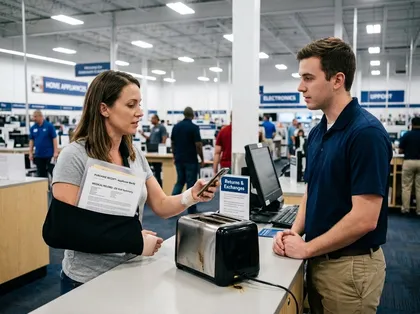
California Code of Civil Procedure section 335.1 generally gives you two years to file a personal injury or wrongful death lawsuit. For most personal injury cases, the deadline begins on the date of the injury. In some cases, it begins when you discover, or reasonably should have discovered, the injury and its cause. For wrongful death cases, the deadline generally begins on the date of death.
Different rules apply if your situation involves a public entity. For example, a government-operated school, transit agency, or public facility may require you to file a formal government claim within six months after the cause of action accrues. This is subject to statutory exceptions, before a lawsuit may proceed. A lawsuit seeking compensation for damage to personal property generally has a three-year filing deadline.
Other rules may shorten, extend, or otherwise change the deadline. For example:
- The injured person may have been a minor.
- The injury or its cause may not have been immediately discoverable.
Statutes of limitations depend on the specific facts of each case and can be difficult to calculate. If you are unsure which deadline applies or whether you still have time to file, consider speaking with a lawyer as soon as possible.
Frequently Asked Questions About Defective Product Claims
The following answers address common concerns about warranties, recalls, proof of purchase, used products, class actions, and allegations of product misuse. The outcome of a claim depends on the product, the available evidence, and the circumstances of the injury.
What If The Product That Injured Me Is Out Of Warranty?
An expired warranty doesn’t automatically prevent a product liability claim. Strict liability focuses on whether the product was defective and whether the defect caused the injury. Separate warranty claims may be subject to warranty terms and different filing deadlines.
Can A Defective-Product Case Become A Class Action In California?
Courts sometimes certify defective-product cases as class actions, but certification is not automatic. Individual questions about product use, causation, injury, and damages may make class treatment inappropriate, depending on the claims and evidence.
Do I Have To Wait For An Official Recall To File A Lawsuit?
You don’t need to wait for a recall before pursuing a claim. However, you must still establish the applicable type of defect, that the defect was a substantial factor in causing your injury, your resulting damages, and a legal basis for holding each defendant responsible.
What If I Lost The Receipt For The Defective Product?
A missing receipt does not automatically prevent a product liability claim. Other evidence may help identify the product and show when or where you obtained it, including:
- Bank or credit card statements.
- Order confirmations.
- Warranty records.
- Photographs.
- Product packaging.
- Witness testimony.
- The product itself.
California product liability law may also protect people who used the product or were injured by it, even if they did not purchase it.
Does Strict Liability Apply To Used Products In California?
Liability for a used product depends on the seller’s role. A commercial used-product dealer may be treated differently from an auctioneer or a casual seller, and liability may also arise from negligent inspection, repair, modification, warranties, or representations about the product.
What If The Manufacturer Blames Me For Misusing The Product?
Product misuse does not automatically defeat a claim. Reasonably foreseeable misuse may still fall within California product-liability law. However, unforeseeable misuse or alteration may undermine the claim, and conduct that contributed to the injury may reduce recovery under comparative-fault principles.
Injured By A Defective Product? Contact Arash Law Today!
A defective product can leave you with serious injuries, unexpected medical bills, lost income, and questions about your legal rights. Our product liability injury lawyers can review the facts of your case, identify potentially responsible parties, and explain the legal options available to you. Call us at (888) 488-1391 to schedule your free, no-obligation case evaluation.
Arash Law (also referred to as AK Law) has recovered substantial compensation for clients in complex product liability cases. While every case is different, the following results reflect our experience handling challenging claims involving defective products and catastrophic injuries.
| Case Result | Case Details |
|---|---|
| $3,680,000 | We represented a client whose case involved both workers’ compensation issues and a complex product liability claim. Despite the unusual facts and legal challenges, our team secured a $3.68 million recovery. |
| $2,200,000 | Our client suffered severe leg and knee injuries after an air compressor exploded during repairs. Although the employer lacked workers’ compensation insurance, we pursued available general liability coverage and recovered the maximum policy limits to help pay for the client’s medical care. |
| $2,000,000 | We worked with a Florida law firm on a challenging product liability case involving a dangerous product. Together, we secured a $2 million recovery for the injured client. |
| Past case results do not guarantee future outcomes. Every product liability case depends on its facts, the available evidence, the applicable law, and other factors. | |