TL;DR: Starting a road trip late at night increases crash risk because fatigue, limited visibility, and impaired drivers make serious collisions more likely. After a late-night crash, compensation can depend on who caused the collision, the available insurance coverage, and whether more than one person shares fault.
Highlights:
- Plan to depart in the early-morning daylight rather than late at night.
- Get 7-9 hours of sleep before driving and rotate drivers on long trips.
- Avoid driving from midnight to 6 a.m. — that’s when drowsy crashes spike.
- Slow down on dark roads and increase following distance to extend reaction time.
- Use working headlamps at night and minimize glare by cleaning the lights and the windshield.
- Stay alert for impaired drivers, especially on weekends between 9 p.m. and 3 a.m.
- After any crash, call 911, get checked out, and photograph lighting and road conditions.
Tip: Preserve evidence fast by saving dashcam footage and requesting nearby business or home security video before it’s overwritten.
Table of Contents
You shouldn’t start a road trip late at night because fatigue, darkness, and impaired drivers all work against you. All of these dangers intensify after midnight on California roads.
Fewer cars on the road doesn’t mean fewer ways to get hurt. Lighter traffic actually removes some of the safety net daylight driving relies on. Fatigue sets in with less to keep you alert, and impaired drivers make up a larger share of those who are still out there. Visibility also worsens, and services like gas stations, rest stops, and roadside assistance are harder to find in some areas.
Rural roads and highways are also where drowsy-driving crashes happen most often. In part because long, empty stretches offer little stimulation to fight fatigue. They also carry more wildlife crossing into the road with little warning.
If you were hurt in a nighttime crash, the physical harm can be severe, but California law gives injured victims the right to pursue compensation. Understanding why these crashes happen, starting with what driving after dark does to your body, is where that process begins.
Why Are Late-Night Road Trips Exceptionally Dangerous?
Late-night road trips are especially dangerous because fatigue, reduced visibility, and the risk of encountering impaired drivers can overlap at once. Starting at 10 or 11 p.m. may feel manageable, but after several hours, drivers often reach the most fatigue-prone part of the night.
NHTSA data show drowsy-driving crashes are most common between midnight and 6 a.m. During those hours, the body’s natural circadian rhythm lowers alertness, while darkness makes hazards harder to see and react to.
Three risks often converge:
- Biological fatigue
- Reduced visibility
- Impaired drivers
Together, these factors can lead to severe, high-speed crashes. Of the three, fatigue is the most underestimated. It builds gradually and can impair a driver before they realize how tired they are.
The Biological Risk: Driver Fatigue And Microsleeps
Late-night road trips increase the risk of driver fatigue and microsleeps because the body naturally becomes less alert during overnight hours. A driver who feels fine at 10 p.m. may be dangerously sleepy several hours later.
Your circadian rhythm, the internal clock that regulates sleep and wakefulness, pushes the body toward sleep at night. On a long drive, that natural drop in alertness can combine with hours of driving fatigue.
Severe sleepiness can also cause microsleeps, involuntary episodes of sleep lasting a few seconds. At freeway speeds, a vehicle can travel hundreds of feet without a driver in control. These risks add to the broader dangers of nighttime driving.
Evidence that a driver made no apparent braking or evasive maneuver may be consistent with drowsiness. However, investigators generally evaluate it together with witness testimony, electronic evidence, driver statements, vehicle data, and other facts.
Environmental Hazards: Reduced Visibility And Glare
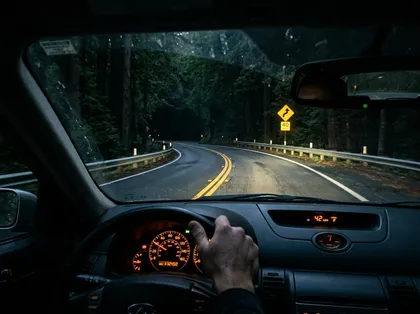
Night driving is more dangerous because darkness and glare reduce how quickly drivers can see and react to hazards. At highway speeds, even a brief loss of visibility can leave very little time to avoid a crash.
California Vehicle Code §24400 requires vehicles to have working headlamps and generally requires their use during darkness. Headlights illuminate only a limited distance ahead, making stopped vehicles, pedestrians, debris, and roadway changes harder to detect. Glare from oncoming headlights can further reduce visibility and depth perception.
Weather can also make nighttime visibility even worse. On routes such as the Grapevine and Tejon Pass, Cajon Pass, and Sierra Nevada highways, freezing temperatures and moisture may create icy pavement that is difficult to spot after dark.
The Human Element: Increased Rates Of Impaired Drivers
The risk of meeting a drunk driver on California roads jumps sharply after midnight. SafeTREC at UC Berkeley found that the peak period for alcohol-involved serious injury crashes in California in 2023 was between Saturday midnight and 3 a.m. on Sunday. 47.1% of all alcohol-involved serious-injury collisions that year occurred between 9 p.m. and 3 a.m.
Alcohol and drugs cloud a driver’s thinking, slow their reflexes, and throw off their physical control. Even a small amount of impairment can strip away the split-second judgment a driver needs to respond safely on a dark road.
An impaired driver may misjudge the speed of oncoming cars, drift across lane lines, or fail to yield at intersections. These mistakes often lead to head-on crashes at high speeds, and the injuries tend to be severe. California law can hold impaired drivers financially responsible for the harm they cause, depending on the facts of the case.
Warning Signs That You’re Too Tired To Keep Driving
Drowsy driving rarely announces itself with a clear signal. Your body sends warnings well before a microsleep takes over, but on a dark highway, they are easy to miss or ignore. Recognizing them early gives you time to pull over before fatigue makes that decision for you.
Watch for these signs behind the wheel:
- Heavy Eyelids or Frequent Blinking: Blinking longer than usual or having trouble keeping your eyes fully open.
- Repeated Yawning: Doing so more than once or twice in a short stretch signals that your body wants sleep, not just a passing moment of boredom.
- Drifting Within Your Lane or Crossing the Line: Small, unintentional steering corrections are among the clearest physical signs of fading attention.
- Missing Your Exit or a Road Sign You Were Watching For: A sign your mind briefly disengaged from the road.
- Not Remembering the Last Few Miles: If you can’t recall a recent stretch of driving, you may have already microslept without realizing it.
- Hitting Rumble Strips: The vibration is designed to jolt an inattentive driver back into focus; treat it as a warning, not an annoyance.
- Restlessness or Irritability: Feeling unusually impatient or on edge can be an early symptom of fatigue, not just frustration with traffic.
- Wandering Thoughts or Difficulty Focusing on the Road: If you notice your mind drifting to unrelated things, your attention has already left the driving task.
If you notice even one of these signs, treat it as your cue to act, not push through. Pull off at the next safe location, a rest stop, gas station, or well-lit parking area, and either switch drivers or stop for the night. A brief nap may temporarily improve alertness, but it does not replace adequate sleep.
This matters beyond your own safety. If you keep driving after recognizing these warning signs and cause a crash, California law can treat that decision as a breach of your duty of care; the same negligence standard that applies to a driver who ignores a known medical condition like sleep apnea. Acting on these signs protects you both physically and legally.
What Should You Do If You Get Sleepy During A Road Trip?
If you get sleepy during a road trip, stop driving before your alertness declines further. Drowsiness can worsen quickly and may impair judgment before you realize how unsafe you have become, so the priority is to get off the road and recover enough alertness to drive safely.
Once you notice the warning signs, what you do in the next few minutes matters. Some responses actually restore alertness. Others make you feel like they’re working while the risk stays the same.
Here’s what you should do:
- Pull off the road as soon as it’s safe. Don’t try to “push through” to the next big city or your final destination. Take the next exit, rest stop, or well-lit gas station. Continuing to drive while searching for the “perfect” place to stop defeats the purpose.
- Take a real nap, not just a break. A 15- to 20-minute nap in a parked, well-lit location can meaningfully restore alertness. Set an alarm. Longer naps can leave you groggier for a short period afterward (sleep inertia), so give yourself a few minutes before getting back on the road.
- Use caffeine strategically, not as a substitute for sleep. Coffee or an energy drink can help, but caffeine takes about 20-30 minutes to take effect. Pairing a short nap with caffeine beforehand, sometimes called a “caffeine nap,” can be more effective than either alone. Caffeine will not counteract severe fatigue or prevent a microsleep.
- Switch drivers if you have one available. This is the single most reliable fix. If you’re traveling with someone who is rested, hand over the wheel rather than trying to fight through fatigue for another hour.
- If you’re alone and too tired to continue safely, stop for the night. Find a hotel, motel, or another safe place to sleep rather than driving to save time. Arriving a few hours later is a minor inconvenience. A fatigue-related crash is not.
- Avoid relying on temporary tricks. Rolling down the window, turning up the radio, singing, or gum-chewing may feel like they help, but none of them address the underlying sleep deficit. They can mask symptoms just long enough for a microsleep to catch you off guard.
- Reassess before merging back onto the highway. After a nap or a break, check in with yourself honestly. If the same warning signs return soon after, that’s a sign you need more rest, not another temporary fix.
Treating sleepiness as a stop-everything signal, rather than something to manage while continuing to drive, is what separates a delayed arrival from a preventable crash.
How California Law Holds At-Fault Nighttime Drivers Accountable
California law can hold a negligent nighttime driver responsible when they fail to use reasonable care for road, traffic, visibility, or weather conditions. The rules that most often affect liability and compensation include speed laws, comparative negligence, punitive damages, and Proposition 213.
Here’s how those rules may affect a claim:
| California Rule / Authority | How It May Affect Your Case |
|---|---|
| Basic Speed Law (Vehicle Code § 22350; Evidence Code § 669) | Drivers must travel at a speed that is safe for current conditions, even if that means driving below the posted limit. A statutory violation may create a rebuttable presumption of negligence when the requirements of Evidence Code § 669 are met. |
| Impaired Driving (Vehicle Code §§ 23152–23153) | California law prohibits driving under the influence, including DUI causing injury. An injured person may pursue a personal injury claim based on the circumstances of the crash. |
| Wrongful Death (Code of Civil Procedure § 377.60) | When a crash causes a death, certain eligible survivors or the decedent’s personal representative may bring a wrongful death action. |
| Punitive Damages (Civil Code § 3294) | Punitive damages may be available in qualifying cases when oppression, fraud, or malice is proven by clear and convincing evidence. |
| Pure Comparative Negligence (Li v. Yellow Cab Co. (1975) 13 Cal. 3d 804) | A plaintiff’s compensation may be reduced according to their percentage of fault rather than being automatically barred by shared fault. |
| Proposition 213 (Civil Code § 3333.4) | Certain uninsured owners and drivers may be barred from recovering non-economic damages, subject to statutory exceptions, including a specified DUI exception. |
A successful claim may include economic and non-economic damages, depending on the circumstances. Gathering relevant evidence early on helps support the claim. Night-driving accident lawyers can help protect that proof before it disappears.
Arash Law Case Results: Nighttime Driving, Fatigue, And Drunk Driving Crashes
Nighttime crashes involving driver fatigue and impaired driving often lead to some of the most severe and legally complex injury claims. Below are Arash Law case results involving drivers who fell asleep at the wheel, drunk driving collisions, and nighttime accidents where liability was disputed.
-
$1,280,000 — Head-On Collision Caused by a Driver Who Fell Asleep at the Wheel.
The at-fault driver fell asleep and collided head-on with our client, causing serious injuries. Arash Law resolved the case in less than six months and recovered the full policy limits for the client.
-
$1,000,000 — Driver Fell Asleep and Drifted Into Traffic.
While the client sat in his parked truck on the side of the road, another driver fell asleep at the wheel, drifted into traffic, and struck his vehicle. Our client suffered neck and lower back injuries requiring spinal surgery. The case settled for the $1 million policy limit weeks before trial.
-
$2,000,000 — Nighttime Crossing With a Disputed Liability Report.
The client was struck while jaywalking at night and was cited by police as the at-fault party. Despite the police report, Arash Law recovered $2 million on the client’s behalf.
Past results do not guarantee future outcomes. Every case is different, and results depend on the specific facts and evidence involved.
Four Steps To Protect Your Injury Claim After A Nighttime Crash
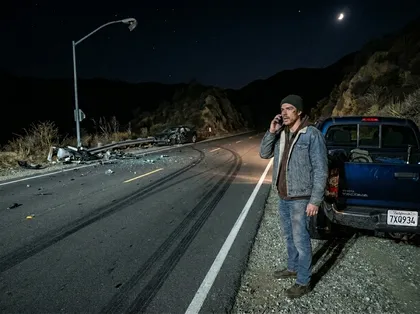
After a nighttime crash, some of the strongest evidence in your case can disappear within hours. Security cameras overwrite old footage on set schedules. Dashcam recordings can be erased within days, and skid marks wash away with rain. Taking these four steps protects the evidence your case depends on.
- Get Medical Care: Call 911 if the crash is a medical emergency, then seek a full medical evaluation as soon as possible. Some crash-related injuries, including concussions, may have symptoms that do not appear until hours or days after the injury.
- Document Nighttime Conditions: Return to the scene or ask someone to photograph it if you could not do so at the time. Focus on broken streetlamps, dark stretches of road, and hidden or missing signs. These images show the lighting and visibility problems that may have contributed to the crash.
- Know Your Rights With Insurers: Be cautious about recorded statements. You generally do not have the same contractual obligations to the other driver’s insurer that you may have under your own policy. Before giving a recorded statement, consider getting legal advice about your rights and policy obligations.
- Contact Arash Law: If you are thinking, “I need a personal injury lawyer,” reach out to schedule a free consultation. An attorney can review your case and, depending on the facts, may send preservation demands for security footage, dashcam recordings, and truck logs before they are erased.
Frequently Asked Questions About Nighttime Road Accidents
After a nighttime crash, the legal questions can feel just as overwhelming as the injuries themselves. You may be unsure about your rights, your timeline, or whether you can even recover anything if you share some of the blame. The answers below address the most common concerns so you understand your legal position after a nighttime crash.
What Is The Safest Time Of Day To Start A Road Trip?
There is no single safest time of day for every driver. A safer approach is to leave after getting adequate sleep, when you normally feel alert, and preferably after daylight begins. Avoid planning a departure during your normal sleep period, particularly the midnight-to-6 a.m. window, which is associated with an increased risk of drowsy driving.
How Do I Avoid Nighttime Driving?
Before going on the road, plan the trip, not just the departure time. Map out where you’ll stop to rest every few hours. If you’re sharing the drive, confirm your co-driver is actually rested, not just available.
If your route runs through mountain passes like the Grapevine, Cajon Pass, or the Sierra Nevada on I-80, you can check Caltrans QuickMap before you go for real-time closures, chain controls, and road conditions.
Consider that the safest departure time is one that follows a full night’s sleep on your own normal schedule, not an early alarm set just to beat traffic. Waking at 3 a.m. to leave by 5 a.m. can leave you just as fatigued as leaving at midnight.
Is Falling Asleep At The Wheel Considered Negligence In California?
Yes, every driver has a duty of care (a legal obligation to drive safely) that includes assessing their own fitness before getting behind the wheel. Driving while fatigued or ignoring a known condition, such as sleep apnea, may be a breach of that duty. The outcome depends on the circumstances, including what the driver knew about their fatigue or any condition affecting their ability to drive safely.
Can I Still Recover Compensation If I Am Partially At Fault For A Nighttime Crash?
Yes. California follows pure comparative negligence. This means your share of the fault reduces your compensation, but you may still be eligible to seek recovery. For example, if the court finds you 30% at fault, you may be able to recover up to 70% of your damages (the money for your losses), depending on the facts of your case.
How Long Do I Have To File An Injury Claim After A Nighttime Crash?
Many California personal injury lawsuits are subject to a two-year limitations period, but substantially shorter deadlines can apply in some cases, including claims involving government entities. The applicable deadline depends on the facts.
Can I Sue A Drunk Driver Before Their Criminal Trial Finishes?
Yes. Your civil claim against a drunk driver is completely separate from any criminal case the state pursues. You do not have to wait for a verdict or a conviction. You generally do not have to wait for the criminal case to conclude before pursuing a civil claim, although filing deadlines still apply.
What Evidence Can Help Show A Driver Was Asleep When They Hit Me?
In commercial-vehicle cases, electronic logging and hours-of-service records may be important. In other cases, phone records, receipts, work schedules, witness testimony, vehicle data, and the driver’s own statements may help establish fatigue.
Speak With Arash Law If You Got Injured In A Nighttime Crash
Our attorneys are experienced in handling complex nighttime and impaired-driving crashes. We know how to find fatigue patterns, secure DUI evidence, and reconstruct what happened when fault is in dispute.
Arash Law — also known as AK Law — handles nighttime accident cases on a contingency fee basis. Do our lawyers only get paid if they win? Yes. You pay no attorney’s fees unless we recover compensation on your behalf.
Call us at (888) 488-1391 today for a free consultation.